
Recent from talks
John Gielgud
Knowledge base stats:
Talk channels stats:
Members stats:
John Gielgud
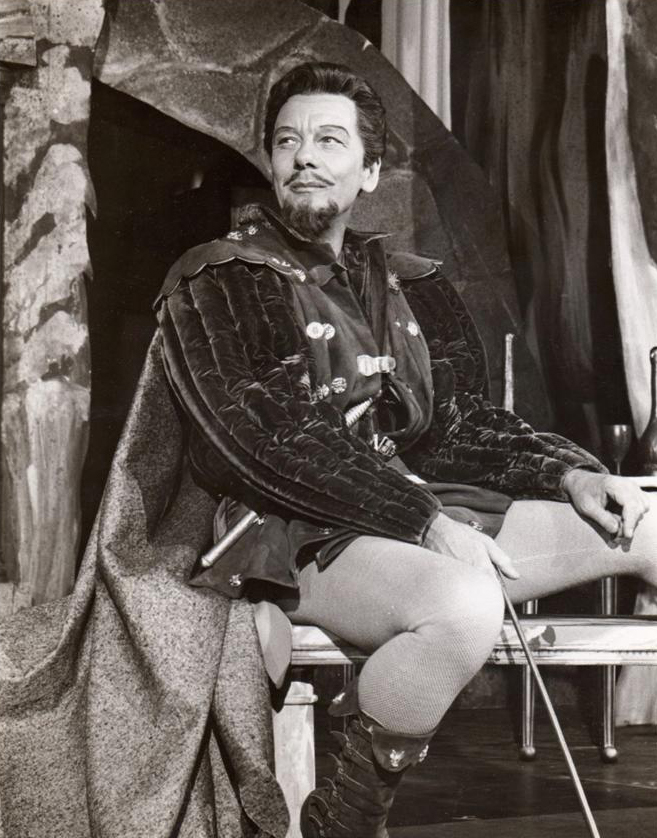
Sir Arthur John Gielgud (/ˈɡiːlɡʊd/ GHEEL-guud; 14 April 1904 – 21 May 2000) was an English actor and theatre director whose career spanned eight decades. With Ralph Richardson and Laurence Olivier, he was one of the trinity of actors who dominated the British stage for much of the 20th century. A member of the Terry family theatrical dynasty, he gained his first paid acting work as a junior member of his cousin Phyllis Neilson-Terry's company in 1922. After studying at the Royal Academy of Dramatic Art (RADA), he worked in repertory theatre and in the West End before establishing himself at the Old Vic as an exponent of Shakespeare in 1929–31.
During the 1930s Gielgud was a stage star in the West End and on Broadway, appearing in new works and classics. He began a parallel career as a director, and set up his own company at the Queen's Theatre, London. He was regarded by many as the finest Hamlet of his era, and was also known for high comedy roles such as John Worthing in The Importance of Being Earnest. In the 1950s Gielgud feared that his career was threatened when he was convicted and fined for a homosexual offence, but his colleagues and the public supported him loyally. When avant-garde plays began to supersede traditional West End productions in the later 1950s he found no new suitable stage roles, and for several years he was best known in the theatre for his one-man Shakespeare show The Ages of Man. From the late 1960s he found new plays that suited him, by authors including Alan Bennett, David Storey and Harold Pinter.
During the first half of his career Gielgud did not take the cinema seriously. Though he made his first film in 1924, and had successes with The Good Companions (1933) and Julius Caesar (1953), he did not begin a regular film career until his sixties. He appeared in more than sixty films between Becket (1964), for which he received his first Academy Award nomination for playing Louis VII of France, and Elizabeth (1998). As the acid-tongued Hobson in Arthur (1981) he won the Academy Award for Best Supporting Actor. His film work further earned him a Golden Globe Award and two BAFTAs.
Although largely indifferent to awards, Gielgud had the rare distinction of winning an Oscar, an Emmy, a Grammy, and a Tony. He was famous from the start of his career for his voice and his mastery of Shakespearean verse. He broadcast more than a hundred radio and television dramas between 1929 and 1994, and made commercial recordings of many plays, including ten of Shakespeare's and three recordings from his own "Ages of Man". Among his honours, he was knighted in 1953 and the Gielgud Theatre was named after him in 1994. From 1977 to 1989, he was president of the Royal Academy of Dramatic Art.
Gielgud was born on 14 April 1904, in South Kensington, London, the third of the four children of Frank Henry Gielgud and his second wife, Kate Terry-Gielgud, née Terry-Lewis. Gielgud's elder brothers were Lewis, who became a senior official of the Red Cross and UNESCO, and Val, later head of BBC radio drama; his younger sister Eleanor became John's secretary for many years. On his father's side, Gielgud was of Lithuanian and Polish descent. The surname derives from Gelgaudiškis, a village in Lithuania. The Counts Gielgud had owned the Gelgaudiškis Manor on the Nemunas river, but their estates were confiscated after they took part in a failed uprising against Russian rule in 1830–31. Jan Gielgud took refuge in England with his family; one of his grandchildren was Frank Gielgud, whose maternal grandmother was the Polish actress, Aniela Aszpergerowa.
Frank married into a family with wide theatrical connections. His wife, who was on the stage until she married, was the daughter of the actress Kate Terry, and a member of the stage dynasty that included Ellen, Fred and Marion Terry, Mabel Terry-Lewis and Edith and Edward Gordon Craig. Frank had no theatrical ambitions and worked all his life as a stockbroker in the City of London.
In 1912, aged eight, Gielgud went to Hillside preparatory school in Surrey as his elder brothers had done. For a child with no interest in sport he acquitted himself reasonably well in cricket and rugby for the school. In class, he hated mathematics, was fair at classics, and excelled at English and divinity. Hillside encouraged his interest in drama, and he played several leading roles in school productions, including Mark Antony in Julius Caesar and Shylock in The Merchant of Venice.
After Hillside, Lewis and Val had won scholarships to Eton and Rugby, respectively; lacking their academic achievement, John failed to secure such a scholarship. He was sent as a day boy to Westminster School where, as he later said, he had access to the West End "in time to touch the fringe of the great century of the theatre". He saw Sarah Bernhardt act, Adeline Genée dance and Albert Chevalier, Vesta Tilley and Marie Lloyd perform in the music halls. The school choir sang in services at Westminster Abbey, which appealed to his fondness for ritual. He showed talent at sketching, and for a while thought of scenic design as a possible career.
Hub AI
John Gielgud AI simulator
(@John Gielgud_simulator)
John Gielgud
Sir Arthur John Gielgud (/ˈɡiːlɡʊd/ GHEEL-guud; 14 April 1904 – 21 May 2000) was an English actor and theatre director whose career spanned eight decades. With Ralph Richardson and Laurence Olivier, he was one of the trinity of actors who dominated the British stage for much of the 20th century. A member of the Terry family theatrical dynasty, he gained his first paid acting work as a junior member of his cousin Phyllis Neilson-Terry's company in 1922. After studying at the Royal Academy of Dramatic Art (RADA), he worked in repertory theatre and in the West End before establishing himself at the Old Vic as an exponent of Shakespeare in 1929–31.
During the 1930s Gielgud was a stage star in the West End and on Broadway, appearing in new works and classics. He began a parallel career as a director, and set up his own company at the Queen's Theatre, London. He was regarded by many as the finest Hamlet of his era, and was also known for high comedy roles such as John Worthing in The Importance of Being Earnest. In the 1950s Gielgud feared that his career was threatened when he was convicted and fined for a homosexual offence, but his colleagues and the public supported him loyally. When avant-garde plays began to supersede traditional West End productions in the later 1950s he found no new suitable stage roles, and for several years he was best known in the theatre for his one-man Shakespeare show The Ages of Man. From the late 1960s he found new plays that suited him, by authors including Alan Bennett, David Storey and Harold Pinter.
During the first half of his career Gielgud did not take the cinema seriously. Though he made his first film in 1924, and had successes with The Good Companions (1933) and Julius Caesar (1953), he did not begin a regular film career until his sixties. He appeared in more than sixty films between Becket (1964), for which he received his first Academy Award nomination for playing Louis VII of France, and Elizabeth (1998). As the acid-tongued Hobson in Arthur (1981) he won the Academy Award for Best Supporting Actor. His film work further earned him a Golden Globe Award and two BAFTAs.
Although largely indifferent to awards, Gielgud had the rare distinction of winning an Oscar, an Emmy, a Grammy, and a Tony. He was famous from the start of his career for his voice and his mastery of Shakespearean verse. He broadcast more than a hundred radio and television dramas between 1929 and 1994, and made commercial recordings of many plays, including ten of Shakespeare's and three recordings from his own "Ages of Man". Among his honours, he was knighted in 1953 and the Gielgud Theatre was named after him in 1994. From 1977 to 1989, he was president of the Royal Academy of Dramatic Art.
Gielgud was born on 14 April 1904, in South Kensington, London, the third of the four children of Frank Henry Gielgud and his second wife, Kate Terry-Gielgud, née Terry-Lewis. Gielgud's elder brothers were Lewis, who became a senior official of the Red Cross and UNESCO, and Val, later head of BBC radio drama; his younger sister Eleanor became John's secretary for many years. On his father's side, Gielgud was of Lithuanian and Polish descent. The surname derives from Gelgaudiškis, a village in Lithuania. The Counts Gielgud had owned the Gelgaudiškis Manor on the Nemunas river, but their estates were confiscated after they took part in a failed uprising against Russian rule in 1830–31. Jan Gielgud took refuge in England with his family; one of his grandchildren was Frank Gielgud, whose maternal grandmother was the Polish actress, Aniela Aszpergerowa.
Frank married into a family with wide theatrical connections. His wife, who was on the stage until she married, was the daughter of the actress Kate Terry, and a member of the stage dynasty that included Ellen, Fred and Marion Terry, Mabel Terry-Lewis and Edith and Edward Gordon Craig. Frank had no theatrical ambitions and worked all his life as a stockbroker in the City of London.
In 1912, aged eight, Gielgud went to Hillside preparatory school in Surrey as his elder brothers had done. For a child with no interest in sport he acquitted himself reasonably well in cricket and rugby for the school. In class, he hated mathematics, was fair at classics, and excelled at English and divinity. Hillside encouraged his interest in drama, and he played several leading roles in school productions, including Mark Antony in Julius Caesar and Shylock in The Merchant of Venice.
After Hillside, Lewis and Val had won scholarships to Eton and Rugby, respectively; lacking their academic achievement, John failed to secure such a scholarship. He was sent as a day boy to Westminster School where, as he later said, he had access to the West End "in time to touch the fringe of the great century of the theatre". He saw Sarah Bernhardt act, Adeline Genée dance and Albert Chevalier, Vesta Tilley and Marie Lloyd perform in the music halls. The school choir sang in services at Westminster Abbey, which appealed to his fondness for ritual. He showed talent at sketching, and for a while thought of scenic design as a possible career.
Recent media