
Recent from talks
Peggy Ashcroft
Knowledge base stats:
Talk channels stats:
Members stats:
Peggy Ashcroft
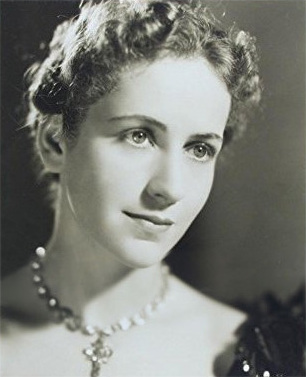
Dame Edith Margaret Emily Ashcroft (22 December 1907 – 14 June 1991), known professionally as Peggy Ashcroft, was an English actress whose career spanned more than six decades.
Born to a comfortable middle-class family, Ashcroft was determined from an early age to become an actress, despite parental opposition. She was working in smaller theatres even before graduating from drama school, and within two years she was starring in the West End. Ashcroft maintained her leading place in British theatre for the next 50 years. Always attracted by the ideals of permanent theatrical ensembles, she did much of her work for the Old Vic in the early 1930s, John Gielgud's companies in the 1930s and 1940s, the Shakespeare Memorial Theatre and its successor the Royal Shakespeare Company from the 1950s, and the National Theatre from the 1970s.
While well regarded in Shakespeare, Ashcroft was also known for her commitment to modern drama, appearing in plays by Bertolt Brecht, Samuel Beckett and Harold Pinter. Her career was almost wholly spent in the live theatre until the 1980s. She then turned to television and cinema with considerable success, winning three BAFTAs, one Golden Globe Award and an Academy Award, and received nominations for an additional Golden Globe Award and two Primetime Emmy Awards.
Ashcroft was born in Croydon, Surrey, (now in Greater London) the younger child and only daughter of Violetta Maud, née Bernheim (1874–1926) and William Worsley Ashcroft (1878–1918), a land agent. According to Michael Billington, her biographer, Violetta Ashcroft was of Danish and German Jewish descent and a keen amateur actress. Ashcroft's father was killed on active service in the First World War. She attended Woodford School, East Croydon, where one of her teachers encouraged her love of Shakespeare, but neither her teachers nor her mother approved of her desire to become a professional actress. Ashcroft was determined, however, and at the age of 16, she enrolled at the Central School of Speech and Drama, run by Elsie Fogerty, from whom her mother had taken lessons some years before. The school's emphasis was on the voice and elegant diction, which did not appeal to Ashcroft or to her fellow pupil Laurence Olivier. She learned more from reading My Life in Art by Constantin Stanislavski, the influential director of the Moscow Art Theatre.
While still a student, Ashcroft made her professional stage debut at the Birmingham Repertory Theatre in a revival of J. M. Barrie's Dear Brutus opposite Ralph Richardson, with whom she had been greatly impressed when she saw him in Charles Doran's touring company while she was still a schoolgirl. She graduated from the Central School in 1927 with London University's Diploma in Dramatic Art. Never much drawn to the West End or stardom, she learned her craft with mostly small companies in fringe theatres. Her first notable West End role was Naemi in Jew Süss in 1929, an extravagantly theatrical production, in which she won praise for the naturalism and truth of her playing. In the same year she married Rupert Hart-Davis, then an aspiring actor and later a publisher. He later described the marriage as "a sad failure: we were much too young to know what we wanted ... after much agony we parted and were duly divorced. Nowadays Peggy and I lunch together perhaps once or twice a year in a Soho restaurant and have a lovely nostalgic-romantic talk of shared memories of long ago. She is a lovely person and the best actress living."
In 1930 Ashcroft was cast as Desdemona in a production of Othello at the Savoy Theatre, starring Paul Robeson in the title role. The production was not well received, but Ashcroft's notices were excellent. The production prompted a political awakening in Ashcroft, who was astonished to receive hate mail for appearing onstage with a black actor; she was angry that Robeson was not welcome at the Savoy Hotel, despite being the star at the adjoining Savoy Theatre. During the run she had a brief affair with Robeson, which brought Robeson's marriage to Essie Robeson to an end. Their affair, followed by another with the writer J. B. Priestley, ended Ashcroft's first marriage. Hart-Davis was granted a divorce in 1933, on the grounds of Ashcroft's adultery with the director Theodore Komisarjevsky.
Among those impressed by Ashcroft's performance as Desdemona was John Gielgud, recently established as a West End star. He recalled, "When Peggy came on in the Senate scene it was as if all the lights in the theatre had suddenly gone up". In 1932 he was invited by the Oxford University Dramatic Society to try his hand at directing, in the society's production of Romeo and Juliet. Ashcroft as Juliet and Edith Evans as the nurse won golden notices, although their director, already notorious for his innocent slips of the tongue, referred to them as "Two leading ladies, the like of whom I hope I shall never meet again."
Ashcroft joined the Old Vic company for the 1932–33 season. The theatre, in an unfashionable area of London south of the Thames, was run by Lilian Baylis to offer plays and operas to a mostly working-class audience at low ticket prices. She paid her performers modest wages, but the theatre was known for its unrivaled repertory of classics, mostly Shakespeare, and many West End stars took a large pay cut to work there. It was, in Sheridan Morley's words, the place to learn Shakespearean technique and try new ideas. During the season Ashcroft played five Shakespeare heroines, as well as Kate in She Stoops to Conquer, Mary Stuart in a new play by John Drinkwater, and Lady Teazle in The School for Scandal. In 1933 she made her first film, The Wandering Jew. She was not attracted to the medium of cinema and made only four more films over the next quarter-century.
Hub AI
Peggy Ashcroft AI simulator
(@Peggy Ashcroft_simulator)
Peggy Ashcroft
Dame Edith Margaret Emily Ashcroft (22 December 1907 – 14 June 1991), known professionally as Peggy Ashcroft, was an English actress whose career spanned more than six decades.
Born to a comfortable middle-class family, Ashcroft was determined from an early age to become an actress, despite parental opposition. She was working in smaller theatres even before graduating from drama school, and within two years she was starring in the West End. Ashcroft maintained her leading place in British theatre for the next 50 years. Always attracted by the ideals of permanent theatrical ensembles, she did much of her work for the Old Vic in the early 1930s, John Gielgud's companies in the 1930s and 1940s, the Shakespeare Memorial Theatre and its successor the Royal Shakespeare Company from the 1950s, and the National Theatre from the 1970s.
While well regarded in Shakespeare, Ashcroft was also known for her commitment to modern drama, appearing in plays by Bertolt Brecht, Samuel Beckett and Harold Pinter. Her career was almost wholly spent in the live theatre until the 1980s. She then turned to television and cinema with considerable success, winning three BAFTAs, one Golden Globe Award and an Academy Award, and received nominations for an additional Golden Globe Award and two Primetime Emmy Awards.
Ashcroft was born in Croydon, Surrey, (now in Greater London) the younger child and only daughter of Violetta Maud, née Bernheim (1874–1926) and William Worsley Ashcroft (1878–1918), a land agent. According to Michael Billington, her biographer, Violetta Ashcroft was of Danish and German Jewish descent and a keen amateur actress. Ashcroft's father was killed on active service in the First World War. She attended Woodford School, East Croydon, where one of her teachers encouraged her love of Shakespeare, but neither her teachers nor her mother approved of her desire to become a professional actress. Ashcroft was determined, however, and at the age of 16, she enrolled at the Central School of Speech and Drama, run by Elsie Fogerty, from whom her mother had taken lessons some years before. The school's emphasis was on the voice and elegant diction, which did not appeal to Ashcroft or to her fellow pupil Laurence Olivier. She learned more from reading My Life in Art by Constantin Stanislavski, the influential director of the Moscow Art Theatre.
While still a student, Ashcroft made her professional stage debut at the Birmingham Repertory Theatre in a revival of J. M. Barrie's Dear Brutus opposite Ralph Richardson, with whom she had been greatly impressed when she saw him in Charles Doran's touring company while she was still a schoolgirl. She graduated from the Central School in 1927 with London University's Diploma in Dramatic Art. Never much drawn to the West End or stardom, she learned her craft with mostly small companies in fringe theatres. Her first notable West End role was Naemi in Jew Süss in 1929, an extravagantly theatrical production, in which she won praise for the naturalism and truth of her playing. In the same year she married Rupert Hart-Davis, then an aspiring actor and later a publisher. He later described the marriage as "a sad failure: we were much too young to know what we wanted ... after much agony we parted and were duly divorced. Nowadays Peggy and I lunch together perhaps once or twice a year in a Soho restaurant and have a lovely nostalgic-romantic talk of shared memories of long ago. She is a lovely person and the best actress living."
In 1930 Ashcroft was cast as Desdemona in a production of Othello at the Savoy Theatre, starring Paul Robeson in the title role. The production was not well received, but Ashcroft's notices were excellent. The production prompted a political awakening in Ashcroft, who was astonished to receive hate mail for appearing onstage with a black actor; she was angry that Robeson was not welcome at the Savoy Hotel, despite being the star at the adjoining Savoy Theatre. During the run she had a brief affair with Robeson, which brought Robeson's marriage to Essie Robeson to an end. Their affair, followed by another with the writer J. B. Priestley, ended Ashcroft's first marriage. Hart-Davis was granted a divorce in 1933, on the grounds of Ashcroft's adultery with the director Theodore Komisarjevsky.
Among those impressed by Ashcroft's performance as Desdemona was John Gielgud, recently established as a West End star. He recalled, "When Peggy came on in the Senate scene it was as if all the lights in the theatre had suddenly gone up". In 1932 he was invited by the Oxford University Dramatic Society to try his hand at directing, in the society's production of Romeo and Juliet. Ashcroft as Juliet and Edith Evans as the nurse won golden notices, although their director, already notorious for his innocent slips of the tongue, referred to them as "Two leading ladies, the like of whom I hope I shall never meet again."
Ashcroft joined the Old Vic company for the 1932–33 season. The theatre, in an unfashionable area of London south of the Thames, was run by Lilian Baylis to offer plays and operas to a mostly working-class audience at low ticket prices. She paid her performers modest wages, but the theatre was known for its unrivaled repertory of classics, mostly Shakespeare, and many West End stars took a large pay cut to work there. It was, in Sheridan Morley's words, the place to learn Shakespearean technique and try new ideas. During the season Ashcroft played five Shakespeare heroines, as well as Kate in She Stoops to Conquer, Mary Stuart in a new play by John Drinkwater, and Lady Teazle in The School for Scandal. In 1933 she made her first film, The Wandering Jew. She was not attracted to the medium of cinema and made only four more films over the next quarter-century.
Recent media