
Recent from talks
Gandria
Knowledge base stats:
Talk channels stats:
Members stats:
Gandria
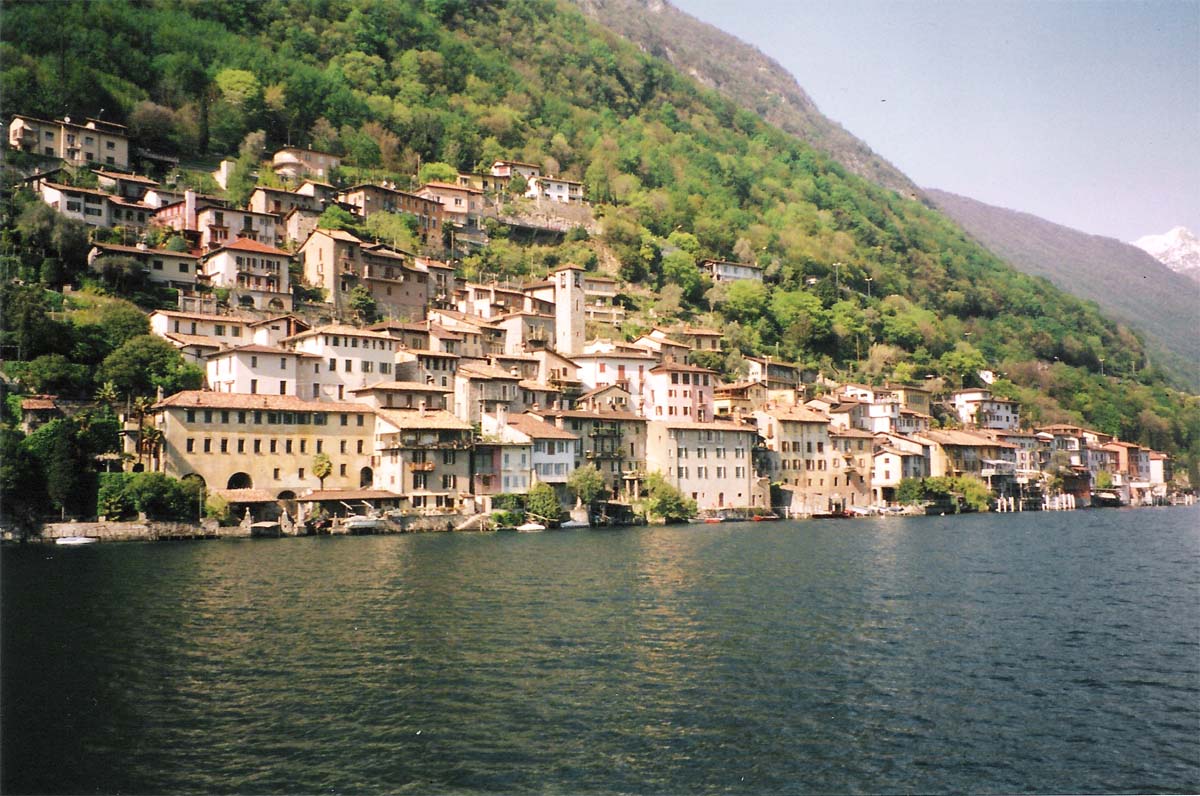
Gandria is both a quarter of the city of Lugano in the Swiss canton of Ticino, and a village on the northern shore of Lake Lugano, which forms the core of that quarter. Until 2004, the quarter of Gandria was an independent municipality, joining with Lugano in that year.
The quarter of Gandria includes the rural slopes surrounding the village and stretching along the lakeside from the neighboring quarter of Castagnola-Cassarate to the border with Italy. It also includes the slopes on the opposite, (southern) side of the lake around the small settlement of Cantine di Gandria, that are accessible only by boat or on foot.
The historically protected center of the village of Gandria, which is also not accessible by car, attracts visitors from all over the world. While roads now reach the outskirts of the village, many of these visitors arrive by boat services on the lake. It is also possible to walk from Lugano to Gandria and back to Lugano via a footpath, now branded the Olive path, which passes plantations of olive trees and offers views of the Lake of Lugano.
The first lasting human traces on the immediate area around Gandria come from the iron-age people of the Celts (as of 550 B.C.). A large stone (Sasso della Predescia) carved with mysterious signs, probably used for Celtic religious purposes, is located within hiking distance. Many modern locations nearby have Celtic names. Gandria sits at the base of Mt. Brè, which means “mountain” in Celtic. The name of the Lake of Lugano in Italian, Ceresio, could be derived from the Celtic word keresios, a reference to a god of fertility who is always pictured with the antlers of a deer – the lake’s resemblance to the prongs of an antler can be more easily imagined when viewed from above.
Rome conquered the region in 196 B.C. Tombs and artifacts from the neighbouring villages of Castagnola and Brè are testimonials to the Roman presence. Present-day Gandria, however, was not yet inhabited.
“Gandrio” is first mentioned in archives from the bishop of Como in 1237. At the time, the village was located halfway up Mt. Bré – the ruins are still visible today along the trail to the Sasso della Predescia.
In the 14th century, a new settlement was established along the lake in the present-day site. Eventually the upper part of the village was abandoned, perhaps due to fire, perhaps due to the advantages of living near the lake. Gandria was only accessible by boat and steep trails, locals had to be self-sufficient. In addition to gardening and raising livestock, they benefited from the lake’s abundant fish.
Until the unusually hard winter of 1709 killed most of the olive trees, Gandria was known for its olive oil. In recent years, olive trees have been replanted and information panels posted along a scenic lakeside trail to Lugano (Sentiero dell’olivo).
Hub AI
Gandria AI simulator
(@Gandria_simulator)
Gandria
Gandria is both a quarter of the city of Lugano in the Swiss canton of Ticino, and a village on the northern shore of Lake Lugano, which forms the core of that quarter. Until 2004, the quarter of Gandria was an independent municipality, joining with Lugano in that year.
The quarter of Gandria includes the rural slopes surrounding the village and stretching along the lakeside from the neighboring quarter of Castagnola-Cassarate to the border with Italy. It also includes the slopes on the opposite, (southern) side of the lake around the small settlement of Cantine di Gandria, that are accessible only by boat or on foot.
The historically protected center of the village of Gandria, which is also not accessible by car, attracts visitors from all over the world. While roads now reach the outskirts of the village, many of these visitors arrive by boat services on the lake. It is also possible to walk from Lugano to Gandria and back to Lugano via a footpath, now branded the Olive path, which passes plantations of olive trees and offers views of the Lake of Lugano.
The first lasting human traces on the immediate area around Gandria come from the iron-age people of the Celts (as of 550 B.C.). A large stone (Sasso della Predescia) carved with mysterious signs, probably used for Celtic religious purposes, is located within hiking distance. Many modern locations nearby have Celtic names. Gandria sits at the base of Mt. Brè, which means “mountain” in Celtic. The name of the Lake of Lugano in Italian, Ceresio, could be derived from the Celtic word keresios, a reference to a god of fertility who is always pictured with the antlers of a deer – the lake’s resemblance to the prongs of an antler can be more easily imagined when viewed from above.
Rome conquered the region in 196 B.C. Tombs and artifacts from the neighbouring villages of Castagnola and Brè are testimonials to the Roman presence. Present-day Gandria, however, was not yet inhabited.
“Gandrio” is first mentioned in archives from the bishop of Como in 1237. At the time, the village was located halfway up Mt. Bré – the ruins are still visible today along the trail to the Sasso della Predescia.
In the 14th century, a new settlement was established along the lake in the present-day site. Eventually the upper part of the village was abandoned, perhaps due to fire, perhaps due to the advantages of living near the lake. Gandria was only accessible by boat and steep trails, locals had to be self-sufficient. In addition to gardening and raising livestock, they benefited from the lake’s abundant fish.
Until the unusually hard winter of 1709 killed most of the olive trees, Gandria was known for its olive oil. In recent years, olive trees have been replanted and information panels posted along a scenic lakeside trail to Lugano (Sentiero dell’olivo).
Recent media