Hubbry Logo
GenerativityGenerativityMain
Open search
Generativity
Community hub
Generativity
logo
8 pages, 0 posts
0 subscribers
Be the first to start a discussion here.
Contribute something
Generativity
Generativity
from Wikipedia
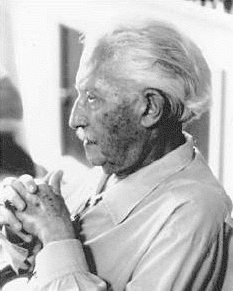
Erik Erikson (1902–1994) was the first to use the term generativity.

The term generativity was coined by the psychoanalyst Erik Erikson in 1950 to denote "a concern for establishing and guiding the next generation."[1] He first used the term while defining the Care stage in his theory of the stages of psychosocial development.

History

[edit]

In 1950 Erik Erikson created the term generativity to explain the 7th stage in his theory of the stages of psychosocial development. The 7th stage encompasses the middle ages of one's life, from 45 through 64. Generativity was defined as the “ability to transcend personal interests to provide care and concern for younger and older generations.”[2] It took over 30 years for generativity to become a subject of empirical research. Modern psychoanalysts, starting in the early 1990s, have included a concern for one's legacy, referred to as an “inner desire for immortality”, in the definition of generativity.[3]

Use in psychology

[edit]

Psychologically, generativity is concern for the future, a need to nurture and guide younger people and contribute to the next generation.[4] Erikson argued that this usually develops during middle age (which spans approximately ages 45 through 64) in keeping with his stage-model of psychosocial development.[5] After having experienced old age himself, Erikson believed that generativity maintains a more important role in later life than he initially had thought.

In Erikson's theory, Generativity is contrasted with Stagnation.[5] During this stage, people contribute to the next generation through caring, teaching and engaging in creative work which contributes to society. Generativity involves answering the question "Can I Make My Life Count?", and in this process, finding one’s life's work and contributing to the development of others through activities such as volunteering, mentoring, and contributing to future generations. It has also been described as a concern for one's legacy, accepting the independence lives of family and increasing philanthropic pursuits.[3] Generative concern leads to concrete goals and actions such as "providing a narrative schematic of the generative self to the next generation".[6]

McAdams and de St. Aubin developed a 20-item scale to assess generativity, and to help discover who it is that is nurturing and leading the next generation.[3] This model is not restricted to stages, with generativity able to be a concern throughout adulthood, not just in middle adulthood, as Erikson suggested. Example items include "I try to pass along the knowledge that I have gained through my experiences", "I have a responsibility to improve the neighborhood in which I live", and (reversed) "In general, my actions do not have a positive effect on other people."

References

[edit]

Further reading

[edit]
Revisions and contributorsEdit on WikipediaRead on Wikipedia
from Grokipedia
Generativity is the seventh stage in Erik Erikson's theory of psychosocial development, occurring during middle adulthood (approximately ages 40 to 65), where the primary conflict involves generating productivity and concern for future generations versus stagnation and self-absorption. This stage emphasizes establishing and guiding the next generation through parenting, mentoring, teaching, or broader societal contributions, cultivating the virtue of care. Erikson described generativity as encompassing procreativity, productivity, and creativity, extending beyond biological reproduction to legacy-building activities that ensure continuity and meaning across generations. The concept, first elaborated in Erikson's 1950 work , posits that successful resolution leads to a sense of purpose and interconnectedness, while failure results in feelings of unproductivity and interpersonal disconnection. Empirical measures, such as the Loyola Generativity Scale, have been developed to assess this construct, revealing associations with positive outcomes like enhanced , marital satisfaction, and reduced psychological distress in midlife and beyond. Research indicates that generativity correlates with voluntary community involvement and career achievements that benefit others, supporting its role in adaptive aging. Despite its influence, Erikson's framework has drawn criticism for limited rigorous empirical validation in early formulations, with later studies providing mixed evidence on universality across cultures and genders, though generativity specifically shows consistent predictive power for life satisfaction in longitudinal data. Defining characteristics include its relational focus—prioritizing causal impacts on successors over personal gain—and sensitivity to societal opportunities, where barriers like economic instability can impede realization, leading to stagnation.

In Psychology

Erik Erikson's Framework

Erik Erikson's theory of psychosocial development, first detailed in his 1950 book , describes eight sequential stages spanning the human lifespan, each characterized by a central conflict that shapes personality and ego strength. The seventh stage, generativity versus stagnation, unfolds during middle adulthood, roughly ages 40 to 65, when individuals confront the task of contributing meaningfully to future generations amid declining personal productivity peaks. This framework extends Freudian psychosexual theory by emphasizing social and cultural influences on development, positioning generativity as a pivotal midpoint between earlier and later life . Generativity entails an active investment in nurturing and guiding the next generation, encompassing procreativity through biological or adoptive , productivity via sustained work and societal roles, and in producing novel ideas, artifacts, or institutions that endure beyond one's lifetime. Erikson elaborated in his 1982 work The Life Cycle Completed that this stage demands extending care from self and family to broader communal legacies, driven by an ego need to counteract the finitude of individual existence through intergenerational transmission. Failure to engage productively risks stagnation, marked by self-preoccupation, interpersonal constriction, and a pervasive sense of personal and cultural stagnation. Resolution toward generativity cultivates the virtue of care, yielding through purpose derived from societal contributions and alignment with evolutionary imperatives for species propagation via , , and norms—prioritizing collective continuity over isolated survival. In contrast, unresolved stagnation fosters overconcern with one's own welfare, potentially cascading into the despair of late adulthood by eroding retrospective . Erikson's model underscores causal mechanisms wherein middle-age tasks reinforce adaptive traits like and foresight, empirically rooted in observations of human societies where generative acts sustain .

Core Manifestations and Outcomes

Generativity manifests in midlife through observable behaviors that promote productivity and continuity across generations, including mentoring younger colleagues or protégés, in roles, advancing career contributions that yield lasting innovations or institutional impacts, and actively nurturing family members such as adult children or guiding grandchildren. These activities represent empirical proxies for generative concern, where individuals invest effort in creating or preserving elements of value beyond their immediate lifespan, such as imparting skills or fostering institutional stability. Unlike the intimacy stage, which centers on forming reciprocal pair bonds in young adulthood, generativity emphasizes unilateral or expansive acts of guidance and provision that extend influence outward, often peaking between ages 40 and 60. Empirical outcomes of sustained generativity include elevated and diminished depressive symptoms, with longitudinal analyses revealing that generative engagement predicts positive affect and self-worth over time, buffering against declines in during later midlife. For instance, adults who realize generative goals through these manifestations experience reduced risks of stagnation-related crises, characterized by feelings of futility or , as their efforts yield tangible intergenerational —such as transmitting vocational expertise or cultural values—which reinforces personal purpose and societal resilience. This causal pathway aligns with human imperatives for replication and , where generative acts counteract personal by embedding one's contributions into enduring social structures, thereby enhancing overall without relying on mere relational intimacy.

Empirical Research and Measurement

The Loyola Generativity Scale (LGS), a 20-item self-report instrument developed by Dan P. McAdams and Ed de St. Aubin in 1992, assesses individual differences in generative concern through statements evaluating preoccupation with guiding and nurturing future generations. Validation studies confirm its reliability, with coefficients exceeding 0.80 across adult samples, and evidenced by correlations with related constructs like and community leadership (r ≈ 0.40–0.60). Other tools, such as the Generative Behavior Checklist, supplement the LGS by quantifying observable actions like mentoring or , though self-reports predominate due to generativity's introspective nature. Cross-sectional and meta-analytic research links higher LGS scores to increased rates, with generative adults reporting 20–30% more hours in prosocial activities than non-generative peers, particularly in midlife cohorts studied from the onward. In occupational contexts, generativity correlates positively with career (ρ = 0.25) and extra-role behaviors like knowledge-sharing, as synthesized in a 2020 of 45 studies encompassing over 10,000 participants. These associations hold after controlling for age and , underscoring behavioral validation beyond self-perception. Longitudinal evidence from multi-decade cohorts demonstrates generativity's role in healthier aging trajectories. In analyses of over 50 years of prospective data from two U.S. studies (n > 1,000), midlife generativity mediated the impact of childhood adversity on late-life , predicting lower rates of physical decline and stagnation-related issues like depression (β ≈ 0.15–0.20). Generativity levels typically peak in early midlife before stabilizing or declining post-60, with sustained high scores associated with reduced stagnation in follow-ups to age 77. Recent advances apply to dissect late-life drivers, as in a 2024 MIDUS-based analysis (n ≈ 2,000) using random forests on 60+ predictors, which identified social potency (importance score 0.12), (0.10), and personal growth orientation (0.09) as top factors explaining 25% of variance in generative outcomes among adults over 50. Such data-driven approaches highlight causal precursors like over demographic variables, prioritizing empirical prediction over theoretical assumptions. Empirical rigor in these studies relies on multi-method convergence—self-reports aligned with behavioral logs and covariates—to mitigate common method bias, though causal inferences remain correlational absent experimental manipulation.

Criticisms and Cultural Considerations

Critics contend that Erikson's generativity versus stagnation stage unduly prioritizes biological and productivity, marginalizing those experiencing involuntary or structural barriers like economic pressures, which may frame non-parenthood as personal failure rather than circumstantial. For instance, midlife is often linked to stagnation in Eriksonian analyses, though narrative interventions demonstrate that generativity can emerge through non-parental avenues such as mentoring or , challenging the model's rigidity. Empirical shortcomings include vague mechanisms for stage resolution and overreliance on sequential crises, with limited longitudinal data validating stagnation's causal links to deficits. Gender-specific critiques highlight misalignment with women's trajectories, where generativity reportedly peaks earlier, coexists with intimacy tasks, and recedes in midlife toward self-reorientation, contrasting Erikson's male-oriented singular ; pushing women toward perpetual generativity risks inducing self-absorption or stagnation. Conservative defenses emphasize generativity's alignment with biological imperatives for reproduction and lineage continuity, positing that deviations exacerbate societal vulnerabilities, while liberal viewpoints assail embedded norms favoring traditional roles, advocating broader expressions like professional legacies. Cross-cultural examinations reveal Western-centric assumptions, as generativity manifests adaptively in collectivist contexts—such as elevated scores among Chinese youth reflecting communal elder guidance—yet universal claims falter amid sparse non-Western empirical support, underscoring individualism's outsized influence in Erikson's framework. Defenses cite partial universality in core concerns for future generations, but critiques note insufficient validation across diverse economies and kinship systems. Truth-seeking analysis counters minimization of stagnation's costs: global fertility rates averaging 2.3 in 2021 and projected below replacement in 76% of countries by 2050 correlate with population shrinkage, economic dependency ratios exceeding 50% in advanced nations by 2050, and risks of innovation stagnation, evidencing causal decay from diminished generational investment rather than benign adaptation.

In Artificial Intelligence

Conceptual Foundations

Generative models in represent the capacity to synthesize novel outputs, such as text, images, or , by learning and sampling from the underlying probability distributions of , thereby extrapolating patterns to create instances that approximate the original data manifold. This process relies on modeling the p(x,y)p(x, y) or marginal p(x)p(x), enabling the generation of realistic variations rather than mere replication. Unlike , which emphasize or decision boundaries, generativity prioritizes creative synthesis grounded in probabilistic . In contrast to discriminative models, which focus on conditional probabilities p(yx)p(y|x) to classify inputs or delineate boundaries between categories, generative approaches emphasize the production of entirely new points, fostering applications in and . This distinction underscores a shift from boundary-focused learning to holistic distribution capture, where models "beget" outputs akin to generative processes in nature but mechanized through algorithmic sampling. The term "generate" traces etymologically to the Latin generāre, meaning "to beget" or "procreate," evoking parallels to biological where inherit and vary parental traits, here transposed to computational production of artifacts from learned exemplars. Such models emerged in literature prior to 2010, building on foundational probabilistic techniques, and experienced explosive adoption after amid accessible public tools and scaled architectures.

Historical Evolution

The foundations of lie in early probabilistic models for generation. introduced Markov chains in , formalizing processes that predict future states based on immediate predecessors, which later enabled rudimentary text and synthesis in computational applications during the mid-20th century. These models emphasized statistical dependencies over rule-based systems, laying groundwork for probability-driven generation, though limited by computational constraints and lack of hierarchical structure until advances in . The 2010s marked a shift toward deep learning-based generative techniques. Variational autoencoders (VAEs), proposed by Diederik Kingma and in December 2013, introduced a framework for learning latent representations to reconstruct and generate by approximating posterior distributions via variational . This was followed by generative adversarial networks (GANs) in June 2014, developed by and colleagues, which pitted a generator against a discriminator in a game to produce realistic , revolutionizing image synthesis despite training instabilities. Diffusion models emerged around 2015 with Jascha Sohl-Dickstein's work on reversing noise-adding processes for generation, offering stable alternatives to GANs for high-fidelity outputs. Concurrently, the transformer architecture, introduced by et al. in June 2017, enabled scalable sequence modeling through self-attention mechanisms, facilitating autoregressive generation pivotal for later language models. The 2020s witnessed explosive growth in large-scale generative systems. OpenAI's , detailed in a May 2020 paper, demonstrated emergent capabilities in few-shot learning via a 175-billion-parameter trained on vast text corpora, shifting focus from narrow generation to broad intelligence simulation. This evolved into multimodal models like in January 2021, combining transformers with for text-to-image synthesis, and culminated in ChatGPT's public launch on November 30, 2022, which popularized interactive generative AI and spurred widespread adoption. By 2023-2025, expansions included integrated vision-language models such as with vision capabilities (March 2023) and subsequent iterations like GPT-4o (May 2024), alongside competitors like Google's Gemini series, enabling seamless handling of text, images, and video. Progress was propelled by empirical scaling laws and private-sector dynamics rather than primarily academic subsidies. Studies like DeepMind's analysis in March 2022 revealed that optimal model performance requires balanced increases in compute, data, and parameters, guiding efficient resource allocation amid hardware advances. Open-source efforts, including Meta's LLaMA models (February 2023) and Stability AI's (August 2022), democratized access and accelerated iteration through community contributions, underscoring market competition—driven by venture funding in firms like and —as the primary catalyst over traditional grant-based research.

Technical Mechanisms

Generative models in primarily rely on deep neural networks trained through , an optimization algorithm that computes gradients of a with respect to network parameters by propagating errors backward from output to input layers. These networks are optimized using variants on massive datasets, minimizing objectives like loss for sequence prediction tasks. A foundational technique for text and sequence generation is autoregressive modeling, where the probability distribution over the next element in a sequence—such as a token in language modeling—is conditioned on all preceding elements, enabling sequential sampling via techniques like or nucleus sampling. This approach factorizes the joint probability of a sequence as a product of conditional probabilities, P(x1,,xn)=i=1nP(xix1,,xi1)P(x_1, \dots, x_n) = \prod_{i=1}^n P(x_i | x_1, \dots, x_{i-1}), trained to predict subsequent tokens from vast corpora. Key architectures underpin these mechanisms. Transformers, introduced in 2017, process sequences in parallel using self-attention mechanisms to capture long-range dependencies without recurrent structures, scaling efficiently to billions of parameters. Generative Adversarial Networks (GANs) employ a minimax game between a generator that produces samples and a discriminator that distinguishes real from fake data, optimizing the generator to minimize the discriminator's ability to detect fakes, formalized as minGmaxDV(D,G)=Expdata[logD(x)]+Ezpz[log(1D(G(z)))]\min_G \max_D V(D,G) = \mathbb{E}_{x \sim p_{data}}[\log D(x)] + \mathbb{E}_{z \sim p_z}[\log(1 - D(G(z)))]. Diffusion models generate data through an iterative denoising process, starting from noise and reversing a forward diffusion that gradually adds to data, learning to predict noise at each step via score matching. Empirical performance follows scaling laws, where model loss decreases as a power-law function of training compute, dataset size, and parameter count—e.g., cross-entropy loss L(N)ANαL(N) \approx A N^{-\alpha} for model size NN, with exponents α0.076\alpha \approx 0.076 observed across language tasks. However, these laws reflect statistical pattern compression rather than causal invention; generated outputs constitute probabilistic interpolations and recombinations within the manifold of training data distributions, constrained by and lacking mechanisms for extrapolative novelty beyond learned correlations. High-quality, diverse data mitigates mode collapse and improves fidelity, underscoring that quantity alone yields without causal structure in training signals.

Key Models and Applications

OpenAI's GPT series represents a cornerstone of generative language models, with released on March 14, 2023, enabling advanced text generation capabilities integrated into applications like for conversational interfaces and content creation. Subsequent iterations, such as launched on May 13, 2024, introduced multimodal processing of text, images, and audio in a unified model, facilitating deployments in real-time interaction tools and enhanced pipelines. In code generation, GPT models power tools like , where empirical studies demonstrate productivity gains for developers; for instance, a McKinsey found coding tasks completed up to twice as fast with generative AI assistance, while a experiment reported over 50% increases in code output volume. Open-source counterparts, including Meta's Llama 2 released on July 18, 2023, support similar text-based applications through customizable fine-tuning, promoting decentralized development by allowing enterprises to adapt models without proprietary dependencies. For image and video synthesis, Stability AI's , publicly released on August 22, 2022, underpins tools for generating visual art and media assets from textual prompts, deployed in creative workflows such as concept design and digital illustration prototyping. xAI's , initially launched in November 2023, extends generative capabilities to integrated reasoning tasks, with applications in scientific query resolution and custom content generation. In scientific domains, generative models accelerate by designing novel molecular structures; deep generative approaches enable de novo molecule generation tailored to target proteins, as evidenced in frameworks optimizing pharmacological properties for preclinical testing. By 2024-2025, integrations of these models, including quantized versions of Llama and variants, enable on-device in industries like mobile content creation and localized , reducing latency and enhancing .

Achievements and Economic Impacts

Generative AI has accelerated research and development in fields like , exemplified by DeepMind's system, which achieved breakthrough accuracy in predicting protein structures, solving a decades-old challenge and enabling faster and biomolecular design as of its 2021 release and subsequent iterations incorporating generative diffusion models. This has scaled content creation and simulation tasks, allowing researchers to generate and iterate on complex models at speeds unattainable manually, with empirical evidence from patent data showing generative tools boosting innovation rates in scientific domains. Productivity gains from generative AI adoption are projected to add $2.6 trillion to $4.4 annually across key use cases, according to analysis of 63 business functions, primarily through automating routine cognitive tasks and enhancing decision-making in sectors like and . These impacts stem from investments in unfettered markets, which have outpaced regulatory-heavy alternatives by enabling rapid iteration and deployment, as seen in the surge of venture capital funding for generative AI startups reaching $33.9 billion globally in 2024, an 18.7% increase from 2023. Economically, the generative AI market is forecasted to reach approximately $59 billion in revenue by 2025, driven by enterprise adoption in software and services, with private investments signaling sustained growth beyond hype through tangible efficiency improvements. Empirical studies on labor markets indicate job augmentation rather than widespread displacement, with AI innovations raising firm and in tech-exposed sectors; for instance, analysis of U.S. over a decade found generative AI correlated with net job growth and higher output per worker, particularly in augmenting roles requiring human oversight. Concerns of Luddite-style mass unemployment echo historical fears around adoption in the 1980s and 1990s, yet total employment rose as PCs created demand for skilled roles in programming, , and IT support without net job loss, a pattern repeated across technological shifts where productivity gains expand economic output and labor needs. This evidence supports generative AI's role in augmenting human capabilities via market-driven , fostering new industries and roles faster than any displacement effects.

Controversies, Limitations, and Ethical Debates

Generative AI systems frequently produce hallucinations, or fabricated outputs presented as factual, with error rates varying by domain and benchmark. In legal research tools, hallucination rates range from 17% to 33%, despite vendor claims of reliability. Specialized evaluations in medical and legal contexts report averages of 4.3% to 18.7%. Even advanced models like those tested in 2025 benchmarks exhibit rates up to 79% on certain reasoning tasks. These models demonstrate no empirical superiority over humans in creative idea generation, as evidenced by multiple 2025 meta-analyses aggregating experimental . One review of 17 studies found no compelling that generative AI consistently outperforms human-generated ideas in , usefulness, or diversity. Another analysis emphasized similar average performance levels, with AI advantages limited to in initial variety rather than true ty. Such findings underscore the absence of genuine , as AI recombines training patterns without causal . Brittleness to adversarial inputs further limits reliability, with large language models showing vulnerability to crafted perturbations that elicit erroneous or unsafe responses. Comprehensive 2024 evaluations reveal that even fine-tuned models fail against targeted attacks, with robustness declining as model size increases in some cases. Studies confirm contemporary systems remain non-robust to adversarial prompts in real-world scenarios. Controversies surrounding data practices include intellectual property disputes, exemplified by The New York Times' December 27, 2023, lawsuit against and , alleging unauthorized use of millions of articles for , leading to verbatim reproductions and competitive harm. Political biases in outputs often reflect data and fine-tuning, with larger models like Llama3-70B exhibiting left-leaning alignments on policy issues. Reward models optimized for alignment consistently amplify such biases, particularly in progressive directions. Deepfake generation, enabled by generative AI, has escalated societal harms, with incidents rising 257% to 150 cases in early 2024 and online deepfakes surging 3000% per reports. These facilitate losses exceeding $16 billion in 2024, erode trust through polarization via false narratives, and threaten political stability in low-tech environments. amplification of these risks often overlooks detection advancements and empirical containment in 2024 elections. Ethical debates include existential risk claims, which empirical scaling data challenges through evidence of beyond current compute thresholds, prompting shifts toward efficiency over brute force. Alarmist projections ignore such plateaus, prioritizing theoretical hazards over observable gains in controlled deployment. User dependency on generative AI correlates with mental health declines, including increased and emotional reliance, as frequent interactions foster dysfunctional attachments without reciprocal depth. Studies report 17-24% of adolescents developing dependencies, exacerbating distress rather than alleviating it. Labor market shifts favor skilled workers in AI-exposed sectors, with empirical showing net job growth and boosts from , though short-term displacements occur in routine white-collar tasks. Freelance markets experienced 2-5% earnings drops in high-exposure occupations by mid-2025, concentrated among less-adapted demographics like young entrants. Broader diffusion to small and medium enterprises mitigates inequality fears, countering narratives of widespread obsolescence.

References

Add your contribution
Related Hubs
Contribute something
User Avatar
No comments yet.