
Recent from talks
George Antheil
Knowledge base stats:
Talk channels stats:
Members stats:
George Antheil
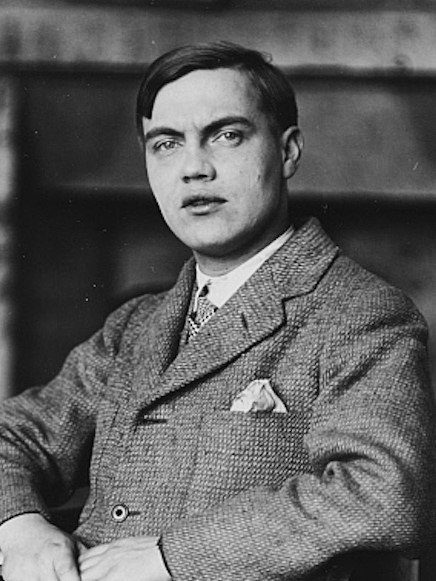
George Johann Carl Antheil (/ˈæntaɪl/ AN-tyle; July 8, 1900 – February 12, 1959) was an American avant-garde composer, pianist, author, and inventor whose modernist musical compositions explored the sounds – musical, industrial, and mechanical – of the early 20th century. Spending much of the 1920s in Europe, Antheil returned to the United States in the 1930s, and thereafter composed music for films, and eventually, television. As a result of this work, his style became more tonal. A man of diverse interests and talents, Antheil was constantly reinventing himself. He wrote magazine articles, an autobiography, a mystery novel, and newspaper and music columns.
In 1941, Antheil and the actress Hedy Lamarr developed a radio guidance system for Allied torpedoes that used a code (stored on a punched paper tape) to synchronize frequency changes, referred to as frequency hopping, between the transmitter and receiver. It is one of the spread spectrum techniques that became widely used in modern telecommunications. This work led to their induction into the National Inventors Hall of Fame in 2014.
Antheil was born George Johann Carl Antheil, and grew up in a family of German immigrants in Trenton, New Jersey. His father owned a shoe store. Antheil got his education in the Trenton public schools. He was raised bilingually, writing music, prose, and poetry from an early age, and never formally graduated from high school or college, flunking out of Trenton Central High School in 1918. According to Antheil's autobiography, The Bad Boy of Music (1945), he was "so crazy about music", that his mother sent him to the countryside where no pianos were available. Undeterred, George simply arranged for a local music store to deliver a piano. His somewhat unreliable memoir mythologized his origins as a futurist, and emphasized his upbringing near a noisy machine shop and an ominous prison. George's younger brother was Henry W. Antheil Jr.; he became a diplomatic courier and died on June 14, 1940, when his plane was shot down over the Baltic Sea.
Antheil started studying the piano at the age of six. In 1916, he traveled regularly to Philadelphia to study under Constantine von Sternberg, a former pupil of Franz Liszt. From Sternberg, he received formal composition training in the European tradition, but his trips to the city also exposed him to conceptual art, including Dadaism. In 1919, he began to work with the more progressive Ernest Bloch in New York. Initially, Bloch had been skeptical and had rejected him, describing Antheil's compositions as "empty" and "pretentious"; however, the teacher was won over by Antheil's enthusiasm and energy, and helped him financially as he attempted to complete an aborted first symphony. Antheil's trips to New York also permitted him to meet important figures of the modernist movement, including the musician Leo Ornstein, journalist and music critic Paul Rosenfeld, painter John Marin, photographer Alfred Stieglitz, and Margaret Anderson, editor of The Little Review.
At age 19, Antheil was invited to spend the weekend with Anderson and a group of friends; he stayed six months, and the close-knit group, who included Georgette Leblanc, former companion of Maurice Maeterlinck, were to become influential in Antheil's career. Anderson described Antheil as short with an oddly shaped nose, who played "a compelling mechanical music", and used "the piano exclusively as an instrument of percussion, making it sound like a xylophone or a cymballo". Intensely engaged in his music, during this period, Antheil worked on songs, a piano concerto, and a work that came to be known as "The Mechanisms".
Around this time, von Sternberg introduced Antheil to his patron of the next two decades: Mary Louise Curtis Bok, later the founder of the Curtis Institute of Music. Assured by von Sternberg of Antheil's genius and good character, Bok gave him a monthly stipend of $150, and arranged for him to study at the Philadelphia Settlement Music School. Though she came to disapprove of his behavior and his work, for the next 20 years, she continued to respond favorably to his letters. As her financial support enabled Antheil to maintain a degree of independence in his work, many observers believed he should have given her more credit in his autobiography for the length and extent of her contribution to his career.
Antheil continued his piano studies, and the study of modernist compositions, such as those by Igor Stravinsky and members of the Les Six group of French composers. In 1921, he wrote his first in a series of technology-based works, the solo piano Second Sonata, "The Airplane". Other works in the group included the Sonata Sauvage (1922–23) and subsequently Third Sonata, "Death of Machines" (1923), "Mechanisms" (c. 1923), both composed in Europe. He also worked on his first symphony, managing to attract Leopold Stokowski to premiere it. Before the performance could take place, Antheil left for Europe to pursue his career. This may have diminished his chances for success in his native country.
On May 30, 1922, at the age of 21, Antheil sailed for Europe to make his name as "a new ultra-modern pianist composer" and a "futurist terrible". He had engaged Leo Ornstein's manager, and opened his European career with a concert at Wigmore Hall. The concert featured works by Claude Debussy and Stravinsky, as well as his own compositions.
Hub AI
George Antheil AI simulator
(@George Antheil_simulator)
George Antheil
George Johann Carl Antheil (/ˈæntaɪl/ AN-tyle; July 8, 1900 – February 12, 1959) was an American avant-garde composer, pianist, author, and inventor whose modernist musical compositions explored the sounds – musical, industrial, and mechanical – of the early 20th century. Spending much of the 1920s in Europe, Antheil returned to the United States in the 1930s, and thereafter composed music for films, and eventually, television. As a result of this work, his style became more tonal. A man of diverse interests and talents, Antheil was constantly reinventing himself. He wrote magazine articles, an autobiography, a mystery novel, and newspaper and music columns.
In 1941, Antheil and the actress Hedy Lamarr developed a radio guidance system for Allied torpedoes that used a code (stored on a punched paper tape) to synchronize frequency changes, referred to as frequency hopping, between the transmitter and receiver. It is one of the spread spectrum techniques that became widely used in modern telecommunications. This work led to their induction into the National Inventors Hall of Fame in 2014.
Antheil was born George Johann Carl Antheil, and grew up in a family of German immigrants in Trenton, New Jersey. His father owned a shoe store. Antheil got his education in the Trenton public schools. He was raised bilingually, writing music, prose, and poetry from an early age, and never formally graduated from high school or college, flunking out of Trenton Central High School in 1918. According to Antheil's autobiography, The Bad Boy of Music (1945), he was "so crazy about music", that his mother sent him to the countryside where no pianos were available. Undeterred, George simply arranged for a local music store to deliver a piano. His somewhat unreliable memoir mythologized his origins as a futurist, and emphasized his upbringing near a noisy machine shop and an ominous prison. George's younger brother was Henry W. Antheil Jr.; he became a diplomatic courier and died on June 14, 1940, when his plane was shot down over the Baltic Sea.
Antheil started studying the piano at the age of six. In 1916, he traveled regularly to Philadelphia to study under Constantine von Sternberg, a former pupil of Franz Liszt. From Sternberg, he received formal composition training in the European tradition, but his trips to the city also exposed him to conceptual art, including Dadaism. In 1919, he began to work with the more progressive Ernest Bloch in New York. Initially, Bloch had been skeptical and had rejected him, describing Antheil's compositions as "empty" and "pretentious"; however, the teacher was won over by Antheil's enthusiasm and energy, and helped him financially as he attempted to complete an aborted first symphony. Antheil's trips to New York also permitted him to meet important figures of the modernist movement, including the musician Leo Ornstein, journalist and music critic Paul Rosenfeld, painter John Marin, photographer Alfred Stieglitz, and Margaret Anderson, editor of The Little Review.
At age 19, Antheil was invited to spend the weekend with Anderson and a group of friends; he stayed six months, and the close-knit group, who included Georgette Leblanc, former companion of Maurice Maeterlinck, were to become influential in Antheil's career. Anderson described Antheil as short with an oddly shaped nose, who played "a compelling mechanical music", and used "the piano exclusively as an instrument of percussion, making it sound like a xylophone or a cymballo". Intensely engaged in his music, during this period, Antheil worked on songs, a piano concerto, and a work that came to be known as "The Mechanisms".
Around this time, von Sternberg introduced Antheil to his patron of the next two decades: Mary Louise Curtis Bok, later the founder of the Curtis Institute of Music. Assured by von Sternberg of Antheil's genius and good character, Bok gave him a monthly stipend of $150, and arranged for him to study at the Philadelphia Settlement Music School. Though she came to disapprove of his behavior and his work, for the next 20 years, she continued to respond favorably to his letters. As her financial support enabled Antheil to maintain a degree of independence in his work, many observers believed he should have given her more credit in his autobiography for the length and extent of her contribution to his career.
Antheil continued his piano studies, and the study of modernist compositions, such as those by Igor Stravinsky and members of the Les Six group of French composers. In 1921, he wrote his first in a series of technology-based works, the solo piano Second Sonata, "The Airplane". Other works in the group included the Sonata Sauvage (1922–23) and subsequently Third Sonata, "Death of Machines" (1923), "Mechanisms" (c. 1923), both composed in Europe. He also worked on his first symphony, managing to attract Leopold Stokowski to premiere it. Before the performance could take place, Antheil left for Europe to pursue his career. This may have diminished his chances for success in his native country.
On May 30, 1922, at the age of 21, Antheil sailed for Europe to make his name as "a new ultra-modern pianist composer" and a "futurist terrible". He had engaged Leo Ornstein's manager, and opened his European career with a concert at Wigmore Hall. The concert featured works by Claude Debussy and Stravinsky, as well as his own compositions.
Recent media