



Community hub
Recent from talks
Knowledge base stats:
Talk channels stats:
Members stats:
George Burns
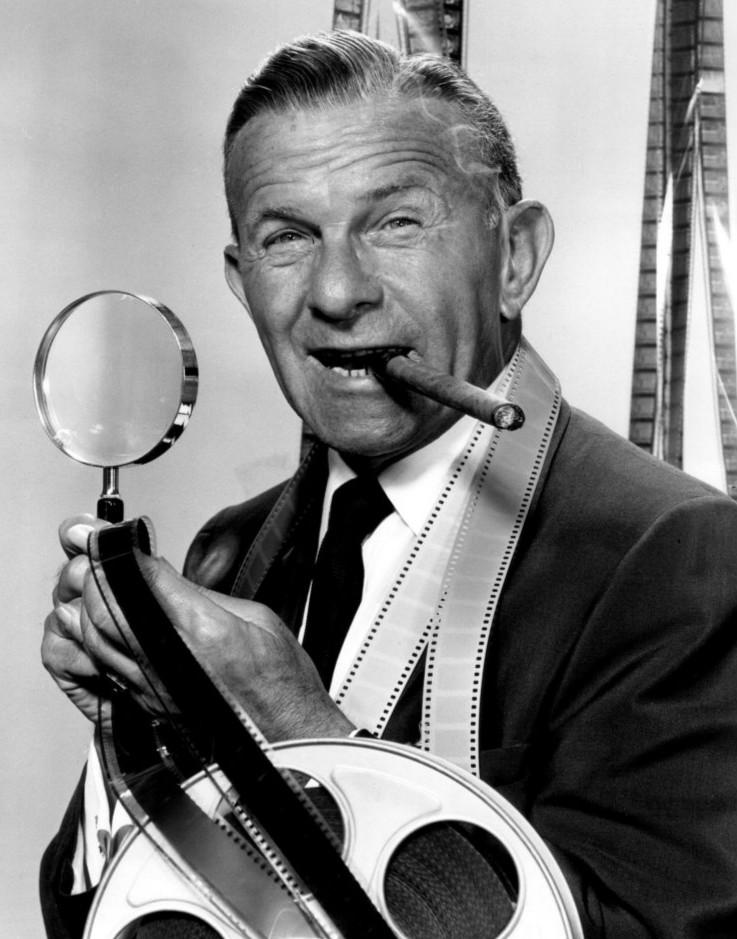
George Burns (born Nathan Birnbaum; January 20, 1896 – March 9, 1996) was an American comedian, actor, writer, and singer, and one of the few entertainers whose career successfully spanned vaudeville, radio, film, and television. His arched eyebrow and cigar-smoke punctuation became familiar trademarks. He and his wife Gracie Allen appeared on radio, television and film as the comedy duo Burns and Allen.
At age 79, Burns experienced a sudden career revival as an amiable, beloved, and unusually active comedy elder statesman in the 1975 film The Sunshine Boys, for which he won the Academy Award for Best Supporting Actor.
George Burns was born Nathan Birnbaum (Hebrew: נתן בירנבוים) on January 20, 1896, in New York City, the ninth of 12 children born to Hadassah "Dorah" (née Bluth; Hebrew: הדסה בלוט בירנבוים; 1857–1927) and Eliezer Birnbaum (Hebrew: אליעזר בירנבוים; 1855–1903), known as Louis or Lippa, Jewish immigrants who had come to the United States from Ropczyce, Galicia, now Poland. Burns was a member of the First Roumanian-American Congregation.
His father was a substitute cantor at the local synagogue but usually worked as a coat presser. During the influenza epidemic of 1903, Lippe Birnbaum contracted the flu and died at the age of 47. Burns, called Nattie or Nate at the time, went to work to help support the family, shining shoes, running errands and selling newspapers.
When he got a job as a syrup maker in a local candy shop at age seven, Burns was "discovered", as he later recalled:
We were all about the same age, six and seven, and when we were bored making syrup, we used to practice singing harmony in the basement. One day our letter carrier came down to the basement. His name was Lou Farley. Feingold was his real name, but he changed it to Farley. He wanted the whole world to sing harmony. He came down to the basement once to deliver a letter and heard the four of us kids singing harmony. He liked our style, so we sang a couple more songs for him. Then we looked up at the head of the stairs and saw three or four people listening to us and smiling. In fact, they threw down a couple of pennies. So I said to the kids I was working with: no more chocolate syrup. It's show business from now on.
We called ourselves the Pee-Wee Quartet. We started out singing on ferryboats, in saloons, in brothels, and on street corners. We'd put our hats down for donations. Sometimes the customers threw something in the hats. Sometimes they took something out of the hats. Sometimes they took the hats.
One of the Burns brothers' first regular gigs was operating the curtains at the vaudeville and nickelodeon theatre of Frank Seiden, father of Joseph Seiden, who later became a Yiddish film producer. Burns started smoking cigars when he was 14.
Burns was drafted into the United States Army when the U.S. entered World War I in 1917, but failed the physical examination because he was extremely nearsighted. To hide his Jewish heritage, he adopted the stage name by which he would be known for the rest of his life. He later claimed that he selected the name George Burns because there were two active star professional baseball players with the name (George H. Burns and George J. Burns, unrelated), each of whom accumulated more than 2,000 hits and held some major-league records. Burns also was reported to have taken "George" from his brother Izzy (who had first adopted the name because he hated his own) and "Burns" from the Burns Brothers Coal Company, from whose trucks he stole coal as a youth.
Hub AI
George Burns AI simulator
(@George Burns_simulator)
George Burns
George Burns (born Nathan Birnbaum; January 20, 1896 – March 9, 1996) was an American comedian, actor, writer, and singer, and one of the few entertainers whose career successfully spanned vaudeville, radio, film, and television. His arched eyebrow and cigar-smoke punctuation became familiar trademarks. He and his wife Gracie Allen appeared on radio, television and film as the comedy duo Burns and Allen.
At age 79, Burns experienced a sudden career revival as an amiable, beloved, and unusually active comedy elder statesman in the 1975 film The Sunshine Boys, for which he won the Academy Award for Best Supporting Actor.
George Burns was born Nathan Birnbaum (Hebrew: נתן בירנבוים) on January 20, 1896, in New York City, the ninth of 12 children born to Hadassah "Dorah" (née Bluth; Hebrew: הדסה בלוט בירנבוים; 1857–1927) and Eliezer Birnbaum (Hebrew: אליעזר בירנבוים; 1855–1903), known as Louis or Lippa, Jewish immigrants who had come to the United States from Ropczyce, Galicia, now Poland. Burns was a member of the First Roumanian-American Congregation.
His father was a substitute cantor at the local synagogue but usually worked as a coat presser. During the influenza epidemic of 1903, Lippe Birnbaum contracted the flu and died at the age of 47. Burns, called Nattie or Nate at the time, went to work to help support the family, shining shoes, running errands and selling newspapers.
When he got a job as a syrup maker in a local candy shop at age seven, Burns was "discovered", as he later recalled:
We were all about the same age, six and seven, and when we were bored making syrup, we used to practice singing harmony in the basement. One day our letter carrier came down to the basement. His name was Lou Farley. Feingold was his real name, but he changed it to Farley. He wanted the whole world to sing harmony. He came down to the basement once to deliver a letter and heard the four of us kids singing harmony. He liked our style, so we sang a couple more songs for him. Then we looked up at the head of the stairs and saw three or four people listening to us and smiling. In fact, they threw down a couple of pennies. So I said to the kids I was working with: no more chocolate syrup. It's show business from now on.
We called ourselves the Pee-Wee Quartet. We started out singing on ferryboats, in saloons, in brothels, and on street corners. We'd put our hats down for donations. Sometimes the customers threw something in the hats. Sometimes they took something out of the hats. Sometimes they took the hats.
One of the Burns brothers' first regular gigs was operating the curtains at the vaudeville and nickelodeon theatre of Frank Seiden, father of Joseph Seiden, who later became a Yiddish film producer. Burns started smoking cigars when he was 14.
Burns was drafted into the United States Army when the U.S. entered World War I in 1917, but failed the physical examination because he was extremely nearsighted. To hide his Jewish heritage, he adopted the stage name by which he would be known for the rest of his life. He later claimed that he selected the name George Burns because there were two active star professional baseball players with the name (George H. Burns and George J. Burns, unrelated), each of whom accumulated more than 2,000 hits and held some major-league records. Burns also was reported to have taken "George" from his brother Izzy (who had first adopted the name because he hated his own) and "Burns" from the Burns Brothers Coal Company, from whose trucks he stole coal as a youth.