Recent from talks
Nothing was collected or created yet.
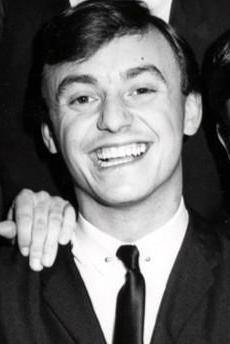
Gerry Marsden
View on Wikipedia
Key Information
Gerard Marsden MBE (24 September 1942 – 3 January 2021) was an English singer-songwriter, musician and television personality, best known for being leader of the Merseybeat band Gerry and the Pacemakers. He was the younger brother of fellow band member Freddie Marsden.
Gerry and the Pacemakers had the distinction of being the first act to have their first three recordings go to number 1 in the UK charts.[1] Although they never had a number 1 in the United States, they were the second-most successful group from Liverpool, after the Beatles, to have hits on the United States Billboard pop charts. Their 1965 musical film Ferry Cross the Mersey was co-written by Tony Warren.
Early life
[edit]Marsden was born at 8 Menzies Street, Toxteth, Liverpool,[2] to Frederick Marsden and Mary McAlindin. His interest in music began at an early age. He remembered standing on top of an air-raid shelter singing "Ragtime Cowboy Joe", and getting a great reception from onlookers.[3]
Career
[edit]Gerry and the Pacemakers formed in 1959.[4] They were the second group signed by Brian Epstein, the first being the Beatles, and remained among his favourite artists.[3] Their first single was 1963's "How Do You Do It?", recommended by George Martin after it was initially given to the Beatles. This was the first number one hit for the Pacemakers. It was recorded at Abbey Road Studios and was released on EMI's Columbia label.[5]
The group's second number one was "I Like It", followed by "You'll Never Walk Alone", both released later in 1963. The group's other singles included "It's Gonna Be Alright", "I'm the One", "Don't Let the Sun Catch You Crying", and "Ferry Cross the Mersey", all released in 1964.[5] A musical film Ferry Cross the Mersey, considered to be their version of the Beatles' A Hard Day's Night, was co-written by Coronation Street creator and writer Tony Warren, and was released in 1965.[6]
The Pacemakers disbanded in October 1966.[4] After leaving the group, Marsden maintained a low-key career on television,[5] including a regular slot on children's television in The Sooty Show.[7] He also starred in the West End musical Charlie Girl alongside Derek Nimmo and Anna Neagle, replacing another pop singer, Joe Brown. A new song, "Liverpool", was added to the score to tie in with Marsden's Liverpool accent.[8][9]
In 1983, Marsden and the Pacemakers' "Ferry Cross the Mersey" was covered by another band from Liverpool, Frankie Goes to Hollywood, in a new arrangement as the B-side of their song "Relax"; at least partly due to this, Marsden began receiving significant royalties (with his total yearly publishing royalties at the time being equivalent to $250,000 USD).[10] By that time, Marsden also owned a radio station in Liverpool and owned real estate in England and Spain.[10]
Marsden returned to #1 in the charts twice during the 1980s with re-recordings of two of his old hits, with all profits going to charity. In 1985 after the Bradford Football Club stadium tragedy in which 56 were killed,[11] he formed a group called the Crowd, which included other musicians, singers, and radio disc jockeys, to produce a new version of "You'll Never Walk Alone".[6] On 18 April 1989, three days after the Hillsborough disaster in which 97 Liverpool F.C. fans died, he joined forces with Paul McCartney, the Christians, Holly Johnson, and his production trio Stock, Aitken & Waterman on a new version of "Ferry Cross the Mersey".[6]
In 1993 Marsden published his autobiography, I'll Never Walk Alone, co-written with former Melody Maker editor Ray Coleman.[12][13] In 1990, he recorded the song "Red White and Blue", with The England Supporters Club,[14][15] that also appears on the Euro 96 album England's Glory.[16][17]

In 2012, Marsden and Paul McCartney were among another group of musicians that recorded a cover of "He Ain't Heavy, He's My Brother" for charity; the single was credited to the Justice Collective.[18]
In 2020, during the COVID-19 pandemic, he released a version of "You'll Never Walk Alone" in tribute to the National Health Service.[19]
Personal life and death
[edit]Marsden had an older brother, Freddie, who co-founded and played drums in Gerry and the Pacemakers and who died in 2006.[20]
In 1965, Marsden married Pauline Behan, and they had two daughters, Yvette and Victoria.[6] Yvette introduced her father to Frankie Goes To Hollywood's cover of "Ferry Cross the Mersey" after hearing it being played in a discotheque.[10]
In September 2003, Marsden had triple bypass heart surgery at Broad Green Hospital in Liverpool.[21] He had a second heart operation in 2016, and announced his retirement in November 2018, although he appeared with Take That at their concert at Anfield in June 2019.[6]
Marsden died on 3 January 2021 at Arrowe Park Hospital in Merseyside, after being diagnosed with a blood infection in his heart. He was 78 years old.[22][23]
Awards and honours
[edit]In 2003, for his services supporting the victims of the Hillsborough disaster, Marsden was made Member of the Order of the British Empire (MBE).[6][24]
In 2009, he was awarded the Freedom of the City by Liverpool.[6][25][26]
In 2010, Marsden was awarded an Honorary Fellowship from Liverpool John Moores University.[27]
Solo discography
[edit]Albums
[edit]- A Tribute to Lennon & McCartney (Dominion, 1995)[28]
- One 2 One (Pulse Records, 1999)[29]
- Much Missed Man: Tribute to John Lennon (Ozit, 2001)[28]
- My Home Town (Angel Air, 2021)
Singles
[edit]- Please Let Them Be / I'm Not Blue (CBS, March 1967)[30]
- Gilbert Green / What Makes Me Love You (CBS, August 1967)[30]
- Liverpool / Charlie Girl (released as Gerry Marsden & Derek Nimmo, CBS, April 1968)[30]
- In the Year of April / Every Day (NEMS, November 1968)[30]
- Every Little Minute / In Days of Old (NEMS, May 1969)[30]
- I've Got My Ukulele / What a Day (Decca, May 1971)[30]
- Amo Credo / Come Break Bread (Phoenix UK, April 1972)[30]
- They Don't Make Days Like That Any More / Can't You Hear the Song? (DJM, August 1974)[30]
- Your Song / Days I Spent with You (DJM, April 1975)[30]
- My Home Town / Lovely Lady (DJM, September 1976)[30]
- You'll Never Walk Alone / Messages (with the Crowd, (Spartan Records, 1985)[6]
- Ferry Cross the Mersey / Abide with Me (with Paul McCartney, the Christians, Holly Johnson and Stock Aitken Waterman, PWE, 1989)[31]
- Red, White and Blue / Red, White and Blue (Backing Track) (Gerry Marsden and the England Supporters Club, Westmoor Music, 1990)[30]
- As Time Stood Still (The Sun: Gulf Aid, GULF, 1991)[30]
- He Ain't Heavy, He's My Brother (as part of the Justice Collective, Metropolis, 2012)[32]
References
[edit]- ^ Paul Gambaccini; Jo Rice (July 1991). British Hit Singles: Every Single Hit Since 1952. Random House Incorporated. ISBN 978-0-8230-7572-0.
- ^ "Gerry Marsden – The Florrie Archive". Retrieved 3 January 2021.
- ^ a b "Gerry Marsden MBE". Liverpool John Moores University. Archived from the original on 28 October 2021. Retrieved 3 January 2021.
- ^ a b "Biography by Richie Unterberger". Allmusic.com. Retrieved 4 March 2009.
- ^ a b c "Gerry & the Pacemakers". AllMusic. Retrieved 3 January 2021.
- ^ a b c d e f g h Sweeting, Adam (3 January 2021). "Gerry Marsden obituary". The Guardian. ISSN 0261-3077. Retrieved 3 January 2021.
- ^ Dafydd Rees; Luke Crampton (1999). Rock Stars Encyclopedia. DK Pub. p. 409. ISBN 978-0-7894-4613-8.
- ^ Kurt Gänzl; Andrew Lamb (1989). Gänzl's Book of the Musical Theatre. Schirmer Books. p. 207. ISBN 978-0-02-871941-2.
- ^ "Charlie Girl". East Surrey Operatic Society. Archived from the original on 7 November 2007. Retrieved 3 January 2021.
- ^ a b c Fricke, David (11 September 1986). "Gerry and the Pacemakers: Where Are They Now?". RollingStone.com. Rolling Stone. Retrieved 14 January 2024.
- ^ Scrivener, Peter (11 May 2005). "Bradford remembers fire disaster". BBC. Retrieved 3 January 2021.
- ^ Leigh, Spencer (3 January 2021). "Remembering Gerry Marsden, the musician who sung Liverpool FC's 'You'll Never Walk Alone'". The Independent. Retrieved 3 January 2021.
- ^ "I'll never walk alone. Review". Kirkus. 20 May 2010.
- ^ "Gerry Marsden & The England Supporters Club - Red, White & Blue - 7" Record". Atlas Records. Archived from the original on 8 January 2021. Retrieved 4 January 2021.
- ^ "Gerry Marsden And The England Supporters Club Discography - UK". 45cat. Retrieved 4 January 2021.
- ^ "England's Glory - England Squad and Supporters 1966-1996". England Football Online. Retrieved 4 January 2021.
- ^ England's Glory: England's Squads & Supporters 1966-Euro '96 - Various Artists | Songs, Reviews, Credits | AllMusic, retrieved 4 January 2021
- ^ "Paul McCartney guests on Hillsborough charity single with Robbie Williams". The Guardian. 23 November 2012.
- ^ "Football: Liverpool salute Marsden after You'll Never Walk Alone singer dies aged 78". The Straits Times. 4 January 2021. Retrieved 4 January 2021.
- ^ "Freddie Marsden". AllMusic. Retrieved 4 January 2021.
- ^ "Gerry Marsden Has Triple Heart Bypass Op". NME. 15 September 2003. Retrieved 3 January 2021.
- ^ "Musician Gerry Marsden dies aged 78". The Independent. 3 January 2021.
- ^ Robertson, Chris (3 January 2021). "Gerry And The Pacemakers star Gerry Marsden who sang You'll Never Walk Alone dies aged 78". Sky News. Retrieved 3 January 2021.
- ^ "Liverpool FC anthem singer Gerry Marsden dies aged 78". BBC News. 3 January 2021. Retrieved 3 January 2021.
- ^ "Gerry Marsden to receive Freedom of Liverpool". The Telegraph. 20 January 2009. Retrieved 4 January 2021.
- ^ Mitchell McCluskey (3 January 2021). "Gerry Marsden, lead singer of Gerry and the Pacemakers, dies at 78". CNN. Retrieved 4 January 2021.
- ^ "Honorary Fellows Index". Liverpool John Moores University. Retrieved 4 January 2021.[dead link]
- ^ a b "Gerry Marsden". AllMusic. Retrieved 3 January 2021.
- ^ "Gerry Marsden - One 2 One". Discogs. January 1999. Retrieved 5 January 2021.
- ^ a b c d e f g h i j k l "Gerry Marsden Discography - UK - 45cat". www.45cat.com. Retrieved 4 January 2021.
- ^ "ferry cross the mersey | full Official Chart History | Official Charts Company". www.officialcharts.com.
- ^ "Paul McCartney guests on Hillsborough charity single with Robbie Williams". The Guardian. 23 November 2012.
External links
[edit]- Official website Archived 4 November 2016 at the Wayback Machine
- Gerry Marsden discography at Discogs
- Gerry Marsden at IMDb
- Portraits of Gerry Marsden at the National Portrait Gallery, London
Gerry Marsden
View on GrokipediaEarly Life
Childhood and Family Background
Gerry Marsden was born Gerard Marsden on 24 September 1942 at 8 Menzies Street in the Toxteth district of Liverpool, a working-class area characterized by the city's post-World War II recovery from heavy bombing and economic challenges in its port economy.[6][2] His parents, Frederick Marsden, a postman, and Mary Marsden (née McAlindin), raised him and his older brother Freddie in modest circumstances amid the grit of Merseyside's industrial neighborhoods, where self-reliance was fostered by limited resources and community ties.[6][7] The Marsden family navigated the austere conditions of wartime rationing's aftermath and Liverpool's high unemployment rates in the 1940s and 1950s, with Toxteth and adjacent Dingle exemplifying the resilience required in dockside communities dependent on volatile shipping trade.[2] Freddie, born two years earlier in 1940, shared in this upbringing, contributing to a sibling dynamic marked by close proximity in a tight-knit household. Marsden attended Our Lady of Mount Carmel School in the Dingle area, where the local Catholic education system emphasized discipline amid the broader socio-economic pressures of rebuilding a blitzed city.[2][4] The family's experiences in this environment instilled practical attitudes, reflecting the era's emphasis on perseverance in Liverpool's working-class ethos rather than formal opportunities.Initial Musical Influences and Band Formation
Marsden developed an early interest in music amid the mid-1950s skiffle boom in Britain, particularly after hearing Lonnie Donegan's recordings around 1956, which prompted him to form his initial skiffle group.[5] This genre, blending folk, blues, jazz, and country elements often played on improvised instruments, swept through working-class youth via radio broadcasts and local club scenes in Liverpool.[8] He supplemented skiffle influences with American rock 'n' roll, notably Elvis Presley's style, transitioning from ukulele to guitar by age 14 to emulate these sounds heard on radio and at informal gatherings.[9][8] At 14 in 1956, Marsden assembled his first band in Liverpool as a skiffle outfit, initially operating under names like the Mars Bars before evolving its lineup and sound.[10] By 1959, the group solidified as Gerry and the Pacemakers, incorporating Marsden's brother Freddie on drums alongside other local musicians, shifting toward a beat-oriented rock style while retaining skiffle roots.[10] The name change from Mars Bars stemmed from potential conflicts with the chocolate manufacturer's trademark, reflecting pragmatic adjustments in the amateur scene.[11] The Pacemakers honed their repertoire through unpaid and low-stakes amateur performances in Liverpool's underground venues, including early appearances at the Cavern Club, where they covered skiffle standards and emerging rock numbers to attract small crowds of peers and workers.[12] These grassroots gigs, reliant on word-of-mouth in the tight-knit Merseyside music community rather than formal management, fostered incremental audience loyalty via repeated sets of high-energy covers without recording contracts or external promotion.[12] This local apprenticeship, typical of the pre-commercial Liverpool beat groups, emphasized endurance in smoky cellars over polished professionalism.Musical Career
Rise with Gerry and the Pacemakers
Gerry and the Pacemakers secured their breakthrough in mid-1962 when Brian Epstein, fresh from managing the Beatles, signed them as his second act, recognizing their raw energy from Liverpool's club scene.[13] This management deal provided professional grooming, including refined stage presence and polished performances, which Epstein applied systematically to his roster amid the rising Merseybeat wave.[14] Epstein's influence extended to negotiating an EMI recording contract, placing the band on the Columbia label and under producer George Martin, who had recently helmed the Beatles' sessions.[15] Martin auditioned them and opted for straightforward, efficient recording techniques, prioritizing commercial viability over experimental artistry in their initial output. The debut single, "How Do You Do It?", originally offered to the Beatles but rejected, was recorded swiftly and released in March 1963, ascending to number one on the UK Singles Chart by 11 April 1963 for three weeks.[16][17] This UK success propelled the band into the British Invasion's transatlantic momentum following the Beatles' 1964 breakthrough, with early US tours commencing that year.[14] They debuted on American television via The Ed Sullivan Show on 3 May 1964, performing amid the era's Beatlemania-fueled frenzy for UK acts, which facilitated broader market penetration through coordinated promotional efforts.[18] Epstein's strategy of bundling acts for joint tours and media exposure underscored the causal role of centralized management in navigating industry barriers during this period.[13]Key Hits and Commercial Peak
Gerry and the Pacemakers attained their commercial peak from late 1963 to early 1965, highlighted by their first three singles consecutively reaching number one on the UK Singles Chart, a feat achieved by no other act at the time.[19] This rapid succession demonstrated strong initial market reception, with each release capitalizing on the Merseybeat wave.[19] The debut single, "How Do You Do It", entered the UK chart on 16 May 1963 before ascending to number one, where it held the top position for three weeks starting in October.[20] [19] Followed by "You'll Never Walk Alone", released in November 1963, which also topped the chart for four weeks.[19] The third, "I Like It", issued in April 1964, secured number one status for four weeks from late May.[21][19]| Single | Release Date | UK Peak Position |
|---|---|---|
| How Do You Do It | 4 October 1963 | 1[19] |
| You'll Never Walk Alone | 29 November 1963 | 1[19] |
| I Like It | 27 April 1964 | 1[21][19] |
Post-Peak Challenges and Band Dynamics
Following the release of their 1965 single "It's Gonna Be All Right," which peaked at number 24 on the UK charts, Gerry and the Pacemakers achieved no further Top 10 hits in the UK, marking the end of their commercial dominance amid shifting musical preferences away from Merseybeat toward psychedelic and more experimental rock styles.[19][18] The group's inability to evolve with these trends, coupled with the broader fade of the British Invasion's initial wave, contributed to their declining relevance, as audiences increasingly favored guitar-driven psychedelia over the Pacemakers' upbeat, orchestral pop sound.[23] In October 1966, the original lineup disbanded, with drummer Freddie Marsden—Gerry's brother—retiring from professional music to pursue non-entertainment work, later taking a position with British Telecom; bassist Les Chadwick relocated to Australia, and pianist Les Maguire joined the navy, reflecting the abrupt transition to ordinary employment for most members as touring and recording opportunities dried up.[24][25] This dissolution stemmed from financial pressures and market rejection rather than publicized internal conflicts, though the band's wholesome image and reluctance to innovate limited their adaptability to the post-Beatlemania landscape.[10] Gerry Marsden reformed the Pacemakers in 1972 with a new lineup, excluding the original members, to capitalize on growing nostalgia for 1960s music through cabaret and touring circuits, including international dates in the 1970s; these efforts sustained his performing career sporadically but yielded no new chart success and relied on rehashing past hits like "Ferry Cross the Mersey" for audiences seeking revival experiences.[1][26] The revolving-door personnel in these reunions underscored persistent challenges in maintaining band cohesion amid inconsistent demand, as Marsden balanced such tours with solo television work until health issues curtailed activities in later decades.[27]Solo Work and Media Involvement
Solo Recordings
Following the dissolution of the original Gerry and the Pacemakers lineup in 1966, Marsden launched a solo recording career, issuing a series of singles primarily through independent and major labels, though none achieved notable commercial success or charted in the UK.[28] His early solo efforts, such as "Please Let Them Be" released in March 1967 on CBS, and "Gilbert Green" in August 1967 on the same label, reflected a continuation of pop-oriented material but failed to recapture the band's earlier momentum amid shifting musical tastes away from Merseybeat.[28]| Title (A-Side / B-Side) | Label | Release Date |
|---|---|---|
| Please Let Them Be / I'm Not Blue | CBS 2784 | March 1967 |
| Gilbert Green / What Makes Me Love You | CBS 2946 | August 1967 |
| Liverpool / Charlie Girl (with Derek Nimmo) | CBS 3575 | April 1968 |
| In The Year Of April / Every Day | NEMS 56-3831 | November 1968 |
| Every Little Minute / In Days Of Old | NEMS 56-4229 | May 1969 |
| I've Got My Ukelele / What A Day | Decca F 13172 | May 1971 |
| Amo Credo / Come Break Bread | Phoenix NIX 129 | April 1972 |
| Your Song / Days I Spent With You | DJM DJS 362 | April 1975 |
| My Home Town / Lovely Lady | DJM DJS 10708 | September 1976 |
| The Rose / You Are My Everything | PACE 100 | September 1988 |
Television and Public Appearances
Gerry Marsden and his band made frequent television appearances in the early 1960s to promote their hits, including multiple spots on the BBC's Top of the Pops. On 22 January 1964, they mimed a performance of "Don't Let the Sun Catch You Crying" during the show's fourth episode.[29] They also appeared on episode 1.17 later that year, hosted by Jimmy Savile.[30] Another notable BBC performance came on 21 January 1965, featuring "Ferry Cross the Mersey."[31] These slots helped maintain the band's visibility amid the Merseybeat boom, adapting live energy to mimed formats typical of the era.[32] Internationally, Marsden appeared on The Ed Sullivan Show on 3 May 1964, performing alongside other British acts.[33] In the UK, he featured on variety programs like Beat City in 1964 and Hippodrome on 7 July 1966, showcasing versatility in entertainment beyond recordings.[33] Post-band, Marsden sustained public profile through children's television, securing a regular slot on The Sooty Show starting around 1970, with appearances spanning at least 41 episodes through 1976.[34] He collaborated with puppeteer Matthew Corbett in comedic segments, including the spin-off Matt and Gerry Ltd., which aired 15-minute displays blending music and sketches.[35] These roles highlighted his adaptability to family-oriented formats, appearing in episodes like season 14, episode 13.[36] Later variety cameos included 3-2-1 in 1978 and Wogan in 1982, often evoking 1960s nostalgia.[37] Publicly, Marsden performed impromptu renditions of "Ferry Cross the Mersey" aboard the actual Mersey ferry into his later years, reinforcing his Liverpool ties and drawing crowds.[6] He also headlined charity events, such as performances supporting Hillsborough disaster victims in 1989, where he joined figures like Paul McCartney for fundraising efforts linked to his anthem "You'll Never Walk Alone."[2] These engagements underscored his role as a enduring local ambassador, blending performance with communal causes.[38]Personal Life
Marriage and Family
Marsden married Pauline Behan on 11 October 1965 at St. Mary's Church in Woolton, Liverpool.[39][40] The couple remained wed until Marsden's death on 3 January 2021, comprising a marriage of over 55 years with no reported separations or scandals.[40] They had two daughters, Yvette and Victoria.[40][41] The family resided in Merseyside, where they maintained a private and enduring domestic life.[42] In 2002, daughter Victoria sustained serious injuries in a hit-and-run accident in Miami, Florida, but recovered.[40]Philanthropic Efforts
Marsden played a pivotal role in the 1989 revival of "Ferry Cross the Mersey" as a charity single to aid victims and families affected by the Hillsborough disaster, collaborating with artists including Paul McCartney, Holly Johnson, and The Christians; the track reached number one in the UK, contributing to relief funds for the tragedy that claimed 96 lives.[4][43] He further supported Hillsborough initiatives through performances, such as leading "You'll Never Walk Alone" at memorial services, and participated in the 2012 charity recording of "He Ain't Heavy, He's My Brother" featuring multiple Liverpool-associated artists to benefit affected families.[44][45] These efforts were part of broader fundraising that reportedly helped raise over £35 million for various causes over his career, including disaster relief.[46] As patron of Claire House Children's Hospice on the Wirral, Marsden provided ongoing support to the facility serving terminally ill children from Merseyside and Cheshire, including visits and promotional endorsements to bolster its operations.[4][47] He also backed local cancer charities, such as the Roy Castle Lung Cancer Foundation, through personal advocacy and events.[48] In 1995, Marsden organized a self-initiated concert in Liverpool to assist children impacted by the Chernobyl nuclear disaster, reflecting direct involvement in international relief tied to his local roots.[49]Health, Death, and Posthumous Recognition
Later Health Struggles
In 2003, at age 60, Marsden underwent triple bypass heart surgery on September 15 in Liverpool, following admission due to cardiac issues.[50][51] He recovered sufficiently to resume touring and public appearances shortly thereafter.[50] Marsden faced further cardiac challenges in 2016, requiring a second major heart operation that included replacement of a heart valve sourced from porcine tissue.[9][52] These procedures, combined with ongoing management of heart conditions, contributed to reduced performing stamina in his later years, though he maintained select engagements, including a surprise appearance in 2019.[2] By July 2020, Marsden publicly referenced his history of two heart operations, including the prior triple bypass, amid discussions of his enduring career.[53] A pacemaker was eventually fitted to address persistent cardiac irregularities, reflecting cumulative strain from decades of health management.[54] These issues were handled largely privately, with Marsden prioritizing recovery over detailed public disclosure beyond confirmed medical events.[55]Death and Memorials
Gerry Marsden died on 3 January 2021 at Arrowe Park Hospital in Upton, Merseyside, England, at the age of 78, from a short illness involving a blood infection that had spread to his heart.[56][57] His family confirmed the death in a statement, noting it was unrelated to COVID-19 and requesting privacy during their time of grief.[58] Due to COVID-19 restrictions, Marsden's funeral on 16 January 2021 at St Mary's Church in Crosby, near the River Mersey, was limited to close family and friends.[59] A subsequent public memorial service occurred on 18 March 2022 at Liverpool Cathedral, drawing hundreds of attendees including music contemporaries such as Sir Cliff Richard and Gloria Estefan, who delivered tributes highlighting Marsden's contributions to Merseybeat.[60][61] In April 2022, a dedicated memorial plaque inscribed with "You'll Never Walk Alone" was unveiled at Anfield Stadium overlooking the Kop stand, arranged by Liverpool FC to honor Marsden's long association with the club.[62] Family statements following the events emphasized preserving Marsden's legacy through privacy and selective public remembrances, with daughter Yvette Marsden noting the emotional weight of the delayed public farewell amid pandemic constraints.[57]Awards and Honors
Official Recognitions
Gerry Marsden was appointed Member of the Order of the British Empire (MBE) in the 2003 Queen's Birthday Honours for services to charity, including fundraising support for victims of the 1989 Hillsborough disaster.[48][63] In April 2009, he received the Freedom of the City of Liverpool, the city's highest civic honor, in recognition of his lifelong contributions to its cultural and charitable life; the presentation occurred aboard the Royal Iris Mersey ferry.[64][47] Liverpool John Moores University awarded Marsden an Honorary Fellowship in 2010 for his outstanding contributions to the performing arts.[4] In 1991, the British Academy of Songwriters, Composers, and Authors (now the Ivors Academy) presented him with its Gold Badge Award, acknowledging his exceptional impact on British music over several decades.[65]Contributions to Liverpool Culture
Gerry Marsden advanced Liverpool's cultural fabric by channeling the city's distinctive Scouse ethos—marked by humor, tenacity, and communal solidarity—into accessible Merseybeat songs that resonated deeply with locals. His composition "Ferry Cross the Mersey," released in 1964, functioned as a direct tribute to Liverpool's landscape and inhabitants, with lyrics evoking the welcoming demeanor of its people and the enduring allure of the River Mersey crossings, thereby cultivating a sense of hometown allegiance amid the band's international success.[66][67] Marsden's embodiment of this regional spirit earned him targeted local distinctions, such as the Freedom of the Ferries in 1985, which acknowledged his longstanding affinity with Liverpool's ferry system as a cultural emblem.[68] This honor permitted him ceremonial privileges on the vessels, mirroring his music's integration of maritime motifs into everyday Scouse narratives. The pinnacle of community-endorsed recognition came with the Freedom of the City of Liverpool, conferred on April 21, 2009, aboard the Royal Iris ferry by Lord Mayor Steve Rotherham, a locale chosen to symbolize Marsden's contributions to civic morale and identity.[64][69][70] These accolades, rooted in grassroots appreciation rather than institutional prestige, underscored Marsden's efficacy in sustaining Liverpool's cultural self-image through event appearances and anthemic output that prioritized empirical ties to the port city's heritage over abstracted acclaim.Legacy
Impact on Merseybeat and British Invasion
Gerry and the Pacemakers contributed to the Merseybeat genre as a prominent Liverpool-based act that followed the Beatles' breakthrough, achieving commercial success through structured management and production. Signed by Brian Epstein as his second group after the Beatles in late 1962, they released their debut single "How Do You Do It" in March 1963, which topped the UK charts, marking them as the first British act to reach number one with each of their initial three singles—"I Like It" in May 1963 and "Ferry Cross the Mersey" in April 1964.[71][72] This rapid ascent, facilitated by Epstein's promotional efforts including the Mersey Beat Showcase tour, helped solidify Merseybeat's national dominance in 1963, with four acts from the scene—including the Pacemakers—reaching the UK summit.[73] In the British Invasion, the Pacemakers extended Merseybeat's influence to the United States, registering five top-20 Billboard Hot 100 hits between 1964 and 1965, such as "Don't Let the Sun Catch You Crying" peaking at number four in June 1964 and "Ferry Cross the Mersey" at number six in May 1964.[74] Their appearance on The Ed Sullivan Show on May 3, 1964, amplified visibility amid the Invasion's influx of UK acts, contributing to the genre's transatlantic export alongside peers like the Searchers, whose "Needles and Pins" narrowly outperformed "Ferry Cross the Mersey" by one chart position in the US.[18][1] Relative to the Searchers' consistent mid-decade US traction, the Pacemakers' footprint reflected solid but secondary standing within the Invasion's hierarchy, with sales driven by chart momentum rather than outsized innovation. Their achievements stemmed primarily from external enablers rather than unique artistic breakthroughs: Epstein's deal-making secured EMI recording contracts and US distribution, while producer George Martin's oversight—from selecting "How Do You Do It" in January 1963 to refining their upbeat, harmony-driven sound—provided the polished appeal that resonated broadly.[13][72] This causal chain underscores how Merseybeat's proliferation, including the Pacemakers' role, relied on Epstein's entrepreneurial coordination and Martin's studio expertise to translate local energy into global hits, countering narratives of spontaneous genius by highlighting systemic professionalization post-Beatles.[73]Enduring Association with Liverpool FC
Gerry Marsden, lead singer of Gerry and the Pacemakers, recorded a cover of "You'll Never Walk Alone" in 1963, which reached number one on the UK Singles Chart.[75] [76] This version, rooted in the Merseybeat sound, resonated with Liverpool Football Club supporters, who began singing it regularly at Anfield Stadium matches shortly after its release, establishing it as the club's unofficial anthem by the late 1960s.[77] [75] The song's association endured through revivals tied to club-related causes, including a 1989 charity recording by supergroup The Crowd—featuring Marsden alongside Paul McCartney and others—released in response to the Hillsborough disaster, which topped the UK charts for two weeks and generated significant funds for victims' families. Fans continued to perform Marsden's 1963 version at Anfield, with the anthem played over the stadium speakers before kickoffs and during key moments, reinforcing its role in matchday rituals.[78] [79] Following Marsden's death on January 3, 2021, from a heart-related illness, Liverpool FC honored him with tributes at Anfield, including a flag displayed on the Kop stand during a January 17, 2021, match and the installation of a permanent memorial plaque on the stadium's eternal wall, recognizing his contributions to the club's cultural identity.[78] [80] [81] These gestures underscored the song's ongoing popularity, as supporters sustained the tradition of communal singing, independent of the team's results.[44]Discography
Albums with Gerry and the Pacemakers
Gerry and the Pacemakers' debut studio album, How Do You Like It?, was released in October 1963 on Columbia Records in the United Kingdom.[82] The album peaked at number 2 on the UK Albums Chart and spent 28 weeks in the top ranks, reflecting the band's early commercial momentum driven by their Merseybeat sound.[19] In 1965, the group issued Ferry Cross the Mersey, a soundtrack album accompanying their feature film of the same title, released on Columbia.[83] This release capitalized on the band's hit title track and film promotion, though it achieved lower chart performance compared to their debut, indicative of waning album sales amid shifting musical trends.[19] Subsequent studio efforts, such as Girl on a Swing in 1966, continued the pattern of declining commercial viability, with the band releasing only two albums that entered the UK Top 40 overall.[19] Later compilations and live recordings, including reissues in the 1970s and beyond, sustained interest among fans but did not replicate the original era's chart success.[84]Singles with Gerry and the Pacemakers
Gerry and the Pacemakers' early singles dominated the UK charts, achieving three consecutive number-one hits in 1963, a feat that underscored their initial commercial dominance within the Merseybeat scene. Their debut, "How Do You Do It" backed with "Away From You," released on 29 March 1963, topped the UK Singles Chart for three weeks and spent 18 weeks in the Top 75, while reaching number nine on the US Billboard Hot 100.[19][85] "I Like It," released 20 May 1963 with B-side "Fever," held the UK number-one position for four weeks and 15 weeks total, peaking at number 17 in the US.[19][85] The follow-up, "You'll Never Walk Alone" with "You Can't Fool Me," issued 1 November 1963, also claimed four weeks at UK number one across 22 weeks, though it only reached number 48 in the US.[19][85] Subsequent releases demonstrated sustained but diminishing UK success alongside stronger US penetration for select tracks. "Don't Let the Sun Catch You Crying," released April 1964, peaked at number six in the UK for 11 weeks and number four on the US Billboard Hot 100 for 12 weeks.[19] "Ferry Cross the Mersey," from late 1964, reached number eight in the UK over 13 weeks and number six in the US, highlighting the band's international appeal tied to Liverpool's cultural imagery.[19][86] "I'm the One" achieved a UK peak of number two in 1964 but only number 82 in the US.[19] Later singles evidenced a commercial decline, with entries like "It's Gonna Be All Right" (1964, UK #24), "I'll Be There" (1965, UK #15), and "La La La" (1968) failing to replicate early peaks, as the band navigated shifting musical trends beyond the British Invasion's zenith.[19]| Single | UK Peak (Weeks at Peak) | US Billboard Peak |
|---|---|---|
| How Do You Do It | 1 (3) | 9 |
| I Like It | 1 (4) | 17 |
| You'll Never Walk Alone | 1 (4) | 48 |
| I'm the One | 2 | 82 |
| Don't Let the Sun Catch You Crying | 6 | 4 |
| Ferry Cross the Mersey | 8 | 6 |
Solo Albums
Marsden's solo album output was limited, primarily consisting of tribute and nostalgic recordings rather than original studio efforts. His most notable solo release during his lifetime was A Tribute to Lennon & McCartney in 1995, a collection of 18 cover versions of songs written by John Lennon and Paul McCartney, including tracks like "Yellow Submarine" and "Pipes of Peace."[87] [88] Issued on CD by K-tel Records, the album emphasized Marsden's vocal style on familiar Beatles-era material but achieved no significant commercial chart success or sales data in available records.[89] Posthumously, following Marsden's death on January 3, 2021, My Home Town was released on June 4, 2021, by Angel Air Records as a CD celebrating his Liverpool heritage and musical career.[90] The expanded edition features 10 tracks blending originals such as the title song "My Home Town" with covers like "Here I Go Again" (his earlier hit reinterpreted solo) and nostalgic pieces evoking Merseybeat roots, such as "Remember the Days of Rock 'n' Roll."[91] [92] Like the 1995 tribute, it received modest attention without notable sales figures or widespread critical acclaim, aligning with Marsden's shift toward personal, low-key solo projects in later decades.[93]Solo Singles
Following the breakup of Gerry and the Pacemakers in 1966, Marsden pursued a solo recording career, issuing a series of singles primarily through CBS, NEMS, Decca, DJM, and other labels between 1967 and 1976. These releases, which included original material and covers, failed to register on the UK Singles Chart, reflecting limited commercial appeal amid shifting musical tastes away from Merseybeat.[28] Notable early efforts encompassed "Please Let Them Be" backed with "I'm Not Blue" (CBS 2784, released March 1967), "Gilbert Green" / "What Makes Me Love You" (CBS 2946, August 1967), and a duet "Liverpool" / "Charlie Girl" with Derek Nimmo (CBS 3575, April 1968). Later 1970s singles such as "Your Song" / "Days I Spent With You" (DJM DJS 362, April 1975) and "My Home Town" / "Lovely Lady" (DJM DJS 10708, September 1976) similarly underperformed, with no documented chart entries.[28]| Title | B-side | Label (Catalogue) | Release Date |
|---|---|---|---|
| Please Let Them Be | I'm Not Blue | CBS 2784 | March 1967 |
| Gilbert Green | What Makes Me Love You | CBS 2946 | August 1967 |
| Liverpool (with Derek Nimmo) | Charlie Girl | CBS 3575 | April 1968 |
| Your Song | Days I Spent With You | DJM DJS 362 | April 1975 |
| My Home Town | Lovely Lady | DJM DJS 10708 | September 1976 |