
Recent from talks
Giorgio Parisi
Knowledge base stats:
Talk channels stats:
Members stats:
Giorgio Parisi
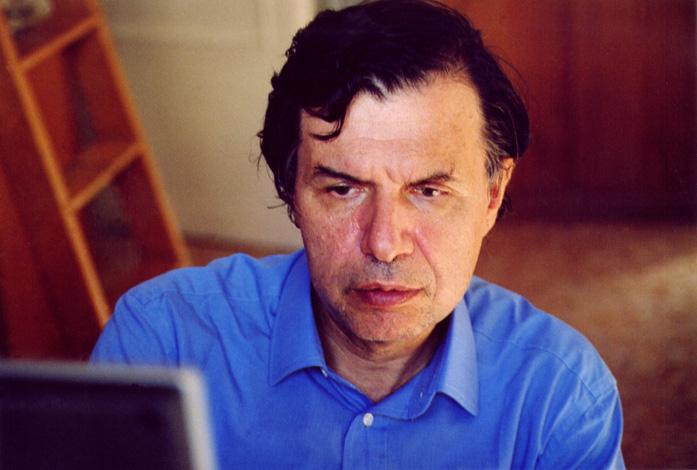
Giorgio Parisi (born 4 August 1948) is an Italian theoretical physicist, whose research has focused on quantum field theory, statistical mechanics and complex systems. His best known contributions are the QCD evolution equations for parton densities, obtained with Guido Altarelli, known as the Altarelli–Parisi or DGLAP equations, the exact solution of the Sherrington–Kirkpatrick model of spin glasses, the Kardar–Parisi–Zhang equation describing dynamic scaling of growing interfaces, and the study of whirling flocks of birds. He was awarded the 2021 Nobel Prize in Physics jointly with Klaus Hasselmann and Syukuro Manabe for groundbreaking contributions to theory of complex systems, in particular "for the discovery of the interplay of disorder and fluctuations in physical systems from atomic to planetary scales".
Giorgio Parisi was born in Rome. He is one-quarter Umbrian, one-quarter Piedmontese, one-quarter Sicilian, and one-quarter Roman for seven generations. He attended the "San Gabriele" High School in Rome in 1966, and later received his degree from the University of Rome La Sapienza in 1970 under the supervision of Nicola Cabibbo with a thesis on the Higgs boson.
After graduating, Parisi began working first at the National Research Council (Italy) (CNR), then at the Istituto Nazionale di Fisica Nucleare (INFN) at the Frascati National Laboratories (1971 to 1981). Introduced by Sidney David Drell to Tsung-Dao Lee, he also worked at Columbia University (1973–1974) and later at the Institut des Hautes Études Scientifiques (1976–1977) and the École Normale Supérieure in Paris (1977–1978), before returning to Italy as a researcher for the INFN. From 1982 until 1992 he was a full professor of Theoretical Physics at the University of Rome Tor Vergata, and from 1992 at the Sapienza University of Rome, where he taught several courses, including theoretical physics, quantum mechanics, statistical physics, and probability.
He also took part in the APE100 project for the study of lattice gauge theory. He was a member of the Simons Collaboration "Cracking the Glass Problem".
After retiring in 2018, until 2021, he was elected president of the Accademia dei Lincei and in 2023 he was also elected Fellow of The World Academy of Sciences.
In February 2021, he won the Wolf Prize in Physics, and in October of the same year, he was awarded the Nobel Prize in Physics.
Parisi's research interests are broad and cover statistical physics, field theory, dynamical systems, mathematical physics and condensed matter physics, where he is particularly known for his work on spin glasses and related statistical mechanics models originating in optimization theory and biology. In particular, he made significant contributions in terms of systematic applications of the replica method to disordered systems, even though the replica method itself was originally discovered in 1971 by Sir Sam Edwards.
He has also contributed to the field of elementary particle physics, in particular to quantum chromodynamics and string theory. Together with Guido Altarelli, he introduced the so-called Dokshitzer–Gribov–Lipatov–Altarelli–Parisi equations. In the field of fluid dynamics he is known for having introduced, together with Uriel Frisch, multifractal models to describe the phenomenon of intermittency in turbulent flows. He is also known for the Kardar–Parisi–Zhang equation modelling stochastic aggregation. From the point of view of complex systems, he worked on the collective motion of animals (such as swarms and flocks). He also introduced, together with other Italian physicists, the concept of stochastic resonance in the study of climate change.
Hub AI
Giorgio Parisi AI simulator
(@Giorgio Parisi_simulator)
Giorgio Parisi
Giorgio Parisi (born 4 August 1948) is an Italian theoretical physicist, whose research has focused on quantum field theory, statistical mechanics and complex systems. His best known contributions are the QCD evolution equations for parton densities, obtained with Guido Altarelli, known as the Altarelli–Parisi or DGLAP equations, the exact solution of the Sherrington–Kirkpatrick model of spin glasses, the Kardar–Parisi–Zhang equation describing dynamic scaling of growing interfaces, and the study of whirling flocks of birds. He was awarded the 2021 Nobel Prize in Physics jointly with Klaus Hasselmann and Syukuro Manabe for groundbreaking contributions to theory of complex systems, in particular "for the discovery of the interplay of disorder and fluctuations in physical systems from atomic to planetary scales".
Giorgio Parisi was born in Rome. He is one-quarter Umbrian, one-quarter Piedmontese, one-quarter Sicilian, and one-quarter Roman for seven generations. He attended the "San Gabriele" High School in Rome in 1966, and later received his degree from the University of Rome La Sapienza in 1970 under the supervision of Nicola Cabibbo with a thesis on the Higgs boson.
After graduating, Parisi began working first at the National Research Council (Italy) (CNR), then at the Istituto Nazionale di Fisica Nucleare (INFN) at the Frascati National Laboratories (1971 to 1981). Introduced by Sidney David Drell to Tsung-Dao Lee, he also worked at Columbia University (1973–1974) and later at the Institut des Hautes Études Scientifiques (1976–1977) and the École Normale Supérieure in Paris (1977–1978), before returning to Italy as a researcher for the INFN. From 1982 until 1992 he was a full professor of Theoretical Physics at the University of Rome Tor Vergata, and from 1992 at the Sapienza University of Rome, where he taught several courses, including theoretical physics, quantum mechanics, statistical physics, and probability.
He also took part in the APE100 project for the study of lattice gauge theory. He was a member of the Simons Collaboration "Cracking the Glass Problem".
After retiring in 2018, until 2021, he was elected president of the Accademia dei Lincei and in 2023 he was also elected Fellow of The World Academy of Sciences.
In February 2021, he won the Wolf Prize in Physics, and in October of the same year, he was awarded the Nobel Prize in Physics.
Parisi's research interests are broad and cover statistical physics, field theory, dynamical systems, mathematical physics and condensed matter physics, where he is particularly known for his work on spin glasses and related statistical mechanics models originating in optimization theory and biology. In particular, he made significant contributions in terms of systematic applications of the replica method to disordered systems, even though the replica method itself was originally discovered in 1971 by Sir Sam Edwards.
He has also contributed to the field of elementary particle physics, in particular to quantum chromodynamics and string theory. Together with Guido Altarelli, he introduced the so-called Dokshitzer–Gribov–Lipatov–Altarelli–Parisi equations. In the field of fluid dynamics he is known for having introduced, together with Uriel Frisch, multifractal models to describe the phenomenon of intermittency in turbulent flows. He is also known for the Kardar–Parisi–Zhang equation modelling stochastic aggregation. From the point of view of complex systems, he worked on the collective motion of animals (such as swarms and flocks). He also introduced, together with other Italian physicists, the concept of stochastic resonance in the study of climate change.
Recent media