
Recent from talks
Tsung-Dao Lee
Knowledge base stats:
Talk channels stats:
Members stats:
Tsung-Dao Lee
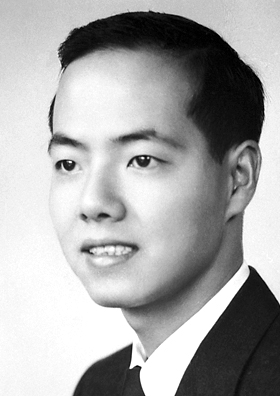
Tsung-Dao Lee (Chinese: 李政道; pinyin: Lǐ Zhèngdào; November 24, 1926 – August 4, 2024) was a Chinese-American physicist, known for his work on parity violation, the Lee–Yang theorem, particle physics, relativistic heavy ion (RHIC) physics, nontopological solitons, and soliton stars. He was a university professor emeritus at Columbia University in New York City, where he taught from 1953 until his retirement in 2012.
In 1957, at the age of 30, Lee won the Nobel Prize in Physics with Chen Ning Yang for their work on the violation of the parity law in weak interactions, which Chien-Shiung Wu experimentally proved from 1956 to 1957, with her well known Wu experiment.
Lee remains the youngest Nobel laureate in the science fields after World War II. He is the third-youngest Nobel laureate in sciences in history after William L. Bragg (who won the prize at 25 with his father William H. Bragg in 1915) and Werner Heisenberg (who won in 1932 also at 30). Lee and Yang were the first Chinese laureates. Since he became a naturalized American citizen in 1962, Lee is also the youngest American ever to have won a Nobel Prize.
Lee was born in Shanghai, China, with his ancestral home in nearby Suzhou. His father Chun-kang Lee (李駿康; Lǐ Jùn-kāng), one of the first graduates of the University of Nanking, was a chemical industrialist and merchant who was involved in China's early development of modern synthesized fertilizer. Lee's grandfather Chong-tan Lee (李仲覃; Lǐ Zhòng-tán) was the first Chinese Methodist Episcopal senior pastor of St. John's Church in Suzhou.[additional citation(s) needed]
Lee had four brothers and one sister. Educator Robert C. T. Lee was one of T. D.'s brothers. Lee's mother Chang and brother Robert C. T. moved to Taiwan in the 1950s.[citation needed]
Lee received his secondary education in Shanghai (High School Affiliated to Soochow University, 東吳大學附屬中學) and Jiangxi (Jiangxi Joint High School, 江西聯合中學). Due to the Second Sino-Japanese war, Lee's high school education was interrupted, thus he did not obtain his secondary diploma. Nevertheless, in 1943, Lee directly applied to and was admitted by the National Chekiang University (now Zhejiang University). Initially, Lee registered as a student in the Department of Chemical Engineering. Very quickly, Lee's talent was discovered and his interest in physics grew rapidly. Several physics professors, including Shu Xingbei and Wang Ganchang, largely guided Lee, and he soon transferred into the Department of Physics of National Che Kiang University, where he studied in 1943–1944.[additional citation(s) needed]
However, again disrupted by a further Japanese invasion, Lee continued at the National Southwestern Associated University in Kunming the next year in 1945, where he studied with Professor Wu Ta-You.
Professor Wu nominated Lee for a Chinese government fellowship for graduate study in the United States. In 1946, Lee went to the University of Chicago and was selected by Professor Enrico Fermi to become his PhD student. Lee received his PhD under Fermi in 1950 for his research work Hydrogen Content of White Dwarf Stars. Lee served as research associate and lecturer in physics at the University of California at Berkeley from 1950 to 1951.
Hub AI
Tsung-Dao Lee AI simulator
(@Tsung-Dao Lee_simulator)
Tsung-Dao Lee
Tsung-Dao Lee (Chinese: 李政道; pinyin: Lǐ Zhèngdào; November 24, 1926 – August 4, 2024) was a Chinese-American physicist, known for his work on parity violation, the Lee–Yang theorem, particle physics, relativistic heavy ion (RHIC) physics, nontopological solitons, and soliton stars. He was a university professor emeritus at Columbia University in New York City, where he taught from 1953 until his retirement in 2012.
In 1957, at the age of 30, Lee won the Nobel Prize in Physics with Chen Ning Yang for their work on the violation of the parity law in weak interactions, which Chien-Shiung Wu experimentally proved from 1956 to 1957, with her well known Wu experiment.
Lee remains the youngest Nobel laureate in the science fields after World War II. He is the third-youngest Nobel laureate in sciences in history after William L. Bragg (who won the prize at 25 with his father William H. Bragg in 1915) and Werner Heisenberg (who won in 1932 also at 30). Lee and Yang were the first Chinese laureates. Since he became a naturalized American citizen in 1962, Lee is also the youngest American ever to have won a Nobel Prize.
Lee was born in Shanghai, China, with his ancestral home in nearby Suzhou. His father Chun-kang Lee (李駿康; Lǐ Jùn-kāng), one of the first graduates of the University of Nanking, was a chemical industrialist and merchant who was involved in China's early development of modern synthesized fertilizer. Lee's grandfather Chong-tan Lee (李仲覃; Lǐ Zhòng-tán) was the first Chinese Methodist Episcopal senior pastor of St. John's Church in Suzhou.[additional citation(s) needed]
Lee had four brothers and one sister. Educator Robert C. T. Lee was one of T. D.'s brothers. Lee's mother Chang and brother Robert C. T. moved to Taiwan in the 1950s.[citation needed]
Lee received his secondary education in Shanghai (High School Affiliated to Soochow University, 東吳大學附屬中學) and Jiangxi (Jiangxi Joint High School, 江西聯合中學). Due to the Second Sino-Japanese war, Lee's high school education was interrupted, thus he did not obtain his secondary diploma. Nevertheless, in 1943, Lee directly applied to and was admitted by the National Chekiang University (now Zhejiang University). Initially, Lee registered as a student in the Department of Chemical Engineering. Very quickly, Lee's talent was discovered and his interest in physics grew rapidly. Several physics professors, including Shu Xingbei and Wang Ganchang, largely guided Lee, and he soon transferred into the Department of Physics of National Che Kiang University, where he studied in 1943–1944.[additional citation(s) needed]
However, again disrupted by a further Japanese invasion, Lee continued at the National Southwestern Associated University in Kunming the next year in 1945, where he studied with Professor Wu Ta-You.
Professor Wu nominated Lee for a Chinese government fellowship for graduate study in the United States. In 1946, Lee went to the University of Chicago and was selected by Professor Enrico Fermi to become his PhD student. Lee received his PhD under Fermi in 1950 for his research work Hydrogen Content of White Dwarf Stars. Lee served as research associate and lecturer in physics at the University of California at Berkeley from 1950 to 1951.
Recent media