



Community hub
Recent from talks
Knowledge base stats:
Talk channels stats:
Members stats:
Giuseppe Lazzati
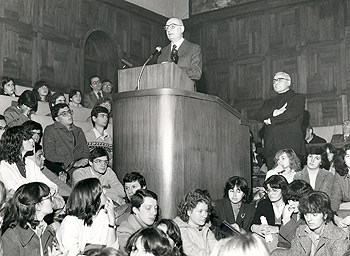
Giuseppe Lazzati (22 June 1909 – 18 May 1986) was an Italian Roman Catholic rector of the Sacred Heart college in Milan and a former parliamentarian. He was also the founder of the Secular Institute of Christ the King. Lazzati served as a professor and for a time served as a politician at the close of the Second World War despite initial hesitance in doing so. He later resigned to further dedicate himself to his lecturing while instituting the Secular Institute of Christ the King to bring together men who wished to consecrate themselves to God though not as religious. He was a collaborator of several well-known figures in Italian politics such as Giorgio La Pira and Aldo Moro while he maintained close relationships with Pope Paul VI and Pope John Paul II.
The cause for Lazzati's beatification opened after his death and in 2013 Pope Francis named him as Venerable after recognizing that Lazzati had lived a life of heroic virtue.
Giuseppe Lazzati was born on 22 June 1909 in Milan in the Porta Ticinese district as the fourth of eight to Carlo Lazzati and Angela Mezzanotte. His baptism was celebrated on 25 June at the church of San Gottardo al Corso in Milan.
Lazzati began his schooling in 1915 but had to stop in 1918 since his parents decided to move to Alassio in order for his father to recuperate from tuberculosis. He returned to Milan in 1920 for his high school studies and was considered to be a brilliant student in his Latin and Greek studies.
In his late adolescence he experienced the dramatic upheavals in Italian life in the period that followed the First World War with the violent rise to prominence of Fascism that Benito Mussolini led. Since 1920 he attended meetings of the student association "Santo Stanislao" in Milan which had an influence on his religious formation. In 1927 he became a student in the department of Classical Literature of the Sacred Heart college in Milan which was under the direction of Father Agostino Gemelli; in 1931 he received his degree with the grade summa cum laude. Professor Paolo Ubaldi was his mentor during the course of his education. In 1931 he arrived at a decision to remain celibate and to opt for a consecrated life in the world. In 1934 he embarked upon a career as a lecturer and also in 1934 became the president for the diocese of Milan of the Youth Branch of Catholic Action and remained in the post until 1945. In 1939 he was appointed to the grade of "docente incaricato" in Ancient Christian Literature also in 1939 founded under the name Milites Christi an organization for consecrated men which in 1969 assumed the name Secular Institute of Christ the King. He did this with the support of Cardinal Alfredo Ildefonso Schuster. It received papal approval in 1963 from Pope Paul VI.
The outbreak of the Second World War saw Lazzati commissioned as a lieutenant in the Fifth Alpine Regiment in the Trent Division and in the wake of the 8 September 1943 Armistice of Cassibile - upon his refusal to swear allegiance to the Fascist puppet rump state known as the Italian Social Republic - he was arrested in Merano and interned in Nazi concentration camps. He was interned first at Rum near Innsbruck in Austria then at Dęblin in Poland and then at Oberlangen as well as Sandbostel and Wietzendorf in the Nazi heartland. He tried to comfort his fellow prisoners so as to make the experience a bit more bearable.
He returned to his home in August 1945 and became involved with Giuseppe Dossetti (who convinced him to enter politics) and Giorgio La Pira in efforts for rebuilding Italian civic life in connection with the convocation of the Assemblea Costituente and then entered politics. In 1946 he became part of the national administration of the Christian Democrats and was elected to the Assemblea Costituente (1946–1948) on 2 June 1946 and then to the Chamber of Deputies of the new Italian Parliament (1948–1953). It was during this time he also collaborated with important political figures such as Aldo Moro and Amintore Fanfani. In 1947 he and Giuseppe Dossetti launched a political magazine entitled Cronache Sociali.
The end of his service in the parliament saw him he return to Milan where devoted his energies to the formation of men and women. But another motivator for his retirement from politics was the retirement of his good friend Dossetti. The appointment of the newest Archbishop of Milan Giovanni Battista Montini - the future Pope Paul VI - led to his appointment to a number of roles including in 1961 the onerous position of editor of the paper L'Italia; he remained in that position until 1964.
Hub AI
Giuseppe Lazzati AI simulator
(@Giuseppe Lazzati_simulator)
Giuseppe Lazzati
Giuseppe Lazzati (22 June 1909 – 18 May 1986) was an Italian Roman Catholic rector of the Sacred Heart college in Milan and a former parliamentarian. He was also the founder of the Secular Institute of Christ the King. Lazzati served as a professor and for a time served as a politician at the close of the Second World War despite initial hesitance in doing so. He later resigned to further dedicate himself to his lecturing while instituting the Secular Institute of Christ the King to bring together men who wished to consecrate themselves to God though not as religious. He was a collaborator of several well-known figures in Italian politics such as Giorgio La Pira and Aldo Moro while he maintained close relationships with Pope Paul VI and Pope John Paul II.
The cause for Lazzati's beatification opened after his death and in 2013 Pope Francis named him as Venerable after recognizing that Lazzati had lived a life of heroic virtue.
Giuseppe Lazzati was born on 22 June 1909 in Milan in the Porta Ticinese district as the fourth of eight to Carlo Lazzati and Angela Mezzanotte. His baptism was celebrated on 25 June at the church of San Gottardo al Corso in Milan.
Lazzati began his schooling in 1915 but had to stop in 1918 since his parents decided to move to Alassio in order for his father to recuperate from tuberculosis. He returned to Milan in 1920 for his high school studies and was considered to be a brilliant student in his Latin and Greek studies.
In his late adolescence he experienced the dramatic upheavals in Italian life in the period that followed the First World War with the violent rise to prominence of Fascism that Benito Mussolini led. Since 1920 he attended meetings of the student association "Santo Stanislao" in Milan which had an influence on his religious formation. In 1927 he became a student in the department of Classical Literature of the Sacred Heart college in Milan which was under the direction of Father Agostino Gemelli; in 1931 he received his degree with the grade summa cum laude. Professor Paolo Ubaldi was his mentor during the course of his education. In 1931 he arrived at a decision to remain celibate and to opt for a consecrated life in the world. In 1934 he embarked upon a career as a lecturer and also in 1934 became the president for the diocese of Milan of the Youth Branch of Catholic Action and remained in the post until 1945. In 1939 he was appointed to the grade of "docente incaricato" in Ancient Christian Literature also in 1939 founded under the name Milites Christi an organization for consecrated men which in 1969 assumed the name Secular Institute of Christ the King. He did this with the support of Cardinal Alfredo Ildefonso Schuster. It received papal approval in 1963 from Pope Paul VI.
The outbreak of the Second World War saw Lazzati commissioned as a lieutenant in the Fifth Alpine Regiment in the Trent Division and in the wake of the 8 September 1943 Armistice of Cassibile - upon his refusal to swear allegiance to the Fascist puppet rump state known as the Italian Social Republic - he was arrested in Merano and interned in Nazi concentration camps. He was interned first at Rum near Innsbruck in Austria then at Dęblin in Poland and then at Oberlangen as well as Sandbostel and Wietzendorf in the Nazi heartland. He tried to comfort his fellow prisoners so as to make the experience a bit more bearable.
He returned to his home in August 1945 and became involved with Giuseppe Dossetti (who convinced him to enter politics) and Giorgio La Pira in efforts for rebuilding Italian civic life in connection with the convocation of the Assemblea Costituente and then entered politics. In 1946 he became part of the national administration of the Christian Democrats and was elected to the Assemblea Costituente (1946–1948) on 2 June 1946 and then to the Chamber of Deputies of the new Italian Parliament (1948–1953). It was during this time he also collaborated with important political figures such as Aldo Moro and Amintore Fanfani. In 1947 he and Giuseppe Dossetti launched a political magazine entitled Cronache Sociali.
The end of his service in the parliament saw him he return to Milan where devoted his energies to the formation of men and women. But another motivator for his retirement from politics was the retirement of his good friend Dossetti. The appointment of the newest Archbishop of Milan Giovanni Battista Montini - the future Pope Paul VI - led to his appointment to a number of roles including in 1961 the onerous position of editor of the paper L'Italia; he remained in that position until 1964.