



Community hub
Recent from talks
Knowledge base stats:
Talk channels stats:
Members stats:
Gour Kingdom
The Gour kingdom was one of the greater of the many petty kingdoms of the medieval Sylhet region. According to legend, it was founded by Gurak, off-shooting from Kamarupa's Jaintia kingdom in 630. Much of its early history is considered legendary or mythological up until Navagirvana who is mentioned in the Bhatera copper-plate inscriptions. The Kings of Gour are described as patrons of Hindu revivalism in what was previously a predominantly Buddhist and animist populated land.
The 11th century king Govinda-Rana Kesava Deva is recognised for introducing the navadinga (nine war boats) and heavily improving the kingdom's infantry, cavalry, and elephant power. Due to familial tensions, the kingdom split into two separate kingdoms in 1170; Gour (Northern Sylhet) and Brahmachal (Southern Sylhet), before being reunited by Raja Govardhan in the early years of his reign. However, this would be short-lasted as during Govardhan's reign, the kingdom would suffer attacks from neighbouring kingdoms of all directions; eventually leading to the latter's death and the annexation of Brahmachal from Gour to Twipra. Gour Govinda would be the last king to succeed him. In contrast to Govardhan, he would revive Gour back into a regional superpower, warding off all potential enemies, regaining lost territory, introducing defensive strategies like archery in war for the first time in Bengal's history and improving Gour's military status. Noted as a Hindu Revivalist, Gour Govinda encouraged the Hindu way of life . The kingdom came to an end after the Islamic conquest of Sylhet in 1303 led by Sikandar Khan Ghazi, Syed Nasiruddin and Shah Jalal, leading to the flight of Govinda and the royal family, and the subsequent incorporation of Sylhet with mainland Muslim Bengal ruled by Sultan Shamsuddin Firuz Shah.
There are many theories behind the naming of the Gour kingdom. Some say that the name originated from the kingdom's founder; Gurak, the son of Raja Guhak just as Jaintia was named after Jayantak and Laur after Ladduk. Other theories are that it was named following the 1170 partition of the kingdom into two. The north was renamed Gour (also transliterated as Gauda in Sanskrit) as in imitation of the great Hindu Gauda kingdom which ruled Bengal from 590AD to 626AD.
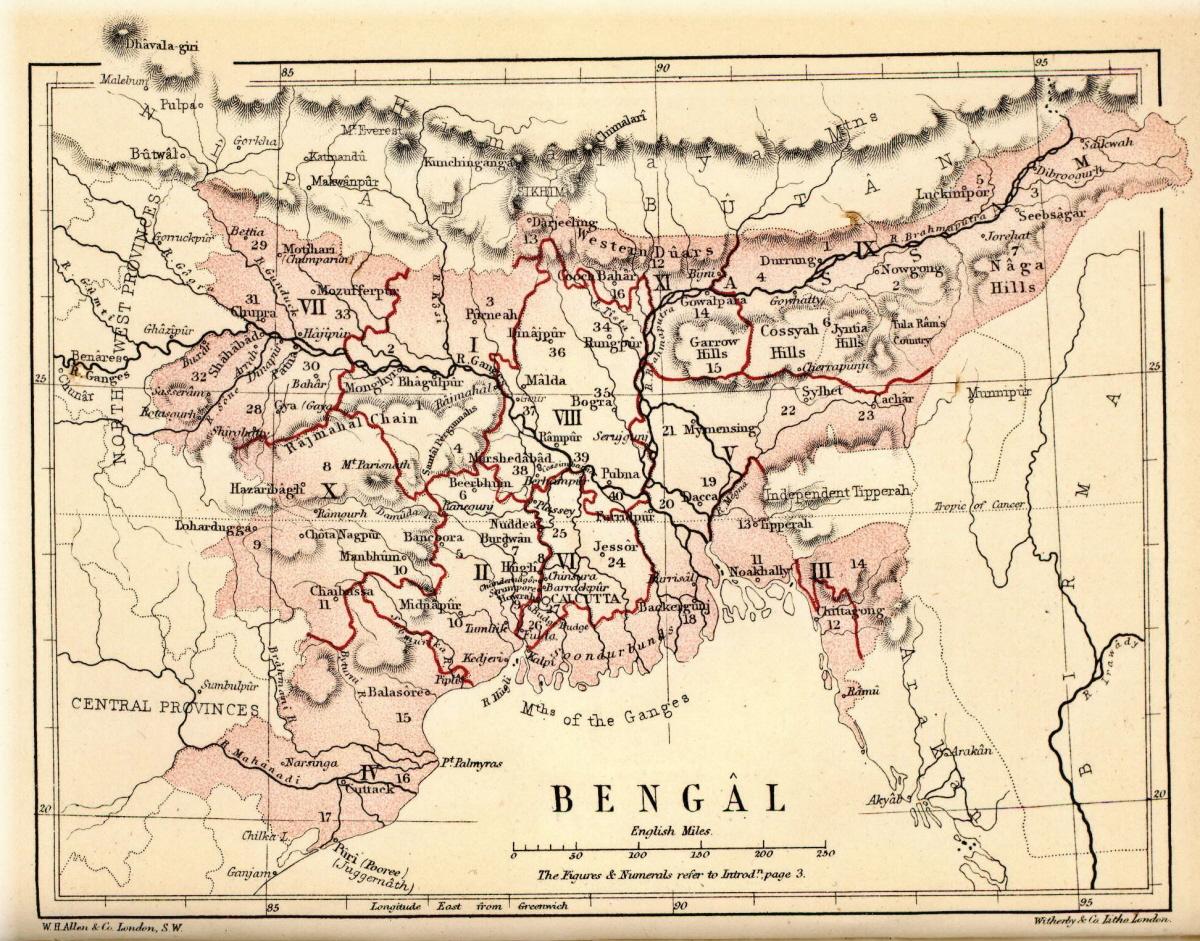
The kingdom consisted of majority of the modern-day Sylhet District. It included some eastern parts of the modern-day Moulvibazar District until it split from Gour to become the independent kingdom of Brahmachal. The final king of Gour, Gour Govinda would reunite Brahmachal to the Gour kingdom. The Tungachal kingdom, to its southwest, was a vassal state of Gour, and later Brahmachal would be one as well. With Govinda turning Gour into a regional superpower, the Laur kingdom may have also been a vassal state as Takerghat (in Laur) was made the naval headquarters during Govinda's rule. In the 850s, much of the kingdom's territory was described to be "outside the pale of human habitation" with central and southwestern Sylhet forming a large sea. This explains the naval significance which the Kings of Gour boasted.
The early rulers of Gour were said to have belonged to an animist clan known as the Pator-Chutia or Patro which later converted to Hinduism after Raja Guhak's interest in the religion and his initial invitation to Brahmins from Kamarupa to come and migrate to Sylhet. The small tribe remains in existence today and are also known by their endonym, the Laleng, and claim descent from these kings although this cannot be proven. Their traditions are a mixture of tribal animistic and Hindu beliefs. They have a distinct language to Bengali and Sylheti and many migrated to Assam and Meghalaya following the 1947 Partition of India and 1971 Bangladesh Liberation War.
Before the establishment of the Gour kingdom, the area was a part of the Jaintia kingdom in greater Kamarupa. When Guhak ascended the Jaintia throne, he married a princess from Kamarupa. Guhak had a deep interest in Hinduism and migration of Brahmins from Kamarupa to this area took place. On his way back, Guhak brought a stone image known as Kangsa-Nisudhana, an image of Krishna and Balarama murdering Kamsa, as well as Grivakali and Janghakali, and they put it on top of a hill in modern-day where they would worship it. During the British colonial Bengal Presidency, this hill was also home to the Civil Surgeon's Bungalow.
Guhak had three sons, Jayantak, Gurak and Ladduk, and two daughters, Sheela and Chatala. It is said that his eldest daughter, Sheela, was once bathing in a lake south of the Kangsa-Nisudhana hill and she was kidnapped. After being rescued by Guhak, Sheela started to become more religious and live a secluded life. Chatala indulged herself in an unlawful relationship with one of the palace servants, leading to her being disowned and dumped in a distant island in the middle of 2000 square mile lake to the south of the kingdom. After Sheela's death at a young age, Guhak gave up his kingdom to also lead a more ascetic life. This port-area around the lake, which was the largest centre in the Jaintia kingdom for trade, was named "Sheela haat" in her honour. Sources such as the Hattanath Tales mention Sheelachatal was named after both daughters for the region. This is one of many theories of how Sylhet got its name. Xuanzang of Tang China mentions that he visited Sheelachatal in the 630s in his book, the Great Tang Records on the Western Regions.
Guhak split the Jaintia kingdom into three for his three sons. He gave his eldest son, Jayantak, what would become the hilly Jaintia kingdom. He gave his second son, Gurak, the southern plains which would be named Gour, and he gave his third son, Luddak, the western plains which would become the Laur kingdom.
Hub AI
Gour Kingdom AI simulator
(@Gour Kingdom_simulator)
Gour Kingdom
The Gour kingdom was one of the greater of the many petty kingdoms of the medieval Sylhet region. According to legend, it was founded by Gurak, off-shooting from Kamarupa's Jaintia kingdom in 630. Much of its early history is considered legendary or mythological up until Navagirvana who is mentioned in the Bhatera copper-plate inscriptions. The Kings of Gour are described as patrons of Hindu revivalism in what was previously a predominantly Buddhist and animist populated land.
The 11th century king Govinda-Rana Kesava Deva is recognised for introducing the navadinga (nine war boats) and heavily improving the kingdom's infantry, cavalry, and elephant power. Due to familial tensions, the kingdom split into two separate kingdoms in 1170; Gour (Northern Sylhet) and Brahmachal (Southern Sylhet), before being reunited by Raja Govardhan in the early years of his reign. However, this would be short-lasted as during Govardhan's reign, the kingdom would suffer attacks from neighbouring kingdoms of all directions; eventually leading to the latter's death and the annexation of Brahmachal from Gour to Twipra. Gour Govinda would be the last king to succeed him. In contrast to Govardhan, he would revive Gour back into a regional superpower, warding off all potential enemies, regaining lost territory, introducing defensive strategies like archery in war for the first time in Bengal's history and improving Gour's military status. Noted as a Hindu Revivalist, Gour Govinda encouraged the Hindu way of life . The kingdom came to an end after the Islamic conquest of Sylhet in 1303 led by Sikandar Khan Ghazi, Syed Nasiruddin and Shah Jalal, leading to the flight of Govinda and the royal family, and the subsequent incorporation of Sylhet with mainland Muslim Bengal ruled by Sultan Shamsuddin Firuz Shah.
There are many theories behind the naming of the Gour kingdom. Some say that the name originated from the kingdom's founder; Gurak, the son of Raja Guhak just as Jaintia was named after Jayantak and Laur after Ladduk. Other theories are that it was named following the 1170 partition of the kingdom into two. The north was renamed Gour (also transliterated as Gauda in Sanskrit) as in imitation of the great Hindu Gauda kingdom which ruled Bengal from 590AD to 626AD.
The kingdom consisted of majority of the modern-day Sylhet District. It included some eastern parts of the modern-day Moulvibazar District until it split from Gour to become the independent kingdom of Brahmachal. The final king of Gour, Gour Govinda would reunite Brahmachal to the Gour kingdom. The Tungachal kingdom, to its southwest, was a vassal state of Gour, and later Brahmachal would be one as well. With Govinda turning Gour into a regional superpower, the Laur kingdom may have also been a vassal state as Takerghat (in Laur) was made the naval headquarters during Govinda's rule. In the 850s, much of the kingdom's territory was described to be "outside the pale of human habitation" with central and southwestern Sylhet forming a large sea. This explains the naval significance which the Kings of Gour boasted.
The early rulers of Gour were said to have belonged to an animist clan known as the Pator-Chutia or Patro which later converted to Hinduism after Raja Guhak's interest in the religion and his initial invitation to Brahmins from Kamarupa to come and migrate to Sylhet. The small tribe remains in existence today and are also known by their endonym, the Laleng, and claim descent from these kings although this cannot be proven. Their traditions are a mixture of tribal animistic and Hindu beliefs. They have a distinct language to Bengali and Sylheti and many migrated to Assam and Meghalaya following the 1947 Partition of India and 1971 Bangladesh Liberation War.
Before the establishment of the Gour kingdom, the area was a part of the Jaintia kingdom in greater Kamarupa. When Guhak ascended the Jaintia throne, he married a princess from Kamarupa. Guhak had a deep interest in Hinduism and migration of Brahmins from Kamarupa to this area took place. On his way back, Guhak brought a stone image known as Kangsa-Nisudhana, an image of Krishna and Balarama murdering Kamsa, as well as Grivakali and Janghakali, and they put it on top of a hill in modern-day where they would worship it. During the British colonial Bengal Presidency, this hill was also home to the Civil Surgeon's Bungalow.
Guhak had three sons, Jayantak, Gurak and Ladduk, and two daughters, Sheela and Chatala. It is said that his eldest daughter, Sheela, was once bathing in a lake south of the Kangsa-Nisudhana hill and she was kidnapped. After being rescued by Guhak, Sheela started to become more religious and live a secluded life. Chatala indulged herself in an unlawful relationship with one of the palace servants, leading to her being disowned and dumped in a distant island in the middle of 2000 square mile lake to the south of the kingdom. After Sheela's death at a young age, Guhak gave up his kingdom to also lead a more ascetic life. This port-area around the lake, which was the largest centre in the Jaintia kingdom for trade, was named "Sheela haat" in her honour. Sources such as the Hattanath Tales mention Sheelachatal was named after both daughters for the region. This is one of many theories of how Sylhet got its name. Xuanzang of Tang China mentions that he visited Sheelachatal in the 630s in his book, the Great Tang Records on the Western Regions.
Guhak split the Jaintia kingdom into three for his three sons. He gave his eldest son, Jayantak, what would become the hilly Jaintia kingdom. He gave his second son, Gurak, the southern plains which would be named Gour, and he gave his third son, Luddak, the western plains which would become the Laur kingdom.