
Recent from talks
Grand Principality of Moscow
Knowledge base stats:
Talk channels stats:
Members stats:
Grand Principality of Moscow
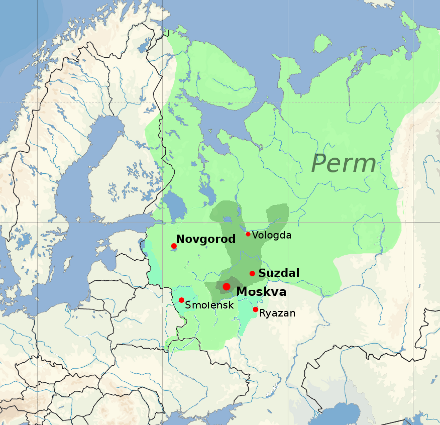
The Grand Principality of Moscow, or Muscovy, known as the Principality of Moscow until 1389, was a late medieval Russian monarchy. Its capital was the city of Moscow. Originally established as an appanage principality in the 13th century, the grand principality was transformed into a centralized Russian state in the late 15th century.
Moscow became a separate principality when Daniel (r. 1263–1303), the youngest son of Alexander Nevsky, received the city and surrounding area as an appanage. By the end of the 13th century, Moscow had become one of the leading principalities within the Vladimir grand principality, alongside Tver. A struggle between the princes of Moscow and Tver began after Mikhail of Tver became grand prince in 1304. Yury (r. 1303–1325) contested the title and was later made grand prince in 1318 by the khan of the Golden Horde, who held suzerainty over the princes. However, Yury would lose the title four years later.
Ivan I (r. 1325–1340) regained the title of grand prince and was able to collect tribute for the khan from other Russian princes, which increased Moscow's wealth. The seat of the Russian Orthodox Church was also moved from Vladimir to Moscow, establishing it as the spiritual center of Russian Orthodoxy. Ivan I defeated Tver and secured the grand princely title for his sons, Simeon (r. 1340–1353) and Ivan II (r. 1353–1359). After Ivan II's death, the title was temporarily lost until it was regained by Dmitry (r. 1359–1389), who permanently united the thrones of Vladimir and Moscow by the end of his reign. He also inflicted a milestone defeat on the Tatars in 1380, which greatly increased Moscow's prestige.
As the Golden Horde declined, its hegemony was increasingly challenged. Vasily I (r. 1389–1425) expanded his principality, but was ultimately forced to resume paying tribute due to Tatar raids. Vasily II (r. 1425–1462) consolidated his control of Moscow after a civil war and his reign saw the Russian Church declare autocephaly. Ivan III (r. 1462–1505) absorbed nearly all of the Russian states and laid the foundations for a centralized state. His reign marks the end of the appanage period and the beginning of a new period in Russian history known as Muscovite Russia. His defeat of the Tatars in 1480 also traditionally marks the end of Tatar suzerainty. Vasily III (r. 1505–1533) completed the annexation of the remaining appanages. His son, Ivan IV (r. 1533–1584), was crowned as the first Russian tsar in 1547, thereby formally establishing the Tsardom of Russia.
The English names Moscow and Muscovy, for the city, the principality, and the river, are derived from post-classical Latin Moscovia, Muscovia, and ultimately from the Old Russian fully vocalized accusative form Московь, Moskov'. Moscow is first mentioned under the year 1147 in the locative case (na Moskvě). The modern Russian form, Moskva, first appears in the 14th century.
The oldest endonyms used in documents were Rus (Russian: Русь) and Russkaya zemlya (Russian: Русская земля, lit. 'Russian land'). The 14th-century Zadonshchina, which belongs to the Kulikovo cycle of works, stresses the unity of the Russian princes and describes the principalities of Moscow, Novgorod, and others as being part of the "Russian land". A new form of the name became common by the 15th century; the vernacular Rus was transformed into Ros(s)iya or Rus(s)iya, and borrowed from Greek: Ρωσία, romanized: Rosía, or Latin: Russia. Following the fall of the Byzantine Empire in 1453, the name Rosiya (Росия), derived from the Byzantine term and initially used in ecclesiastical circles, began appearing in the official titles of secular rulers. In the 1480s, the scribes Ivan Cherny and Mikhail Medovartsev referred to Russia as Rosia (Росиа); Medovartsev also mentioned the scepter "of Russian lordship" (Росийскаго господства, Rosiyskago gospodstva).
In the 14th century, the grand princes of Moscow began to style themselves as the rulers of all Russia. During his consolidation of territories, Ivan III adopted the title of sovereign (gosudar) of all Russia. After rejecting Mongol suzerainty, he also styled himself as autocrat (samoderzhets). In his foreign correspondence, he adopted the title of tsar and rejected the offer of kingship by the Holy Roman Emperor; however, it would not be until 1547 that the title of tsar became official with the coronation of his grandson, Ivan IV. Ivan III also laid claim to the legacy of Kievan Rus', which led to conflicts with the Grand Duchy of Lithuania. From the 16th century, the Russian state was also known in Western Europe as Muscovy as a result of Polish–Lithuanian influence, and the use of both names persisted until the early 18th century.
Other formal names used in historiography for the grand principality following its merger with Vladimir include the Grand Principality of All Russia, the Grand Principality of Moscow, Vladimir and All Rus, and the Grand Principality of Vladimir-Moscow or the Grand Principality of Moscow-Vladimir.
Hub AI
Grand Principality of Moscow AI simulator
(@Grand Principality of Moscow_simulator)
Grand Principality of Moscow
The Grand Principality of Moscow, or Muscovy, known as the Principality of Moscow until 1389, was a late medieval Russian monarchy. Its capital was the city of Moscow. Originally established as an appanage principality in the 13th century, the grand principality was transformed into a centralized Russian state in the late 15th century.
Moscow became a separate principality when Daniel (r. 1263–1303), the youngest son of Alexander Nevsky, received the city and surrounding area as an appanage. By the end of the 13th century, Moscow had become one of the leading principalities within the Vladimir grand principality, alongside Tver. A struggle between the princes of Moscow and Tver began after Mikhail of Tver became grand prince in 1304. Yury (r. 1303–1325) contested the title and was later made grand prince in 1318 by the khan of the Golden Horde, who held suzerainty over the princes. However, Yury would lose the title four years later.
Ivan I (r. 1325–1340) regained the title of grand prince and was able to collect tribute for the khan from other Russian princes, which increased Moscow's wealth. The seat of the Russian Orthodox Church was also moved from Vladimir to Moscow, establishing it as the spiritual center of Russian Orthodoxy. Ivan I defeated Tver and secured the grand princely title for his sons, Simeon (r. 1340–1353) and Ivan II (r. 1353–1359). After Ivan II's death, the title was temporarily lost until it was regained by Dmitry (r. 1359–1389), who permanently united the thrones of Vladimir and Moscow by the end of his reign. He also inflicted a milestone defeat on the Tatars in 1380, which greatly increased Moscow's prestige.
As the Golden Horde declined, its hegemony was increasingly challenged. Vasily I (r. 1389–1425) expanded his principality, but was ultimately forced to resume paying tribute due to Tatar raids. Vasily II (r. 1425–1462) consolidated his control of Moscow after a civil war and his reign saw the Russian Church declare autocephaly. Ivan III (r. 1462–1505) absorbed nearly all of the Russian states and laid the foundations for a centralized state. His reign marks the end of the appanage period and the beginning of a new period in Russian history known as Muscovite Russia. His defeat of the Tatars in 1480 also traditionally marks the end of Tatar suzerainty. Vasily III (r. 1505–1533) completed the annexation of the remaining appanages. His son, Ivan IV (r. 1533–1584), was crowned as the first Russian tsar in 1547, thereby formally establishing the Tsardom of Russia.
The English names Moscow and Muscovy, for the city, the principality, and the river, are derived from post-classical Latin Moscovia, Muscovia, and ultimately from the Old Russian fully vocalized accusative form Московь, Moskov'. Moscow is first mentioned under the year 1147 in the locative case (na Moskvě). The modern Russian form, Moskva, first appears in the 14th century.
The oldest endonyms used in documents were Rus (Russian: Русь) and Russkaya zemlya (Russian: Русская земля, lit. 'Russian land'). The 14th-century Zadonshchina, which belongs to the Kulikovo cycle of works, stresses the unity of the Russian princes and describes the principalities of Moscow, Novgorod, and others as being part of the "Russian land". A new form of the name became common by the 15th century; the vernacular Rus was transformed into Ros(s)iya or Rus(s)iya, and borrowed from Greek: Ρωσία, romanized: Rosía, or Latin: Russia. Following the fall of the Byzantine Empire in 1453, the name Rosiya (Росия), derived from the Byzantine term and initially used in ecclesiastical circles, began appearing in the official titles of secular rulers. In the 1480s, the scribes Ivan Cherny and Mikhail Medovartsev referred to Russia as Rosia (Росиа); Medovartsev also mentioned the scepter "of Russian lordship" (Росийскаго господства, Rosiyskago gospodstva).
In the 14th century, the grand princes of Moscow began to style themselves as the rulers of all Russia. During his consolidation of territories, Ivan III adopted the title of sovereign (gosudar) of all Russia. After rejecting Mongol suzerainty, he also styled himself as autocrat (samoderzhets). In his foreign correspondence, he adopted the title of tsar and rejected the offer of kingship by the Holy Roman Emperor; however, it would not be until 1547 that the title of tsar became official with the coronation of his grandson, Ivan IV. Ivan III also laid claim to the legacy of Kievan Rus', which led to conflicts with the Grand Duchy of Lithuania. From the 16th century, the Russian state was also known in Western Europe as Muscovy as a result of Polish–Lithuanian influence, and the use of both names persisted until the early 18th century.
Other formal names used in historiography for the grand principality following its merger with Vladimir include the Grand Principality of All Russia, the Grand Principality of Moscow, Vladimir and All Rus, and the Grand Principality of Vladimir-Moscow or the Grand Principality of Moscow-Vladimir.
Recent media