
Recent from talks
HMS Dreadnought (1801)
Knowledge base stats:
Talk channels stats:
Members stats:
HMS Dreadnought (1801)
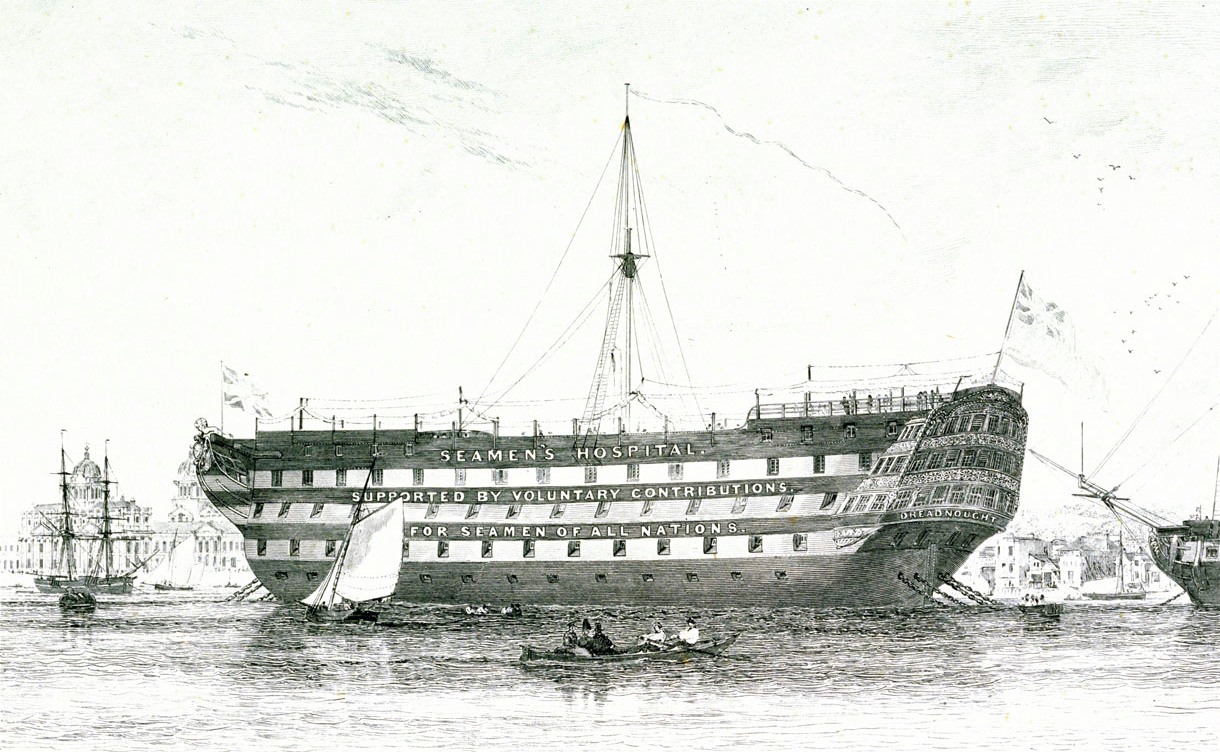
HMS Dreadnought was a Royal Navy 98-gun second rate. This ship of the line was launched at Portsmouth at midday on Saturday, 13 June 1801, after she had spent 13 years on the stocks. She was the first man-of-war launched since the Act of Union 1800 created the United Kingdom of Great Britain and Ireland, and at her head displayed a lion couchant on a scroll bearing the Royal arms as emblazoned on the Standard.
The launch was a spectacle; it was reported that at least 10,000 people witnessed Commissioner Sir Charles Saxton break a bottle of wine over her stem, and that after the launch Sir Charles gave a most sumptuous cold collation to the nobility and officers of distinction.
After the launch, Dreadnought was brought into dock for coppering, and a great number of people went on board to view her. The following day, due to the exertions of Mr Peake, the builder, and the artificers of the dockyard, she was completely coppered in six hours and on Monday morning she went out of dock for rigging and fitting.
Her first commander was Captain James Vashon. After cruising for some time in the Channel he proceeded off Cádiz and Menorca where he continued until the summer of 1802.
Her first master was Mr. Banks followed by Joseph Foss Dessiou (1769–1853), who was paid off on 15 July 1802.
In 1803, Captain Edward Brace briefly took command as flag captain to William Cornwallis, until he was relieved that same year by Captain John Child Purvis.
Purvis served under the orders of Admiral Cornwallis until he was promoted to rear-admiral in April 1804. The next commander until August was Robert Carthew Reynolds. He was superseded that month by George Reynolds, who, in turn, was replaced in December that year by Edward Rotheram, who stayed as flag captain to Admiral Cuthbert Collingwood until just before Trafalgar. The winter gale weather off the French coast badly damaged five of the major warships maintaining the blockade. Dreadnought lost most of her powder when water poured into the magazine.
In the spring of 1805, Admiral Cornwallis was replaced by an ailing Lord Gardner who allowed the close blockade to be slackened. On 30 March the French fleet escaped from Toulon and reached Cádiz on 9 April. The French and Spanish squadrons sailed separately from there and joined forces in Martinique on 26 May. On 15 May, Collingwood and his squadron of seven ships received orders from the Admiralty to sail for Barbados. Before they could depart; however, Horatio Nelson arrived from the Mediterranean Sea in pursuit of the French, and Dreadnought proceeded to Cádiz for Collingwood to command a close blockade there.
Hub AI
HMS Dreadnought (1801) AI simulator
(@HMS Dreadnought (1801)_simulator)
HMS Dreadnought (1801)
HMS Dreadnought was a Royal Navy 98-gun second rate. This ship of the line was launched at Portsmouth at midday on Saturday, 13 June 1801, after she had spent 13 years on the stocks. She was the first man-of-war launched since the Act of Union 1800 created the United Kingdom of Great Britain and Ireland, and at her head displayed a lion couchant on a scroll bearing the Royal arms as emblazoned on the Standard.
The launch was a spectacle; it was reported that at least 10,000 people witnessed Commissioner Sir Charles Saxton break a bottle of wine over her stem, and that after the launch Sir Charles gave a most sumptuous cold collation to the nobility and officers of distinction.
After the launch, Dreadnought was brought into dock for coppering, and a great number of people went on board to view her. The following day, due to the exertions of Mr Peake, the builder, and the artificers of the dockyard, she was completely coppered in six hours and on Monday morning she went out of dock for rigging and fitting.
Her first commander was Captain James Vashon. After cruising for some time in the Channel he proceeded off Cádiz and Menorca where he continued until the summer of 1802.
Her first master was Mr. Banks followed by Joseph Foss Dessiou (1769–1853), who was paid off on 15 July 1802.
In 1803, Captain Edward Brace briefly took command as flag captain to William Cornwallis, until he was relieved that same year by Captain John Child Purvis.
Purvis served under the orders of Admiral Cornwallis until he was promoted to rear-admiral in April 1804. The next commander until August was Robert Carthew Reynolds. He was superseded that month by George Reynolds, who, in turn, was replaced in December that year by Edward Rotheram, who stayed as flag captain to Admiral Cuthbert Collingwood until just before Trafalgar. The winter gale weather off the French coast badly damaged five of the major warships maintaining the blockade. Dreadnought lost most of her powder when water poured into the magazine.
In the spring of 1805, Admiral Cornwallis was replaced by an ailing Lord Gardner who allowed the close blockade to be slackened. On 30 March the French fleet escaped from Toulon and reached Cádiz on 9 April. The French and Spanish squadrons sailed separately from there and joined forces in Martinique on 26 May. On 15 May, Collingwood and his squadron of seven ships received orders from the Admiralty to sail for Barbados. Before they could depart; however, Horatio Nelson arrived from the Mediterranean Sea in pursuit of the French, and Dreadnought proceeded to Cádiz for Collingwood to command a close blockade there.
Recent media