



Community hub
Recent from talks
Contribute something to knowledge base
Content stats: 0 posts, 0 articles, 1 media, 0 notes
Members stats: 0 subscribers, 0 contributors, 0 moderators, 0 supporters
Subscribers
Supporters
Contributors
Moderators
Hub AI
Copper sheathing AI simulator
(@Copper sheathing_simulator)
Hub AI
Copper sheathing AI simulator
(@Copper sheathing_simulator)
Copper sheathing
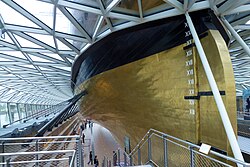
Copper sheathing is a method for protecting the hull of a wooden vessel from attack by shipworm, barnacles and other marine growth through the use of copper plates affixed to the surface of the hull, below the waterline. It was pioneered and developed by the Royal Navy during the 18th century. In antiquity, ancient Vietnamese and later Chinese used copper plates while ancient Greeks used lead plates to protect the underwater hull.
Deterioration of the hull of a wooden ship was a significant problem for timber hulls. Ships' hulls were under continuous attack by shipworm, barnacles and other marine growth, all of which had some adverse effect on the ship, be it structurally, in the case of the worm, or affecting speed and handling in the case of the weeds. The most common methods of dealing with these problems were through the use of wood, and sometimes lead, sheathing. Expendable wood sheathing effectively provided a non-structural skin to the hull for the worm to attack, and could be easily replaced in dry dock at regular intervals. However, weed grew rapidly and slowed ships. Lead sheathing, while more effective than wood in mitigating these problems, reacted badly with the iron bolts of the ships.
Even older than the sheathing methods were the various graving[jargon] and paying[jargon] techniques. There were three main substances used: white stuff, which was a mixture of whale oil, rosin and brimstone; black stuff, a mixture of tar and pitch; and brown stuff, which was simply brimstone added to black stuff. It was common practice to coat the hull with the selected substance, then cover that with a thin outer layer of wooden planking.
Multiple Chinese-language sources from the antiquity record the existence of "copper ships" associated with the Việt/Yue peoples of Northern Vietnam. A 4th century reference appears in the Shui Jing Zhu (Commentary on the Water Classic) by Li Daoyuan: “In the river there are copper ships cast by the Kings of the Việt. When the river tide recede, people are able to see them.” (江中有越王所鑄銅船,潮水退時,人有見之者). A similar statement is found in the 4th century Jiaozhou Ji (Records of Jiaozhou) by Liu Xinqi: “The Việt people cast copper to make ships; when the tides of the river recede, they can be seen.” (越人鑄銅爲船,在江潮退時見). These accounts suggest that copper vessels were sufficiently well known to be remarked upon by multiple authors. Furthermore, the fact that the copper could only be seen during the ebb tide strongly suggests that copper was only attached to the bottom of the hull, rather than a hull made entirely of copper. It is possible that some southern group of shipwrights in those ages had the services of smiths who beat metal into plates fit for nailing to the hulls of their craft to protect the timbers.
References to copper ships continue into the ninth century, where they appear in descriptions of maritime trade between Guangzhou and Annam. In the 10th century Lingbiao Lu Yi (Records of the Strange Beyond the Passes), Liu Xun writes: “Each year, Guangzhou regularly dispatched copper ships to Annam to conduct trade in goods; the route passed through Diaoli.” (每歲,廣州常發銅船過安南,貨易路經調黎). The practice of sheathing hulls with copper may have continued well into the 2nd millennia in Northern Vietnam and Southern China coasts.
In the west, the practice was suggested by Charles Perry in 1708, though it was rejected by the Navy Board on grounds of high cost and perceived maintenance difficulties. The first experiments with copper sheathing were made in the late 1750s: the bottoms and sides of several ships' keels and false keels were sheathed with copper plates.
In 1761, the experiment was expanded, and the 32-gun frigate HMS Alarm was ordered to have her entire bottom coppered, in response to the terrible condition in which she had returned from service in the West Indies. HMS Alarm was chosen because, in 1761, a letter had been sent regarding the ship's condition, saying that the worms from the waters had taken a significant toll on the ship’s wooden hull. Before the copper plates were applied, the hull was covered with "soft stuff", which was simply hair, yarn and brown paper. The copper performed very well, both in protecting the hull from worm invasion and in preventing weed growth for, when in contact with water, the copper produced a poisonous film, composed mainly of copper oxychloride, that deterred these marine organisms. Furthermore, as this film was slightly soluble, it gradually washed away, leaving no way in which marine life could attach itself to the ship. However, it was soon discovered by the Admiralty that the copper bolts used to hold the plates to the hull had reacted with the iron bolts used in the construction of the ship, rendering many bolts nearly useless. In 1766, because of the poor condition of the iron bolts, Alarm's copper was removed.
After this experiment, and deterred by the unanticipated and not understood galvanic reaction between the copper and iron, lead sheathing was tried again, though it was found to be unsuitable to the task, as the plates tended to fall from the hull alarmingly quickly. By 1764, a second vessel, HMS Dolphin, had been sheathed in copper, specifically to prepare her for a voyage of discovery in tropical waters. Dolphin's hull was inspected in 1768 after the ship had twice circumnavigated the world; there was significant corrosion of the hull's iron components, which had to be replaced. In 1769 another attempt was made at coppering a ship's hull, this time on a new ship that had been constructed using bolts made from a copper alloy. The results were far more favourable this time, but still the problems with the bolting remained. The onset and intensification from 1773 of the war with America took the focus off the bolting issue necessary to allow a full-scale coppering programme.
Copper sheathing
Copper sheathing is a method for protecting the hull of a wooden vessel from attack by shipworm, barnacles and other marine growth through the use of copper plates affixed to the surface of the hull, below the waterline. It was pioneered and developed by the Royal Navy during the 18th century. In antiquity, ancient Vietnamese and later Chinese used copper plates while ancient Greeks used lead plates to protect the underwater hull.
Deterioration of the hull of a wooden ship was a significant problem for timber hulls. Ships' hulls were under continuous attack by shipworm, barnacles and other marine growth, all of which had some adverse effect on the ship, be it structurally, in the case of the worm, or affecting speed and handling in the case of the weeds. The most common methods of dealing with these problems were through the use of wood, and sometimes lead, sheathing. Expendable wood sheathing effectively provided a non-structural skin to the hull for the worm to attack, and could be easily replaced in dry dock at regular intervals. However, weed grew rapidly and slowed ships. Lead sheathing, while more effective than wood in mitigating these problems, reacted badly with the iron bolts of the ships.
Even older than the sheathing methods were the various graving[jargon] and paying[jargon] techniques. There were three main substances used: white stuff, which was a mixture of whale oil, rosin and brimstone; black stuff, a mixture of tar and pitch; and brown stuff, which was simply brimstone added to black stuff. It was common practice to coat the hull with the selected substance, then cover that with a thin outer layer of wooden planking.
Multiple Chinese-language sources from the antiquity record the existence of "copper ships" associated with the Việt/Yue peoples of Northern Vietnam. A 4th century reference appears in the Shui Jing Zhu (Commentary on the Water Classic) by Li Daoyuan: “In the river there are copper ships cast by the Kings of the Việt. When the river tide recede, people are able to see them.” (江中有越王所鑄銅船,潮水退時,人有見之者). A similar statement is found in the 4th century Jiaozhou Ji (Records of Jiaozhou) by Liu Xinqi: “The Việt people cast copper to make ships; when the tides of the river recede, they can be seen.” (越人鑄銅爲船,在江潮退時見). These accounts suggest that copper vessels were sufficiently well known to be remarked upon by multiple authors. Furthermore, the fact that the copper could only be seen during the ebb tide strongly suggests that copper was only attached to the bottom of the hull, rather than a hull made entirely of copper. It is possible that some southern group of shipwrights in those ages had the services of smiths who beat metal into plates fit for nailing to the hulls of their craft to protect the timbers.
References to copper ships continue into the ninth century, where they appear in descriptions of maritime trade between Guangzhou and Annam. In the 10th century Lingbiao Lu Yi (Records of the Strange Beyond the Passes), Liu Xun writes: “Each year, Guangzhou regularly dispatched copper ships to Annam to conduct trade in goods; the route passed through Diaoli.” (每歲,廣州常發銅船過安南,貨易路經調黎). The practice of sheathing hulls with copper may have continued well into the 2nd millennia in Northern Vietnam and Southern China coasts.
In the west, the practice was suggested by Charles Perry in 1708, though it was rejected by the Navy Board on grounds of high cost and perceived maintenance difficulties. The first experiments with copper sheathing were made in the late 1750s: the bottoms and sides of several ships' keels and false keels were sheathed with copper plates.
In 1761, the experiment was expanded, and the 32-gun frigate HMS Alarm was ordered to have her entire bottom coppered, in response to the terrible condition in which she had returned from service in the West Indies. HMS Alarm was chosen because, in 1761, a letter had been sent regarding the ship's condition, saying that the worms from the waters had taken a significant toll on the ship’s wooden hull. Before the copper plates were applied, the hull was covered with "soft stuff", which was simply hair, yarn and brown paper. The copper performed very well, both in protecting the hull from worm invasion and in preventing weed growth for, when in contact with water, the copper produced a poisonous film, composed mainly of copper oxychloride, that deterred these marine organisms. Furthermore, as this film was slightly soluble, it gradually washed away, leaving no way in which marine life could attach itself to the ship. However, it was soon discovered by the Admiralty that the copper bolts used to hold the plates to the hull had reacted with the iron bolts used in the construction of the ship, rendering many bolts nearly useless. In 1766, because of the poor condition of the iron bolts, Alarm's copper was removed.
After this experiment, and deterred by the unanticipated and not understood galvanic reaction between the copper and iron, lead sheathing was tried again, though it was found to be unsuitable to the task, as the plates tended to fall from the hull alarmingly quickly. By 1764, a second vessel, HMS Dolphin, had been sheathed in copper, specifically to prepare her for a voyage of discovery in tropical waters. Dolphin's hull was inspected in 1768 after the ship had twice circumnavigated the world; there was significant corrosion of the hull's iron components, which had to be replaced. In 1769 another attempt was made at coppering a ship's hull, this time on a new ship that had been constructed using bolts made from a copper alloy. The results were far more favourable this time, but still the problems with the bolting remained. The onset and intensification from 1773 of the war with America took the focus off the bolting issue necessary to allow a full-scale coppering programme.
Recent media
Recent media