
Recent from talks
Hafiz Saeed
Knowledge base stats:
Talk channels stats:
Members stats:
Hafiz Saeed
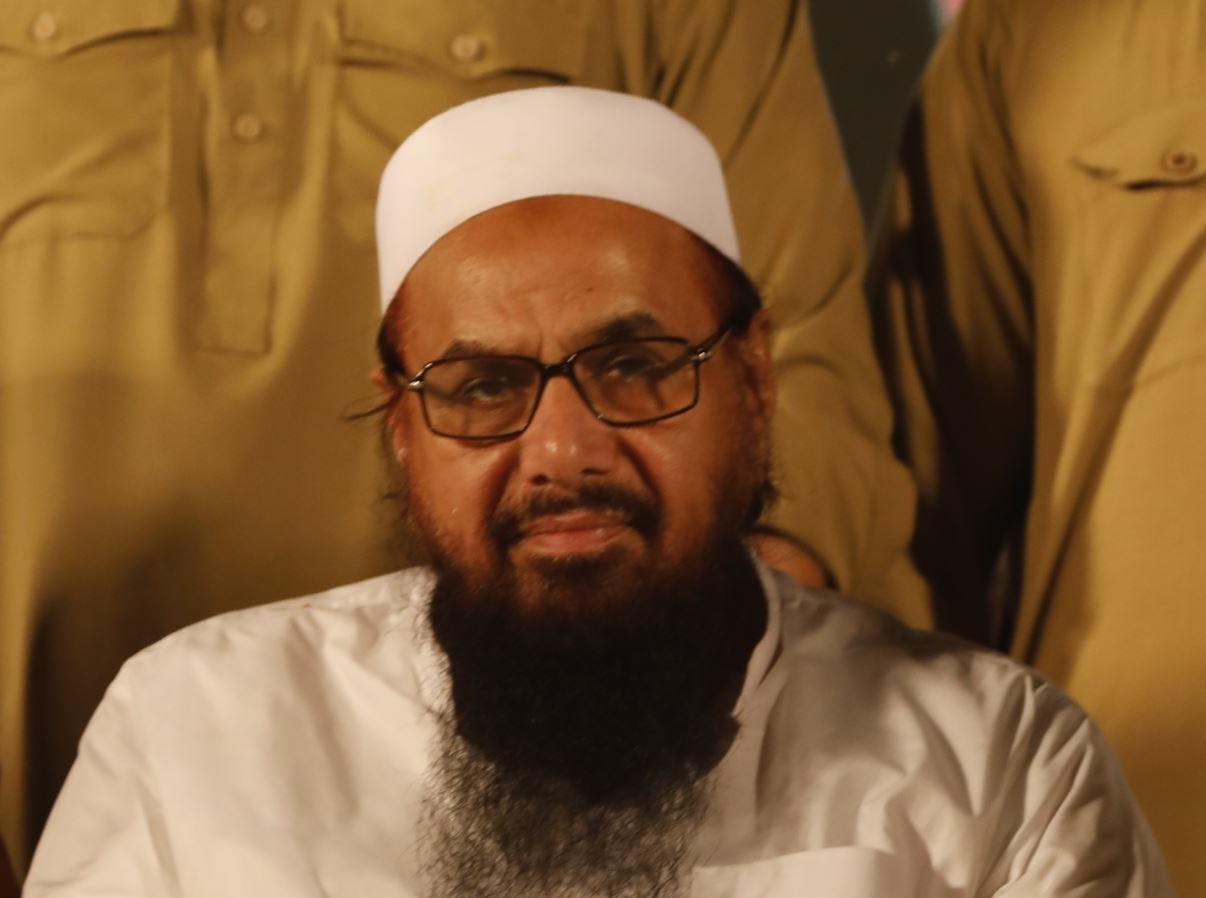
Hafiz Muhammad Saeed (born 5 June 1950) is a Pakistani militant and religious preacher convicted of terrorism. He co-founded Lashkar-e-Taiba (LeT), a Pakistan-based Islamist militant organization that is designated as a terrorist group by the United Nations Security Council, India, the United States, the United Kingdom, the European Union, Australia, and Russia.
In July 2019, three months before the scheduled reviewal of Pakistan's action plan by the Financial Action Task Force, Saeed was arrested by Pakistani authorities and sentenced to an 11-year prison sentence. In early April 2022, he was sentenced an additional 31 years for terror financing.
The Pakistan Army claimed to have jailed him, but Indian media found him housed in a military-protected residence in the centre of Lahore with a private park, vehicles, a mosque, a madrasa, and additional bodyguards.
Hafiz Saeed was born on June 5, 1950, in Sargodha, Punjab to a Punjabi family belonging to the Muslim Gujjar community. As told by him, his father, Maulana Kamal-ud-Din, a religious scholar, landlord and farmer, along with his family started migrating from Ambala and Hisar, East Punjab (now in Haryana) and reached Pakistan in around four months in the autumn of 1947.
He was named hafiz because he memorized the Qur'an during his childhood, his mother having impulsed him to do so when he was nine, a time during which he was already enthusiastic about the verses on jihad and also took interest in sports such as football and kabbadi. He then attended the Government College Sargodha (now University of Sargodha) before getting a Master's in Islamic Studies at the King Saud University in Riyadh.
A major early influence on his life and ideology was his maternal uncle, and later father-in-law, Hafiz Abdullah Bahawalpuri, who was a famed theologian belonging to the Salafi Ahl-i Hadith, who held that democracy was incompatible with Islam (which alienated him with Maulana Maududi's Jamaat-e-Islami) and argued, on the importance of jihad, "that only in jihad does one offer one's life in the way of Allah, which elevates it to a higher plane than merely fulfilling other religious responsibilities such as saying prayers and paying zakat, also entailing sacrifices and adjustments, but not at the scale evident in jihad" and "considered shahadat (martyrdom) to be the crux of jihad." Bahawalpuri's only son, Abdul Rehman Makki, is Saeed's brother-in-law and has been described as "his close partner."
General Muhammad Zia-ul-Haq appointed Saeed to the Council on Islamic Ideology, and he later served as an Islamic Studies teacher at the University of Engineering and Technology, Pakistan. He was sent to Saudi Arabia in the early 1980s by the university for higher studies where he met Saudi sheikhs who were taking part in the Soviet–Afghan War. They inspired him in taking an active role supporting the mujahideen in Afghanistan. During his studies at the King Saud University, where he was gold medalist for his academic performances as well as taught there, he came under the influence of Salafi scholars like al-Uthaymin and Ibn Baz.
Saeed held two master's degrees from the University of Punjab and a specialisation in Islamic Studies and Arabic Language from King Saud University.
Hub AI
Hafiz Saeed AI simulator
(@Hafiz Saeed_simulator)
Hafiz Saeed
Hafiz Muhammad Saeed (born 5 June 1950) is a Pakistani militant and religious preacher convicted of terrorism. He co-founded Lashkar-e-Taiba (LeT), a Pakistan-based Islamist militant organization that is designated as a terrorist group by the United Nations Security Council, India, the United States, the United Kingdom, the European Union, Australia, and Russia.
In July 2019, three months before the scheduled reviewal of Pakistan's action plan by the Financial Action Task Force, Saeed was arrested by Pakistani authorities and sentenced to an 11-year prison sentence. In early April 2022, he was sentenced an additional 31 years for terror financing.
The Pakistan Army claimed to have jailed him, but Indian media found him housed in a military-protected residence in the centre of Lahore with a private park, vehicles, a mosque, a madrasa, and additional bodyguards.
Hafiz Saeed was born on June 5, 1950, in Sargodha, Punjab to a Punjabi family belonging to the Muslim Gujjar community. As told by him, his father, Maulana Kamal-ud-Din, a religious scholar, landlord and farmer, along with his family started migrating from Ambala and Hisar, East Punjab (now in Haryana) and reached Pakistan in around four months in the autumn of 1947.
He was named hafiz because he memorized the Qur'an during his childhood, his mother having impulsed him to do so when he was nine, a time during which he was already enthusiastic about the verses on jihad and also took interest in sports such as football and kabbadi. He then attended the Government College Sargodha (now University of Sargodha) before getting a Master's in Islamic Studies at the King Saud University in Riyadh.
A major early influence on his life and ideology was his maternal uncle, and later father-in-law, Hafiz Abdullah Bahawalpuri, who was a famed theologian belonging to the Salafi Ahl-i Hadith, who held that democracy was incompatible with Islam (which alienated him with Maulana Maududi's Jamaat-e-Islami) and argued, on the importance of jihad, "that only in jihad does one offer one's life in the way of Allah, which elevates it to a higher plane than merely fulfilling other religious responsibilities such as saying prayers and paying zakat, also entailing sacrifices and adjustments, but not at the scale evident in jihad" and "considered shahadat (martyrdom) to be the crux of jihad." Bahawalpuri's only son, Abdul Rehman Makki, is Saeed's brother-in-law and has been described as "his close partner."
General Muhammad Zia-ul-Haq appointed Saeed to the Council on Islamic Ideology, and he later served as an Islamic Studies teacher at the University of Engineering and Technology, Pakistan. He was sent to Saudi Arabia in the early 1980s by the university for higher studies where he met Saudi sheikhs who were taking part in the Soviet–Afghan War. They inspired him in taking an active role supporting the mujahideen in Afghanistan. During his studies at the King Saud University, where he was gold medalist for his academic performances as well as taught there, he came under the influence of Salafi scholars like al-Uthaymin and Ibn Baz.
Saeed held two master's degrees from the University of Punjab and a specialisation in Islamic Studies and Arabic Language from King Saud University.
Recent media