



Community hub
Recent from talks
Knowledge base stats:
Talk channels stats:
Members stats:
Hand washing
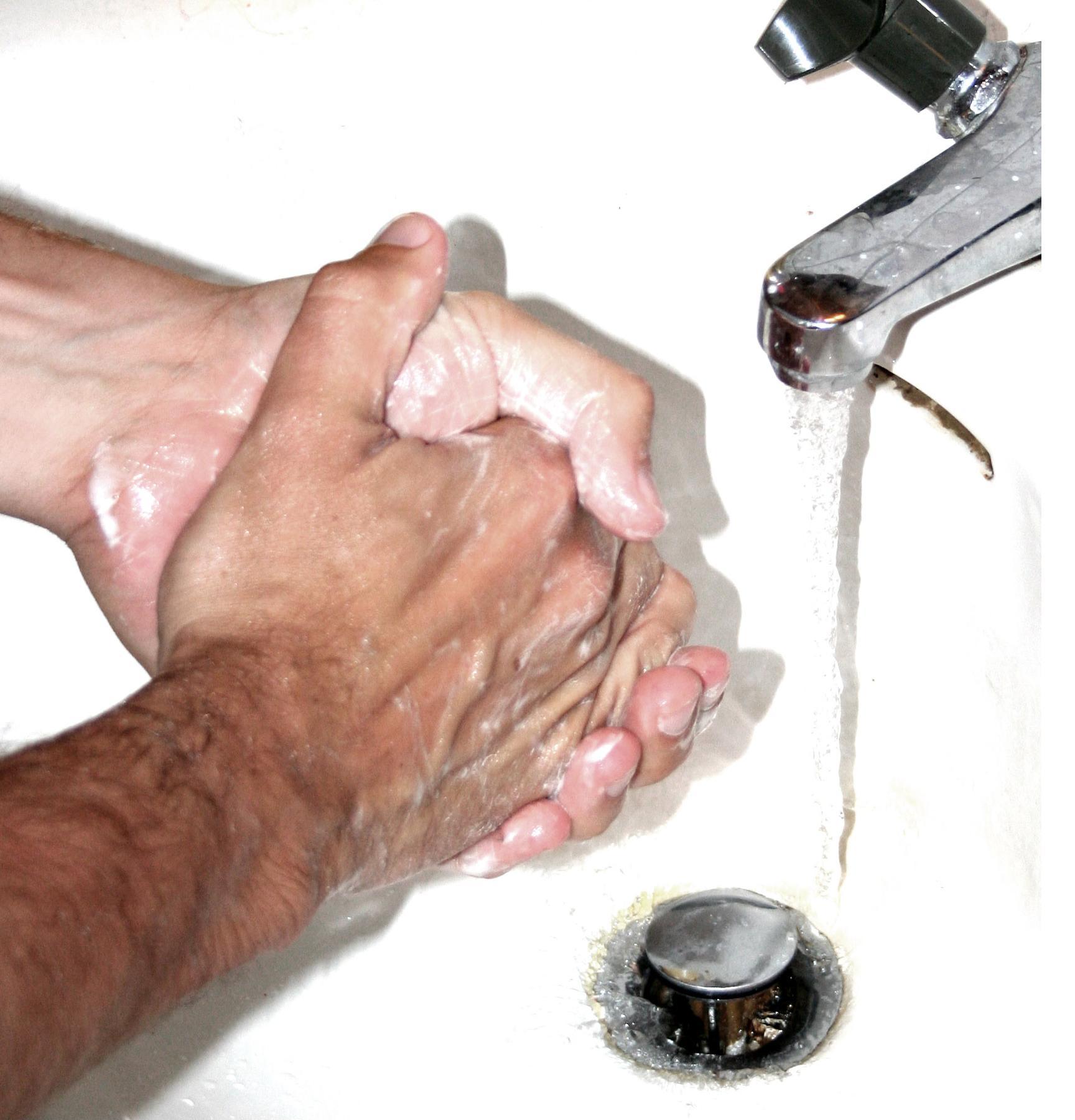
Hand washing (or handwashing), also called hand hygiene, is the process of cleaning the hands with soap or handwash and water to eliminate bacteria, viruses, dirt, microorganisms, and other potentially harmful substances. Drying of the washed hands is part of the process as wet and moist hands are more easily recontaminated. If soap and water are unavailable, hand sanitizer that is at least 60% (v/v) alcohol in water can be used as long as hands are not visibly excessively dirty or greasy. Hand hygiene is central to preventing the spread of infectious diseases in home and everyday life settings. Meta-analyses have shown that regular hand washing in community settings significantly reduces respiratory and gastrointestinal infection
The World Health Organization (WHO) recommends washing hands for at least 20 seconds before and after certain activities. These include the five critical times during the day where washing hands with soap is important to reduce fecal-oral transmission of disease: after using the toilet (for urination, defecation, menstrual hygiene), after cleaning a child's bottom (changing diapers), before feeding a child, before eating and before/after preparing food or handling raw meat, fish, or poultry.
When neither hand washing nor using hand sanitizer is possible, hands can be cleaned with uncontaminated ash and clean water, although the benefits and harms are uncertain for reducing the spread of viral or bacterial infections. However, frequent hand washing can lead to skin damage due to drying of the skin. Moisturizing lotion is often recommended to keep the hands from drying out; dry skin can lead to skin damage which can increase the risk for the transmission of infection.
The United States Centers for Disease Control and Prevention (CDC) recommends the following steps when washing one's hands for the prevention of transmission of disease:
The most commonly missed areas are the thumb, the wrist, the areas between the fingers, and under fingernails. Artificial nails and chipped nail polish may harbor microorganisms.
There are five critical times during the day where washing hands with soap is important to reduce fecal-oral transmission of disease: after using the toilet (for urination, defecation, menstrual hygiene), after cleaning a child's bottom (changing diapers), before feeding a child, before eating and before/after preparing food or handling raw meat, fish, or poultry. Other occasions when proper hand washing techniques should be practiced to prevent the transmission of disease include before and after treating a cut or wound; after sneezing, coughing, or blowing your nose; after touching animal waste or handling animals; and after touching garbage.In healthcare settings, the WHO also recommends "Five Moments for Hand Hygiene"" before patient contact, before aseptic tasks, after exposure to body fluids, after patient contact, and after contact with patient surroundings.
Hand washing has many significant health benefits, including minimizing the spread of influenza, COVID-19, and other infectious diseases; preventing infectious causes of diarrhea; decreasing respiratory infections; and reducing infant mortality rate at home birth deliveries. A 2013 study showed that improved hand washing practices may lead to small improvements in the length growth in children under five years of age. In developing countries, childhood mortality rates related to respiratory and diarrheal diseases can be reduced by introducing simple behavioral changes, such as hand washing with soap. This simple action can reduce the rate of mortality from these diseases by almost 50%. Interventions that promote hand washing can reduce diarrhea episodes by about a third, and this is comparable to providing clean water in low income areas. 48% of reductions in diarrhea episodes can be associated with hand washing with soap.
Handwashing with soap is the single most effective and inexpensive way to prevent diarrhea and acute respiratory infections (ARI), as automatic behavior performed in homes, schools, and communities worldwide. Pneumonia, a major ARI, is the number one cause of mortality among children under five years old, taking the lives of an estimated 1.8 million children per year. Diarrhea and pneumonia together account for almost 3.5 million child deaths annually. According to UNICEF, turning handwashing with soap before eating and after using the toilet into an ingrained habit can save more lives than any single vaccine or medical intervention, cutting deaths from diarrhea by almost half and deaths from acute respiratory infections by one-quarter. Hand washing is usually integrated with other sanitation interventions as part of water, sanitation, and hygiene (WASH) programmes. Hand washing also protects against impetigo which is transmitted through direct physical contact.
Hub AI
Hand washing AI simulator
(@Hand washing_simulator)
Hand washing
Hand washing (or handwashing), also called hand hygiene, is the process of cleaning the hands with soap or handwash and water to eliminate bacteria, viruses, dirt, microorganisms, and other potentially harmful substances. Drying of the washed hands is part of the process as wet and moist hands are more easily recontaminated. If soap and water are unavailable, hand sanitizer that is at least 60% (v/v) alcohol in water can be used as long as hands are not visibly excessively dirty or greasy. Hand hygiene is central to preventing the spread of infectious diseases in home and everyday life settings. Meta-analyses have shown that regular hand washing in community settings significantly reduces respiratory and gastrointestinal infection
The World Health Organization (WHO) recommends washing hands for at least 20 seconds before and after certain activities. These include the five critical times during the day where washing hands with soap is important to reduce fecal-oral transmission of disease: after using the toilet (for urination, defecation, menstrual hygiene), after cleaning a child's bottom (changing diapers), before feeding a child, before eating and before/after preparing food or handling raw meat, fish, or poultry.
When neither hand washing nor using hand sanitizer is possible, hands can be cleaned with uncontaminated ash and clean water, although the benefits and harms are uncertain for reducing the spread of viral or bacterial infections. However, frequent hand washing can lead to skin damage due to drying of the skin. Moisturizing lotion is often recommended to keep the hands from drying out; dry skin can lead to skin damage which can increase the risk for the transmission of infection.
The United States Centers for Disease Control and Prevention (CDC) recommends the following steps when washing one's hands for the prevention of transmission of disease:
The most commonly missed areas are the thumb, the wrist, the areas between the fingers, and under fingernails. Artificial nails and chipped nail polish may harbor microorganisms.
There are five critical times during the day where washing hands with soap is important to reduce fecal-oral transmission of disease: after using the toilet (for urination, defecation, menstrual hygiene), after cleaning a child's bottom (changing diapers), before feeding a child, before eating and before/after preparing food or handling raw meat, fish, or poultry. Other occasions when proper hand washing techniques should be practiced to prevent the transmission of disease include before and after treating a cut or wound; after sneezing, coughing, or blowing your nose; after touching animal waste or handling animals; and after touching garbage.In healthcare settings, the WHO also recommends "Five Moments for Hand Hygiene"" before patient contact, before aseptic tasks, after exposure to body fluids, after patient contact, and after contact with patient surroundings.
Hand washing has many significant health benefits, including minimizing the spread of influenza, COVID-19, and other infectious diseases; preventing infectious causes of diarrhea; decreasing respiratory infections; and reducing infant mortality rate at home birth deliveries. A 2013 study showed that improved hand washing practices may lead to small improvements in the length growth in children under five years of age. In developing countries, childhood mortality rates related to respiratory and diarrheal diseases can be reduced by introducing simple behavioral changes, such as hand washing with soap. This simple action can reduce the rate of mortality from these diseases by almost 50%. Interventions that promote hand washing can reduce diarrhea episodes by about a third, and this is comparable to providing clean water in low income areas. 48% of reductions in diarrhea episodes can be associated with hand washing with soap.
Handwashing with soap is the single most effective and inexpensive way to prevent diarrhea and acute respiratory infections (ARI), as automatic behavior performed in homes, schools, and communities worldwide. Pneumonia, a major ARI, is the number one cause of mortality among children under five years old, taking the lives of an estimated 1.8 million children per year. Diarrhea and pneumonia together account for almost 3.5 million child deaths annually. According to UNICEF, turning handwashing with soap before eating and after using the toilet into an ingrained habit can save more lives than any single vaccine or medical intervention, cutting deaths from diarrhea by almost half and deaths from acute respiratory infections by one-quarter. Hand washing is usually integrated with other sanitation interventions as part of water, sanitation, and hygiene (WASH) programmes. Hand washing also protects against impetigo which is transmitted through direct physical contact.