Hubbry Logo
HarbourFront (Singapore)HarbourFront (Singapore)Main
Open search
HarbourFront (Singapore)
Community hub
HarbourFront (Singapore)
logo
8 pages, 0 posts
0 subscribers
Be the first to start a discussion here.
Contribute something
HarbourFront (Singapore)
from Wikipedia
Maritime Square
The Singapore Cruise Centre is Singapore's first international cruise centre.

HarbourFront is a waterfront district situated in southern Singapore. Whilst HarbourFront's boundaries are ambiguous, its location is roughly represented on the URA's Master Plan as a subzone called Maritime Square, located within the Bukit Merah Planning Area.[1]

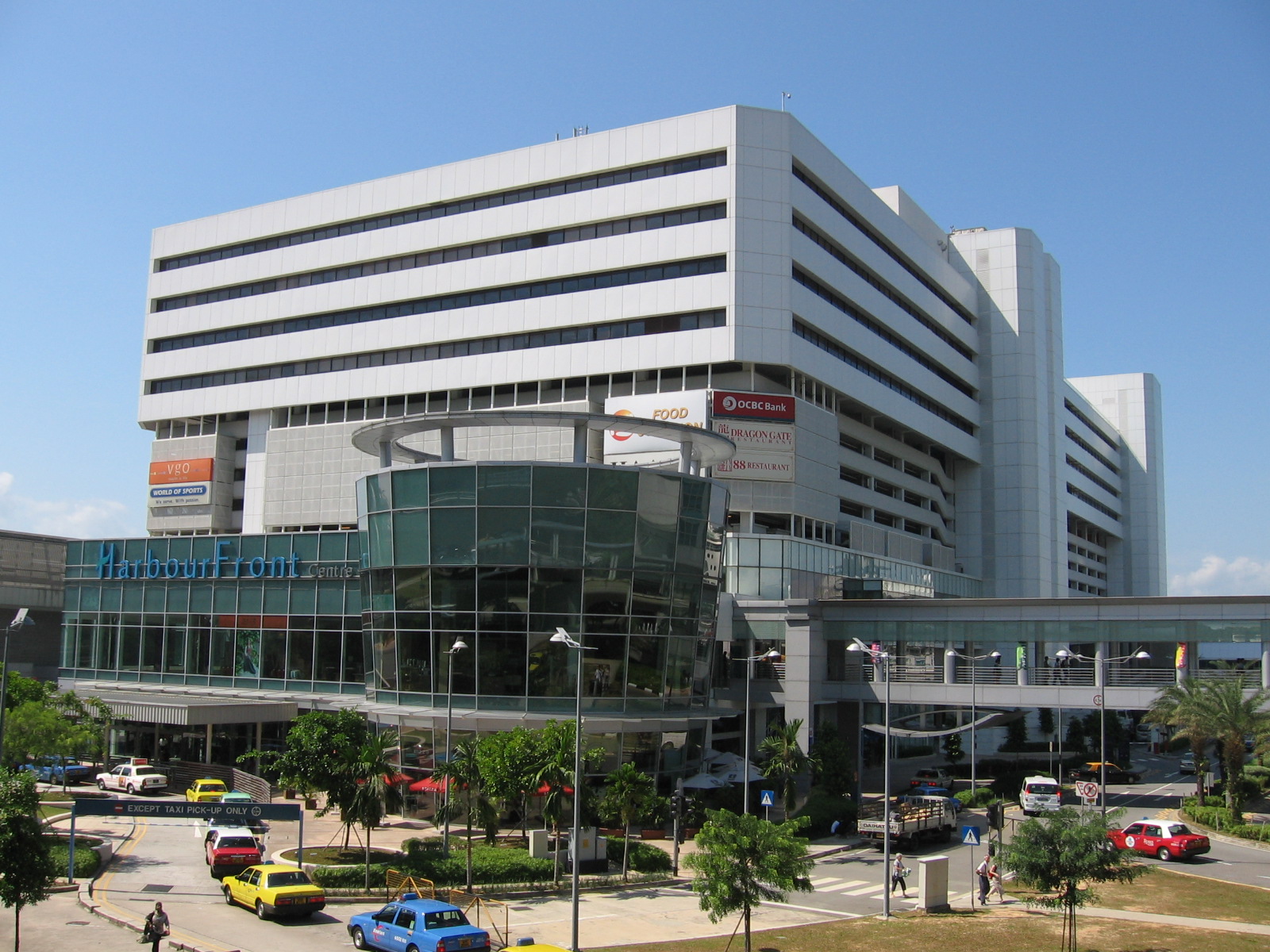
Main thoroughfares in HarbourFront include Keppel Way and Telok Blangah Road. Notable buildings in the vicinity include HarbourFront Centre, Singapore Cruise Centre, St James Power Station, VivoCity and the Jardine Steps Tower which hosts the HarbourFront stop of the Singapore Cable Car. Maritime Square is currently being redeveloped into a new business and lifestyle hub.

Etymology

[edit]

The area was originally known as Seah Im but was also referred to as Jardine Steps. After the Port of Singapore expanded, it was developed into Maritime Square and later renamed as HarbourFront.[2] The present-day appellation, HarbourFront, was coined in the 2000s to give the area a more upmarket feel.

History

[edit]

HarbourFront was once close to the southernmost point of the main island of Singapore, until land reclamation in Tanjong Pagar and Tuas. Its location in the sheltered waters of Keppel Harbour helped the area to thrive as a commercial area adjacent to Keppel Shipyards, particularly with the building of the former World Trade Centre in 1978. Singapore's first major Exhibitions and Conventions venue, the World Trade Centre Exhibition Complex, was subsequently built beside the World Trade Centre, and also served as a transport node with ferries to Sentosa and other regional destinations such as Batam. The Singapore Cruise Centre opened in 1991 in HarbourFront as the country's first international cruise terminal.

Massive redevelopment in the area after the closure of the shipyard subsequently led to the name HarbourFront being coined in the early 2000s to refer to the immediate vicinity of the World Trade Centre, which was in the midst of a major refurbishment project. Relaunched as HarbourFront Centre, the former World Trade Centre also has its neighbouring Exhibition Complex demolished to make way for VivoCity, the upgrading of the Cable Car Towers (old Jardine Steps Station on top the old PSA Tower) and the construction of two new office blocks adjacent to it. Transportation into the area was vastly improved with the opening of the HarbourFront MRT station and extension of the HarbourFront Bus Interchange. Also, the new monorail link to Sentosa, the Sentosa Express has been completed and opened on 15 January 2007. The HarbourFront station of the Circle line had opened on 8 October 2011.

A new six-storey office building is also in the works as a new addition to the HarbourFront Office Park. The new site is referred to as the HarbourFront Merrill Lynch, which is a six-storey building and will be entirely occupied by American bank Merrill Lynch with a total area of 200,000 sq ft (19,000 m2). Another office development is being planned on the site of the current SPI Building. Furthermore, a residential development is possible in the future.[3] The Singapore Cruise Centre would be expanded to accommodate over 6 million passengers by 2010.

Panoramic view of HarbourFront, with Cruise Bay in the foreground. Taken from the now defunct Sentosa Ferry Terminal.

References

[edit]
[edit]
Revisions and contributorsEdit on WikipediaRead on Wikipedia
from Grokipedia
HarbourFront is a dynamic mixed-use precinct and planning area in the Central Region of , spanning approximately 24 hectares along the southern waterfront and serving as a primary gateway to as well as regional ferry destinations. It integrates commercial, residential, retail, and transportation functions, featuring key landmarks such as —Singapore's largest shopping mall with over 1 million square feet of lettable space across five storeys—and the , a complex that includes office towers, exhibition halls, and connectivity to the Singapore Cruise Centre for international cruises and ferries to Indonesia's and . The area is anchored by the , an underground interchange terminus for the North East Line and Circle Line, facilitating seamless access for commuters and tourists. Historically, HarbourFront traces its roots to Singapore's waterfront development since the establishment of the trading post in 1819, evolving from industrial port activities into a modern urban hub through targeted reclamation and planning efforts. Reclamation along Telok Blangah Road commenced in the 1970s, enabling the construction of the World Trade Centre, which opened in 1977, and was repurposed and renamed HarbourFront Centre in 2003 to reflect its expanded role in commerce and tourism. The 1990s marked a significant transformation phase, shifting the precinct from ageing port infrastructure and underutilized spaces to a vibrant business and lifestyle destination, with the opening of VivoCity in 2006 enhancing its appeal as a retail and entertainment epicenter connected directly to Sentosa via boardwalk and cable car. Today, HarbourFront supports a diverse with premium spaces in towers like HarbourFront Tower One and Two, residential developments in the vicinity, and cultural amenities including the HarbourFront Library, which overlooks and promotes reading and heritage. It plays a crucial role in regional connectivity, handling ferry services to , Bintan, Karimun, and Desaru, while fostering waterfront leisure through promenades and events. Looking ahead, HarbourFront forms an integral part of the Urban Redevelopment Authority's Greater Southern Waterfront master plan, which envisions a 120-kilometer accessible coastline from to Marina East, emphasizing sustainable urban living, green corridors, and enhanced public spaces. Ongoing projects include the completion of the Circle Line loop by early 2026 for better transit integration and the relocation of the Cruise Centre to a new interim terminal in mid-2026, alongside the redevelopment of into a 33-storey mixed-use structure with Grade A offices, experiential retail, and an elevated waterfront park by 2031. These initiatives aim to revitalize the precinct while preserving its heritage elements amid broader coastal transformations.

Geography and Planning

Location and Boundaries

HarbourFront is a prominent waterfront district situated in the southern region of , forming part of the Planning Area. It is officially designated as the Maritime Square subzone, covering approximately 0.62 km², within the Urban Redevelopment Authority's (URA) Master Plan, which outlines its role in the nation's urban framework. This positioning integrates HarbourFront into 's broader southern coastal landscape, emphasizing its function as a transitional zone between urban mainland areas and offshore islands. The district's boundaries are defined by key geographical and infrastructural features: Keppel Harbour lies to the south, providing a natural maritime edge; borders it to the east; and it extends westward toward through connectivity links such as the Sentosa Gateway and Sentosa Express route. Centered at approximately 1°15′35″N 103°49′20″E, the subzone encompasses a compact urban expanse that supports mixed residential, commercial, and transport activities, though its precise area delineation reflects the fluid nature of waterfront planning in . Positioned roughly 4 km south of Singapore's , HarbourFront acts as a vital gateway to , enabling seamless access via , boardwalk, and vehicular routes that link the mainland to the resort island's attractions. Under URA administration, the area is planned to balance development with waterfront preservation, ensuring its integration into the national land-use strategy.

Land Use and Reclamation

Land reclamation in the HarbourFront area, particularly around and extending to , has been a key strategy since the late 1960s to expand usable land along Singapore's southern shoreline. The first major post-independence project in 1967 reclaimed 23 hectares at Keppel Harbour in to construct Singapore's initial container terminal, transforming former sea areas into industrial and port facilities that laid the foundation for HarbourFront's development. Subsequent efforts in , starting in the 2010s, added over 414 hectares through Phase 1 of the Tuas Port project, further extending the shoreline and supporting the relocation of port operations to enable mixed-use redevelopment in the original HarbourFront zone. Under the Urban Redevelopment Authority's (URA) Master Plan 2019, land in the HarbourFront region is zoned for a mix of uses, emphasizing integrated commercial, residential, and transport/institutional developments to foster vibrant waterfront living. The plan promotes , allowing for commercial hubs alongside residential spaces and infrastructure like MRT connections, with a focus on sustainable along the southern coast. This zoning balances economic activity with community needs. Reclamation efforts have significantly altered the local geography, adding roughly 2 km² of land in the vicinity and shifting the southernmost point of mainland outward by incorporating adjacent marine areas. Overall, such projects have contributed to 's total land expansion of about 138 km² between and , with southern reclamations playing a pivotal role in HarbourFront's evolution from port-dominated to multifaceted urban space. To address environmental impacts from increased , reclamation in HarbourFront incorporates green mitigation measures, including waterfront parks and open spaces that enhance and public recreation. The URA's guidelines integrate these green elements, such as promenades and landscaped areas along the shoreline, to create resilient, liveable environments while offsetting the ecological effects of land extension.

History

Colonial and Early Post-Independence Era

Prior to the arrival of the British in 1819, the area encompassing what is now HarbourFront was part of Singapore's sparsely populated southern coast, characterized by small fishing communities and the presence of sea nomads who lived on long boats and utilized the waters for trade and sustenance. Local legends associate the nearby with the legendary landing of in the 13th century, when wooden ships already navigated Keppel Bay's waterway as a route between the Straits of Malacca and the . These early inhabitants engaged in fishing and regional maritime activities, though the region remained largely undeveloped compared to northern trading centers. In the , the area's development accelerated with the establishment of Keppel Harbour as a vital shipping port under British colonial rule. Identified as "New Harbour" by Resident in August 1819, it gained prominence after Captain Henry Keppel surveyed and highlighted its deep-water anchorage in May 1848 aboard the HMS Meander, enabling safer anchoring for larger vessels. The first graving dock (Dock No. 1) was constructed in 1859, followed by Dock No. 2 in 1867, supporting ship repairs and coaling operations; by 1852, the Peninsular and Oriental Steam Navigation Company () had relocated its coaling station here from the . Passenger access was facilitated through Jardine Steps, originally known as Seah Im—a name derived from the wealthy businessman Ang Seah Im (d. 1927), who owned properties in the vicinity and after whom the adjacent road and warehouse district were named—serving as a docking point for ferries to Pulau Belakang Mati (now ). These developments positioned the harbor as a key node in the British colonial trading network, handling and supporting regional . The early 20th century saw further growth tied to Keppel Shipyards and expanded trade infrastructure, reinforcing the area's role in the British colonial economy. In 1900, the harbor was officially renamed Keppel Harbour in honor of Admiral Henry Keppel, coinciding with expansions to accommodate larger vessels, including dredging and wharf improvements. The Singapore Harbour Board, formed in 1913, oversaw major projects such as the opening of King's Dock—the largest at the time—in that year, which utilized 203,000 tonnes of concrete and boosted ship repair capabilities. By the 1920s, the West Wharf Extension added over 3,000 feet of berthing space and 11 transit godowns for storage, while godowns in the Seah Im area handled commodities like latex and . These facilities made Keppel Harbour essential for Britain's maritime operations, contributing significantly to Singapore's position as an entrepôt with three-quarters of trade passing through its ports by the 1860s. Following Singapore's in , the HarbourFront area retained an initial industrial focus centered on ship repair and emerging , solidifying its status as a maritime hub before later urban transformations. The Authority, established in 1964, continued post-war enhancements like Queen's Dock for advanced repairs, while Keppel Shipyards—tracing origins to 19th-century docks—expanded operations, with ship-repairing accounting for about a quarter of the sector by the late . Early efforts built on this foundation, with planning for modern cargo handling in the Keppel vicinity supporting the government's push for industrialization and trade growth in the immediate post-independence years.

Modern Redevelopment (1980s–2000s)

The redevelopment of HarbourFront in the late 20th century marked a pivotal shift from its industrial port origins to a multifaceted commercial and tourism hub, beginning with the opening of the World Trade Centre in 1977. Commissioned by the Port of Singapore Authority, this 40-storey complex served as Southeast Asia's pioneering international convention and exhibition centre, featuring office spaces, exhibition halls, an auditorium, conference rooms, and a ferry terminal to facilitate global trade links. Its strategic location opposite Sentosa Island positioned it as a gateway for business events, hosting major trade shows and conferences that elevated Singapore's profile in regional commerce. This transformation accelerated in 1991 with the launch of the Singapore Cruise Centre at Keppel Basin, constructed by the Port of Singapore Authority to bolster tourism by accommodating regional ferries and international cruises. Relocated to HarbourFront in 1992, the facility handled growing passenger traffic, with cruise calls increasing by 29% annually from 1991 to 1997, supporting Singapore's ambition to become a premier maritime leisure destination. By integrating ferry operations with nearby trade infrastructure, it enhanced connectivity for visitors arriving from Indonesia, Malaysia, and beyond, laying the groundwork for waterfront vibrancy. In the early 2000s, the area underwent rebranding from its colonial-era names—Jardine Steps and Seah Im—to HarbourFront, a term coined to evoke a modern, upscale waterfront lifestyle and distance from historical industrial connotations. This coincided with the redevelopment of the former World Trade Centre into , renovated and reopened in 2003 as a mixed-use retail and complex. Key projects included the construction of , which opened on 7 October 2006 as Singapore's largest at approximately 1.5 million square feet of gross floor area, drawing shoppers with its retail, dining, and entertainment offerings. Integration with Sentosa advanced further via the Sentosa Express , which commenced operations on 15 January 2007, providing seamless access from to the island's attractions. These initiatives delivered significant economic benefits, particularly in , as HarbourFront became a central node in Singapore's visitor ecosystem; by 2007, national tourist arrivals surpassed 10 million annually, with waterfront developments like and the Cruise Centre contributing to a 10% rise in tourism receipts to S$13.6 billion. The rebranding and infrastructure upgrades not only boosted local commerce but also reinforced Singapore's status as a global lifestyle destination, with HarbourFront MRT's opening in further enhancing accessibility.

Recent Developments (2010s–Present)

The opening of the on the Circle Line on 8 October 2011 marked a significant enhancement in connectivity for the HarbourFront area, integrating it more seamlessly with the city's rail network and facilitating easier access to key attractions like and the . This extension, part of Circle Line Stages 4 and 5, reduced travel times and supported the growing commercial and tourist activities in the precinct by linking it directly to lines such as the North East Line. During the 2010s, the Singapore Cruise Centre at HarbourFront underwent upgrades to accommodate larger vessels, including berth extensions completed in 2008 that prepared the facility for mega-resort cruise ships, contributing to Singapore's overall cruise passenger capacity reaching over 6 million annually by 2015 across both HarbourFront and Marina Bay terminals. Complementing this, St James Power Station was revitalized as a prominent entertainment complex during the decade, operating from 2006 to 2018 as a multi-concept nightlife hub with themed pubs, live music venues, and interactive spaces that drew thousands of visitors nightly, boosting the area's vibrancy until its closure for further redevelopment. Following its closure, the site was redeveloped and opened in 2022 as the global headquarters of technology company Dyson, transforming it into a modern office and innovation campus. The led to a sharp decline in and cruise operations at HarbourFront from 2020 to 2022, with international arrivals plummeting and cruise traffic halting due to global restrictions, resulting in near-zero passenger throughput at the Singapore Cruise Centre during peak periods. Recovery began in 2023 with the easing of borders and implementation of enhanced health protocols, such as mandatory vaccinations and testing for cruise passengers, allowing visitor numbers to rebound toward pre-pandemic levels by mid-decade. In the 2020s, construction of a new interim Passenger Terminal adjacent to the existing Singapore Cruise Centre commenced in 2024 and is scheduled for completion in December 2025, enabling the relocation of and cruise operations from the second half of 2026 to support the site's redevelopment while maintaining service continuity. The Merrill Lynch HarbourFront building, a six-storey Grade A structure spanning approximately 200,000 square feet, has continued to anchor activities in the area since its completion in 2008, with ongoing occupancy reinforcing HarbourFront's role as a mixed-use hub. These efforts align with the broader Greater Southern Waterfront plan, which integrates HarbourFront into a 30-kilometer waterfront transformation by consolidating cruise facilities and creating continuous promenades to enhance and urban connectivity.

Landmarks and Attractions

Commercial and Entertainment Hubs

HarbourFront serves as a vibrant commercial and in , anchored by major retail complexes that attract both locals and tourists. , the largest in the country, spans 1,082,671 square feet of lettable area across three above-ground levels and two basement floors, housing over 300 retail stores ranging from fashion and lifestyle brands to supermarkets and specialty shops. Opened in 2006, it features a 15-screen cinema complex and numerous waterfront dining options, including over 100 eateries offering diverse cuisines from local hawker fare to international fine dining. As a key gateway to Island, plays a pivotal role in retail tourism, drawing millions of visitors annually and recording tenant sales exceeding S$1.1 billion in FY2023/24, which underscores its contribution to the area's economic vitality. Adjacent to , functions as a comprising retail outlets on its lower levels and office spaces above, providing a blend of shopping, business, and connectivity facilities. The 13-storey complex, completed in 1978, includes ground-level shops for everyday retail needs and upper floors dedicated to corporate tenants, supporting the district's role as a commercial node outside the . It is scheduled for a temporary closure in the second half of 2026 to undergo into a 33-storey integrated building with enhanced office and retail components, expected to reopen by 2031. The district also hosts annual waterfront events to boost leisure footfall. Collectively, HarbourFront's malls, including , generate significant retail turnover estimated to exceed S$1 billion annually, bolstering Singapore's broader retail sector through tourism-driven spending and local patronage.

Cultural and Waterfront Sites

HarbourFront's cultural and waterfront sites preserve Singapore's maritime legacy while offering scenic and experiential attractions that draw visitors to its southern shores. The area features historical remnants from its colonial past, integrated into modern promenades and terminals that emphasize the region's seafaring heritage. These sites not only commemorate Keppel Harbour's role in early and movement but also provide spaces for public engagement with Singapore's evolving waterfront identity. The Singapore Cruise Centre, established in 1991 by the Port of Singapore Authority at a cost of S$50 million, functions as a vital hub for regional ferry services connecting to ports in Indonesia's , such as and Bintan, and Malaysia's region. In 2019, it achieved a record of 5.3 million regional ferry passengers, underscoring its importance as a gateway for short-haul maritime travel before the disruptions. Complementing this, the centre accommodates berthings, contributing to the area's vibrant visitor flow. As of 2024, Singapore's overall cruise passenger throughput has recovered to near pre-pandemic levels at 1.85 million, with the Singapore Cruise Centre undergoing a S$40 million upgrade announced in 2025 to enhance embarkation and terminal facilities. A notable historical feature is the Jardine Steps Tower, now incorporated as HarbourFront Tower 2, which originated as colonial-era passenger steps dating back to the for disembarking ships in Keppel Harbour. This preserved structure serves as a scenic viewpoint, offering elevated panoramas of the bay and Island, evoking the area's early role in international arrivals. The National Heritage Board oversees the broader preservation of Keppel Harbour's elements, recognizing them as integral to Singapore's maritime history through interpretive efforts and heritage trails that highlight 19th-century dockyards and naval developments. Waterfront promenades along HarbourFront extend inviting pathways with views toward , incorporating public art installations that enhance the cultural ambiance, such as sculptures reflecting maritime themes. These spaces host seasonal cultural events, including light-up festivals that illuminate the shoreline during holidays like Deepavali and , fostering community gatherings. Adjacent waterfront parks, including elements of Labrador Nature Reserve, promote eco-tourism via coastal trails and ecosystems, encouraging sustainable exploration of the area's and historical bunkers. Together, these sites create an immersive visitor experience centered on heritage appreciation and natural serenity.

Transportation

Rail and MRT Connections

(NE1/CC29) is a major underground interchange serving the North East Line (NEL) and Circle Line (CCL), facilitating seamless transfers for commuters in southern . The NEL platforms opened on 20 June 2003 as part of the line's initial rollout, marking HarbourFront as its southern terminus. The CCL extension to the station commenced operations on 8 October 2011, integrating it into the orbital network and boosting connectivity to surrounding areas. Daily ridership at the station exceeded 40,000 passengers as of June 2024, reflecting its high usage for both local travel and tourism-related journeys. The station's design emphasizes accessibility and integration with nearby developments, featuring direct underground pedestrian links to shopping mall at basement level and the Sentosa Express on the mall's third level for access. It is also connected to , formerly the World Trade Centre, enhancing its role as a for commercial and leisure activities. Post-2011, enhancements such as platform reconfiguration and crowd flow improvements have been implemented to handle increased volumes from the CCL interchange, including dedicated alighting areas during peak hours. In terms of urban mobility, HarbourFront MRT connects southern residential and commercial zones to the city center via the CCL, enabling efficient orbital travel that reduces reliance on radial lines and shortens commutes to areas like Dhoby Ghaut in under 30 minutes. This interchange supports broader network efficiency by linking to the NEL for northeastern routes. Looking ahead, planned enhancements tied to the Circle Line Stage 6 completion in 2026 will close the CCL loop, adding three intermediate stations and improving reliability through new signaling and fleet expansions at HarbourFront. These upgrades will also enhance proximity to the Thomson-East Coast Line's Stage 5 rollout in the same year, fostering better overall rail integration without direct interchange.

Bus, Road, and Water Access

HarbourFront Bus Interchange, located adjacent to , serves as a key hub with services operated by , , and . It accommodates 10 bus routes, including services 10, 30, and 100, which provide connections to the and other parts of southern . These routes facilitate efficient access for commuters traveling to and from the area, with frequencies typically ranging from every 5 to 15 minutes during peak hours. The road network supporting HarbourFront includes major arteries such as the Keppel Viaduct and , which link the district to the and western parts of the island. These infrastructure elements handle substantial vehicular traffic, with the implementing measures like and signalized intersections to manage congestion during peak periods. The , a multi-lane elevated structure, enhances connectivity by bypassing at-grade intersections. Water access is provided through the Singapore Cruise Centre at HarbourFront, offering ferry services to the Riau Islands in , including and Bintan. High-speed ferries, operated by companies such as Majestic Fast Ferry and Sindo Ferry, complete the journey to in approximately 45 to 60 minutes. These services depart multiple times daily, supporting both and regional . To promote sustainable and inclusive transport, HarbourFront features accessibility enhancements added in the 2020s, including covered walkways connecting key facilities and charging stations. The Authority's network ensures sheltered paths within 400 meters of transit hubs, improving comfort in Singapore's . EV charging points, such as those at Keppel Bay Tower and , have been installed to support the growing adoption of electric vehicles. These integrate with the broader MRT and bus systems for seamless multimodal access. HarbourFront serves as the primary gateway to Island, facilitating seamless access through dedicated transportation links integrated with the . The , a system, provides a direct and efficient connection from station, located above the MRT, to key points on Sentosa. This elevated line, spanning approximately 2.1 kilometers, connects HarbourFront to Imbiah Station in about 10 minutes, offering a convenient entry for visitors heading to major attractions. Launched on 15 January 2007, the Sentosa Express operates with trains departing every 5 minutes during peak hours, accommodating up to 4,000 passengers per hour in each direction and enhancing accessibility for the island's influx of tourists. Complementing this is the Singapore Cable Car, an aerial gondola system that has linked Mount Faber on the mainland to Sentosa since its opening on 15 February 1974. The cable car spans the harbor, delivering panoramic views of the Singapore skyline, Sentosa's beaches, and surrounding waters during its 12-minute journey, with a system capacity of 2,600 passengers per hour. Both systems integrate directly with HarbourFront MRT via pedestrian links, such as escalators to VivoCity's Level 3 for the Express and a short walk to the cable car's HarbourFront Tower station. The cable car underwent significant enhancements in the late , including a S$36 million overhaul completed in 2010 that replaced the mechanical systems, introduced modern metallic cabins, and bolstered safety protocols with advanced monitoring and structural reinforcements to prevent past incidents. These connections collectively handle the majority of inbound traffic to , underscoring HarbourFront's role in supporting the island's ecosystem.

Future Developments

Ongoing Projects

Construction of a new interim passenger terminal adjacent to the existing HarbourFront facility began in 2024 and is scheduled for completion in December 2025 (as of November 2025). This two-storey facility, developed by under a design-and-build awarded in 2024, will serve as a temporary all-weather hub for and cruise operations, featuring a new , foreshore , walkway ramp, and sheltered floating pontoon. Upon opening, it will boost capacity from 6,800 to 11,700 passengers. The relocation of operations to this interim terminal is set for the second half of 2026, enabling the redevelopment of the Singapore Cruise Centre, which has served as a key maritime gateway since its establishment in 1991. This move supports broader revitalization efforts in the area while maintaining seamless connectivity for passengers to regional destinations like Batam and Bintan. Parallel to these maritime upgrades, is undergoing a comprehensive makeover managed by , with a temporary closure planned from mid-2026 to facilitate transformative works. The redevelopment will convert the site into a 33-storey mixed-use building spanning 123,000 square meters, incorporating 26 floors of Grade A and five floors dedicated to experiential retail and leisure areas, including a 13,000 square meter elevated verdant park offering panoramic views. The project emphasizes sustainability, targeting BCA Green Mark Platinum and Platinum certifications, and is expected to reopen in the first half of 2031. These initiatives form part of Phase 1 enhancements in the Greater Southern Waterfront (GSW) transformation, spanning to 2025 (as of November 2025), which integrate HarbourFront through the addition of green corridors and parks to foster ecological connectivity and economic vibrancy. Key features include four major green corridors—Central, Berlayer, Henderson, and Northern—linking sites like the former Keppel to and beyond, alongside new commercial developments such as the project to anchor activities. Environmental impact assessments for these early-phase works, including and waterfront enhancements, were completed in to ensure minimal ecological disruption.

Planned Expansions and Visions

The Urban Redevelopment Authority's (URA) Greater Southern Waterfront Master Plan positions HarbourFront as the northern anchor for a transformative 2,000-hectare eco-district spanning 30 kilometres of coastline from to Marina East, envisioned as a seamless extension of urban living, working, and recreational spaces over the next three decades. This long-term vision includes the development of tens of thousands of new homes and the creation of significant employment opportunities, fostering a balanced mix of residential, commercial, and green precincts to support and economic vitality. Sustainability is central to these expansions, with designs emphasizing net-zero emissions pathways by 2050 through extensive waterfront parks, corridors, and flood-resilient such as coastal barriers and elevated landscapes to mitigate sea-level rise. Potential future additions within the precinct include high-rise residential towers reaching up to 46 storeys, as seen in planned developments like Berlayar Estate, to accommodate diverse housing needs while preserving scenic views and public access. Additionally, post-2026 enhancements to the ferry terminal, following its relocation to an interim facility, will improve maritime connectivity and integration with the evolving waterfront.

References

Add your contribution
Related Hubs
Contribute something
User Avatar
No comments yet.