Recent from talks
Nothing was collected or created yet.
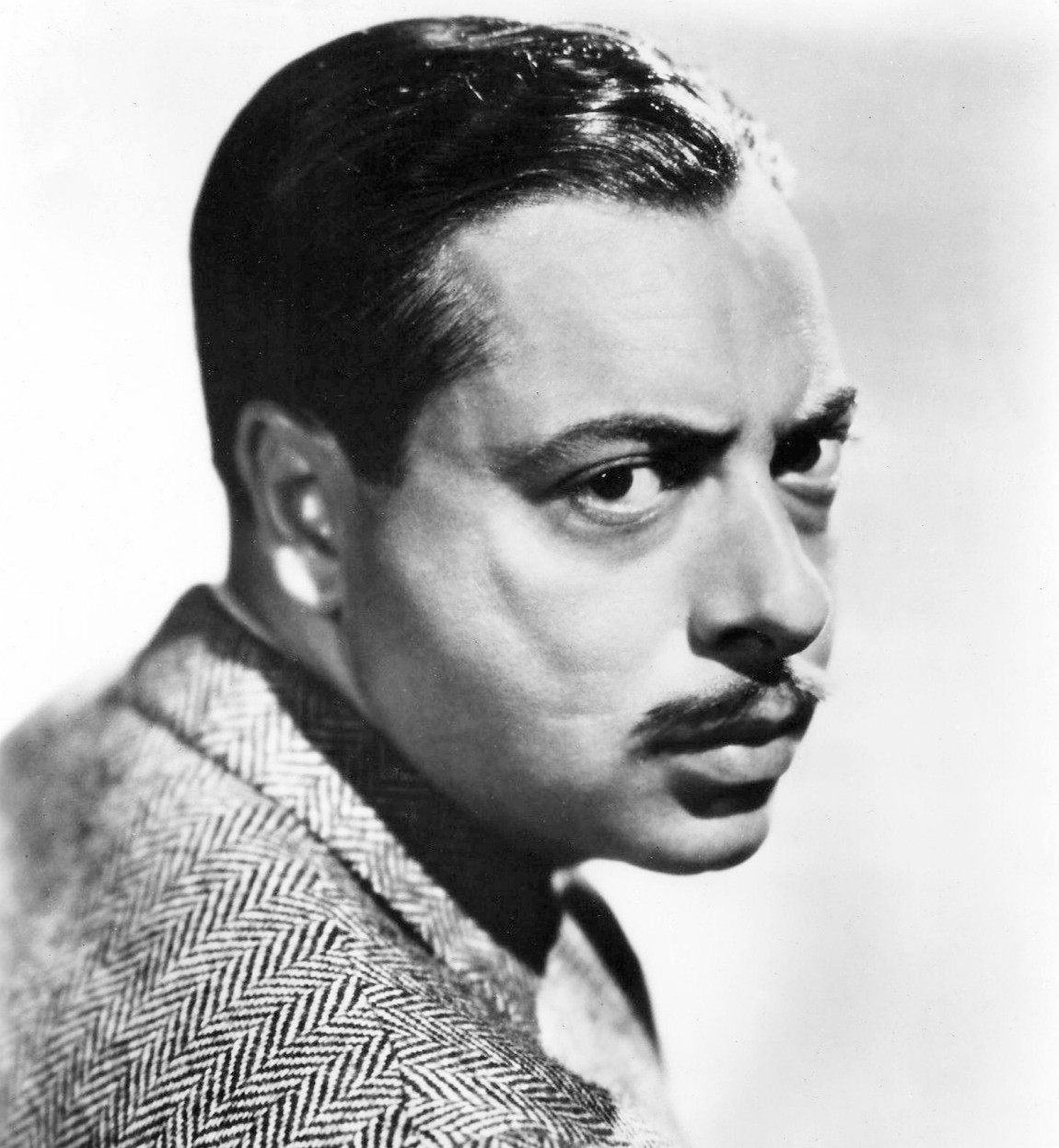
Harold Huber
View on WikipediaHarold Huber (born Harold Joseph Huberman, December 5, 1909 – September 29, 1959) was an American actor who appeared on film, radio and television.
Key Information
Early life
[edit]Huber was born in the Bronx to Jewish immigrants from Imperial Russia, who had arrived in the United States as infants.[2] His father was the manager of an optical firm. Harold Huberman entered New York University in the fall of 1925 at age sixteen. He was a member of the university debate team, and by his third year had become editor of a school magazine called The Medley.[3] His tenure at that post was marked by an incident, reported in the newspapers, when the administration suspended publication of The Medley in May 1928 for printing "low humor...not fit to bear the name of New York University".[4]
After graduating from NYU in 1929, Huberman attended Columbia University for a short time, reportedly in the School of Law, but apparently dropped out after getting his first acting job in 1930.[5]
Career
[edit]Stage
[edit]On September 22, 1930, Harold Huberman became Harold Huber, for a Broadway adaption of A Farewell to Arms. This first acting job lasted a month. He also appeared in the Broadway productions The Assassin (1945), Merry-Go-Round (1932), Two Seconds (1931), and First Night (1930)[6] before landing roles in some Warner Bros. films shot on location in New York.
Film
[edit]Huber made his film debut in Central Park in late 1932, followed quickly by a bit part in 20,000 Years in Sing Sing. He appeared in nearly 100 films in the 1930s and 1940s. An early noteworthy role was as the stool-pigeon Nunnheim in The Thin Man (1934). He played many roles requiring him to assume different accents, like Ito Nakamura, a Japanese American in the 1942 film Little Tokyo, U.S.A.. Among his many roles were appearances as a police officer in various Charlie Chan films, including an American in Charlie Chan on Broadway (1937), a French officer in Charlie Chan at Monte Carlo (1937) and Charlie Chan in City in Darkness (1939), and a Brazilian in Charlie Chan in Rio (1941). He played a supporting role as a member of the French Foreign Legion in Beau Geste (1939). He also played roles in films featuring Mr. Moto and Charlie McCarthy.
Radio
[edit]Huber starred as Hercule Poirot in The Adventures of M. Hercule Poirot in a weekly half-hour program from February to October, 1945 (the program is also cited as being titled simply Hercule Poirot or Agatha Christie's Poirot).[7] Agatha Christie introduced the initial broadcast of the series via shortwave radio.[8] In October 1946, Huber began a year-long run on radio as Poirot in a daily fifteen-minute program on CBS, called Mystery of the Week, with scripts by Alfred Bester.[9] Huber also portrayed Fu Manchu on radio in an eponymous program.[10]
Television
[edit]Huber's television debut came in 1950, as the star of a weekly half-hour drama, I Cover Times Square, on ABC. He played Johnny Warren, a nationally known newspaper and radio columnist. Huber also produced the New York-made show, which lasted only one season.[11]
Final roles
[edit]In September 1958, Huber co-starred with Eva Gabor in a short-lived off-Broadway revival of Frank Wedekind's play Lulu, his last stage credit. That same year he was cast in two episodes of the hit TV comedy series The Phil Silvers Show, aired in November 1958 and February 1959, respectively.
Personal life
[edit]Huber died during surgery at Jewish Memorial Hospital on September 29, 1959, leaving behind his wife Ethel and daughter Margaret.[5] He was buried at Mount Hebron Cemetery in Queens.[12]
Selected filmography
[edit]- The Criminal Code (1930) - Convict in Yard (uncredited)
- Central Park (1932) - Nick Sarno
- 20,000 Years in Sing Sing (1932) - Tony - Death Row Convict (uncredited)
- Frisco Jenny (1932) - Weaver
- The Match King (1932) - Scarlatti
- Parachute Jumper (1933) - Steve Donovan
- Ladies They Talk About (1933) - Lefty Simons
- Girl Missing (1933) - Jim Hendricks
- Central Airport (1933) - Swarthy Man (scenes deleted)
- The Life of Jimmy Dolan (1933) - Reggie Newman
- The Silk Express (1933) - Train Guard Craft
- The Mayor of Hell (1933) - Joe
- Midnight Mary (1933) - Puggy
- Mary Stevens, M.D. (1933) - Tony
- Police Car 17 (1933) - Johnny Davis
- The Bowery (1933) - Slick (uncredited)
- Fury of the Jungle (1933) - Gaston Labelle aka Frenchy
- Hi, Nellie! (1934) - Leo
- No More Women (1934) - Iceberg
- The Crosby Case (1934) - Rogers (uncredited)
- The Line-Up (1934) - 'Mile-a-Way' Miller
- A Very Honorable Guy (1934) - Joe Ponzetti
- He Was Her Man (1934) - J.C. Ward, Curly's Hitman
- The Thin Man (1934) - Nunheim
- The Merry Frinks (1934) - Benny Lopez
- The Defense Rests (1934) - Castro
- Beyond the Law (1934) - Gordon
- Hide-Out (1934) - Dr. Warner
- Port of Lost Dreams (1934) - Louis Constolos
- Cheating Cheaters (1934) - Edgar 'Legs' Finelli
- The World Accuses (1934) - 'Checkers' Fraley
- Forsaking All Others (1934) - Mr. Frankenstein - Hamburger Stand Owner (uncredited)
- One New York Night (1935) - Blake
- Naughty Marietta (1935) - Abe
- G Men (1935) - Venke
- Reckless (1935) - Nick Londos (uncredited)
- Mad Love (1935) - Thief (scenes deleted)
- Pursuit (1935) - Jake
- I Live My Life (1935) - Picture Hanger (uncredited)
- We're Only Human (1935) - Tony Ricci (uncredited)
- Muss 'em Up (1936) - Maratti
- Klondike Annie (1936) - Chan Lo
- San Francisco (1936) - Babe
- Kelly the Second (1936) - Spike
- Women Are Trouble (1936) - Pete the Pusher
- The Devil Is a Sissy (1936) - Willie
- The Gay Desperado (1936) - Juan Campo
- They Gave Him a Gun (1937)
- The Good Earth (1937) - Cousin
- Trouble in Morocco (1937) - Palmo
- Midnight Taxi (1937) - Walter 'Lucky' Todd
- Angel's Holiday (1937) - Bat Regan
- You Can't Beat Love (1937) - Pretty Boy Jones
- Outlaws of the Orient (1937) - Bandit General Ho-Fang
- Love Under Fire (1937) - Lieutenant Chaves
- Charlie Chan on Broadway (1937) - Inspector Nelson
- Charlie Chan at Monte Carlo (1937) - Jules Joubert
- International Settlement (1938) - Joseph Lang
- A Slight Case of Murder (1938) - Giuseppe
- Mr. Moto's Gamble (1938) - Lieutenant Riggs
- The Adventures of Marco Polo (1938) - Toctai
- A Trip to Paris (1938) - Willie Jones
- Gangs of New York (1938) - Panatella
- Passport Husband (1938) - Blackie Bennet
- Mysterious Mr. Moto (1938) - Ernst Litmar
- Little Tough Guys in Society (1938) - Uncle Buck
- While New York Sleeps (1938) - Joe Marco
- Going Places (1938) - Maxie
- Midnight Mary (1939)
- King of the Turf (1939) - Santelli
- You Can't Get Away with Murder (1939) - Tom Scappa
- The Lady and the Mob (1939) - Harry the Lug
- Chasing Danger (1939) - Carlos Demitri
- 6,000 Enemies (1939) - Joe Silenus
- Beau Geste (1939) - Voisin
- Main Street Lawyer (1939) - Tony Marco
- Charlie Chan in City in Darkness (1939) - Marcel
- Charlie McCarthy, Detective (1939) - Tony Garcia
- The Ghost Comes Home (1940) - Tony
- Kit Carson (1940) - Lopez
- Dance, Girl, Dance (1940) - Hoboken Gent
- A Man Betrayed (1941) - Morris Slade
- Country Fair (1941) - Cash Nichols
- Charlie Chan in Rio (1941) - Chief Souto
- Down Mexico Way (1941) - Pancho Grande
- Pardon My Stripes (1942) - Big George Kilraine
- Sleepytime Gal (1942) - Honest Joe Kincaid
- A Gentleman After Dark (1942) - S. Jenkins (Stubby)
- Little Tokyo, U.S.A. (1942) - Ito Takimura
- Manila Calling (1942) - Santoro
- Lady from Chungking (1942) - Gen. Kaimura
- Ice-Capades Revue (1942) - Duke Baldwin
- Crime Doctor (1943) - Joe Dylan
- My Friend Irma Goes West (1950) - Pete
- Let's Dance (1950) - Marcel
- The Joker Is Wild (1957) - Harry Bliss (uncredited)
Radio appearances
[edit]| Year | Program | Episode/source |
|---|---|---|
| 1952 | The FBI in Peace and War | The Trouble Shooter[13] |
References
[edit]- ^ "Movies". The New York Times.
- ^ The New York Times, "Obituary (Huberman, Mammie)", March 1, 1958, pg 17
- ^ The New York Times, "M.I.T. Wins Debate on Debt Cancellation", March 20, 1927, pg 7
- ^ The New York Times, "N.Y.U. Paper Restored", November 4, 1928, pg 27
- ^ a b The New York Times, "Harold Huber, Actor, Dies at 49", October 1, 1959, pg 40
- ^ "("Harold Huber" search results)". Internet Broadway Database. The Broadway League. Archived from the original on 7 February 2018. Retrieved 7 February 2018.
- ^ Terrace, Vincent (1999). Radio Programs, 1924-1984: A Catalog of More Than 1800 Shows. McFarland & Company, Inc. p. 149. ISBN 978-0-7864-4513-4.
- ^ Cox, Jim, Radio Crime Fighters, 2002, p. 18, McFarland, Jefferson, NC, ISBN 0-7864-1390-5
- ^ The New York Times, "One Thing and Another", August 18, 1946, pg 55
- ^ Cox, Jim, Radio Crime Fighters, 2002, p. 226, McFarland, Jefferson, NC, ISBN 0-7864-1390-5
- ^ Brooks, Tim; Marsh, Earle F. (2009). The Complete Directory to Prime Time Network and Cable TV Shows, 1946-Present. Random House Publishing Group. p. 649. ISBN 9780307483201. Retrieved 7 February 2018.
- ^ Resting Places
- ^ "Radio Highlights". The Brooklyn Daily Eagle. New York, Brooklyn. The Brooklyn Daily Eagle. June 26, 1952. p. 17. Retrieved December 21, 2015 – via Newspapers.com.
Further reading
[edit]- Ken Hanke, Charlie Chan at the Movies Jefferson, NC: McFarland, 1989. ISBN 0-7864-1921-0.
External links
[edit]Harold Huber
View on GrokipediaBiography
Early life and education
Harold Huber was born Harold Joseph Huberman on December 5, 1909, in the Bronx borough of New York City, to parents who were Jewish immigrants from Imperial Russia and had arrived in the United States as infants.[1] His father, Joseph Huberman, was a Russian-Jewish immigrant who managed an optical company, while his mother was named Mammie Glassberg.[6] [3] Information on siblings or detailed early childhood influences remains limited in available records. Huber attended New York University, graduating in 1928 with a bachelor's degree after completing the program in three years.[7] He subsequently enrolled at Columbia Law School, initially intending to pursue a career in law.[8] [3] Huber soon left law school after securing his first acting role, marking his transition to the performing arts.[3] He made his professional debut on Broadway in 1930 in the play A Farewell to Arms, at which point he legally changed his surname to Huber.[8] This shift occurred as the Great Depression began, though primary motivations appear tied to his growing interest in performance rather than explicitly economic factors.[9]Personal life and family
Huber married Ethel Silverberg on May 1, 1932, and the couple remained together for the duration of his life.[5] They had one daughter, Margaret.[8] Described as a devoted family man, Huber maintained close ties with his wife and daughter while based in New York.[10] Beyond his professional pursuits, Huber was an amateur fencing champion, a passion that resulted in a facial scar from one of his matches.[6] He was also known as a scholar with a keen interest in antiques and was fluent in five languages.[10]Death
Harold Huber died on September 29, 1959, at the age of 49, while undergoing surgery at Jewish Memorial Hospital in New York City.[8][11] He was survived by his widow, Ethel, and their daughter, Margaret.[8] A funeral service was held on October 1, 1959, at 1:30 P.M. at Park West Memorial Chapel on Columbus Avenue and Seventy-ninth Street in New York.[8] Huber was interred at Mount Hebron Cemetery in Flushing, Queens, New York, in Block 76C, Lot 48C, Grave 4.[11] His gravestone reads: "HAROLD HUBER BELOVED HUSBAND AND FATHER 1909 - 1959 THEN MUST THOU NEEDS FIND NEW HEAVEN, NEW EARTH."[11]Career
Stage work
Harold Huber made his stage debut on September 22, 1930, in the Broadway adaptation of Ernest Hemingway's A Farewell to Arms, directed by Laurence Stallings and John F. Monk Jr., where he portrayed an Officer of the Carabinieri at the National Theatre.[12][13] The production ran for 30 performances, marking Huber's entry into professional theater after graduating from New York University.[8] Following his debut, Huber appeared in four more Broadway productions during the early 1930s, showcasing his range in dramatic and comedic roles. In First Night (November 26, 1930–February 1931), he played Frank Pisano in a comedy by A. A. Milne and Stephen Powys, which ran for 85 performances at the Longacre Theatre.[14] He then took on the role of Tony Scafidi in the suspense drama Two Seconds (October 9, 1931–December 5, 1931) by Elliott Lester, a hit that lasted 352 performances at the Ritz Theatre.[15] In 1932, Huber performed as Jig Zelli in the musical Merry-Go-Round (April 22–June 1932), a revue-style production that closed after 31 shows at the Selwyn Theatre, and contributed to ensemble casts emphasizing character-driven vignettes.[16] Huber's Broadway activity paused after the early 1930s as his film career gained momentum, but he returned to the stage in 1945 for Irwin Shaw's The Assassin at the National Theatre, portraying the sinister policeman Victor Mallasis in a drama inspired by the assassination of Admiral Darlan; the play ran briefly from October 17 to 27.[17][18] Critics noted his portrayal as evoking an "evil genius" with devilish intensity, highlighting his skill in embodying menacing authority figures.[18] His final stage role came in 1958, co-starring in an off-Broadway revival of Frank Wedekind's Lulu at the Fourth Street Theatre, alongside Eva Gabor and Clarence Derwent; the production opened on September 29 and was short-lived.[19] Throughout his theatrical career from the 1930s to the 1950s, Huber specialized in character acting, often playing ethnic or authoritative figures in both comedies like First Night and dramas such as Two Seconds and The Assassin, demonstrating versatility that complemented his later screen work without being confined to typecasting.[8] His stage success in the early 1930s facilitated opportunities in Hollywood, where he transitioned amid overlapping live performances.[7]Film roles
Harold Huber began his film career in the early 1930s, debuting in Central Park (1932) as Nick Sarno, a small-time crook. He quickly followed with supporting roles in crime dramas such as 20,000 Years in Sing Sing (1932) and The Match King (1932), establishing himself in Hollywood's burgeoning sound era. His breakthrough arrived with the portrayal of the volatile gangster Nunheim in W.S. Van Dyke's The Thin Man (1934), a role that showcased his ability to blend menace with pathos and contributed to the film's success as a seminal screwball mystery. Throughout the late 1930s and early 1940s, Huber amassed nearly 100 film credits, often in fast-paced B-movies and supporting parts within major productions. He frequently appeared in the Charlie Chan series for 20th Century Fox, playing various ethnic detectives or suspects from 1937 to 1941, including Tony Scarfi in Charlie Chan on Broadway (1937), Inspector Joubert in Charlie Chan at Monte Carlo (1937), and Chief Souto in Charlie Chan in Rio (1941). Other standout roles included Legionnaire Voisin, a tough French Foreign Legionnaire, in William A. Wellman's Beau Geste (1939), and the scheming Ito Takimura in the wartime propaganda film Little Tokyo, U.S.A. (1942).[20] Huber's screen persona led to typecasting as ethnic gangsters, henchmen, or comedic heavies, leveraging his distinctive features and versatile accents to portray Italians, Frenchmen, Latinos, and even Asians in yellowface. These roles often positioned him as a foil to protagonists in mysteries and comedies, such as the racketeer in A Slight Case of Murder (1938) or the henchman Ernst Litmar in Mr. Moto entries like Mysterious Mr. Moto (1938). He collaborated with notable directors on occasion, including Wellman on Beau Geste and Howard Hawks on early credits, though his work was more commonly in ensemble casts under studio contract players.[20] Huber's career peaked during the 1930s and 1940s, a period of prolific output amid Hollywood's Golden Age, with consistent employment at studios like MGM and Fox. Post-World War II, opportunities for major roles diminished due to the rise of television, changing audience tastes, and his advancing age, leading to sporadic appearances in lower-budget films through the 1950s, such as The Joker Is Wild (1957).[21]Radio and television appearances
Harold Huber began his radio career in the early 1930s, leveraging his talent for accents to portray villainous characters. His debut in the medium came during the 1932-1933 season on CBS, where he voiced the sinister Dr. Fu Manchu in a series adapted from Sax Rohmer's novels, emphasizing the character's menacing Eastern accent through vocal delivery alone.[7] This role showcased how radio permitted Huber to focus on auditory elements like intonation and menace, distinct from the visual physicality required in film portrayals of similar gangsters.[4] Huber's most prominent radio success arrived in 1945 with The Adventures of Hercule Poirot on the Mutual Broadcasting System, where he starred as the Belgian detective in approximately 51 half-hour episodes through early 1946.[22] The series transitioned to CBS in April 1946 as a daily 15-minute serial titled Mystery of the Week, running for over 200 episodes until 1947 and allowing Huber to highlight Poirot's precise French-inflected English and eccentric mannerisms via voice acting.[7] Agatha Christie herself introduced the Mutual broadcasts via shortwave, endorsing Huber's interpretation despite the original scripts deviating from her novels.[7] Later, he made guest appearances, such as in The FBI in Peace and War on ABC in 1952, voicing supporting roles in crime dramas.[4] Transitioning to television in the early 1950s, Huber debuted as the lead in I Cover Times Square, a half-hour ABC drama airing from 1950 to 1951, where he portrayed newspaper columnist Johnny Warren investigating New York's underbelly—a shift that demanded adapting his character-driven intensity to live visual performance.[23] He also appeared in two episodes of The Phil Silvers Show during its 1958-1959 season, playing recurring comedic antagonists like Bandit #1, extending his radio-honed accent work to the small screen's more immediate demands.[24] Overall, Huber's broadcast career remained limited compared to his film output, with most credits concentrated in the 1940s and 1950s, reflecting the era's transitional media landscape.[4]Legacy
Typecasting and cultural impact
Harold Huber was predominantly typecast in Hollywood during the 1930s and 1940s as a sneering villain, often embodying gangsters, mobsters, and tough antagonists who met dramatic ends in nearly 100 films.[8] His signature scowl and swarthy features made him a go-to "heavy" for studios, appearing in gangster pictures alongside stars like James Cagney and Edward G. Robinson, where he portrayed ruthless henchmen or criminal underlings.[8] This typecasting extended to diverse ethnic personas, including Oriental characters, despite his own Russian-Jewish heritage, which allowed him to navigate roles that blurred national origins through accent and mannerism.[8] Huber's on-screen menace starkly contrasted his off-screen personality as a mild-mannered, multilingual intellectual who spoke nine languages and graduated from New York University and briefly attended Columbia Law School.[25] Born to Russian-Jewish immigrant parents in the Bronx, his heritage inadvertently funneled him into "ethnic" supporting parts, a common practice in pre-WWII Hollywood where actors of Eastern European Jewish background were frequently cast as Italians, Latinos, or other "foreign" villains to evoke exotic menace without regard for authenticity.[26] He once remarked on his predicament, "I am typecast, but I don't mind. It's a living," highlighting the limited opportunities for character actors like himself in an industry favoring leads over nuanced supporting roles.[25] In the context of 1930s Hollywood, Huber's portrayals contributed to entrenched stereotypes of ethnic minorities as criminal or villainous figures, particularly in gangster films that amplified fears of urban immigration and organized crime.[26] These roles reinforced broader cultural narratives of "otherness," where Jewish and Italian immigrants were conflated into caricatured threats, limiting positive representation and perpetuating biases in popular media.[26] While not a lead performer, his reliable delivery in B-movies and mysteries helped solidify the archetype of the swarthy, accented heavy, influencing the visual language of villainy in American cinema. Posthumously, Huber received no major awards during his lifetime, but his work has garnered occasional recognition in film histories as a dependable character actor essential to the era's supporting casts.[8] In retrospectives on noir and B-movie genres, he is noted for adding grit to ensemble dynamics, though modern scholarship on ethnic representation critiques such typecasting as emblematic of Hollywood's discriminatory practices, prompting reevaluations in discussions of diverse casting today.[27]Selected filmography
Harold Huber's film career spanned over two decades, with notable appearances in mystery series, comedies, and adventure films. The following table presents a curated selection of 14 key credits, chosen for their representation of breakthrough performances, acclaimed productions, and recurring series roles in diverse genres such as screwball comedy, detective mysteries, and war dramas.[5][28]| Year | Title | Role | Director |
|---|---|---|---|
| 1933 | Parachute Jumper | Steve Donovan (gangster) | Alfred E. Green[29] |
| 1934 | The Thin Man | Nunheim (informant) | W.S. Van Dyke[30] |
| 1937 | Charlie Chan on Broadway | Inspector Nelson (detective) | Eugene Forde[31] |
| 1938 | Mysterious Mr. Moto | Ernst Litmar (villain) | Norman Foster[32] |
| 1938 | A Slight Case of Murder | Guiseppe (henchman) | Lloyd Bacon |
| 1939 | Beau Geste | Legionnaire Voisin (soldier) | William A. Wellman[33] |
| 1939 | The Lady and the Mob | Harry the Lug (gangster) | Ben Holmes[34] |
| 1939 | Charlie Chan in City in Darkness | Victor Lorente (suspect) | Herbert I. Leeds |
| 1940 | Dance, Girl, Dance | Hoboken Gent (comic) | Dorothy Arzner |
| 1941 | Charlie Chan in Rio | Chief Souto (police chief) | Harry Lachman[35] |
| 1942 | Lady from Chungking | General Kaimura (antagonist) | William Nigh |
| 1943 | The Crime Doctor | Joe Dylan (criminal) | Michael Gordon |
| 1950 | Let's Dance | Marcel (butler) | Norman Taurog |
| 1957 | The Joker Is Wild | Harry Bliss (club owner) | Charles Vidor |
Notable radio credits
Harold Huber had several notable roles in radio during the golden age of broadcasting, particularly in detective and adventure genres that aligned with his on-screen persona as a character actor. His most prominent radio work was as the titular detective in the Hercule Poirot series, where he brought a distinctive accent and intensity to the role.[37]- The Shadow of Fu Manchu (CBS, 1932–1933): Huber portrayed the diabolical criminal mastermind Dr. Fu Manchu in this early serial, playing the villain opposite British official Nayland Smith in a series of 15-minute episodes focused on exotic threats and intrigue.[7]
- Lux Radio Theatre – North West Mounted Police (CBS, April 13, 1942): As a supporting player in this adaptation of the 1940 film, Huber contributed to the dramatic reenactment of a Western tale involving Mounties and frontier justice, alongside stars like Cecil Kellaway.[38]
- The Adventures of Hercule Poirot (Mutual, 1945; CBS, 1946–1947): Huber starred as Agatha Christie's Belgian detective Hercule Poirot in this long-running series, beginning with 52 half-hour weekly episodes on Mutual featuring original stories set in New York City, followed by a daily 15-minute serial on CBS that ran for approximately two seasons (over 250 episodes, though many are lost), emphasizing Poirot's deductive prowess in mystery-of-the-week formats.[37][39]
- Cavalcade of America – The Port of Missing Men (NBC, January 15, 1952): Huber appeared in this historical drama anthology episode, which dramatized real-life events and figures, showcasing his versatility in narrative-driven broadcasts.[4]
- The FBI in Peace and War – The Fence (Syndicated, August 1, 1952): In this crime drama inspired by real FBI cases, Huber played a villainous role in the episode "The Fence," highlighting criminal operations and law enforcement pursuits in a semi-documentary style.[4]