



Community hub
Recent from talks
Contribute something to knowledge base
Content stats: 0 posts, 0 articles, 1 media, 0 notes
Members stats: 0 subscribers, 0 contributors, 0 moderators, 0 supporters
Subscribers
Supporters
Contributors
Moderators
Hub AI
Harold Nicolson AI simulator
(@Harold Nicolson_simulator)
Hub AI
Harold Nicolson AI simulator
(@Harold Nicolson_simulator)
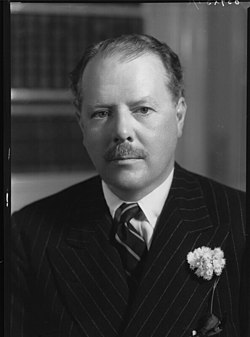
Harold Nicolson
Sir Harold George Nicolson KCVO CMG (21 November 1886 – 1 May 1968) was a British politician, writer, broadcaster and gardener. His wife was Vita Sackville-West.
Nicolson was born in Tehran, Persia, the youngest son of diplomat Arthur Nicolson, 1st Baron Carnock. He spent his boyhood in various places throughout Europe and the Near East and followed his father's frequent postings, including in St. Petersburg, Constantinople, Madrid, Sofia, and Tangier. He was educated at The Grange School in Folkestone, Kent, followed by Wellington College. He attended Balliol College, Oxford, graduating in 1909 with a third-class degree. Nicolson entered the Foreign Office that same year, after passing second in the competitive exams for the Diplomatic Service and Civil Service.
In 1909, Nicolson joined HM Diplomatic Service. He served as attaché at Madrid from February to September 1911 and as Third Secretary at Constantinople from January 1912 to October 1914. In 1913, Nicolson married Vita Sackville-West, who later became famous as a novelist and garden designer. Nicolson and his wife practised what would now be called an open marriage, with both having affairs with others of the same sex.
A diplomatic career was honourable and prestigious in Edwardian Britain, but Sackville-West's parents were aristocrats who wanted their daughter to marry a fellow member of an old noble family and so gave only reluctant approval to the marriage.
During the First World War, Nicolson served at the Foreign Office in London during which period he was promoted to Second Secretary. As the Foreign Office's most junior employee of this rank, it fell to him on 4 August 1914 to hand Britain's revised declaration of war to Prince Max von Lichnowsky, the German ambassador in London. He served in a junior capacity in the Paris Peace Conference in 1919 for which he was appointed Companion of the Order of St Michael and St George (CMG) in the 1920 New Year Honours. In his book entitled Peacemaking 1919, he expressed critical views including racial stereotyping about Hungarians and Turks during the peace treaty in Paris.
Promoted to First Secretary in 1920, he was appointed private secretary to Sir Eric Drummond, the first Secretary-General of the League of Nations, but was recalled to the Foreign Office in June 1920. In the same year, Sackville-West became involved in an intense relationship with Violet Trefusis that nearly wrecked her marriage. As Nicolson wrote in his diary, "Damn! Damn! Damn! Violet. How I loathe her". On one occasion, Nicolson had to follow Vita to France, where she had "eloped" with Trefusis, to try to win her back.
Nicolson himself was no stranger to homosexual affairs; he was openly, but not publicly, bisexual. Among others, he was involved in a long-term relationship with Raymond Mortimer, whom both he and Vita affectionately referred to as "Tray". Nicolson and Vita discussed their shared homosexual tendencies frankly with each other, and they remained happy together. They were famously devoted to each other and wrote almost every day when they were separated because of Nicolson's long diplomatic postings abroad or Vita's insatiable wanderlust. Eventually, he gave up diplomacy, partly so that they could live together in England.
In 1925, he was promoted to counsellor and posted to Tehran as chargé d'affaires. The same year, General Reza Khan deposed the last Qajar Shah, Ahmad Shah Qajar, to take the Peacock Throne for himself. Though it was not entirely appropriate for a foreign diplomat's wife, Sackville-West became deeply involved in the coronation of Reza Khan as the new Shah. Nicolson personally disliked Reza Khan and called him "a bullet-headed man with the voice of an asthmatic child".
Harold Nicolson
Sir Harold George Nicolson KCVO CMG (21 November 1886 – 1 May 1968) was a British politician, writer, broadcaster and gardener. His wife was Vita Sackville-West.
Nicolson was born in Tehran, Persia, the youngest son of diplomat Arthur Nicolson, 1st Baron Carnock. He spent his boyhood in various places throughout Europe and the Near East and followed his father's frequent postings, including in St. Petersburg, Constantinople, Madrid, Sofia, and Tangier. He was educated at The Grange School in Folkestone, Kent, followed by Wellington College. He attended Balliol College, Oxford, graduating in 1909 with a third-class degree. Nicolson entered the Foreign Office that same year, after passing second in the competitive exams for the Diplomatic Service and Civil Service.
In 1909, Nicolson joined HM Diplomatic Service. He served as attaché at Madrid from February to September 1911 and as Third Secretary at Constantinople from January 1912 to October 1914. In 1913, Nicolson married Vita Sackville-West, who later became famous as a novelist and garden designer. Nicolson and his wife practised what would now be called an open marriage, with both having affairs with others of the same sex.
A diplomatic career was honourable and prestigious in Edwardian Britain, but Sackville-West's parents were aristocrats who wanted their daughter to marry a fellow member of an old noble family and so gave only reluctant approval to the marriage.
During the First World War, Nicolson served at the Foreign Office in London during which period he was promoted to Second Secretary. As the Foreign Office's most junior employee of this rank, it fell to him on 4 August 1914 to hand Britain's revised declaration of war to Prince Max von Lichnowsky, the German ambassador in London. He served in a junior capacity in the Paris Peace Conference in 1919 for which he was appointed Companion of the Order of St Michael and St George (CMG) in the 1920 New Year Honours. In his book entitled Peacemaking 1919, he expressed critical views including racial stereotyping about Hungarians and Turks during the peace treaty in Paris.
Promoted to First Secretary in 1920, he was appointed private secretary to Sir Eric Drummond, the first Secretary-General of the League of Nations, but was recalled to the Foreign Office in June 1920. In the same year, Sackville-West became involved in an intense relationship with Violet Trefusis that nearly wrecked her marriage. As Nicolson wrote in his diary, "Damn! Damn! Damn! Violet. How I loathe her". On one occasion, Nicolson had to follow Vita to France, where she had "eloped" with Trefusis, to try to win her back.
Nicolson himself was no stranger to homosexual affairs; he was openly, but not publicly, bisexual. Among others, he was involved in a long-term relationship with Raymond Mortimer, whom both he and Vita affectionately referred to as "Tray". Nicolson and Vita discussed their shared homosexual tendencies frankly with each other, and they remained happy together. They were famously devoted to each other and wrote almost every day when they were separated because of Nicolson's long diplomatic postings abroad or Vita's insatiable wanderlust. Eventually, he gave up diplomacy, partly so that they could live together in England.
In 1925, he was promoted to counsellor and posted to Tehran as chargé d'affaires. The same year, General Reza Khan deposed the last Qajar Shah, Ahmad Shah Qajar, to take the Peacock Throne for himself. Though it was not entirely appropriate for a foreign diplomat's wife, Sackville-West became deeply involved in the coronation of Reza Khan as the new Shah. Nicolson personally disliked Reza Khan and called him "a bullet-headed man with the voice of an asthmatic child".
Recent media
Recent media