Hubbry Logo
Harold WaldenHarold WaldenMain
Open search
Harold Walden
Community hub
Harold Walden
logo
8 pages, 0 posts
0 subscribers
Be the first to start a discussion here.
Harold Walden
Harold Walden
from Wikipedia

Olympic medal record
Men's football
Representing  Great Britain
Gold medal – first place 1912 Stockholm Team competition

Key Information

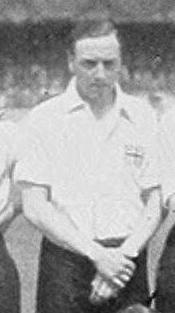
Harold Adrian Walden (10 October 1887 – 2 December 1955) was an English amateur footballer who played for several clubs, Halifax Town, Bradford City and Arsenal. Walden also played for Great Britain's football team, with which he won gold in the 1912 Summer Olympics.[1][2]

Playing career

[edit]

A centre forward, he began his career with Cliftonville and Linfield in Ireland, before joining Halifax Town in October 1911 and Bradford City two months later.[3] He spent four seasons with the Bantams and was the League's top scorer in 1911–12.[3] That summer, he was part of the English amateur team that represented Great Britain at the Olympic football tournament, playing a pivotal role in helping the team win the gold medal since he netted 9 goals in just three games, thus averaging three goals per game.[3] Walden scored six goals in a 7–0 win over Schlosser's Hungary in the quarter-finals, followed by two goals in a 4–0 win over Finland in the semi-finals, and then netted a goal in the final against Denmark as Great Britain won 4–2, thus contributing decisively to his side's triumph in Stockholm.[4] He holds the record of being the 'Highest British goal scorer within the Olympics' and is still the shared eighth highest goal scorer overall within the Olympics.[5]

Walden entered the army by joining the Cheshire Regiment in April 1902 at the age of 14 and a half as a drummer boy and served in India and Ireland.[3] He played for the Army against the Navy in 1910 and 1911, and also served in World War I, for the West Yorkshire Regiment, rising to the rank of captain.[3] After the war ended he joined Arsenal and played six times for the Gunners, twice against Oldham Athletic scoring a single goal and in four friendlies, with his debut coming on 12 February 1921. With just those games to his name, he returned to Bradford at the end of the 1920–21 season.[6]

Personal life

[edit]

After retiring from football and the army, he went into the music hall as a variety performer, touring England, Australia, China and India.[3] He made his stage debut while still playing football, in 1919. He had also had a minor film career, which included starring in The Winning Goal, one of the earliest football-related films, in 1920. Walden also played himself in the 1948 film Cup-tie Honeymoon.[6] He made 78rpm records such as "Ronnie the Robin" together with "And only me knows why", on the Imperial label as well as from Ernest Binns' Arcadian Follies, 'Mother I'm a soldier' and 'Only me knows why' upon Parlophone.[3] The latter was reviewed in The Gramophone magazine's November 1939 edition. He died in 1955 of a heart attack at Leeds railway station.[3] He is buried at Killingbeck RC Cemetery, York Road, Leeds, Yorkshire.[3]

International goals

[edit]
England Amateurs score listed first, score column indicates score after each Walden goal.
List of international goals scored by Harold Walden[4]
No. Cap Date Venue Opponent Score Result Competition Ref
1 1 30 June 1912 Stockholms Olympiastadion, Stockholm, Sweden  Hungary
1–0
7–0 1912 Summer Olympics Quarter-finals
2
2–0
3
4–0
4
5–0
5
6–0
6
7–0
7 2 2 July 1912  Finland
2–0
4–0 1912 Summer Olympics Semi-finals
8
3–0
9 3 4 July 1912  Denmark
1–0
4–2 1912 Summer Olympics Final

Honours

[edit]
Great Britain

Individual

[edit]

References

[edit]
[edit]
Revisions and contributorsEdit on WikipediaRead on Wikipedia
from Grokipedia
Harold Walden (10 October 1887 – 2 December 1955) was an English footballer known for winning the gold medal and scoring 11 goals (a British Olympic record) in the men's football tournament at the 1912 Summer Olympics as part of the Great Britain team. Born in Ambala, India to a British Army family, he pursued a professional football career primarily as a forward, notably with Bradford City after World War I. He served as a captain in the British Army during the war and, after the conflict, transitioned into entertainment as a singer, comedian, and film actor, appearing in movies such as The Winning Goal and Cup-Tie Honeymoon. Walden's life encompassed achievements across sports, military service, and the performing arts, making him a versatile figure of the early 20th century. His Olympic success highlighted Great Britain's strength in amateur football at the time, while his post-war career in show business reflected his talents as a performer.

Early Life

Birth and Family Background

Harold Adrian Walden was born on 10 October 1887 in Umballa, India (now known as Ambala in the state of Haryana). This birth occurred in colonial India, where his father was serving as a member of the Cheshire Regiment of the British Army. Walden's full name was Harold Adrian Walden, and his origins reflect a family tied to British military service abroad. Most biographical sources, particularly those associated with his football and Olympic career, consistently record his birth date as 10 October 1887, though some actor databases have listed it as circa 1889.

Childhood and Move to England

Walden moved to England as a young child with his family and later settled in Halifax, Yorkshire, where he established his early adult life. In the Halifax area, he became involved in local amateur football, playing in regional competitions and developing his skills on the pitch. This grassroots participation in the sport directly contributed to his signing with Halifax Town in October 1911, marking the beginning of his professional career.

Football Career

Early Clubs and Rise at Bradford City

Harold Walden began his senior football career in 1911 as an amateur with newly formed Halifax Town after leaving the army and being spotted while playing representative football for the Irish League. He made a strong impression in a short stint, scoring 8 goals in 6 matches, including braces on debut against Bradford Reserves and in a win over Thornhill Lees Albion, as well as a hat-trick against a Kirkstall-based Leeds United side. Described as speedy, quick to snap up chances, and a fine distributor of passes, Walden's form as a forward led directly to his professional signing with First Division Bradford City on 15 December 1911. Walden made his Bradford City debut the following day in a 3-2 home defeat to Notts County. He opened his goal account a week later with a brace in a 3-2 victory over Tottenham Hotspur. Walden continued to contribute significantly, scoring a hat-trick in a 4-0 FA Cup first-round win over Queen's Park Rangers on 18 January 1912. Playing as a centre-forward, he finished the 1911-12 season as the club's top scorer with 11 goals in 17 league appearances. Walden's rapid rise at Bradford City established him as a reliable goal threat in the First Division, building on his amateur background and brief but productive time at Halifax Town. His strong performances during this early period at the club led to his inclusion in the Great Britain squad for the 1912 Olympics.

1912 Olympics and International Play

Harold Walden's strong form with Bradford City led to his selection for the Great Britain amateur football team at the 1912 Summer Olympics in Stockholm, Sweden. As an amateur forward, he played a key role in Great Britain's successful campaign in the men's football tournament, which featured amateur sides from various nations. In the second round, Walden scored six goals in Great Britain's 7-0 victory over Hungary. He added four goals in the semi-final 4-0 win against Finland. Walden also scored in the final, where Great Britain defeated Denmark 4-2 to claim the gold medal. His total of 11 goals across the tournament made him the leading scorer in the Olympic football competition. This achievement marked the pinnacle of his football career as part of the amateur Great Britain side.

Post-Football and War Years

World War I Service

Harold Walden re-joined the British Army in April 1915 during World War I and was commissioned as a second-lieutenant in the 18th (Service) Battalion (2nd Bradford), The Prince of Wales’s Own (West Yorkshire) Regiment, known as the Bradford Pals. In 1917, while at the Étaples base in France, he sustained a knee injury after jumping into a trench during training, which required his return to Britain. He was later promoted to captain and spent the remainder of the war serving as an acting adjutant stationed in Hull. Walden's World War I service built on his prior military experience in the Cheshire Regiment from 1902 to 1911, after which he had pursued his football career until re-enlisting. No records indicate front-line combat duty, as his knee injury shifted his role to administrative duties in the later war years.

Interwar Period

After the conclusion of World War I, Harold Walden resumed his professional football career with Bradford City in the 1919–20 Football League season, where he made 12 league appearances and scored 4 goals. A standout moment came on 25 October 1919, when he scored both goals in a 2–0 away victory over Arsenal. This performance led to his signing by Arsenal in October 1920. Walden made two senior league appearances for Arsenal in consecutive matches against Oldham Athletic, both ending in draws, and scored one goal in the second fixture. He also played four friendly matches for the club, scoring three goals. Walden returned to Bradford City in the summer of 1921. He retired from professional football later that year after Bradford City presented him with a cheque in recognition of his service.

Entertainment Career

Transition to Comedy and Stage

Harold Walden, professionally known as Harry Walden during his entertainment career, began his transition from professional football to entertainment in 1919 while still playing for Bradford City. He made his stage debut at the Bradford Alhambra Theatre during a charity lifeboat appeal, where he played piano and sang, impressing theatre owner Francis Laidler who immediately booked him for a full week on the variety bill. This initial success launched Walden's music hall career, where he cultivated a comedian and sportsman persona that drew heavily on his football fame. He incorporated sketches based on his experiences as a Bradford City player and 1912 Olympic gold medalist, often displaying the medal outside theatres to attract audiences. Within two years, Walden was topping bills and touring extensively across the United Kingdom, as well as internationally in Australia, China, and India. During an Australian tour with Edgar Warwick’s Concert Party in 1925, he stepped in for an ill comedian and delivered a successful performance that advanced his comedy work; he adopted a distinctive "kiss-curl" hairstyle and borrowed a straw hat for the act. His variety act combined comedy with singing and piano playing, featuring original ukulele compositions and songs including his signature tune "Only Me Knows Why," alongside "Ronnie the Robin" and "Mother I’m a Soldier," all recorded on 78rpm discs. Walden remained active in entertainment for decades, joining Ernest Binns' Arcadian Follies in Morecambe during the 1940s. He frequently participated in charity performances, including a final appearance in Harrogate for the Yorkshire Evening News Christmas Appeal in 1955. His stage success also paved the way for opportunities in film.

Film Appearances

Harold Walden had a limited film career, primarily consisting of roles that leveraged his background as a professional footballer. His debut on screen came in the British silent film The Winning Goal (1920), where he portrayed the character Jack in a story centered around a crucial football match. Decades later, he appeared as himself in the comedy film Cup-Tie Honeymoon (1948), a production that incorporated football themes and featured several real-life sports figures in cameo roles. This marked his final known screen credit, consistent with his primary shift to comedy and variety entertainment rather than sustained acting work. Walden's film appearances remained few and typically small-scale, reflecting his more prominent contributions in other areas of performance.

Personal Life and Death

Family and Later Years

In his later years, Harold Walden resided in Leeds, West Yorkshire, where he spent much of his time after retiring from professional football and military service. He remained active in the entertainment industry as a variety performer, comedian, and singer, focusing his performances in Yorkshire venues during the 1940s and 1950s, including appearances in Bradford and Harrogate. Walden joined Ernest Binns' Arcadian Follies revue in the 1940s and featured in his own radio broadcasts during the same decade. He also made a film appearance as himself in the 1948 production Cup-Tie Honeymoon. He continued to compose and perform original material, including his signature tune "Only Me Knows Why", as well as songs such as "Ronnie the Robin" and "Mother I’m a Soldier", which were recorded and helped sustain his popularity as a music hall artist. Walden participated in charity performances to support local causes in Yorkshire, maintaining his involvement in community-oriented entertainment work well into his later decades.

Death

Harold Walden died of a heart attack on 3 December 1955 at Leeds Railway Station, at the age of 68. The incident occurred while he was returning from a charity performance in Harrogate. He was buried in Killingbeck Cemetery, Leeds. His sudden death marked the end of a varied career that had spanned professional football, military service, and entertainment.
Add your contribution
Related Hubs
User Avatar
No comments yet.