



Community hub
Recent from talks
Knowledge base stats:
Talk channels stats:
Members stats:
Hebraization of surnames
The Hebraization of surnames (also Hebraicization; Hebrew: עברות Ivrut) is the act of amending one's Jewish surname so that it originates from the Hebrew language, which was natively spoken by Jews and Samaritans until it died out of everyday use by around 200 CE. For many diaspora Jews, immigrating to the Land of Israel and taking up a Hebrew surname has long been conceptualized as a way to erase remnants of their diaspora oppression, particularly since the inception of Zionism in the 19th century. This notion, which was part of what drove the Zionist revival of the Hebrew language, was further consolidated after the founding of the State of Israel in 1948.
Hebraizing surnames has been an especially common practice among Ashkenazi Jews; many Ashkenazi families had acquired permanent surnames (rather than patronyms) only when surnames were forced upon them by Emperor Joseph II of the Holy Roman Empire following an official decree on 12 November 1787. Sephardic Jews often had hereditary family names (e.g., Cordovero, Abrabanel, Shaltiel, de Leon, Alcalai, Toledano, Lopez) since well before the Spanish expulsion of Jews near the end of the Reconquista, which had begun after the Muslim conquest of the Iberian Peninsula in the 8th century.
After the extinction of Hebrew as a day-to-day spoken language, Hebrew surnames were not the norm among Jews in parts of the diaspora. Common examples of those that persisted include Cohen (כֹּהֵן, lit. 'kohen'), Moss (מֹשֶׁה, lit. 'Moses'), and Levi (לוי, lit. 'Levite'). Several Hebrew surnames, such as Katz (כּ״ץ, ABBR. kohen tzedek or kohen tzadok, lit. 'righteous priest' or 'priest of Zadok') and Bogoraz (ABBR. Ben ha-Rav Zalman, from בן הרב זאַלמאַן, lit. 'son of Rabbi Zalman') are, in fact, Hebrew acronyms, despite being commonly perceived as being of non-Jewish origin (in these cases, from German and Russian, respectively).
Hebraization began as early as the days of the First Aliyah. The widespread trend towards Hebraization of surnames in the days of the Yishuv (i.e., Palestinian Jews) and after Israel's founding was based on the idea of returning to an authentic Jewish identity and thus having a stronger sense of one's Israeli Jewishness. Likewise, it was also tied in with the desire among diaspora Jews to distance themselves from the lost and dead past of exile and also from the imposition upon Jews of foreign names in previous centuries.
The process of Hebraization among the Jewish diaspora has continued since Israel's founding in 1948; among the thousands of olim and olot who currently apply for legal name changes in Israel each year, many do so to adopt Hebrew names and thereby assimilate into a shared Jewish national identity, chiefly with Mizrahi Jews.
Among the Yishuv (the first to return to Eretz Yisrael—the Land of Israel), there was a strong feeling of sh'lilat ha-golah (Hebrew: שלילת הגולה "negation of the diaspora/Exile"), which often included the exchange of Diaspora surnames for purely Hebrew ones. Part of the Zionist movement was not only aliyah, it was also wanting to create an image of an empowered Israeli Jew that would be different from the stereotypical perception of oppressed Yiddish-speaking, shtetl-living, weak Diaspora Jews, and these things were a significant part of the people of the First and Second Aliyot. Some of the immigrants of the First Aliyah (1882–1903) Hebraized their surnames, and the practice became widespread during the Second Aliyah (1904–1914).
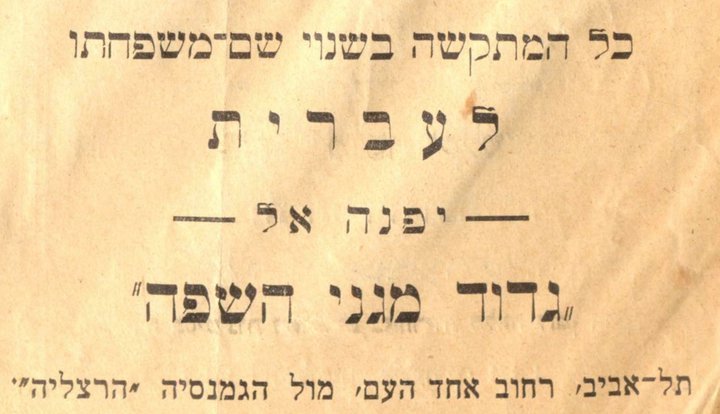
This process started with individuals like Eliezer Ben-Yehuda (Perelman) and was adopted by the New Yishuv. In 1944, before the founding of the State of Israel, the Zionist leadership and the Jewish National Council proclaimed it the "Year of naturalization and the Hebrew name". A special committee under the chairmanship of Mordechai Nemzabi, the Jewish Agency advisor on matters of civilian defense, published a booklet which contained guidelines on the creation on new Hebrew surnames.
After the Israeli Declaration of Independence, there was still the attitude that the Hebraization of family names should continue, in order to get rid of names with a diaspora sound. Hebraization of names became a typical part of the integration process for new immigrants among Ashkenazi Jews. It also occurred among Sephardi and Mizrahi Jewish immigrants from Arab and Muslim lands, though it was less common among them than among Ashkenazi Jews; Sephardi and Mizrahi children were typically given new Hebrew names in school, often without permission from their parents.
Hub AI
Hebraization of surnames AI simulator
(@Hebraization of surnames_simulator)
Hebraization of surnames
The Hebraization of surnames (also Hebraicization; Hebrew: עברות Ivrut) is the act of amending one's Jewish surname so that it originates from the Hebrew language, which was natively spoken by Jews and Samaritans until it died out of everyday use by around 200 CE. For many diaspora Jews, immigrating to the Land of Israel and taking up a Hebrew surname has long been conceptualized as a way to erase remnants of their diaspora oppression, particularly since the inception of Zionism in the 19th century. This notion, which was part of what drove the Zionist revival of the Hebrew language, was further consolidated after the founding of the State of Israel in 1948.
Hebraizing surnames has been an especially common practice among Ashkenazi Jews; many Ashkenazi families had acquired permanent surnames (rather than patronyms) only when surnames were forced upon them by Emperor Joseph II of the Holy Roman Empire following an official decree on 12 November 1787. Sephardic Jews often had hereditary family names (e.g., Cordovero, Abrabanel, Shaltiel, de Leon, Alcalai, Toledano, Lopez) since well before the Spanish expulsion of Jews near the end of the Reconquista, which had begun after the Muslim conquest of the Iberian Peninsula in the 8th century.
After the extinction of Hebrew as a day-to-day spoken language, Hebrew surnames were not the norm among Jews in parts of the diaspora. Common examples of those that persisted include Cohen (כֹּהֵן, lit. 'kohen'), Moss (מֹשֶׁה, lit. 'Moses'), and Levi (לוי, lit. 'Levite'). Several Hebrew surnames, such as Katz (כּ״ץ, ABBR. kohen tzedek or kohen tzadok, lit. 'righteous priest' or 'priest of Zadok') and Bogoraz (ABBR. Ben ha-Rav Zalman, from בן הרב זאַלמאַן, lit. 'son of Rabbi Zalman') are, in fact, Hebrew acronyms, despite being commonly perceived as being of non-Jewish origin (in these cases, from German and Russian, respectively).
Hebraization began as early as the days of the First Aliyah. The widespread trend towards Hebraization of surnames in the days of the Yishuv (i.e., Palestinian Jews) and after Israel's founding was based on the idea of returning to an authentic Jewish identity and thus having a stronger sense of one's Israeli Jewishness. Likewise, it was also tied in with the desire among diaspora Jews to distance themselves from the lost and dead past of exile and also from the imposition upon Jews of foreign names in previous centuries.
The process of Hebraization among the Jewish diaspora has continued since Israel's founding in 1948; among the thousands of olim and olot who currently apply for legal name changes in Israel each year, many do so to adopt Hebrew names and thereby assimilate into a shared Jewish national identity, chiefly with Mizrahi Jews.
Among the Yishuv (the first to return to Eretz Yisrael—the Land of Israel), there was a strong feeling of sh'lilat ha-golah (Hebrew: שלילת הגולה "negation of the diaspora/Exile"), which often included the exchange of Diaspora surnames for purely Hebrew ones. Part of the Zionist movement was not only aliyah, it was also wanting to create an image of an empowered Israeli Jew that would be different from the stereotypical perception of oppressed Yiddish-speaking, shtetl-living, weak Diaspora Jews, and these things were a significant part of the people of the First and Second Aliyot. Some of the immigrants of the First Aliyah (1882–1903) Hebraized their surnames, and the practice became widespread during the Second Aliyah (1904–1914).
This process started with individuals like Eliezer Ben-Yehuda (Perelman) and was adopted by the New Yishuv. In 1944, before the founding of the State of Israel, the Zionist leadership and the Jewish National Council proclaimed it the "Year of naturalization and the Hebrew name". A special committee under the chairmanship of Mordechai Nemzabi, the Jewish Agency advisor on matters of civilian defense, published a booklet which contained guidelines on the creation on new Hebrew surnames.
After the Israeli Declaration of Independence, there was still the attitude that the Hebraization of family names should continue, in order to get rid of names with a diaspora sound. Hebraization of names became a typical part of the integration process for new immigrants among Ashkenazi Jews. It also occurred among Sephardi and Mizrahi Jewish immigrants from Arab and Muslim lands, though it was less common among them than among Ashkenazi Jews; Sephardi and Mizrahi children were typically given new Hebrew names in school, often without permission from their parents.