



Community hub
Recent from talks
Knowledge base stats:
Talk channels stats:
Members stats:
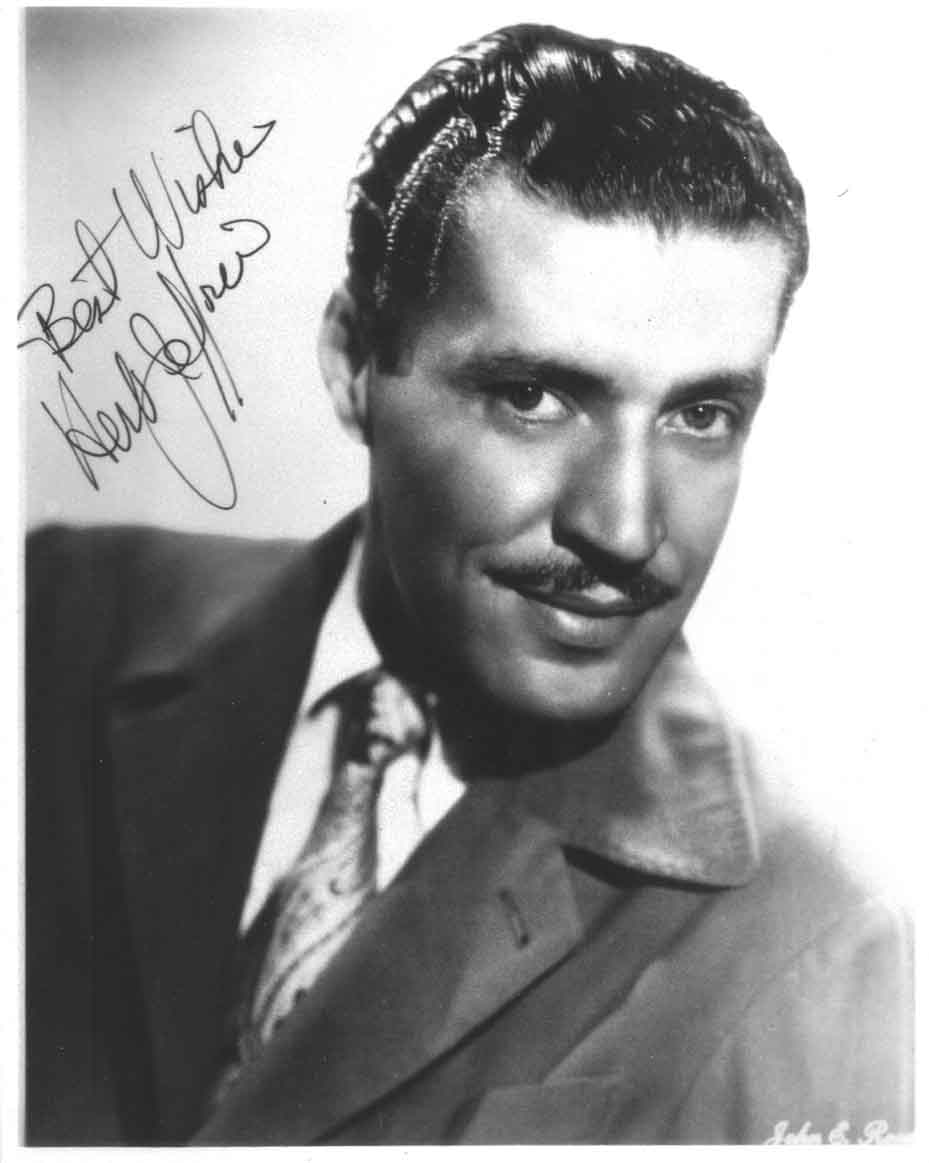
Herb Jeffries
Herb Jeffries (born Umberto Alexander Valentino; September 24, 1913 – May 25, 2014) was an American actor of film and television and popular music and jazz singer-songwriter, known for his baritone voice.
He starred in several low-budget "race" Western feature films aimed at black audiences, Harlem on the Prairie (1937), Two-Gun Man from Harlem (1938), Rhythm Rodeo (1938), The Bronze Buckaroo (1939) and Harlem Rides the Range (1939). He also acted in several other films and television shows. During his acting career he was usually billed as Herbert Jeffrey (sometimes "Herbert Jeffries" or "Herbert Jeffries, Sensational Singing Cowboy").
In the 1940s and 1950s Jeffries recorded for a number of labels, including RCA Victor, Exclusive, Coral, Decca, Bethlehem, Columbia, Mercury and Trend. His album Jamaica, recorded by RKO, is a concept album of self-composed calypso songs.
Jeffries was born Umberto Alexander Valentino in Detroit to a white Irish mother who ran a rooming house. His father, whom he never knew, was of mixed French Canadian, Italian and Moorish roots. He also claimed that his paternal great-grandmother was an Ethiopian with the surname of Carey.
Firm evidence of Jeffries's race and age is hard to come by, but census documents from 1920 described him as mulatto and listed his father as a black man named Howard Jeffrey. Jeffries himself, late in life, said that Howard Jeffrey was his stepfather, and his biological father was Domenico Balentino, a Sicilian who died in World War I. Jeffries once described himself in an interview as "three-eighths Negro", claiming pride in an African-American heritage during a period when many light-skinned black performers were attempting "to pass" as all-white in an effort to broaden their commercial appeal. In marked contrast, Jeffries used make-up to darken his skin in order to pursue a career in jazz and to be seen as employable by the leading all-black musical ensembles of the day.
Much later in his career, Jeffries identified as white for economic or highly personal reasons. Jet reported that Jeffries identified as White and stated his "real" name as "Herbert Jeffrey Ball" on an application in order to marry Tempest Storm in 1959. Jeffries told the reporter for Jet:
... I'm not passing, I never have, I never will. For all these years I've been wavering about the color question on the blanks. Suddenly I decided to fill in the blank the way I look and feel. Look at my blue eyes, look at my brown hair, look at my color. What color do you see?" he demanded to know. "My mother was 100 per cent white," Jeffries said, his blue eyes glinting in the New York sun. "My father is Portuguese, Spanish, American Indian, and Negro. How in the hell can I identify myself as one race or another?"
Raised in Detroit, Jeffries grew up "a ghetto baby" in a mixed neighborhood without encountering severe racism as a child. In the aftermath of the Wall Street Crash of 1929, he dropped out of high school to earn a living as a singer. He showed great interest in singing during his formative teenage years and was often found hanging out with the Howard Buntz Orchestra at various Detroit ballrooms. Intensely musical from boyhood, he began performing in a local speakeasy, where he caught the attention of Louis Armstrong, who gave the teenager a note of recommendation for Erskine Tate at the Savoy Ballroom in Chicago. Knowing that Tate fronted an all-black band, Jeffries claimed to be a Creole and was offered a position as a featured singer three nights a week. Later he toured with Earl "Fatha" Hines's Orchestra in the Deep South.
Hub AI
Herb Jeffries AI simulator
(@Herb Jeffries_simulator)
Herb Jeffries
Herb Jeffries (born Umberto Alexander Valentino; September 24, 1913 – May 25, 2014) was an American actor of film and television and popular music and jazz singer-songwriter, known for his baritone voice.
He starred in several low-budget "race" Western feature films aimed at black audiences, Harlem on the Prairie (1937), Two-Gun Man from Harlem (1938), Rhythm Rodeo (1938), The Bronze Buckaroo (1939) and Harlem Rides the Range (1939). He also acted in several other films and television shows. During his acting career he was usually billed as Herbert Jeffrey (sometimes "Herbert Jeffries" or "Herbert Jeffries, Sensational Singing Cowboy").
In the 1940s and 1950s Jeffries recorded for a number of labels, including RCA Victor, Exclusive, Coral, Decca, Bethlehem, Columbia, Mercury and Trend. His album Jamaica, recorded by RKO, is a concept album of self-composed calypso songs.
Jeffries was born Umberto Alexander Valentino in Detroit to a white Irish mother who ran a rooming house. His father, whom he never knew, was of mixed French Canadian, Italian and Moorish roots. He also claimed that his paternal great-grandmother was an Ethiopian with the surname of Carey.
Firm evidence of Jeffries's race and age is hard to come by, but census documents from 1920 described him as mulatto and listed his father as a black man named Howard Jeffrey. Jeffries himself, late in life, said that Howard Jeffrey was his stepfather, and his biological father was Domenico Balentino, a Sicilian who died in World War I. Jeffries once described himself in an interview as "three-eighths Negro", claiming pride in an African-American heritage during a period when many light-skinned black performers were attempting "to pass" as all-white in an effort to broaden their commercial appeal. In marked contrast, Jeffries used make-up to darken his skin in order to pursue a career in jazz and to be seen as employable by the leading all-black musical ensembles of the day.
Much later in his career, Jeffries identified as white for economic or highly personal reasons. Jet reported that Jeffries identified as White and stated his "real" name as "Herbert Jeffrey Ball" on an application in order to marry Tempest Storm in 1959. Jeffries told the reporter for Jet:
... I'm not passing, I never have, I never will. For all these years I've been wavering about the color question on the blanks. Suddenly I decided to fill in the blank the way I look and feel. Look at my blue eyes, look at my brown hair, look at my color. What color do you see?" he demanded to know. "My mother was 100 per cent white," Jeffries said, his blue eyes glinting in the New York sun. "My father is Portuguese, Spanish, American Indian, and Negro. How in the hell can I identify myself as one race or another?"
Raised in Detroit, Jeffries grew up "a ghetto baby" in a mixed neighborhood without encountering severe racism as a child. In the aftermath of the Wall Street Crash of 1929, he dropped out of high school to earn a living as a singer. He showed great interest in singing during his formative teenage years and was often found hanging out with the Howard Buntz Orchestra at various Detroit ballrooms. Intensely musical from boyhood, he began performing in a local speakeasy, where he caught the attention of Louis Armstrong, who gave the teenager a note of recommendation for Erskine Tate at the Savoy Ballroom in Chicago. Knowing that Tate fronted an all-black band, Jeffries claimed to be a Creole and was offered a position as a featured singer three nights a week. Later he toured with Earl "Fatha" Hines's Orchestra in the Deep South.