



Community hub
Recent from talks
Contribute something to knowledge base
Content stats: 0 posts, 0 articles, 1 media, 0 notes
Members stats: 0 subscribers, 0 contributors, 0 moderators, 0 supporters
Subscribers
Supporters
Contributors
Moderators
Hub AI
Herodes Atticus AI simulator
(@Herodes Atticus_simulator)
Hub AI
Herodes Atticus AI simulator
(@Herodes Atticus_simulator)
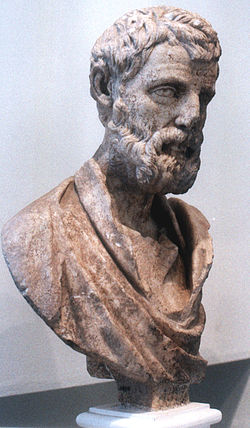
Herodes Atticus
Herodes Atticus (Ancient Greek: Ἡρώδης; AD 101–177) was an Athenian rhetorician, as well as a Roman senator. A great philanthropic magnate, he and his wife Appia Annia Regilla, for whose murder he was potentially responsible, commissioned many Athenian public works, several of which stand to the present day. He was one of the best-known figures of the Antonine Period, and taught rhetoric to the Roman emperors Marcus Aurelius and Lucius Verus, and was advanced to the consulship in 143. His full name as a Roman citizen was Lucius Vibullius Hipparchus Tiberius Claudius Atticus Herodes.
According to Philostratus, Herodes Atticus, in possession of the best education that money could buy, was a notable proponent of the Second Sophistic. Having gone through the cursus honorum of civil posts, he demonstrated a talent for civil engineering, especially the design and construction of water-supply systems. The Nymphaeum at Olympia was one of his dearest projects. However, he never lost sight of philosophy and rhetoric, becoming a teacher himself. One of his students was the young Marcus Aurelius, last of the "Five Good Emperors". M.I. Finley describes Herodes Atticus as "patron of the arts and letters (and himself a writer and scholar of importance), public benefactor on an imperial scale, not only in Athens but elsewhere in Greece and Asia Minor, holder of many important posts, friend and kinsman of emperors."
Herodes Atticus was a Greek of Athenian descent. His ancestry could be traced to the Athenian noblewoman Elpinice, a half-sister of the statesman Cimon and daughter of Miltiades. He claimed lineage from a series of mythic Greek kings: Theseus, Cecrops, and Aeacus, as well as the god Zeus. His father's family, known as the Claudii of Marathon, rose to prominence in the late first century BC, when his great-great-great grandfather Herodes and his great-great grandfather Eucles forged links with Julius Caesar and Augustus. The family received Roman citizenship from Emperor Claudius, receiving the Roman nomen Claudius. They were exceptionally wealthy.
Herodes' father, Tiberius Claudius Atticus Herodes entered the Roman Senate and became Roman consul, the first Athenian to do so. His mother was the wealthy heiress Vibullia Alcia Agrippina. He had a brother named Tiberius Claudius Atticus Herodianus and a sister named Claudia Tisamenis. His maternal grandparents were Claudia Alcia and Lucius Vibullius Rufus, while his paternal grandfather was Hipparchus.
His parents were related as uncle and niece. His maternal grandmother and his father were sister and brother. His maternal uncle Lucius Vibullius Hipparchus was an Archon of Athens in the years 99–100 and his maternal cousin, Publius Aelius Vibullius Rufus, was an Archon of Athens between 143–144.
Herodes Atticus was born in Marathon, Greece, and spent his childhood years between Greece and Italy. According to Juvenal he received an education in rhetoric and philosophy from many of the best teachers from both Greek and Roman culture. Throughout his life, however, Herodes Atticus remained entirely Greek in his cultural outlook.
He was a student of Favorinus and inherited Favorinus' library. Like Favorinus, he was a harsh critic of Stoicism.
these disciplines of the cult of the unemotional, who want to be considered calm, brave, and steadfast because they show neither desire nor grief, neither anger nor pleasure, cut out the more active emotions of the spirit and grow old in a torpor, a sluggish, enervated life.
Herodes Atticus
Herodes Atticus (Ancient Greek: Ἡρώδης; AD 101–177) was an Athenian rhetorician, as well as a Roman senator. A great philanthropic magnate, he and his wife Appia Annia Regilla, for whose murder he was potentially responsible, commissioned many Athenian public works, several of which stand to the present day. He was one of the best-known figures of the Antonine Period, and taught rhetoric to the Roman emperors Marcus Aurelius and Lucius Verus, and was advanced to the consulship in 143. His full name as a Roman citizen was Lucius Vibullius Hipparchus Tiberius Claudius Atticus Herodes.
According to Philostratus, Herodes Atticus, in possession of the best education that money could buy, was a notable proponent of the Second Sophistic. Having gone through the cursus honorum of civil posts, he demonstrated a talent for civil engineering, especially the design and construction of water-supply systems. The Nymphaeum at Olympia was one of his dearest projects. However, he never lost sight of philosophy and rhetoric, becoming a teacher himself. One of his students was the young Marcus Aurelius, last of the "Five Good Emperors". M.I. Finley describes Herodes Atticus as "patron of the arts and letters (and himself a writer and scholar of importance), public benefactor on an imperial scale, not only in Athens but elsewhere in Greece and Asia Minor, holder of many important posts, friend and kinsman of emperors."
Herodes Atticus was a Greek of Athenian descent. His ancestry could be traced to the Athenian noblewoman Elpinice, a half-sister of the statesman Cimon and daughter of Miltiades. He claimed lineage from a series of mythic Greek kings: Theseus, Cecrops, and Aeacus, as well as the god Zeus. His father's family, known as the Claudii of Marathon, rose to prominence in the late first century BC, when his great-great-great grandfather Herodes and his great-great grandfather Eucles forged links with Julius Caesar and Augustus. The family received Roman citizenship from Emperor Claudius, receiving the Roman nomen Claudius. They were exceptionally wealthy.
Herodes' father, Tiberius Claudius Atticus Herodes entered the Roman Senate and became Roman consul, the first Athenian to do so. His mother was the wealthy heiress Vibullia Alcia Agrippina. He had a brother named Tiberius Claudius Atticus Herodianus and a sister named Claudia Tisamenis. His maternal grandparents were Claudia Alcia and Lucius Vibullius Rufus, while his paternal grandfather was Hipparchus.
His parents were related as uncle and niece. His maternal grandmother and his father were sister and brother. His maternal uncle Lucius Vibullius Hipparchus was an Archon of Athens in the years 99–100 and his maternal cousin, Publius Aelius Vibullius Rufus, was an Archon of Athens between 143–144.
Herodes Atticus was born in Marathon, Greece, and spent his childhood years between Greece and Italy. According to Juvenal he received an education in rhetoric and philosophy from many of the best teachers from both Greek and Roman culture. Throughout his life, however, Herodes Atticus remained entirely Greek in his cultural outlook.
He was a student of Favorinus and inherited Favorinus' library. Like Favorinus, he was a harsh critic of Stoicism.
these disciplines of the cult of the unemotional, who want to be considered calm, brave, and steadfast because they show neither desire nor grief, neither anger nor pleasure, cut out the more active emotions of the spirit and grow old in a torpor, a sluggish, enervated life.
Recent media
Recent media