Hubbry Logo
HexagrammidaeHexagrammidaeMain
Open search
Hexagrammidae
Community hub
Hexagrammidae
logo
8 pages, 0 posts
0 subscribers
Be the first to start a discussion here.
Hexagrammidae
Hexagrammidae
from Wikipedia

Hexagrammidae
Temporal range: Middle Miocene to present
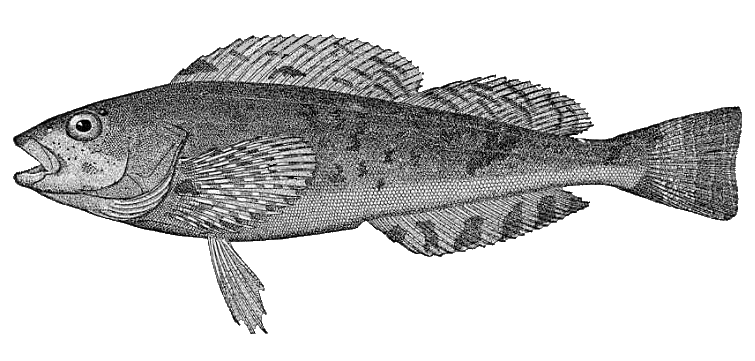
Whitespotted greenling Hexagrammos stelleri
Lingcod, Ophiodon elongatus
Scientific classification Edit this classification
Kingdom: Animalia
Phylum: Chordata
Class: Actinopterygii
Order: Perciformes
Suborder: Cottoidei
Superfamily: Hexagrammoidea
Shinohara, 1994[2]
Family: Hexagrammidae
Jordan, 1888[1]
Type species
Hexagrammus stelleri
Genera

see text

Okhotsk atka mackerel (Pleurogrammus azonus)

Hexagrammidae, the greenlings, is a family of marine ray-finned fishes belonging to the suborder Cottoidei in the order Perciformes. These fishes are found in the North Pacific Ocean.

Taxonomy

[edit]

Hexagrammidae was first proposed as a family in 1888 by the American ichthyologist David Starr Jordan.[1] The 5th edition of Fishes of the World classifies this family as the only family in the monotypic superfamily Hexagrammoidea within the suborder Cottoidei of the diverse order Scorpaeniformes.[4] Other workers have found that if the Scorpaeniformes, as delimited in Fishes of the World, is not included in the Perciformes it renders the Perciformes paraphyletic. These workers retain the Cottoidei as a suborder within the Perciformes while reclassifying Hexagrammoidea as the infraorder Hexagrammales.[5] The family Zaniolepididae has been included within the Hexagrammidae, as the subfamilies Zaniolepidinae and Oxylebiinae, but Fishes of the World and Betancur et al classify these taxa as distinct from the Hexagrammidae.[4][5] Placing these two families in their own monotypic superfamilies was originally proposed in 1994 by Gento Shinohara.[2]

Subfamilies and genera

[edit]

Hexagrammidae contains the following subfamilies and genera:[3]

The following fossil genera are also known:

Characteristics

[edit]

Hexagrammidae have cirri but do not have ridges or spines on their heads, They have between one and five lateral lines and may have cycloid or ctenoid scales. There is a single dorsal fin which is notched and contains between 16 and 28 spines and 11 and 30 soft rays. There is a single spine and 5 soft rays in the pelvic fin. The front nostril on each side of the snout is well developed but the rear nostril may be absent or if it is there it is merely a small pore. The anal fin may have upn to 3 spines, or there may be no spines, and 6 or 7 soft rays. There is no swimbladder.[4] The largest species is the lingcod (Ophiodon elongatus)which has a maximum published total length of 152 cm (60 in) but typically they are 50 cm (20 in) or less in length.[8]

Distribution and habitat

[edit]

Hexagrammidae is endemic to the North Pacific Ocean where they are found in the subarctic and temperate regions, with a single species, the whitespotted greenling Hexagrammos stelleri, being found in the Arctic Ocean too. They occur from the intertidal zone to as deep as 600 m (2,000 ft) but most are found in waters of depths of less than 200 m (660 ft) on the continental shelf.[2]

Biology

[edit]

Hexagrammidae greenlings are demersal fishes, except for the pelagic Pleurogrammus, and they feed on crustaceans, polychaetes, small fishes and fish eggs.[2]

Utilization

[edit]

Hexagrammidae greenlings are fished for, the coastal species are fished for using hook and line and spears and in the late 20th and early 21st centuries the kelp greenling (Hexagrammas decagrammus) has become a target of a commercial fishery, while historically the lingcod (O. elongatus) and the atka mackerels of the genus Pleurogrammus have been the most targeted species.[2]

References

[edit]
Revisions and contributorsEdit on WikipediaRead on Wikipedia
from Grokipedia
Hexagrammidae, commonly known as greenlings, is a of marine ray-finned fishes belonging to the suborder Cottoidei in the order , consisting of 12 across five genera: Hexagrammos, Ophiodon, Oxylebius, Pleurogrammus, and Zaniolepis (though some classifications place Oxylebius and Zaniolepis in the separate family Zaniolepididae). These demersal or pelagic are characterized by a moderately elongate and compressed body, a single notched with 16–28 spines and 11–30 soft rays, an anal fin with up to four rudimentary spines and 12–28 soft rays, and pelvic fins featuring one spine and five soft rays. Endemic to the temperate and waters of the North , with one (Hexagrammos stelleri) extending into the , Hexagrammidae inhabit environments from intertidal zones to depths exceeding 600 meters, though most occur shallower than 200 meters. They possess ctenoid scales ( in Ophiodon), one to five lateral lines, small teeth on the jaws, , and sometimes , and lack a , with 36–62 vertebrae. Most reach a maximum length of about 60 cm, though the (Ophiodon elongatus) can grow to 1.52 m and holds commercial importance. Their diet primarily includes , amphipods, polychaetes, juvenile fishes, and fish eggs, and they are nonguarding or guarding spawners in reproductive behavior. The family is divided into subfamilies including Hexagramminae, Ophiodontinae, Oxylebiinae, Pleurogramminae, and Zaniolepidinae, reflecting phylogenetic diversity within the group. While generally not highly migratory, species like those in Pleurogrammus are pelagic as adults, contributing to their ecological roles in North Pacific marine ecosystems.

Taxonomy

Phylogenetic relationships

The family Hexagrammidae was first proposed by American ichthyologist in 1888, initially classified within the suborder Cottoidei of the order . This placement reflected early morphological assessments linking greenlings to other scorpaeniform-like groups based on shared cranial and fin structures. Traditionally positioned in the monotypic superfamily Hexagrammoidea, the family has seen revisions in higher taxonomy; contemporary classifications, informed by molecular data, often elevate it to the infraorder Hexagrammales within Cottoidei. Former subfamilies Zaniolepidinae and Oxylebiinae, encompassing genera like Zaniolepis and Oxylebius, were historically included but have been excluded based on phylogenetic evidence, now constituting the distinct family Zaniolepididae. Multi-locus molecular phylogenies, utilizing nuclear and mitochondrial genes, confirm Hexagrammidae as a monophyletic endemic to the North Pacific, forming a to Cottidae within the broader Cottoidei suborder. These analyses, with strong bootstrap support, highlight divergences such as the basal position of Ophiodon relative to clades including Hexagrammos and Pleurogrammus. The family's evolutionary history underscores its isolation in temperate to waters, with no close relatives outside this region. The fossil record of Hexagrammidae is limited, primarily comprising taxa from the North Pacific, such as the extinct genus Paraophiodon from Island deposits. estimates suggest origins for the lineage, aligning with the diversification of Cottoidei during early cooling events.

Genera and species

Taxonomic treatments of Hexagrammidae vary. While some authorities, following phylogenetic evidence, recognize only three genera (9 species) in Hexagrammidae sensu stricto, broader classifications like ITIS include five genera by retaining Zaniolepididae (Oxylebius and Zaniolepis) as subfamilies, totaling 12 species. Recent taxonomic revisions, including updates in and phylogenetic analyses (e.g., Betancur et al., 2017), have confirmed the stricter composition by resolving historical synonymies (e.g., many early names under Labrax or Chirus reassigned to Hexagrammos) and excluding formerly associated genera like Oxylebius and Zaniolepis to the separate family Zaniolepididae in some schemes. The following table lists all species in the strict classification, their common names, and brief diagnostic traits based on meristic and morphological features distinguishing them within the family.
GenusSpeciesCommon NameBrief Diagnostic Traits
HexagrammosH. agrammus (Temminck & Schlegel, 1843)Spotty-bellied greenlingBrownish body with irregular dark spots on belly and sides; 5–6 spines; shallow-water form with reduced cirri above eyes.
HexagrammosH. decagrammus (Pallas, 1810)Pronounced (males blue-green with blue spots, females dull brown); 8–10 dorsal spines; elongated body adapted to kelp holdfasts.
HexagrammosH. lagocephalus (Pallas, 1810)Robust head with cirri; variable coloration (greenish to reddish) and moderate dimorphism; 8 dorsal spines; prefers exposed rocky reefs.
HexagrammosH. octogrammus (Pallas, 1814)Masked greenlingDark mask-like bars across eyes and cheeks; 8–9 dorsal spines; smaller size (to 30 cm); western Pacific distribution with finer spotting.
HexagrammosH. otakii Jordan & Starks, 1895Fat greenlingDeep-bodied with dark bars and spots; pronounced cirri on head; 9 dorsal spines; endemic to and Korea.
HexagrammosH. stelleri Tilesius, 1810Whitespotted greenlingDark body with prominent white spots and blotches; 7–8 dorsal spines; larger head and more northerly range to Aleutians.
OphiodonO. elongatus Girard, 1854Elongate body (to 150 cm); 17–19 dorsal spines; large terminal mouth with canine teeth; solitary on reefs.
PleurogrammusP. azonus Jordan & Metz, 1913Slender, silvery body; single long (no spinous separation); small mouth; pelagic over deep shelves in Sea.
PleurogrammusP. monopterygius (Pallas, 1810)Similar single to P. azonus but with more rakers (25–30); deeper-bodied; schooling fish over continental slopes.

Description

Morphology

Hexagrammidae, commonly known as greenlings, exhibit a moderately elongate and compressed body form adapted to their demersal lifestyle. The head lacks ridges or spines on its upper surface, featuring instead one or two fleshy cirri above each eye in most species, with some taxa possessing an additional pair on the occiput. Scales are small and typically ctenoid, though in Ophiodon elongatus, covering the body without prominent bony ridges. The system is distinctive, consisting of 1 to 5 canals per side, with a single line in Hexagrammos agrammus and five in most members of the subfamily Hexagramminae. The is single and continuous, usually notched between the spinous and soft-rayed portions, bearing 16–28 spines anteriorly and 11–30 soft rays posteriorly; the notch is shallow or absent in the subfamily Pleurogramminae. Pelvic fins are positioned behind the pectoral fins, each with 1 spine and 5 soft rays, and are notably elongate in the subfamily Zaniolepinae. The anal fin has a long base with 0–4 rudimentary spines (up to 3–4 more developed in Oxylebiinae) and 12–28 soft rays. Hexagrammidae lack a , a trait common to many scorpaeniform fishes. Jaws are equipped with small, strong teeth on the , , and , supporting a carnivorous diet, while some also bear teeth on the ; Ophiodon features enlarged fang-like teeth. ray counts show intergeneric variation, with Hexagrammos typically exhibiting dorsal spine numbers of 20–22 (e.g., 20–21 in H. lagocephalus and 21–22 in H. decagrammus) compared to other genera like Oxylebius (shorter soft-rayed portion). Such meristic differences, including anal soft ray counts (e.g., 23–24 in Hexagrammos vs. 12–13 in Oxylebius pictus), aid in taxonomic distinction and reflect subtle phylogenetic divergences within the family.

Size and coloration

Hexagrammidae species exhibit a wide range in , from approximately 25 cm total in smaller taxa such as the painted greenling (Oxylebius pictus) to a maximum of 152 cm total in the (Ophiodon elongatus), which is the largest member of the family. Most species, particularly those in the genus Hexagrammos, reach maximum lengths of 30–61 cm total , with examples including the (H. decagrammus) at 61 cm and the spotty-bellied greenling (H. agrammus) at 30 cm standard . While O. elongatus can attain this extreme , typical lengths for the species are around 60–90 cm, reflecting variability influenced by age and sex. Growth in Hexagrammidae is characterized by rapid early development in juveniles, enabling quick adaptation to predatory pressures in coastal environments, though specific rates vary by species and are not uniformly documented across the family. in size is evident in several species, particularly O. elongatus, where females grow larger than males, often reaching up to 120 cm compared to 90 cm for males, a pattern linked to differences in maturation and (females up to 20 years, males to 14 years). Similar dimorphism occurs in some Hexagrammos species, though less pronounced, contributing to overall size variation within populations. Coloration across Hexagrammidae is highly variable and typically features mottled patterns of greens, browns, and reds that provide against rocky substrates. Species-specific variations include the white-spotted patterns on the yellowish-cream body of H. stelleri, and the elongate, brownish form of O. elongatus often marked with dark bars or spots. In H. decagrammus, sexual dichromatism is prominent, with males displaying grayish-olive tones and blue spots, while females show more subdued browns with yellow flecks. These patterns adapt to local habitats, enhancing blending with algae-covered rocks. Ontogenetic color changes are observed in several species, with juveniles often exhibiting brighter or more contrasting patterns than adults, such as in the masked greenling (H. octogrammus), where young individuals display vivid body markings that fade to mottled adults. In the painted greenling (O. pictus), juveniles show more pronounced spotting that diminishes with age, correlating with shifts in and habitat use. Corneal coloration also changes ontogenetically in some Hexagrammos species, shifting from transparent in small juveniles to pigmented forms in larger individuals, potentially aiding visual adaptation.

Distribution and habitat

Geographic range

Hexagrammidae is endemic to the , where it inhabits and temperate waters spanning from northward to the and westward to . The family's distribution primarily encompasses coastal and regions within this basin, with most species showing a preference for nearshore environments. The family occurs on both the eastern and western sides of the North Pacific, though some species are restricted to one side or the other. The latitudinal range of Hexagrammidae extends approximately from 23°N to 66°N, reflecting its adaptation to temperate and conditions across the North Pacific. One , Hexagrammos stelleri, extends beyond this range into the via the , marking the northernmost limit for the family. Zonal patterns within the family show dominance by coastal and shelf-dwelling in temperate zones, while the Pleurogrammus is more prevalent in northern areas and exhibits pelagic tendencies. Historical distributions of Hexagrammidae have been influenced by post-glacial climate changes, with evidence of range expansions following the ; for instance, Pleurogrammus monopterygius colonized the via a northeastward route after glacial retreat. Such patterns suggest that warming post-glacial periods facilitated broader occupancy of shelf habitats across the North Pacific.

Habitat preferences

Hexagrammidae species primarily inhabit marine environments ranging from intertidal zones to depths of 600 m, with most occurring shallower than 200 m on continental shelves. They are predominantly demersal, associating closely with the seafloor, except for the genus Pleurogrammus, whose adults exhibit pelagic behavior in open waters. These fishes prefer substrates such as rocky , beds, and boulder fields, which provide structural complexity for shelter and foraging. For instance, the (Hexagrammos decagrammus) is commonly found in inshore rocky areas and kelp beds, occasionally extending to sand bottoms. Similarly, the (Ophiodon elongatus) favors rocky reefs and bottoms from intertidal depths to around 100 m, avoiding soft sediments. Their often mottled coloration aids in among these reef substrates. Hexagrammidae thrive in cold to temperate waters, typically between 4°C and 15°C, characterized by high dissolved oxygen levels inherent to these well-oxygenated and temperate North Pacific habitats. Some species undertake seasonal vertical migrations; for example, the rock greenling (Hexagrammos lagocephalus) moves into shallow waters of 1-2 m during summer. Habitat specialization varies across genera: kelp greenlings occupy algal forests in nearshore zones, while lingcods prefer deeper rocky areas on continental shelves. The Atka mackerel (Pleurogrammus monopterygius), in contrast, associates with open-water pelagic zones as adults but nests on shallow rocky substrates during reproduction.

Biology

Feeding ecology

Hexagrammidae species are predominantly carnivorous, with diets centered on crustaceans such as and , worms, small fishes, and fish eggs. For instance, kelp greenlings (Hexagrammos decagrammus) and rock greenlings (Hexagrammos lagocephalus) consume a variety of including amphipods, isopods, and brittle stars, alongside juvenile fishes and . In sympatric species like Hexagrammos otakii and Hexagrammos agrammus, crustaceans dominate the diet, comprising the majority of prey items by frequency and volume. Foraging strategies among Hexagrammidae typically involve ambush predation, where individuals conceal themselves in rocky crevices, kelp beds, or eelgrass to lunge at passing prey; this behavior is evident in species like the masked greenling (Hexagrammos octogrammus) and , which survey the substrate before striking. Their strong jaw teeth facilitate capturing and processing hard-shelled prey such as crustaceans. (Ophiodon elongatus), a larger member of the family, acts as an , targeting bigger fishes including (Sebastes spp.), , and , often using similar ambush tactics from cover. In nearshore ecosystems, Hexagrammidae occupy mid-level trophic positions, serving as key predators that link primary consumers to higher trophic levels, with mean trophic levels around 4.0–4.2 based on stable isotope analysis in . Ontogenetic shifts are common, as juveniles primarily feed on smaller like amphipods and polychaetes, while adults transition to more fish-dominated diets, reflecting increased gape size and predatory capability. Feeding intensity and prey composition exhibit seasonal variations, with higher activity in summer and a noted increase in fish consumption during the spawning periods of prey species such as ( pallasii). For example, greenlings in , , show elevated intake of herring s during winter spawning events, supplementing their crustacean-based diet.

Reproduction and development

Members of the Hexagrammidae family are primarily oviparous, employing where females deposit adhesive egg masses on hard substrates such as rocks, holdfasts, or crevices, and males subsequently fertilize and often guard the nests to protect against predators and environmental threats. This reproductive strategy is widespread across genera, with notable examples in species like the (Ophiodon elongatus), where males exhibit pronounced nest-guarding behavior, fanning the eggs to oxygenate them and defending the site for up to two months until hatching. Similarly, in (Hexagrammos decagrammus), males guard nests containing egg masses from multiple females, demonstrating a polygynous that enhances through . Spawning seasons for Hexagrammidae vary by species and , typically occurring from late fall through summer in temperate North Pacific waters. In southern populations, such as kelp greenling, spawning peaks between September and December, while northern populations initiate spawning in early winter ( to ), extending into spring. (Hexagrammos lagocephalus) in northern waters spawn during spring months ( to ), reflecting latitudinal influences on timing to align with optimal environmental conditions for egg development. Females are often batch spawners, releasing multiple clutches over the season to distribute reproductive effort. Fecundity in Hexagrammidae ranges from approximately 10,000 to 500,000 eggs per female, scaling positively with body size; for instance, smaller females produce around 55,000 eggs, while larger can release up to 500,000 in a single season. The eggs are demersal and , adhering firmly to substrates to minimize displacement by currents. Following fertilization, embryonic development lasts 3 to 8 weeks depending on , after which larvae hatch and enter a pelagic phase, dispersing in the before settling to benthic habitats as juveniles. is generally reached at 2 to 5 years of age, with females maturing around 3 years and greenling species like Hexagrammos otakii at about 3 years. The family lacks hermaphroditism, maintaining gonochoristic reproduction, though is evident in some species, such as Ophiodon elongatus, where females attain larger maximum sizes than males, potentially enhancing egg production capacity. Coloration differences during breeding also occur, aiding mate recognition and territorial defense in species like .

Utilization and conservation

Commercial and recreational use

Hexagrammidae species are harvested using primary methods including hook-and-line gear, , and bottom trawls, with historical significance centered on genera such as Ophiodon and Pleurogrammus. Key commercial species include (Ophiodon elongatus), valued for both sport and markets due to its large size reaching up to 152 cm and high fillet yield from firm white flesh. Atka mackerel (Pleurogrammus spp.), particularly P. monopterygius in U.S. waters and P. azonus in Russian and Japanese fisheries, supports substantial operations in the North Pacific. Commercial lingcod catches in U.S. West Coast waters historically exceeded 1,000 tons annually prior to the 2000s, primarily via trawl and hook-and-line methods. Atka mackerel fisheries in the and [Aleutian Islands](/page/Aleutian Islands) have recorded annual catches around 50,000–80,000 tons in recent assessments, targeted mainly by bottom trawls. Recreationally, Hexagrammidae are popular in the for , especially and greenlings, using hook-and-line techniques near rocky structures. Regulations include size limits, such as slot restrictions of 26–36 inches for in and the , along with daily bag limits to manage harvest. contributes to recreational takes, particularly for nearshore greenlings. Culinary uses emphasize fresh preparations like or , as well as , which enhances the mild flavor of species such as . (Hexagrammos decagrammus) is occasionally targeted in recreational and limited commercial hook-and-line catches.

Conservation status

The species of the family Hexagrammidae are generally not considered at high risk of , with no taxa listed as Vulnerable, Endangered, or Critically Endangered on the . Among the assessed species, several are categorized as Least Concern, indicating stable populations despite localized fishing pressures. For instance, the (Hexagrammos decagrammus) is rated Least Concern, with its wide distribution and resilience to moderate exploitation supporting this assessment; it was last evaluated in 2019. Similarly, the rock greenling (H. lagocephalus) and fat greenling (H. otakii) hold Least Concern status, reflecting their occurrence in diverse North Pacific habitats where abundance remains sufficient to withstand current threats. Other prominent species, such as the (Ophiodon elongatus) and masked greenling (H. octogrammus), have not been formally evaluated by the IUCN, though regional stock assessments indicate healthy or recovering populations. , a key commercial species, was previously along the U.S. West Coast but successfully rebuilt following a 2000 management plan under the Magnuson-Stevens Act, which implemented catch limits, seasonal closures, and gear restrictions; by 2009, it was declared rebuilt, with spawning biomass now above target levels. Nearshore species like the face low risk but are vulnerable to alterations from coastal runoff, , and decline due to warming oceans and poor water quality. Overall, conservation efforts emphasize sustainable through bodies like the Pacific Fishery Management Council, which monitors nearshore groundfish stocks and enforces quotas to prevent . Additional pressures, including in trawl fisheries and climate-driven shifts in prey availability, underscore the need for continued habitat protection in rocky intertidal and subtidal zones across the North Pacific. Despite these challenges, the family's species exhibit broad geographic ranges and adaptability, contributing to their generally favorable status.
Representative SpeciesIUCN StatusAssessment YearKey Notes
Kelp greenling (H. decagrammus)Least Concern2019Abundant in habitats; low concern.
(H. lagocephalus)Least Concern2019Widespread; supports recreational fisheries.
(O. elongatus)Rebuilt U.S. stock; managed under federal quotas.
Masked greenling (H. octogrammus)Localized populations; minimal commercial pressure.

References

Add your contribution
Related Hubs
User Avatar
No comments yet.