
Recent from talks
Hinduism in England
Knowledge base stats:
Talk channels stats:
Members stats:
Hinduism in England
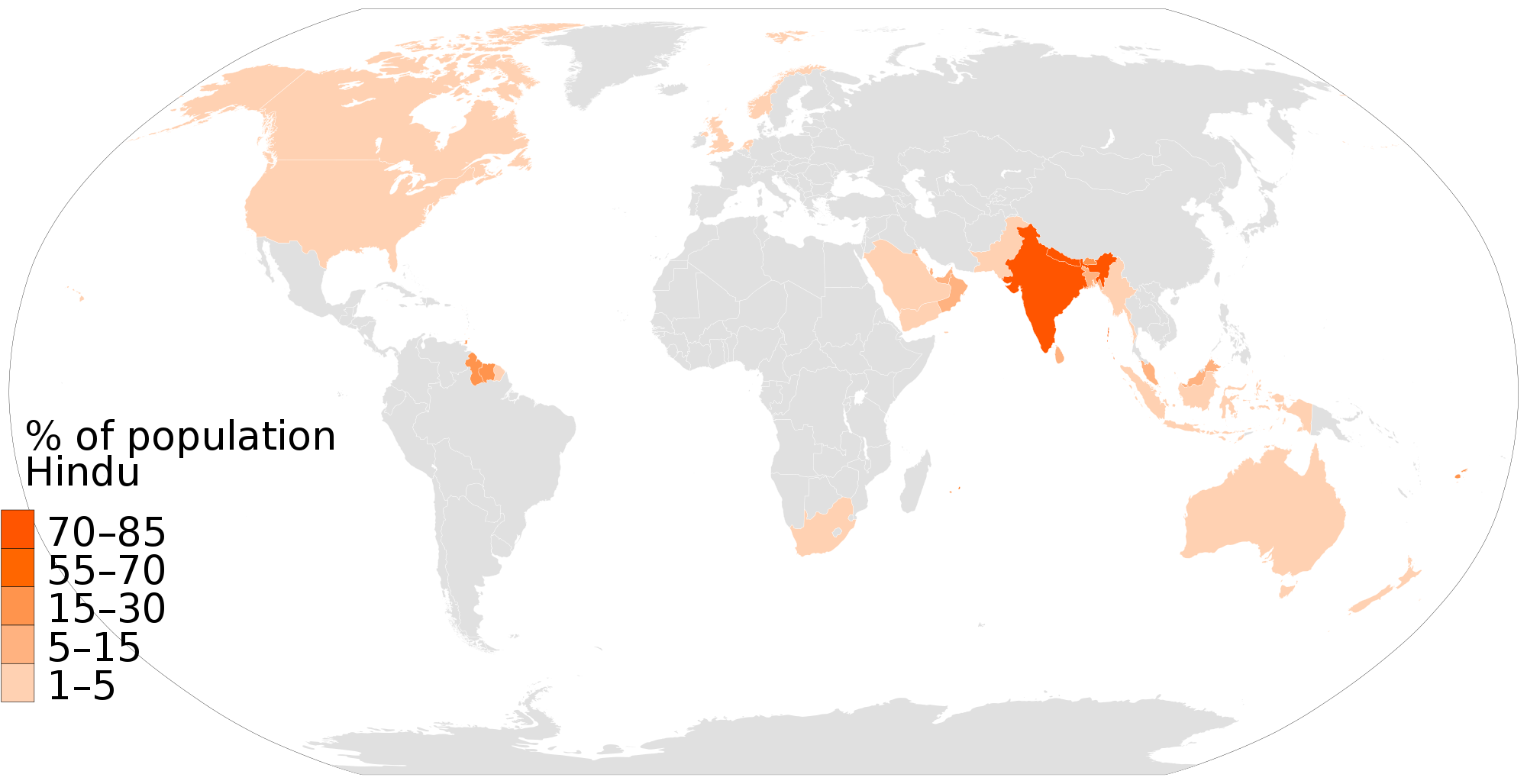
Hinduism in England is the third largest religion in the country, with over 1,020,533 followers as of the 2021 census. This represents over 1.8% of the English population, up from 1.5% in 2011 and 1.1% in 2001. Hindus are predominantly in the cities of London and Leicester, where they make up greater proportions of the population. England has a number of Hindu temples, including the Hindu temple at Neasden which is a large Hindu temple in Europe. In 2007, the largest Hindu Mandir in the North of England, the Bradford Lakshmi Narayan Hindu Temple opened in Bradford, West Yorkshire.
Hinduism has been in England since the early 19th century. Occasionally there were Hindu scholars, philosophers, reformers and also visitors from the princely states of India. Raja Ram Mohan Roy (born in India in 1772) was founder of a Hindu reform movement in India. He was in England in 1829 to visit his Christian friends. He also had audience with King William IV. Roy died in Stapleton, Bristol four years later.
The orientalist and reformer Sir R.G. Bhandarkar visited London in 1874. In 1879 Aurobindo went to England as a boy with his two brothers to study, living in Manchester, London (St. Paul's School) and Cambridge (King's College) where he stayed until 1893. Swami Vivekananda visited England in 1895 and 1896, having addressed the World's Parliament of Religions in Chicago in 1893. In England Vivekananda's talk on Hindu philosophy and particularly on Vedanta deeply influenced Miss Margaret Elizabeth Noble, who was later known as Sister Nivedita.
Early Hindus in England were usually students. Rabindranath Tagore (later a Nobel Laureate) went to England in 1878, returning to India in 1880. Fifty years later Tagore was at Oxford delivering Hibbert Lectures (1930) on the Religion of Man. Ramanujan, a mathematical genius and an orthodox Hindu, spent almost five years (1914–19) at Cambridge University. Professor Sir Sarvepalli Radhakrishnan was Spalding Professor of Eastern Religions and Ethics at the University of Oxford from 1939 until 1952. Hinduism had already received widespread attention in the Victorian era largely due to the work of the Theosophical Society and emergence of the new field, Indology. In 1878 Max Muller, an Indologist, delivered inaugural Hibbert Lectures at Oxford on the Religions of India.
In 1929 Dr. Hari Prasad Shastri (1882-1956), who was a highly learned teacher (Acharya) of Adhyatma Yoga in India, went to England having taught for many years in Japan at Imperial and Waseda Universities and then in China also as a professor of philosophy. Hari Prasad Shastri founded Shanti Sadan (temple of inner peace) in London. Trevor Leggett, an English Judo teacher, met Shastri in 1936. He was deeply influenced by Hari Prasad Shastri's yoga teachings.
In 1935 Paramahansa Yogananda visited England, returning from the USA. In London he addressed a large meeting at Caxton Hall introduced by Sir Francis Younghusband. He again visited England in 1936 addressing more meetings and especially a large gathering at Whitefield Congregational Church, organised by the British National Council of the World Fellowship of Faiths. A Self-Realization Fellowship Centre in London was formed after Yogananda's departure. In his autobiography Yogananda commented that the 'English tenacity has an admirable expression in a spiritual relationship'.
There have been three waves of migration of Hindus to England. The first wave was before India's Independence in 1947. Before the Second World War Hindu migration to England was minuscule and largely temporary. During the post-war era, economic conditions compelled many Indians including Hindus to leave their country in search of better opportunities. The fact that Indians, as Commonwealth citizens, didn't require a visa to enter or live in the United Kingdom was a factor. In the early 1960s, in order to save the NHS, the Conservative Health Minister The Rt Hon Enoch Powell recruited a large number of doctors including Hindus from the Indian sub-continent
The second wave of migration occurred in the 1970s after Idi Amin's expulsion of Gujarati and other Asians (who were British Overseas Citizens) from Uganda. Initially, Hindu Immigration was limited to Punjabis and Gujaratis. Later Hindu communities from other regions of the Indian sub-continent and countries like Guyana, Trinidad and Tobago, Mauritius and Fiji could be found in England.
Hub AI
Hinduism in England AI simulator
(@Hinduism in England_simulator)
Hinduism in England
Hinduism in England is the third largest religion in the country, with over 1,020,533 followers as of the 2021 census. This represents over 1.8% of the English population, up from 1.5% in 2011 and 1.1% in 2001. Hindus are predominantly in the cities of London and Leicester, where they make up greater proportions of the population. England has a number of Hindu temples, including the Hindu temple at Neasden which is a large Hindu temple in Europe. In 2007, the largest Hindu Mandir in the North of England, the Bradford Lakshmi Narayan Hindu Temple opened in Bradford, West Yorkshire.
Hinduism has been in England since the early 19th century. Occasionally there were Hindu scholars, philosophers, reformers and also visitors from the princely states of India. Raja Ram Mohan Roy (born in India in 1772) was founder of a Hindu reform movement in India. He was in England in 1829 to visit his Christian friends. He also had audience with King William IV. Roy died in Stapleton, Bristol four years later.
The orientalist and reformer Sir R.G. Bhandarkar visited London in 1874. In 1879 Aurobindo went to England as a boy with his two brothers to study, living in Manchester, London (St. Paul's School) and Cambridge (King's College) where he stayed until 1893. Swami Vivekananda visited England in 1895 and 1896, having addressed the World's Parliament of Religions in Chicago in 1893. In England Vivekananda's talk on Hindu philosophy and particularly on Vedanta deeply influenced Miss Margaret Elizabeth Noble, who was later known as Sister Nivedita.
Early Hindus in England were usually students. Rabindranath Tagore (later a Nobel Laureate) went to England in 1878, returning to India in 1880. Fifty years later Tagore was at Oxford delivering Hibbert Lectures (1930) on the Religion of Man. Ramanujan, a mathematical genius and an orthodox Hindu, spent almost five years (1914–19) at Cambridge University. Professor Sir Sarvepalli Radhakrishnan was Spalding Professor of Eastern Religions and Ethics at the University of Oxford from 1939 until 1952. Hinduism had already received widespread attention in the Victorian era largely due to the work of the Theosophical Society and emergence of the new field, Indology. In 1878 Max Muller, an Indologist, delivered inaugural Hibbert Lectures at Oxford on the Religions of India.
In 1929 Dr. Hari Prasad Shastri (1882-1956), who was a highly learned teacher (Acharya) of Adhyatma Yoga in India, went to England having taught for many years in Japan at Imperial and Waseda Universities and then in China also as a professor of philosophy. Hari Prasad Shastri founded Shanti Sadan (temple of inner peace) in London. Trevor Leggett, an English Judo teacher, met Shastri in 1936. He was deeply influenced by Hari Prasad Shastri's yoga teachings.
In 1935 Paramahansa Yogananda visited England, returning from the USA. In London he addressed a large meeting at Caxton Hall introduced by Sir Francis Younghusband. He again visited England in 1936 addressing more meetings and especially a large gathering at Whitefield Congregational Church, organised by the British National Council of the World Fellowship of Faiths. A Self-Realization Fellowship Centre in London was formed after Yogananda's departure. In his autobiography Yogananda commented that the 'English tenacity has an admirable expression in a spiritual relationship'.
There have been three waves of migration of Hindus to England. The first wave was before India's Independence in 1947. Before the Second World War Hindu migration to England was minuscule and largely temporary. During the post-war era, economic conditions compelled many Indians including Hindus to leave their country in search of better opportunities. The fact that Indians, as Commonwealth citizens, didn't require a visa to enter or live in the United Kingdom was a factor. In the early 1960s, in order to save the NHS, the Conservative Health Minister The Rt Hon Enoch Powell recruited a large number of doctors including Hindus from the Indian sub-continent
The second wave of migration occurred in the 1970s after Idi Amin's expulsion of Gujarati and other Asians (who were British Overseas Citizens) from Uganda. Initially, Hindu Immigration was limited to Punjabis and Gujaratis. Later Hindu communities from other regions of the Indian sub-continent and countries like Guyana, Trinidad and Tobago, Mauritius and Fiji could be found in England.
Recent media