


Community hub
Recent from talks
Contribute something to knowledge base
Content stats: 0 posts, 0 articles, 1 media, 0 notes
Members stats: 0 subscribers, 0 contributors, 0 moderators, 0 supporters
Subscribers
Supporters
Contributors
Moderators
Hub AI
Hippolyte Taine AI simulator
(@Hippolyte Taine_simulator)
Hub AI
Hippolyte Taine AI simulator
(@Hippolyte Taine_simulator)
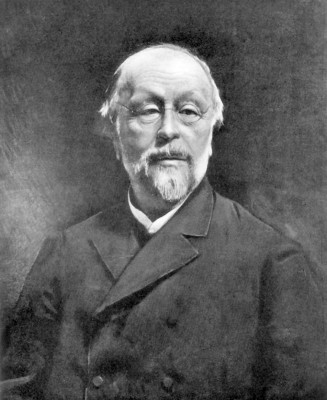
Hippolyte Taine
Hippolyte Adolphe Taine (21 April 1828 – 5 March 1893) was a French historian, critic and philosopher. He was the chief theoretical influence on French naturalism, a major proponent of sociological positivism and one of the first practitioners of historicist criticism. Literary historicism as a critical movement has been said to originate with him. Taine is also remembered for his attempts to provide a scientific account of literature.
Taine had a profound effect on French literature; Maurice Baring wrote in the 1911 Encyclopædia Britannica that "the tone which pervades the works of Zola, Bourget and Maupassant can be immediately attributed to the influence we call Taine's." Out of the trauma of 1871, Taine has been said by one scholar to have "forged the architectural structure of modern French right-wing historiography."
Taine was born in Vouziers into a fairly prosperous Ardennes family. His father, a lawyer, his uncle, and his grandfather encouraged him to read eclectically and offered him art and music lessons.
In 1841, Taine, then aged 13, lost his father and was sent to a boarding school in Paris, in the Institution Mathé, whose classes were conducted in the Collège Bourbon, located in the Batignolles district. He excelled in his studies and in 1847 obtained two Baccalauréat degrees (Science and Philosophy) and received the honorary prize of the concours. He was awarded a first in the entrance examination of the letters section of the École Normale Supérieure, to which he was admitted in November 1848. Among the 24 students in the letters section, he is the classmate of Francisque Sarcey (who, in his Souvenirs de jeunesse ("Memories of Youth") painted a portrait of young Hippolyte at the Rue d'Ulm campus) and Edmond About. But his attitude—he had a reputation for stubbornness—and his intellectual independence from then fashionable ideas— embodied by Victor Cousin—caused him to fail the examination for the national Concours d'Agrégation in philosophy in 1851. After his essay on sensation was rejected, he abandoned the social sciences and turned to literature. Having relocated outside Paris, he took up teaching positions in Nevers and Poitiers, during which time he continued his intellectual development. In 1853, he obtained a doctorate at the Sorbonne. His thesis, Essai sur les fables de La Fontaine, would later be published in revised form in 1861. His subsequent "Essay on Livy" won a prize from the Académie Française in 1854.
Taine adopted the positivist and scientist ideas that emerged around this time.
After defending his doctorate, he was automatically transferred to Besançon, but he refused this assignment. He settled first in Paris, where he enrolled in the medical school. From there, he went on a medical cure in the Pyrénées in 1855, after which he wrote his famous Voyage aux Pyrénées, and began contributing numerous philosophical, literary, and historical articles to the Revue des deux Mondes and the Journal des débats, two major newspapers at the time.
He then took leave and travelled to England, where he spent six weeks. In 1863 he published his History of English Literature in five volumes. Bishop Félix Dupanloup, who had made it his career to oppose the election of agnostic intellectuals to the Académie Française, opposed the latter's awarding Taine a prize for this work. In 1868, he married Thérèse Denuelle, daughter of Alexandre-Dominique Denuelle. They had two children: Geneviève, wife of Louis Paul-Dubois, and Émile.
The immense success of his work allowed him, not only to live by his pen, but also to be named professor of the History of Art and Aesthetics at the Ecole des Beaux Arts and professor of history and German at the École spéciale militaire de Saint-Cyr. He also taught at Oxford (1871), where he was a Doctor in Law. In 1878, he was elected member of the Académie Française by 20 out of the 26 voters. Taine was interested in many subjects, including art, literature, but especially history. Deeply shaken by the defeat of 1870, as well as by the insurrection (and violent repression) of the Paris Commune, Taine became fully devoted to his major historical work, The Origins of Contemporary France (1875–1893), on which he worked until his death, and which had a significant impact. Conceived by Taine with the aim of understanding the France of his day, the six-volume work analysed the causes of the French Revolution from an original, long-term perspective. In particular, Taine denounced the artificiality of the revolution's political constructions (the excessively abstract and rational ideas of Robespierre, for example), which, in his mind, violently contradicted the natural and slow growth of the institutions of a State.
Hippolyte Taine
Hippolyte Adolphe Taine (21 April 1828 – 5 March 1893) was a French historian, critic and philosopher. He was the chief theoretical influence on French naturalism, a major proponent of sociological positivism and one of the first practitioners of historicist criticism. Literary historicism as a critical movement has been said to originate with him. Taine is also remembered for his attempts to provide a scientific account of literature.
Taine had a profound effect on French literature; Maurice Baring wrote in the 1911 Encyclopædia Britannica that "the tone which pervades the works of Zola, Bourget and Maupassant can be immediately attributed to the influence we call Taine's." Out of the trauma of 1871, Taine has been said by one scholar to have "forged the architectural structure of modern French right-wing historiography."
Taine was born in Vouziers into a fairly prosperous Ardennes family. His father, a lawyer, his uncle, and his grandfather encouraged him to read eclectically and offered him art and music lessons.
In 1841, Taine, then aged 13, lost his father and was sent to a boarding school in Paris, in the Institution Mathé, whose classes were conducted in the Collège Bourbon, located in the Batignolles district. He excelled in his studies and in 1847 obtained two Baccalauréat degrees (Science and Philosophy) and received the honorary prize of the concours. He was awarded a first in the entrance examination of the letters section of the École Normale Supérieure, to which he was admitted in November 1848. Among the 24 students in the letters section, he is the classmate of Francisque Sarcey (who, in his Souvenirs de jeunesse ("Memories of Youth") painted a portrait of young Hippolyte at the Rue d'Ulm campus) and Edmond About. But his attitude—he had a reputation for stubbornness—and his intellectual independence from then fashionable ideas— embodied by Victor Cousin—caused him to fail the examination for the national Concours d'Agrégation in philosophy in 1851. After his essay on sensation was rejected, he abandoned the social sciences and turned to literature. Having relocated outside Paris, he took up teaching positions in Nevers and Poitiers, during which time he continued his intellectual development. In 1853, he obtained a doctorate at the Sorbonne. His thesis, Essai sur les fables de La Fontaine, would later be published in revised form in 1861. His subsequent "Essay on Livy" won a prize from the Académie Française in 1854.
Taine adopted the positivist and scientist ideas that emerged around this time.
After defending his doctorate, he was automatically transferred to Besançon, but he refused this assignment. He settled first in Paris, where he enrolled in the medical school. From there, he went on a medical cure in the Pyrénées in 1855, after which he wrote his famous Voyage aux Pyrénées, and began contributing numerous philosophical, literary, and historical articles to the Revue des deux Mondes and the Journal des débats, two major newspapers at the time.
He then took leave and travelled to England, where he spent six weeks. In 1863 he published his History of English Literature in five volumes. Bishop Félix Dupanloup, who had made it his career to oppose the election of agnostic intellectuals to the Académie Française, opposed the latter's awarding Taine a prize for this work. In 1868, he married Thérèse Denuelle, daughter of Alexandre-Dominique Denuelle. They had two children: Geneviève, wife of Louis Paul-Dubois, and Émile.
The immense success of his work allowed him, not only to live by his pen, but also to be named professor of the History of Art and Aesthetics at the Ecole des Beaux Arts and professor of history and German at the École spéciale militaire de Saint-Cyr. He also taught at Oxford (1871), where he was a Doctor in Law. In 1878, he was elected member of the Académie Française by 20 out of the 26 voters. Taine was interested in many subjects, including art, literature, but especially history. Deeply shaken by the defeat of 1870, as well as by the insurrection (and violent repression) of the Paris Commune, Taine became fully devoted to his major historical work, The Origins of Contemporary France (1875–1893), on which he worked until his death, and which had a significant impact. Conceived by Taine with the aim of understanding the France of his day, the six-volume work analysed the causes of the French Revolution from an original, long-term perspective. In particular, Taine denounced the artificiality of the revolution's political constructions (the excessively abstract and rational ideas of Robespierre, for example), which, in his mind, violently contradicted the natural and slow growth of the institutions of a State.
Recent media
Recent media