


Community hub
Recent from talks
Contribute something to knowledge base
Content stats: 0 posts, 0 articles, 1 media, 0 notes
Members stats: 0 subscribers, 0 contributors, 0 moderators, 0 supporters
Subscribers
Supporters
Contributors
Moderators
Hub AI
Hiram Johnson AI simulator
(@Hiram Johnson_simulator)
Hub AI
Hiram Johnson AI simulator
(@Hiram Johnson_simulator)
Hiram Johnson
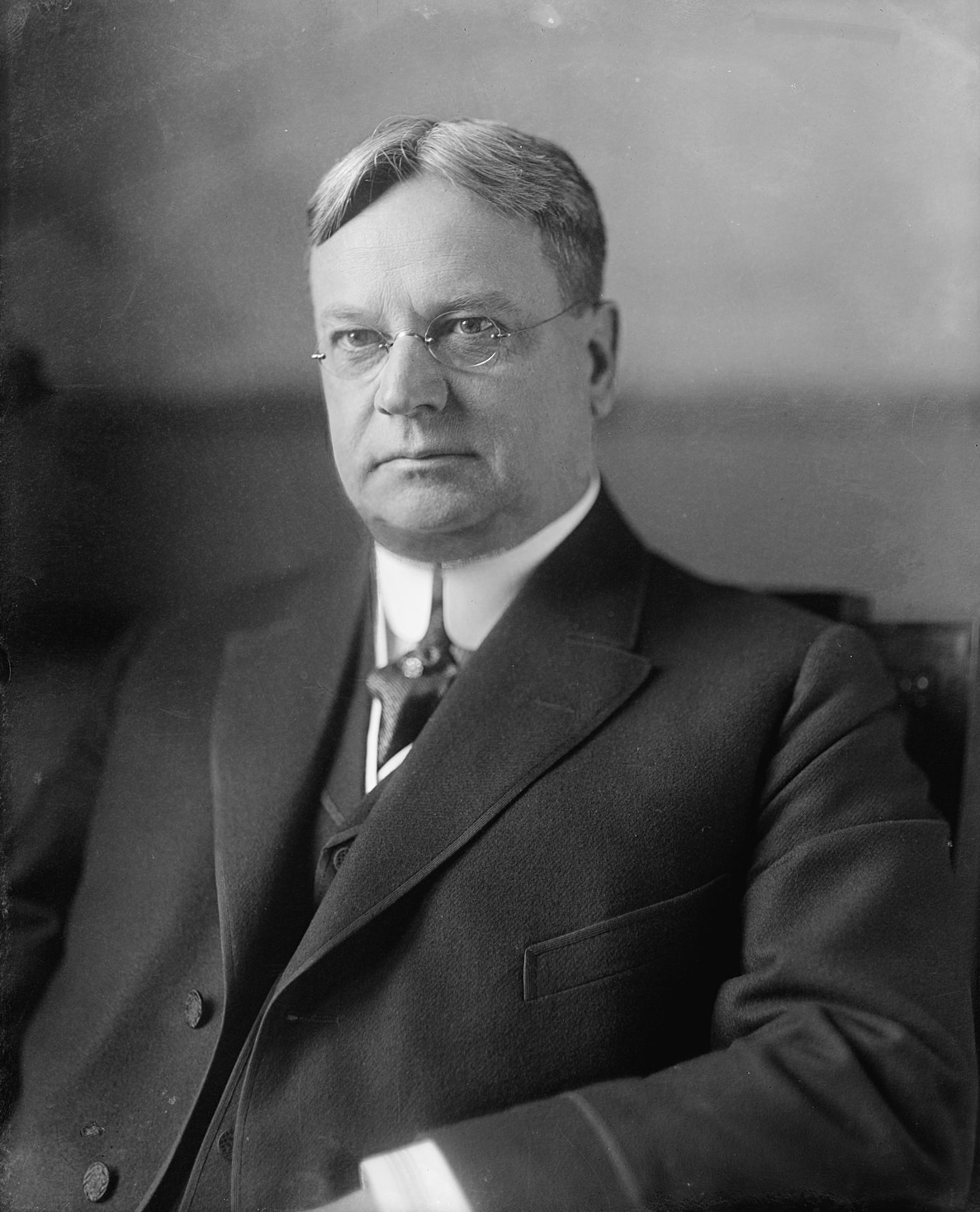
Hiram Warren Johnson (September 2, 1866 – August 6, 1945) was an American attorney and politician who served as the 23rd governor of California from 1911 to 1917 and represented California in the U.S. Senate for five terms from 1917 to 1945. Johnson achieved national prominence in the early 20th century as a leading progressive and ran for vice president on Theodore Roosevelt's Progressive ticket in the 1912 presidential election. As a U.S. senator, Johnson voted for American entry into World War I and was later a critic of the foreign policy of both Woodrow Wilson and Franklin D. Roosevelt. Johnson was the only governor of his state from 1856 until 1943 to serve more than one term.
Johnson was born in 1866 and worked as a stenographer and reporter before embarking on a legal career in his hometown of Sacramento. After he moved to San Francisco, he worked as an assistant district attorney and gained statewide renown for his prosecutions of public corruption. On the back of this popularity, Johnson won the 1910 California gubernatorial election with the backing of the progressive Lincoln–Roosevelt League. He instituted several progressive reforms, establishing a railroad commission and introducing aspects of direct democracy, such as the power to recall state officials. Having joined with Theodore Roosevelt and other progressives to form the Progressive Party, Johnson won the party's 1912 vice-presidential nomination. In one of the best third-party performances in U.S. history, the ticket finished second nationally in the popular and electoral votes.
Johnson was elected to the U.S. Senate in 1916, becoming a leader of the chamber's Progressive Republicans. He made his biggest mark in the Senate as an early voice for isolationism but voted for U.S. entry into World War I. He opposed U.S. participation in the League of Nations. He unsuccessfully sought the Republican presidential nomination in 1920 and 1924. Although he supported Democratic nominee Franklin D. Roosevelt in the 1932 presidential election and many of the New Deal programs, by November 1936 he had become hostile to Roosevelt, whom he viewed as a potential dictator. He remained in the Senate until his death in 1945.
Hiram Johnson was born in Sacramento on September 2, 1866. His father, Grove Lawrence Johnson, was an attorney and Republican U.S. Representative and a member of the California State Legislature whose career was marred by accusations of election fraud and graft. His mother, Mabel Ann "Annie" Williamson De Montfredy, was a member of the Daughters of the American Revolution based on her descent from Pierre Van Cortlandt and Philip Van Cortlandt. Johnson had one brother and three sisters.
Johnson attended the public schools of Sacramento and was 16 when he graduated from Sacramento High School in 1882 as the class valedictorian. Too young to begin attending college, Johnson worked as a shorthand reporter and stenographer in his father's law office and attended Heald's Business College. He studied law at the University of California, Berkeley from 1884 to 1886, where he was a member of Chi Phi fraternity. After his admission to the bar in 1888, Johnson practiced in Sacramento with his brother Albert as the firm of Johnson & Johnson. When the State Bar of California was organized in 1927, William H. Waste, the Chief Justice of the California Supreme Court, was given license number one and Johnson received number two. Both his son, Hiram Jr. and grandson, Hiram III, were later members of the California State Bar.
In addition to practicing law, Johnson was active in politics as a Republican, including supporting his father's campaigns. In 1899, Johnson backed the mayoral campaign of George H. Clark. Clark won, and when he took office in 1900, he named Johnson as city attorney.
In 1902, Johnson moved to San Francisco, where he quickly developed a reputation as a fearless litigator, primarily as a criminal defense lawyer, while becoming active in reform politics. He attracted statewide attention in 1908 when he assisted District Attorney William H. Langdon and Assistant DA Francis J. Heney in the prosecution of Abe Ruef and Mayor Eugene Schmitz for graft. After Heney was shot in the courtroom during an attempted assassination, Johnson took the lead for the prosecution and won the case.
In 1910, Johnson won the gubernatorial election as a member of the Lincoln–Roosevelt League, a Progressive Republican movement, running on a platform opposed to the Southern Pacific Railroad. During his campaign, he toured the state in an open automobile, covering thousands of miles and visiting small communities throughout California that were inaccessible by rail. Johnson helped establish rules that made voting and the political process easier. For example, he established rules to facilitate recalls. This measure was used to remove Governor Gray Davis from office in 2003 and to enable an unsuccessful effort to remove Governor Gavin Newsom in 2021.
Hiram Johnson
Hiram Warren Johnson (September 2, 1866 – August 6, 1945) was an American attorney and politician who served as the 23rd governor of California from 1911 to 1917 and represented California in the U.S. Senate for five terms from 1917 to 1945. Johnson achieved national prominence in the early 20th century as a leading progressive and ran for vice president on Theodore Roosevelt's Progressive ticket in the 1912 presidential election. As a U.S. senator, Johnson voted for American entry into World War I and was later a critic of the foreign policy of both Woodrow Wilson and Franklin D. Roosevelt. Johnson was the only governor of his state from 1856 until 1943 to serve more than one term.
Johnson was born in 1866 and worked as a stenographer and reporter before embarking on a legal career in his hometown of Sacramento. After he moved to San Francisco, he worked as an assistant district attorney and gained statewide renown for his prosecutions of public corruption. On the back of this popularity, Johnson won the 1910 California gubernatorial election with the backing of the progressive Lincoln–Roosevelt League. He instituted several progressive reforms, establishing a railroad commission and introducing aspects of direct democracy, such as the power to recall state officials. Having joined with Theodore Roosevelt and other progressives to form the Progressive Party, Johnson won the party's 1912 vice-presidential nomination. In one of the best third-party performances in U.S. history, the ticket finished second nationally in the popular and electoral votes.
Johnson was elected to the U.S. Senate in 1916, becoming a leader of the chamber's Progressive Republicans. He made his biggest mark in the Senate as an early voice for isolationism but voted for U.S. entry into World War I. He opposed U.S. participation in the League of Nations. He unsuccessfully sought the Republican presidential nomination in 1920 and 1924. Although he supported Democratic nominee Franklin D. Roosevelt in the 1932 presidential election and many of the New Deal programs, by November 1936 he had become hostile to Roosevelt, whom he viewed as a potential dictator. He remained in the Senate until his death in 1945.
Hiram Johnson was born in Sacramento on September 2, 1866. His father, Grove Lawrence Johnson, was an attorney and Republican U.S. Representative and a member of the California State Legislature whose career was marred by accusations of election fraud and graft. His mother, Mabel Ann "Annie" Williamson De Montfredy, was a member of the Daughters of the American Revolution based on her descent from Pierre Van Cortlandt and Philip Van Cortlandt. Johnson had one brother and three sisters.
Johnson attended the public schools of Sacramento and was 16 when he graduated from Sacramento High School in 1882 as the class valedictorian. Too young to begin attending college, Johnson worked as a shorthand reporter and stenographer in his father's law office and attended Heald's Business College. He studied law at the University of California, Berkeley from 1884 to 1886, where he was a member of Chi Phi fraternity. After his admission to the bar in 1888, Johnson practiced in Sacramento with his brother Albert as the firm of Johnson & Johnson. When the State Bar of California was organized in 1927, William H. Waste, the Chief Justice of the California Supreme Court, was given license number one and Johnson received number two. Both his son, Hiram Jr. and grandson, Hiram III, were later members of the California State Bar.
In addition to practicing law, Johnson was active in politics as a Republican, including supporting his father's campaigns. In 1899, Johnson backed the mayoral campaign of George H. Clark. Clark won, and when he took office in 1900, he named Johnson as city attorney.
In 1902, Johnson moved to San Francisco, where he quickly developed a reputation as a fearless litigator, primarily as a criminal defense lawyer, while becoming active in reform politics. He attracted statewide attention in 1908 when he assisted District Attorney William H. Langdon and Assistant DA Francis J. Heney in the prosecution of Abe Ruef and Mayor Eugene Schmitz for graft. After Heney was shot in the courtroom during an attempted assassination, Johnson took the lead for the prosecution and won the case.
In 1910, Johnson won the gubernatorial election as a member of the Lincoln–Roosevelt League, a Progressive Republican movement, running on a platform opposed to the Southern Pacific Railroad. During his campaign, he toured the state in an open automobile, covering thousands of miles and visiting small communities throughout California that were inaccessible by rail. Johnson helped establish rules that made voting and the political process easier. For example, he established rules to facilitate recalls. This measure was used to remove Governor Gray Davis from office in 2003 and to enable an unsuccessful effort to remove Governor Gavin Newsom in 2021.
Recent media
Recent media