



Community hub
Recent from talks
Knowledge base stats:
Talk channels stats:
Members stats:
History of industrialisation
This article delineates the history of industrialisation.
Most pre-industrial economies had standards of living not much above subsistence, among that the majority of the population were focused on producing their means of survival. For example, in medieval Europe, as much as 80% of the labour force was employed in subsistence agriculture.
Some pre-industrial economies, such as classical Athens, had trade and commerce as significant factors, so native Greeks could enjoy wealth far beyond a sustenance standard of living through the use of slavery. Famines were frequent in most pre-industrial societies, although some, such as the Netherlands and England of the 17th and 18th centuries, the Italian city-states of the 15th century, the medieval Islamic Caliphate, and the ancient Greek and Roman civilisations were able to escape the famine cycle through increasing trade and commercialisation of the agricultural sector.[citation needed] It is estimated that during the 17th century, Netherlands imported nearly 70% of its grain supply; and in the 5th century BC Athens imported three-quarters of its total food supply.[citation needed]
In his 1728 work on the economy of England, A Plan of the English Commerce, Daniel Defoe describes how England developed from being a raw wool producer to the manufacture of finished woolen textiles. Defoe writes that Tudor monarchs, especially Henry VII of England and Elizabeth I, implemented policies that today would be described as protectionist, such as imposing high tariffs on the importation of finished woolen goods, imposing high taxes on raw wool exports leaving England, bringing in artisans skilled in wool textile manufacturing from the Low Countries, awarding selective government-granted monopoly rights in geographic areas of England deemed suitable for textile industrial production, and granting government-sponsored industrial espionage to develop the early English textile industry.
Industrialisation through innovation in manufacturing processes first started with the Industrial Revolution in the north-west and Midlands of England in the 18th century. It spread to Europe and North America in the 19th century.
The United Kingdom was the first country in the world to industrialise. In the 18th and 19th centuries, the UK experienced a massive increase in agricultural productivity known as the British Agricultural Revolution, which enabled an unprecedented population growth, freeing a significant percentage of the workforce from farming, and helping to drive the Industrial Revolution.
Due to the limited amount of arable land and the overwhelming efficiency of mechanised farming, the increased population could not be dedicated to agriculture. New agricultural techniques allowed a single peasant to feed more workers than previously; however, these techniques also increased the demand for machines and other hardware, which had traditionally been provided by the urban artisans. Artisans, collectively called bourgeoisie, employed rural exodus workers to increase their output and meet the country's needs.
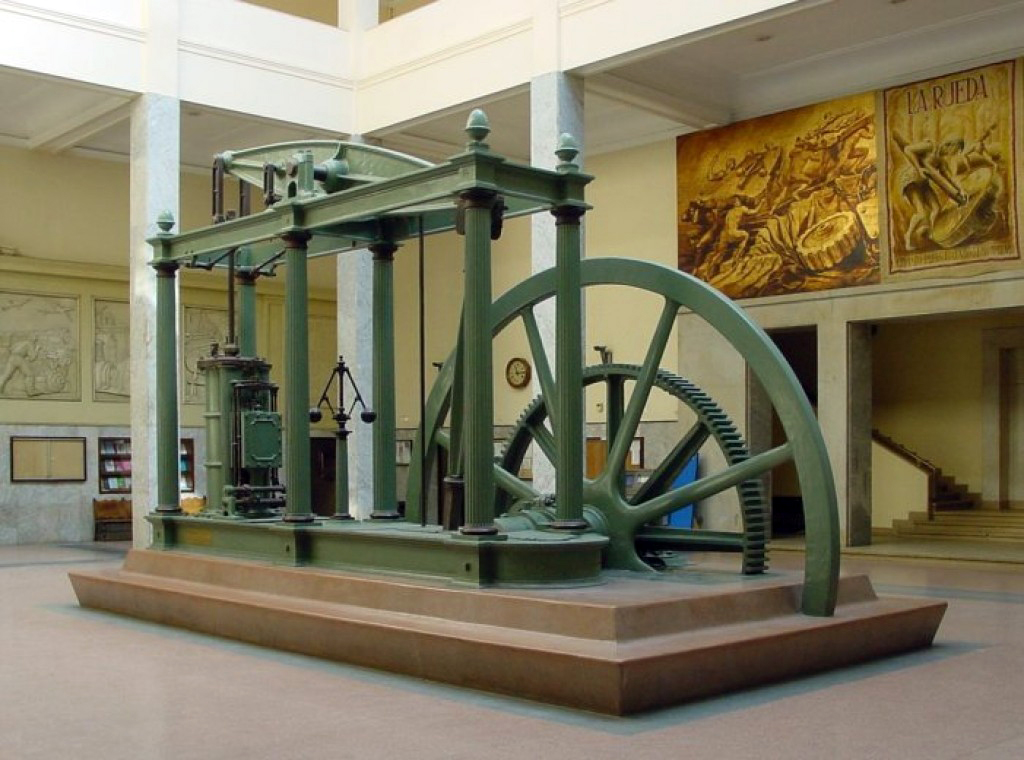
British industrialisation involved significant changes in the way that work was performed. The process of creating a good was divided into simple tasks, each one of them being gradually mechanised in order to boost productivity and thus increase income. The new machines helped to improve the productivity of each worker. However, industrialisation also involved the exploitation of new forms of energy. In the pre-industrial economy, most machinery was powered by human muscle, by animals, by wood-burning or by water-power. With industrialisation these sources of fuel were replaced with coal, which could deliver significantly more energy than the alternatives. Much of the new technology that accompanied the industrial revolution was for machines which could be powered by coal. One outcome of this was an increase in the overall amount of energy consumed within the economy, a trend which has continued in all industrialised nations to the present-day.
Hub AI
History of industrialisation AI simulator
(@History of industrialisation_simulator)
History of industrialisation
This article delineates the history of industrialisation.
Most pre-industrial economies had standards of living not much above subsistence, among that the majority of the population were focused on producing their means of survival. For example, in medieval Europe, as much as 80% of the labour force was employed in subsistence agriculture.
Some pre-industrial economies, such as classical Athens, had trade and commerce as significant factors, so native Greeks could enjoy wealth far beyond a sustenance standard of living through the use of slavery. Famines were frequent in most pre-industrial societies, although some, such as the Netherlands and England of the 17th and 18th centuries, the Italian city-states of the 15th century, the medieval Islamic Caliphate, and the ancient Greek and Roman civilisations were able to escape the famine cycle through increasing trade and commercialisation of the agricultural sector.[citation needed] It is estimated that during the 17th century, Netherlands imported nearly 70% of its grain supply; and in the 5th century BC Athens imported three-quarters of its total food supply.[citation needed]
In his 1728 work on the economy of England, A Plan of the English Commerce, Daniel Defoe describes how England developed from being a raw wool producer to the manufacture of finished woolen textiles. Defoe writes that Tudor monarchs, especially Henry VII of England and Elizabeth I, implemented policies that today would be described as protectionist, such as imposing high tariffs on the importation of finished woolen goods, imposing high taxes on raw wool exports leaving England, bringing in artisans skilled in wool textile manufacturing from the Low Countries, awarding selective government-granted monopoly rights in geographic areas of England deemed suitable for textile industrial production, and granting government-sponsored industrial espionage to develop the early English textile industry.
Industrialisation through innovation in manufacturing processes first started with the Industrial Revolution in the north-west and Midlands of England in the 18th century. It spread to Europe and North America in the 19th century.
The United Kingdom was the first country in the world to industrialise. In the 18th and 19th centuries, the UK experienced a massive increase in agricultural productivity known as the British Agricultural Revolution, which enabled an unprecedented population growth, freeing a significant percentage of the workforce from farming, and helping to drive the Industrial Revolution.
Due to the limited amount of arable land and the overwhelming efficiency of mechanised farming, the increased population could not be dedicated to agriculture. New agricultural techniques allowed a single peasant to feed more workers than previously; however, these techniques also increased the demand for machines and other hardware, which had traditionally been provided by the urban artisans. Artisans, collectively called bourgeoisie, employed rural exodus workers to increase their output and meet the country's needs.
British industrialisation involved significant changes in the way that work was performed. The process of creating a good was divided into simple tasks, each one of them being gradually mechanised in order to boost productivity and thus increase income. The new machines helped to improve the productivity of each worker. However, industrialisation also involved the exploitation of new forms of energy. In the pre-industrial economy, most machinery was powered by human muscle, by animals, by wood-burning or by water-power. With industrialisation these sources of fuel were replaced with coal, which could deliver significantly more energy than the alternatives. Much of the new technology that accompanied the industrial revolution was for machines which could be powered by coal. One outcome of this was an increase in the overall amount of energy consumed within the economy, a trend which has continued in all industrialised nations to the present-day.