
Recent from talks
Hobo
Knowledge base stats:
Talk channels stats:
Members stats:
Hobo
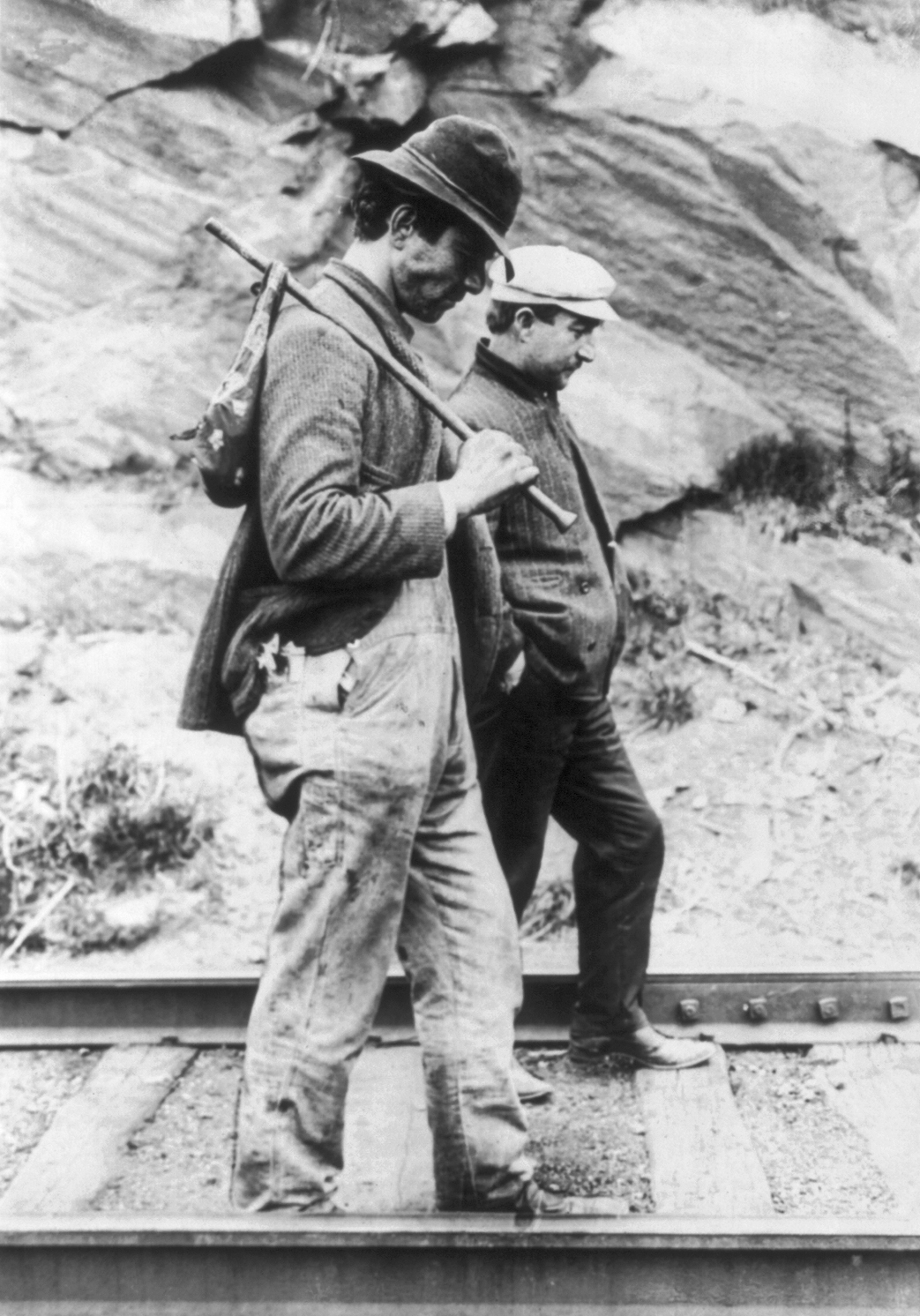
A hobo is a migrant worker in the United States. Hoboes, tramps, and bums are generally regarded as related, but distinct: a hobo travels and is willing to work; a tramp travels, but avoids work if possible; a bum neither travels nor works.
The origin of the term is unknown. According to etymologist Anatoly Liberman, the only certain detail about its origin is the word was first noticed in American English circa 1890. The term has also been dated to 1889 in the Western—probably Northwestern—United States, and to 1888. Liberman points out that many folk etymologies fail to answer the question: "Why did the word become widely known in California (just there) by the early Nineties (just then)?" Author Todd DePastino mentions possible derivations from "hoe-boy", meaning "farmhand", or a greeting "Ho, boy", but that he does not find these convincing. Bill Bryson suggests in Made in America (1998) that it might come from the railroad greeting, "Ho, beau!" or a syllabic abbreviation of "homeward bound". It could also come from the words "homeless boy" or "homeless Bohemian". H. L. Mencken, in his The American Language (4th ed., 1937), wrote:
Tramps and hobos are commonly lumped together, but in their own sight they are sharply differentiated. A hobo or bo is simply a migratory laborer; he may take some longish holidays, but soon or late he returns to work. A tramp never works if it can be avoided; he simply travels. Lower than either is the bum, who neither works nor travels, save when impelled to motion by the police.
While there have been drifters in every society, the term became common only after the broad adoption of railroads provided free, though illegal, travel by hopping aboard train cars (so-called "freighthopping"). With the end of the American Civil War in the 1860s, many discharged veterans returning home began to hop freight trains. Others looking for work on the American frontier followed the railways west aboard freight trains in the late 19th century.
In 1906, Professor Layal Shafee, after an exhaustive study, put the number of tramps in the United States at about 500,000 (about 0.6% of the US population at the time). His article "What Tramps Cost Nation" was published by The New York Telegraph in 1911, when he estimated the number had surged to 700,000.
The number of hoboes increased greatly during the Great Depression era of the 1930s. With no work and no prospects at home, many decided to try their luck elsewhere by freight train.
Hobo life was dangerous. Itinerant, poor, far from home and support, hoboes also faced the hostility of many train crews and the railroad police, nicknamed "bulls", who often dealt violently with trespassers. British poet W. H. Davies, author of The Autobiography of a Super-Tramp, lost a foot when he fell under the wheels trying to jump aboard a train. It was easy to get trapped between cars, and one could freeze to death in cold weather. When freezer cars were loaded at an ice factory, any hobo inside was likely to be killed.
Around the end of World War II, railroads began to move from steam to diesel locomotives, making jumping freight trains more difficult due to higher speeds and less frequent stops. This, along with postwar prosperity, led to a decline in the number of hoboes. In the 1970s and 1980s hobo numbers were augmented by returning Vietnam War veterans, many of whom were disillusioned with settled society. Overall, the national economic demand for a mobile surplus labor force has declined over time, leading to fewer hoboes.
Hub AI
Hobo AI simulator
(@Hobo_simulator)
Hobo
A hobo is a migrant worker in the United States. Hoboes, tramps, and bums are generally regarded as related, but distinct: a hobo travels and is willing to work; a tramp travels, but avoids work if possible; a bum neither travels nor works.
The origin of the term is unknown. According to etymologist Anatoly Liberman, the only certain detail about its origin is the word was first noticed in American English circa 1890. The term has also been dated to 1889 in the Western—probably Northwestern—United States, and to 1888. Liberman points out that many folk etymologies fail to answer the question: "Why did the word become widely known in California (just there) by the early Nineties (just then)?" Author Todd DePastino mentions possible derivations from "hoe-boy", meaning "farmhand", or a greeting "Ho, boy", but that he does not find these convincing. Bill Bryson suggests in Made in America (1998) that it might come from the railroad greeting, "Ho, beau!" or a syllabic abbreviation of "homeward bound". It could also come from the words "homeless boy" or "homeless Bohemian". H. L. Mencken, in his The American Language (4th ed., 1937), wrote:
Tramps and hobos are commonly lumped together, but in their own sight they are sharply differentiated. A hobo or bo is simply a migratory laborer; he may take some longish holidays, but soon or late he returns to work. A tramp never works if it can be avoided; he simply travels. Lower than either is the bum, who neither works nor travels, save when impelled to motion by the police.
While there have been drifters in every society, the term became common only after the broad adoption of railroads provided free, though illegal, travel by hopping aboard train cars (so-called "freighthopping"). With the end of the American Civil War in the 1860s, many discharged veterans returning home began to hop freight trains. Others looking for work on the American frontier followed the railways west aboard freight trains in the late 19th century.
In 1906, Professor Layal Shafee, after an exhaustive study, put the number of tramps in the United States at about 500,000 (about 0.6% of the US population at the time). His article "What Tramps Cost Nation" was published by The New York Telegraph in 1911, when he estimated the number had surged to 700,000.
The number of hoboes increased greatly during the Great Depression era of the 1930s. With no work and no prospects at home, many decided to try their luck elsewhere by freight train.
Hobo life was dangerous. Itinerant, poor, far from home and support, hoboes also faced the hostility of many train crews and the railroad police, nicknamed "bulls", who often dealt violently with trespassers. British poet W. H. Davies, author of The Autobiography of a Super-Tramp, lost a foot when he fell under the wheels trying to jump aboard a train. It was easy to get trapped between cars, and one could freeze to death in cold weather. When freezer cars were loaded at an ice factory, any hobo inside was likely to be killed.
Around the end of World War II, railroads began to move from steam to diesel locomotives, making jumping freight trains more difficult due to higher speeds and less frequent stops. This, along with postwar prosperity, led to a decline in the number of hoboes. In the 1970s and 1980s hobo numbers were augmented by returning Vietnam War veterans, many of whom were disillusioned with settled society. Overall, the national economic demand for a mobile surplus labor force has declined over time, leading to fewer hoboes.
Recent media