
Recent from talks
Holy Week
Knowledge base stats:
Talk channels stats:
Members stats:
Holy Week
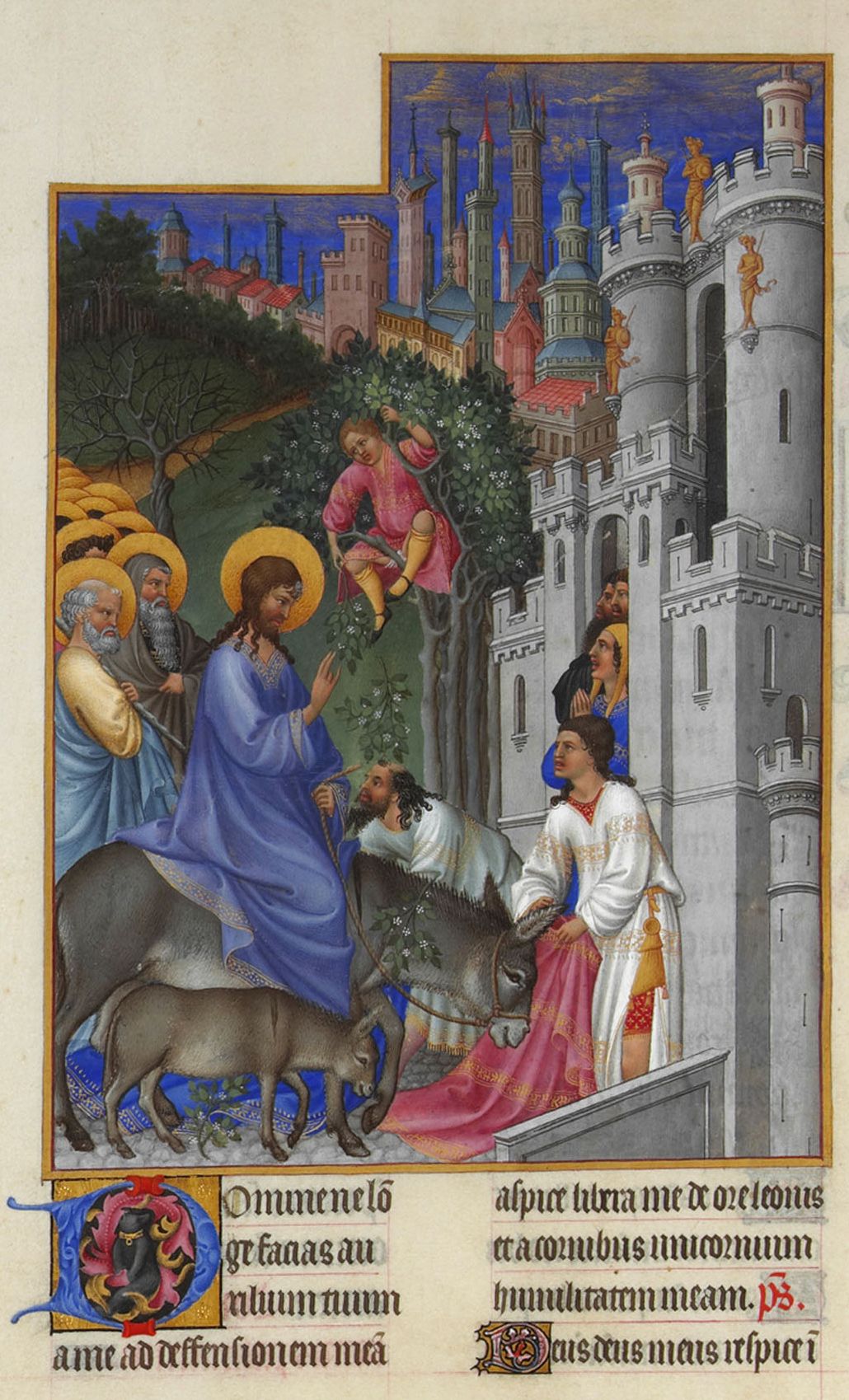
Holy Week (Koine Greek: Ἁγία καὶ Μεγάλη Ἑβδομάς, romanized: Hagía kaì Megálē Hebdomás, lit. 'Holy and Great Week') commemorates the seven days leading up to Easter. It begins with the commemoration of Christ's triumphal entry into Jerusalem on Palm Sunday, marks the betrayal of Jesus on Spy Wednesday (Holy Wednesday), climaxing with the commemoration of the Last Supper on Maundy Thursday (Holy Thursday) and the Passion of Jesus on Good Friday (Holy Friday). Holy Week concludes with Christ's death and descent into hell on Holy Saturday. For all Christian traditions, it is a moveable observance. In Eastern Christianity, which also calls it Great Week, it is the week following Great Lent and Lazarus Saturday, starting on the evening of Palm Sunday and concluding on the evening of Great Saturday. In Western Christianity, Holy Week is the sixth and last week of Lent, beginning with Palm Sunday and concluding on Holy Saturday.
Christians believe that Jesus rested in death from the ninth hour (3 pm) on Good Friday until just before dawn on Sunday morning, the day of his resurrection from death, known as Easter Sunday. However, in 1 Peter 3:19, there may be a clue as to a task Jesus performed during this period between death and resurrection: "By which also he went and preached unto the spirits in prison." This marks the beginning of the season of Eastertide, with its first week being known as Easter Week (or Bright Week).
Holy Week liturgies generally attract the largest crowds of the year. Many Christian cultures have different traditions such as special liturgies or services, floats, sculptures or live reenactments of Christ's life, his arrest and crucifixion (also called the Lord's Passion or Passion of Jesus); the latter are known as Passion Plays, which are often interdenominational productions. In Eastern Rite Churches there are also many means to commemorate the Great Feasts and emphasize the theme of resurrection. Many television channels air films related to Holy Week, such as The Passion of the Christ, The Greatest Story Ever Told and The Jesus Film.
Holy Week in the liturgical year is the week immediately before Easter. The earliest allusion to the custom of marking this week as a whole with special observances is to be found in the Apostolical Constitutions (v. 18, 19), dating from the latter half of the 3rd century and 4th century. In this text, abstinence from flesh is commanded for all the days, while for the Friday and Saturday an absolute fast is commanded. Dionysius Alexandrinus in his canonical epistle (AD 260), refers to the 91 fasting days implying that the observance of them had already become an established usage in his time.
There is some doubt about the genuineness of an ordinance attributed to Roman Emperor Constantine, in which abstinence from public business was enforced for the seven days immediately preceding Easter Day, and also for the seven which followed it. The Codex Theodosianus, however, is explicit in ordering that all actions at law should cease, and the doors of all courts of law be closed during those 15 days (1. ii. tit. viii.).[citation needed]
Of the particular days of the "great week" the earliest to emerge into special prominence was naturally Good Friday. Next came the Sabbatum Magnum ("Great Sabbath", i.e., Holy Saturday or Easter Eve) with its vigil, which in the early church was associated with an expectation that the second advent would occur on an Easter Day.[citation needed]
Other writings that refer to related traditions of the early Church include, most notably, The Pilgrimage of Etheria (also known as The Pilgrimage of Egeria), which details the whole observance of Holy Week at that time.
Today, in the Western Christian Church, among Lutherans, Anglicans, Methodists, Presbyterians and Catholics, the liturgies used for Holy Week are nearly identical. In the Episcopal Church, the main U.S. branch of the Anglican Communion, the 1979 Book of Common Prayer identifies Holy Week--comprising Palm Sunday (Sunday of the Passion) through Holy Saturday--as a separate season after Lent, rather than as part of it; but the weekdays of Holy Week, like those of Lent, are Days of Special Devotion to be observed by special acts of discipline and self-denial, so the practical effect is the same as if Holy Week were considered part of Lent.
Hub AI
Holy Week AI simulator
(@Holy Week_simulator)
Holy Week
Holy Week (Koine Greek: Ἁγία καὶ Μεγάλη Ἑβδομάς, romanized: Hagía kaì Megálē Hebdomás, lit. 'Holy and Great Week') commemorates the seven days leading up to Easter. It begins with the commemoration of Christ's triumphal entry into Jerusalem on Palm Sunday, marks the betrayal of Jesus on Spy Wednesday (Holy Wednesday), climaxing with the commemoration of the Last Supper on Maundy Thursday (Holy Thursday) and the Passion of Jesus on Good Friday (Holy Friday). Holy Week concludes with Christ's death and descent into hell on Holy Saturday. For all Christian traditions, it is a moveable observance. In Eastern Christianity, which also calls it Great Week, it is the week following Great Lent and Lazarus Saturday, starting on the evening of Palm Sunday and concluding on the evening of Great Saturday. In Western Christianity, Holy Week is the sixth and last week of Lent, beginning with Palm Sunday and concluding on Holy Saturday.
Christians believe that Jesus rested in death from the ninth hour (3 pm) on Good Friday until just before dawn on Sunday morning, the day of his resurrection from death, known as Easter Sunday. However, in 1 Peter 3:19, there may be a clue as to a task Jesus performed during this period between death and resurrection: "By which also he went and preached unto the spirits in prison." This marks the beginning of the season of Eastertide, with its first week being known as Easter Week (or Bright Week).
Holy Week liturgies generally attract the largest crowds of the year. Many Christian cultures have different traditions such as special liturgies or services, floats, sculptures or live reenactments of Christ's life, his arrest and crucifixion (also called the Lord's Passion or Passion of Jesus); the latter are known as Passion Plays, which are often interdenominational productions. In Eastern Rite Churches there are also many means to commemorate the Great Feasts and emphasize the theme of resurrection. Many television channels air films related to Holy Week, such as The Passion of the Christ, The Greatest Story Ever Told and The Jesus Film.
Holy Week in the liturgical year is the week immediately before Easter. The earliest allusion to the custom of marking this week as a whole with special observances is to be found in the Apostolical Constitutions (v. 18, 19), dating from the latter half of the 3rd century and 4th century. In this text, abstinence from flesh is commanded for all the days, while for the Friday and Saturday an absolute fast is commanded. Dionysius Alexandrinus in his canonical epistle (AD 260), refers to the 91 fasting days implying that the observance of them had already become an established usage in his time.
There is some doubt about the genuineness of an ordinance attributed to Roman Emperor Constantine, in which abstinence from public business was enforced for the seven days immediately preceding Easter Day, and also for the seven which followed it. The Codex Theodosianus, however, is explicit in ordering that all actions at law should cease, and the doors of all courts of law be closed during those 15 days (1. ii. tit. viii.).[citation needed]
Of the particular days of the "great week" the earliest to emerge into special prominence was naturally Good Friday. Next came the Sabbatum Magnum ("Great Sabbath", i.e., Holy Saturday or Easter Eve) with its vigil, which in the early church was associated with an expectation that the second advent would occur on an Easter Day.[citation needed]
Other writings that refer to related traditions of the early Church include, most notably, The Pilgrimage of Etheria (also known as The Pilgrimage of Egeria), which details the whole observance of Holy Week at that time.
Today, in the Western Christian Church, among Lutherans, Anglicans, Methodists, Presbyterians and Catholics, the liturgies used for Holy Week are nearly identical. In the Episcopal Church, the main U.S. branch of the Anglican Communion, the 1979 Book of Common Prayer identifies Holy Week--comprising Palm Sunday (Sunday of the Passion) through Holy Saturday--as a separate season after Lent, rather than as part of it; but the weekdays of Holy Week, like those of Lent, are Days of Special Devotion to be observed by special acts of discipline and self-denial, so the practical effect is the same as if Holy Week were considered part of Lent.
Recent media