


Community hub
Recent from talks
Contribute something to knowledge base
Content stats: 0 posts, 0 articles, 1 media, 0 notes
Members stats: 0 subscribers, 0 contributors, 0 moderators, 0 supporters
Subscribers
Supporters
Contributors
Moderators
Hub AI
Horia Sima AI simulator
(@Horia Sima_simulator)
Hub AI
Horia Sima AI simulator
(@Horia Sima_simulator)
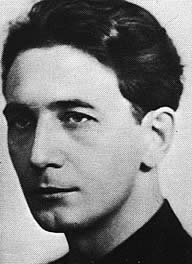
Horia Sima
Horia Sima (3 July 1906 – 25 May 1993) was a Romanian fascist politician and writer, best known as the second and last leader of the fascist paramilitary movement known as the Iron Guard (also known as the Legion of the Archangel Michael). Sima was also the Vice President of the Council of Ministers and de facto co-leader in Ion Antonescu's National Legionary State. Sima had previously served briefly as State Secretary of Education under Gheorghe Tătărescu in 1940, and as a short-lived Minister of Religion and Arts in the government of Ion Gigurtu.
In January 1941, Sima initiated and led the Legionnaires' Rebellion against Conducător Ion Antonescu and the Romanian Army, for which he was sentenced to death, as well as the Bucharest pogrom, the largest and most violent pogrom against Jews in the history of Muntenia. Following the rebellion, Sima escaped to Germany, and later to Spain, where he lived until his death. In 1946, the Romanian People's Tribunals again sentenced Sima to death in absentia as a war criminal.
Sima was born on 3 July 1906 to Silvia and Gheorghe Sima in Mundra, Fogaras County, Transylvania, Kingdom of Hungary (today Mândra, Brașov County, Romania), although some sources incorrectly list his birthplace as the nearby city of Făgăraș and his birth year as 1907. Between 1926 and 1932, Horia Sima studied at the Faculty of Letters and Philosophy of the University of Bucharest, serving as councillor of the National Union of Christian Students of Romania. Beginning in 1932 he began to work as a high school teacher of logic, Latin, and philosophy in Caransebeș, later transferring to a school in Lugoj, and finally to Timișoara.
In October 1927, when a student, he joined the newly formed Iron Guard and became responsible for the Banat area. In the early 1930s, Sima participated in the Legion's "Excursions among the People", wherein Iron Guard members would promote their movement in rural areas among peasants, and had become a leading organizer for the Legion in Severin County by the 1930s. Sima was named in initial lists of Iron Guard electoral candidates for the 1933 Romanian general election, but the party was ultimately banned from participating. In 1935, he was promoted to the position of Legionary commander of the Timișoara region, and in the 1937 Romanian general elections, he ran as a candidate in Severin County. Sima became commander of the Iron Guard in late 1938 after its founder and leader, Corneliu Zelea Codreanu, was imprisoned and later murdered. The Iron Guard had initially formed an interim leadership including Sima, Ion Belgae, Iordache Nicoară, Ion Antoniu, and Radu Mironovici in April 1938, but by August, Sima remained the only leader not imprisoned by the Romanian government, eventually allowing him to bypass the hierarchy of leadership previously established and become leader of the Iron Guard. Prior to his ascension to leadership, tension had built significantly both within the organization and country-wide following a series of assassinations of Iron Guard members, including of Codreanu (who was killed by order of King Carol II).
In early 1939, Sima fled to Nazi Germany through Yugoslavia, wherein he and a number of Romanian exiles attempted to plan a coup; this plot was discovered by German police and a number of Legionnaires were arrested. In the summer of the same year, he was sent back to prepare for and conduct the assassination of the Romanian Prime Minister, Armand Călinescu, on 21 September 1939 — following Călinescu's murder, a group of Legionnaires led by Sima assumed control of Romania's national radio broadcaster.
After a power struggle for Legionary leadership between Sima and a splinter group led by Vasile Noveanu that had formed while in exile, Sima was brought in by the short-lived Gheorghe Tătărescu government to serve as state secretary within the Ministry of Education. He occupied this position for only six days, and the Tătărescu government resigned on 3 July. On 4 July 1940, he joined the cabinet of Ion Gigurtu as the undersecretary of state in the Ministry of Public Education, as well as Minister of Religion and Arts, alongside two other Iron Guard members. Sima resigned from the Gigurtu cabinet after only four days. Under this cabinet, antisemitism became codified in Romanian law, and by 9 August 1940, marriage between ethnic Romanians and Jews was prohibited, as was access to public education for Jews. Following the secession of Northern Transylvania to Hungary (known as the Second Vienna Award) on 30 August 1940, the Gigurtu government collapsed.
Beginning in August 1940, prior to this secession, the Iron Guard faction controlled by Sima began to organize for a coup against King Carol II in reaction to the concession of Northern Transylvania. Sima, alongside Nicolae Petrașcu, attempted to organize and arm groups of Legionnaires but managed to only gather about 1000 members willing to sacrifice themselves. On the occasion of the Second Vienna Award, Sima visited German authorities in an attempt to form an Axis-allied nationalist government, but left without success. By September he had prepared a manifesto for distribution and had set the date of the coup to 3 September. Due to a lack of manpower (only 500 of the intended 1,000 Legionnaires participated) the coup was not carried out as planned — Legionnaires and police officers exchanged gunfire and clashed in centres such as Brașov, Constanța and Bucharest, and by the end of the day most Legionnaires had surrendered. Although the coup was unsuccessful, it spurred a number of protests against Carol II, and by 4 September the King had appointed General Ion Antonescu to the position of Prime Minister, thus halting the uprising.
In September 1940, Carol II abdicated and the Iron Guard entered a tense political alliance with General Ion Antonescu, forming what was proclaimed the National Legionary State. At that point, Sima was able to officially return from exile and rise to power as deputy prime minister in the new government, as well as resume his activities as leader of the Iron Guard in Romania. Sima appointed five Legionnaires into ministerial positions within the National Legionary State, and Legionnaires assumed leadership roles as prefects in each of Romania's administrative districts. Romanian territorial cessions in the summer of 1940, secretly implemented by his Nazi protectors, offered him the pretext for sparking a wave of xenophobic and antisemitic attacks. As a member of the government, Sima immediately initiated a series of brutal pogroms, assassinations, and de-possessions of Jews and competing politicians.
Horia Sima
Horia Sima (3 July 1906 – 25 May 1993) was a Romanian fascist politician and writer, best known as the second and last leader of the fascist paramilitary movement known as the Iron Guard (also known as the Legion of the Archangel Michael). Sima was also the Vice President of the Council of Ministers and de facto co-leader in Ion Antonescu's National Legionary State. Sima had previously served briefly as State Secretary of Education under Gheorghe Tătărescu in 1940, and as a short-lived Minister of Religion and Arts in the government of Ion Gigurtu.
In January 1941, Sima initiated and led the Legionnaires' Rebellion against Conducător Ion Antonescu and the Romanian Army, for which he was sentenced to death, as well as the Bucharest pogrom, the largest and most violent pogrom against Jews in the history of Muntenia. Following the rebellion, Sima escaped to Germany, and later to Spain, where he lived until his death. In 1946, the Romanian People's Tribunals again sentenced Sima to death in absentia as a war criminal.
Sima was born on 3 July 1906 to Silvia and Gheorghe Sima in Mundra, Fogaras County, Transylvania, Kingdom of Hungary (today Mândra, Brașov County, Romania), although some sources incorrectly list his birthplace as the nearby city of Făgăraș and his birth year as 1907. Between 1926 and 1932, Horia Sima studied at the Faculty of Letters and Philosophy of the University of Bucharest, serving as councillor of the National Union of Christian Students of Romania. Beginning in 1932 he began to work as a high school teacher of logic, Latin, and philosophy in Caransebeș, later transferring to a school in Lugoj, and finally to Timișoara.
In October 1927, when a student, he joined the newly formed Iron Guard and became responsible for the Banat area. In the early 1930s, Sima participated in the Legion's "Excursions among the People", wherein Iron Guard members would promote their movement in rural areas among peasants, and had become a leading organizer for the Legion in Severin County by the 1930s. Sima was named in initial lists of Iron Guard electoral candidates for the 1933 Romanian general election, but the party was ultimately banned from participating. In 1935, he was promoted to the position of Legionary commander of the Timișoara region, and in the 1937 Romanian general elections, he ran as a candidate in Severin County. Sima became commander of the Iron Guard in late 1938 after its founder and leader, Corneliu Zelea Codreanu, was imprisoned and later murdered. The Iron Guard had initially formed an interim leadership including Sima, Ion Belgae, Iordache Nicoară, Ion Antoniu, and Radu Mironovici in April 1938, but by August, Sima remained the only leader not imprisoned by the Romanian government, eventually allowing him to bypass the hierarchy of leadership previously established and become leader of the Iron Guard. Prior to his ascension to leadership, tension had built significantly both within the organization and country-wide following a series of assassinations of Iron Guard members, including of Codreanu (who was killed by order of King Carol II).
In early 1939, Sima fled to Nazi Germany through Yugoslavia, wherein he and a number of Romanian exiles attempted to plan a coup; this plot was discovered by German police and a number of Legionnaires were arrested. In the summer of the same year, he was sent back to prepare for and conduct the assassination of the Romanian Prime Minister, Armand Călinescu, on 21 September 1939 — following Călinescu's murder, a group of Legionnaires led by Sima assumed control of Romania's national radio broadcaster.
After a power struggle for Legionary leadership between Sima and a splinter group led by Vasile Noveanu that had formed while in exile, Sima was brought in by the short-lived Gheorghe Tătărescu government to serve as state secretary within the Ministry of Education. He occupied this position for only six days, and the Tătărescu government resigned on 3 July. On 4 July 1940, he joined the cabinet of Ion Gigurtu as the undersecretary of state in the Ministry of Public Education, as well as Minister of Religion and Arts, alongside two other Iron Guard members. Sima resigned from the Gigurtu cabinet after only four days. Under this cabinet, antisemitism became codified in Romanian law, and by 9 August 1940, marriage between ethnic Romanians and Jews was prohibited, as was access to public education for Jews. Following the secession of Northern Transylvania to Hungary (known as the Second Vienna Award) on 30 August 1940, the Gigurtu government collapsed.
Beginning in August 1940, prior to this secession, the Iron Guard faction controlled by Sima began to organize for a coup against King Carol II in reaction to the concession of Northern Transylvania. Sima, alongside Nicolae Petrașcu, attempted to organize and arm groups of Legionnaires but managed to only gather about 1000 members willing to sacrifice themselves. On the occasion of the Second Vienna Award, Sima visited German authorities in an attempt to form an Axis-allied nationalist government, but left without success. By September he had prepared a manifesto for distribution and had set the date of the coup to 3 September. Due to a lack of manpower (only 500 of the intended 1,000 Legionnaires participated) the coup was not carried out as planned — Legionnaires and police officers exchanged gunfire and clashed in centres such as Brașov, Constanța and Bucharest, and by the end of the day most Legionnaires had surrendered. Although the coup was unsuccessful, it spurred a number of protests against Carol II, and by 4 September the King had appointed General Ion Antonescu to the position of Prime Minister, thus halting the uprising.
In September 1940, Carol II abdicated and the Iron Guard entered a tense political alliance with General Ion Antonescu, forming what was proclaimed the National Legionary State. At that point, Sima was able to officially return from exile and rise to power as deputy prime minister in the new government, as well as resume his activities as leader of the Iron Guard in Romania. Sima appointed five Legionnaires into ministerial positions within the National Legionary State, and Legionnaires assumed leadership roles as prefects in each of Romania's administrative districts. Romanian territorial cessions in the summer of 1940, secretly implemented by his Nazi protectors, offered him the pretext for sparking a wave of xenophobic and antisemitic attacks. As a member of the government, Sima immediately initiated a series of brutal pogroms, assassinations, and de-possessions of Jews and competing politicians.
Recent media
Recent media