Hubbry Logo
Howard TateHoward TateMain
Open search
Howard Tate
Community hub
Howard Tate
logo
8 pages, 0 posts
0 subscribers
Be the first to start a discussion here.
Howard Tate
Howard Tate
from Wikipedia

Key Information

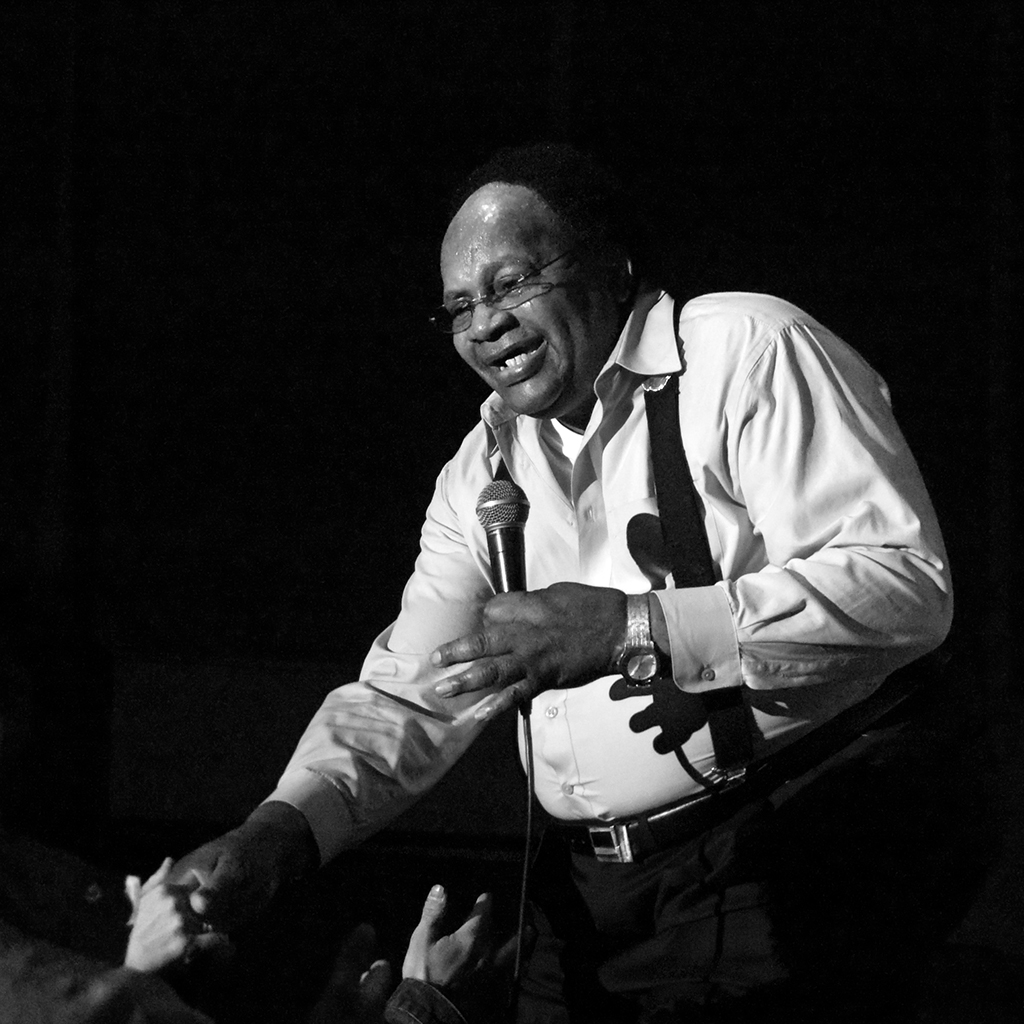
Howard Tate (August 13, 1939 – December 2, 2011) was an American soul singer and songwriter.[1]

His greatest success came with a string of hit singles in the late 1960s, including "Ain't Nobody Home" and "Get It While You Can," the latter of which became a hit when recorded by singer Janis Joplin. After withdrawing from the music business and struggling with drug addiction, Tate mounted a warmly received comeback in 2001.

Biography

[edit]

Early life

[edit]

According to an interview Tate gave to No Depression magazine writer Edd Hurt in 2006, he was born in Elberton, Georgia. Tate pronounced the town's name as "Eberton," but the 1940 census records for Elberton show a two-year-old boy named Howard Tate as a resident of the city. [1]. According to the census record, Tate's father was named Hult Tate and his mother Roberta Tate. He moved with his family to Philadelphia in the early 1940s.[2] In his teens, he joined a gospel music group that included Garnet Mimms, and, as the Gainors, they recorded rhythm and blues songs for Mercury Records and Cameo Records in the early 1960s.[1] Tate performed with the organist Bill Doggett and returned to Philadelphia.

Mimms, leading a group called the Enchanters, introduced Tate to the record producer Jerry Ragovoy, who began recording Tate for Verve Records. Utilizing New York City session musicians, including Paul Griffin, Richard Tee, Eric Gale, Chuck Rainey, and Herbie Lovelle, Tate and Ragovoy produced a series of soul blues recordings from 1966 to 1968. With Ragovoy he recorded during these years "Ain't Nobody Home", "Look at Granny Run Run", "Baby I Love You" and "Stop". The recordings were well received by record buyers. "Ain't Nobody Home", "Look at Granny" and "Stop" charted in the Top 20 of the Billboard R&B chart.[1]

Career

[edit]

Janis Joplin performed another of Tate's Ragovoy songs, "Get It While You Can" (on the album Pearl), around this time.[1] Tate's reputation among critics was high. Robert Christgau wrote in his review of Tate's Verve recordings, "Tate is a blues-drenched Macon native who had the desire to head north and sounds it every time he gooses a lament with one of the trademark keens that signify the escape he never achieved. He brought out the best in soul pro Jerry Ragovoy, who made Tate's records jump instead of arranging them into submission, and gave him lyrics with some wit to them besides."[3]

"This does almost as much for Tate's amazing vocal and emotional range—as cocksure as Wilson Pickett one moment, as sweet and hurting as B.B. King the next, and as corny as Joe Tex to top it off—as his Verve stuff with [Jeff] Ragovoy."

Tate, working apart from Ragovoy, recorded the album Howard Tate's Reaction, produced by Lloyd Price and Johnny Nash and released in 1970 by Turntable Records, it was distributed in small quantities. Christgau wrote, "Tate's voice is potent enough to activate more inert material."[3] The record was reissued, under the title Reaction, in 2003. Ragovoy and Tate reunited for the 1972 album Howard Tate, released by Atlantic Records; it included more songs by Ragovoy, along with Tate's cover versions of "Girl from the North Country", by Bob Dylan, and "Jemima Surrender", by Robbie Robertson and Levon Helm.

After recording a single for Epic Records and a few songs for his own label, Tate retired from the music industry in the late 1970s. He sold securities in the New Jersey and Philadelphia area. In the 1980s, after his 13-year-old daughter died in a house fire,[5] he developed a drug habit and ended up living in a homeless shelter. In the mid-1990s, he began counseling drug abusers and mentally ill people and also worked as a preacher.[1]

Rediscovery

[edit]

Phil Casden, a disc jockey from Camden, New Jersey, discovered Tate's whereabouts early in 2001, and in spring 2001 Tate played his first date in many years, in New Orleans. He then began working with Ragovoy on the 2003 album Rediscovered. It included covers of songs by Elvis Costello and Prince and a new version of "Get It While You Can."

At the Roskilde Festival in 2004, he sang "Love Will Keep You Warm" with Swan Lee. A recording of the performance is included on the album Swan Lee: The Complete Collection (2007).

The album Howard Tate Live, recorded in Denmark in 2004, was released by Shout! Factory in 2006. Working with the producer, arranger and songwriter Steve Weisberg, Tate recorded A Portrait of Howard, released in 2006 on the independent Solid Ground label. It included compositions by Randy Newman, Nick Lowe, Lou Reed and Carla Bley, along with songs written by Tate and Weisberg. In late 2007, Tate recorded Blue Day in Nashville with the producer Jon Tiven; it was released in 2008.

That year Tate was a judge for the sixth annual Independent Music Awards to support independent artists' careers.[6]

He and his touring quartet performed songs from his catalogue at Blue Heaven Studios, for an album released in 2010 as a limited-edition vinyl-only, direct-to-disc live recording.

Tate died of complications of multiple myeloma and leukemia on December 2, 2011, at the age of 72.[5]

Discography

[edit]

Albums

[edit]
  • Get It While You Can (April 1967)
  • Howard Tate's Reaction (1970)
  • Howard Tate (1972)
  • Rediscovered (2003)
  • Live! (2006)
  • A Portrait of Howard (2006)
  • Blue Day (2008)

Chart singles

[edit]
Year Single Chart Positions
U.S. Pop[7] U.S.
R&B
[8]
1966 "Ain't Nobody Home" 63 12
"Look at Granny Run, Run" 67 12
1967 "Baby, I Love You" 40
1968 "Stop" 76 15
1969 "These Are the Things That Make Me Know You're Gone" 28
1970 "My Soul's Got A Hole in It" 100 31

References

[edit]
[edit]
Revisions and contributorsEdit on WikipediaRead on Wikipedia
from Grokipedia
Howard Tate (August 13, 1939 – December 2, 2011) was an American soul singer known for his powerful tenor voice and influential recordings in the 1960s, particularly his collaborations with producer Jerry Ragovoy on songs such as "Get It While You Can," "Ain't Nobody Home," and "Stop." His emotive style and dramatic delivery made him a significant figure in northern soul and R&B, with several of his tracks becoming staples for collectors and later covered by artists like Janis Joplin and B.B. King. After achieving moderate success with Verve Records and other labels, Tate largely withdrew from the music industry in the early 1970s to pursue religious ministry, becoming an ordained minister and focusing on community work in New Jersey. He remained out of the public eye for decades until his music was rediscovered in the late 1990s and early 2000s through compilations and reissues, leading to a celebrated comeback that included a new album Howard Tate (2003), which earned critical acclaim for blending his classic soul sound with contemporary elements. Tate's career spanned several decades, marked by periods of commercial challenge, personal transformation, and eventual recognition as one of soul music's underappreciated talents. His recordings continue to be revered for their emotional depth and vocal prowess.

Early life

Childhood and family background

Howard Tate was born on August 13, 1939, in Macon, Georgia, to an African American family. His father served as a minister in a Baptist church, shaping an early environment rooted in religious traditions common in the mid-20th-century American South. Public sources provide limited details on his immediate family dynamics, such as information about his mother or siblings, during his childhood in Georgia. As a young boy, Tate relocated with his family to Philadelphia.

Move to Philadelphia and early musical experiences

Howard Tate was born in Georgia and moved with his family to Philadelphia during his childhood, where he was raised in the city's North Philadelphia area. His father, a Baptist minister, encouraged his son's musical talents by having him sing in church, providing Tate's earliest experiences with gospel music. At the age of 10, Tate formed a gospel trio with his cousins, performing locally and honing his vocal abilities within the church tradition. His singing impressed members of a visiting gospel group called the Gainors, who invited him to join them; the group performed at churches throughout the Philadelphia area, exposing Tate to a wider regional gospel circuit. As a teenager, Tate continued performing with the Gainors, which developed into a doo-wop vocal group in the North Philadelphia scene and also included future soul singer Garnet Mimms. These early experiences in Philadelphia's gospel and doo-wop communities laid the foundation for his distinctive tenor voice and style before he began professional recording efforts.

Music career

Early recordings and doo-wop period

Howard Tate began his secular music career in the mid-1950s after roots in gospel singing, transitioning with a Philadelphia-based doo-wop group. Influenced by major gospel acts like the Dixie Hummingbirds and Soul Stirrers from childhood, Tate sang in church starting around age 8 and formed a trio with his nephews by age 10. At approximately 14 or 15, he joined a gospel ensemble that included Garnet Mimms and Sam Bell, initially called the Evening Star and later the Belairs, performing gospel programs around Philadelphia. A Mercury Records scout discovered the group during a church event, leading them to record secular material despite initial reluctance to leave gospel. Produced by Clyde Otis, they cut several sides for Mercury in the mid-1950s, but the recordings achieved no significant commercial success. This group is commonly known as the Gainors, a North Philadelphia doo-wop act with which Tate sang during his teens alongside future soul singer Garnet Mimms. After departing the group, Tate performed secular pop in Philadelphia nightclubs before becoming the vocalist for organist Bill Doggett in the early 1960s, touring extensively across the United States. He returned to Philadelphia thereafter and eventually connected with producer Jerry Ragovoy through mutual associates.

Breakthrough with Verve and 1960s hits

Howard Tate achieved his breakthrough in the mid-1960s after signing with Verve Records and forming a close creative partnership with producer and songwriter Jerry Ragovoy. Ragovoy, who had discovered Tate earlier through mutual connections, signed him to the label and provided material for key recording sessions, leading to Tate's most celebrated work. The single "Ain't Nobody Home," released in 1966, became Tate's biggest hit, reaching No. 12 on the Billboard R&B chart and elevating him from day labor to national touring alongside major soul artists such as Wilson Pickett. That same year brought "Look at Granny Run Run," which also reached No. 12 on the R&B chart and further solidified his presence in the soul scene. "Get It While You Can," also issued in 1966, failed commercially upon release despite its later reputation as a masterpiece, later gaining prominence through Janis Joplin's cover version on her 1970 album Pearl. Tate's album Get It While You Can appeared on Verve in 1967, showcasing the fruits of his collaboration with Ragovoy and featuring many of these tracks. The recordings from this era are noted for their immaculate production and Tate's emotive delivery, though limited commercial success was partly attributed to Verve's primary focus on jazz rather than R&B marketing.

Hiatus, retirement, and ministry work

Tate continued recording into the early 1970s, releasing Howard Tate's Reaction (Turntable, 1969/1970) and a self-titled album on Atlantic in 1972 that reunited him with Ragovoy. He released his final singles in the mid-1970s before largely withdrawing from the secular music industry in the late 1970s and early 1980s. Disillusioned with the music business and later grappling with substance abuse that affected his personal stability, Tate turned to religion. He underwent a profound religious conversion, became an ordained minister, and dedicated himself to church and community service in New Jersey, focusing on counseling and rehabilitating individuals struggling with substance abuse. In later interviews, Tate described his departure from music as a deliberate choice to serve God and help others, stating that he found greater purpose in ministry than in performing secular soul music. He remained committed to this religious path for decades, staying out of the public eye until his rediscovery as a singer in the late 1990s and early 2000s prompted a return to music.

Rediscovery and 2000s comeback

Tate's rediscovery began on New Year's Day 2001 when a former member of Harold Melvin & the Blue Notes spotted him in a supermarket, prompting word to spread through a Philadelphia disc jockey and a British music journalist until it reached producer Jerry Ragovoy, who had long assumed Tate was deceased based on liner notes from a 1995 reissue of Get It While You Can. Ragovoy arranged a meeting in New York and invited Tate to his Atlanta studio, leading to a reconciliation despite Tate's lingering bitterness from past professional grievances. The pair collaborated on new material, resulting in the album Rediscovered, released on July 1, 2003, by Private Music. The record featured 12 tracks, mostly Ragovoy compositions, including a re-recorded version of "Get It While You Can," the Ragovoy-Elvis Costello co-write "Either Side of the Same Town," and a cover of Prince's "Kiss," emphasizing a classic Philly soul sound with horn sections and minimal electronic elements. Critics and reviewers praised Tate's voice for retaining its emotional intensity and gaining a darker edge after decades away, describing the album as a welcome return that highlighted his enduring power even if it broke little new musical ground. Tate supported the release with live performances and international touring, appearing on television programs including Later... with Jools Holland on May 7, 2004, where he performed "Get It While You Can." He also performed the same song on Late Show with David Letterman around the time of the album's release. The comeback continued with the 2006 studio album A Portrait of Howard, released on September 19, 2006, and backed by a 20-piece orchestra, serving as a follow-up that extended his renewed recording activity. While the 2000s revival garnered significant acclaim within soul and R&B circles and brought Tate more attention than his 1960s career, it remained a niche success without matching the broader commercial impact of his earlier hits.

Personal life

Family, marriages, and children

Howard Tate was married and had at least one daughter. In 1976, his 13-year-old daughter tragically died in a house fire, an event that deeply affected him. The loss contributed to the breakdown of his first marriage, which ended in divorce in 1981. He married his second wife the following year, in 1982. Details about the identities of his wives or any additional children remain limited in public records.

Religious conversion and community involvement

In 1994, Howard Tate experienced a profound religious conversion that enabled him to overcome crack addiction and homelessness in Camden, New Jersey. This turning point prompted him to become a preacher and minister, where he dedicated himself to community outreach, particularly working with homeless addicts by sharing his own recovery journey to offer support and guidance. As a minister in the Camden area, Tate focused on faith-based counseling and assistance for those struggling with substance abuse, drawing directly from his personal transformation. He became known as Rev. Howard Tate, emphasizing spiritual redemption and community involvement in his local New Jersey environment during the mid-1990s. When rediscovered by music enthusiasts and returning to recording and performing in the early 2000s, Tate framed his comeback as a divine calling, stating that God had directed him back to music after a period of having "hated and despised" the industry. This perspective allowed him to integrate his religious convictions with his artistic life, viewing performances as an extension of his ministry to inspire and uplift audiences.

Illness and death

Howard Tate died on December 2, 2011, at the age of 72 at his apartment in Burlington City, New Jersey, after a battle with cancer.

Legacy and influence

Add your contribution
Related Hubs
User Avatar
No comments yet.