Hubbry Logo
Joe TexJoe TexMain
Open search
Joe Tex
Community hub
Joe Tex
logo
8 pages, 0 posts
0 subscribers
Be the first to start a discussion here.
Joe Tex
Joe Tex
from Wikipedia

Key Information

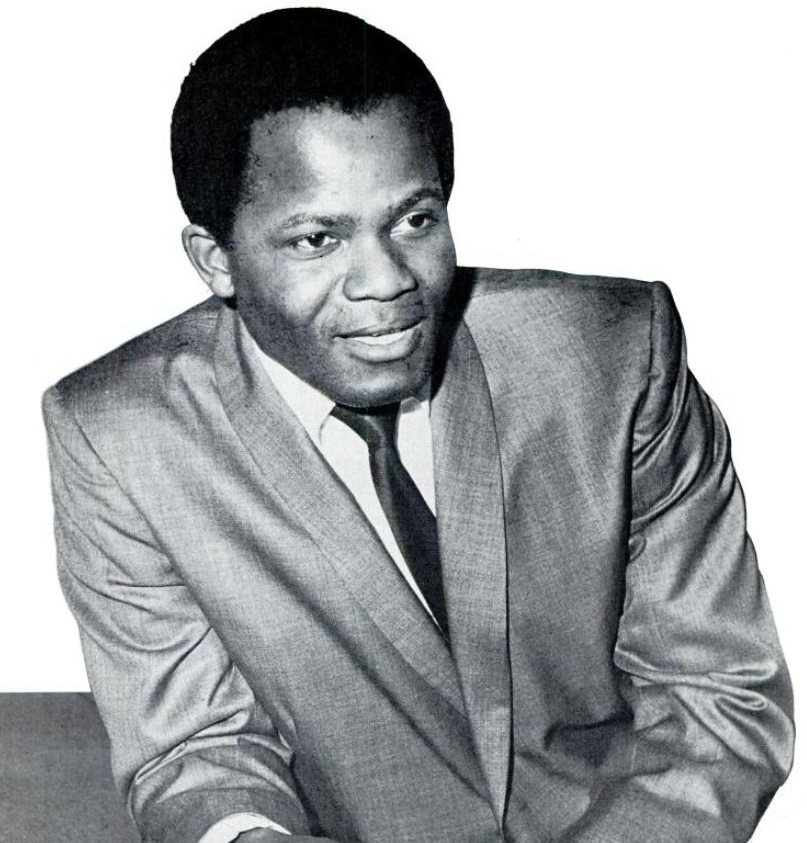
Yusuf Hazziez (born Joseph Arrington Jr.; August 8, 1935[1] – August 13, 1982), known professionally as Joe Tex, was an American singer and musician who gained success in the 1960s and 1970s with his brand of Southern soul, which mixed the styles of funk, country, gospel, and rhythm and blues.[1]

His career started after he was signed to King Records in 1955 following four wins at the Apollo Theater. Between 1955 and 1964, he struggled to find hits, and by the time he finally recorded his first hit, "Hold What You've Got" in 1964, he had recorded 30 previous singles that were deemed failures on the charts.[1] He went on to have four million-selling hits: "Hold What You've Got" (1965), "Skinny Legs and All" (1967),[4] "I Gotcha" (1972),[5] and "Ain't Gonna Bump No More (With No Big Fat Woman)" (1977).[6]

Tex was nominated for the Rock & Roll Hall of Fame six times, most recently in 2017.[7]

Early life

[edit]

Joe Tex was born Joseph Arrington, Jr. in Rogers, Texas, in Bell County to Joseph Arrington and Cherie Sue (Jackson) Arrington.[1] He and his sister Mary Sue were initially raised by their grandmother, Mary Richardson. After their parents divorced, Cheri Arrington moved to Baytown.[3] Tex played baritone saxophone in the high-school band and sang in a local Pentecostal church choir. He entered several talent shows, and after an important win in Houston, he won $300 and a trip to New York City.[1] Joe Tex took part in the amateur portion of the Apollo Theater, winning first place four times, which led to his discovery by Henry Glover, who offered him a contract with King Records. His mother's wish was that he graduate from high school first, and Glover agreed to wait a year before signing him at age 19.[1]

Music career

[edit]

Early recordings

[edit]

Tex recorded for King Records between 1955 and 1957 with little success. He later claimed he sold musical rights to the composition "Fever" to King Records staff to get money to pay his rent. The song's credited songwriters, Otis Blackwell (who used the pseudonym John Davenport) and Joe Cooley, disputed Tex's claims.[1] Labelmate Little Willie John had a hit with "Fever", which inspired Tex to write the first of his answer songs, "Pneumonia".[1]

In 1958, he signed with Ace and continued to have relative failures, but he was starting to build a unique stage reputation, opening for artists such as Jackie Wilson, James Brown, and Little Richard. He perfected the microphone tricks and dance moves that defined the rest of his career. Many, including Little Richard, claim that Tex's future nemesis James Brown stole Tex's dance moves and microphone tricks.[1] In 1960, he left Ace and briefly recorded for Detroit's Anna Records label, scoring a Bubbling Under Billboard hit with his cover version of Etta James' "All I Could Do Was Cry". By then, Tex's use of rapping over his music was starting to become commonplace.[1]

In 1961, he recorded his composition "Baby You're Right" for Anna. Later that year, James Brown recorded a cover version, though with different lyrics and a different musical composition, gaining songwriting credit, making it a hit in 1962, and reaching number two on the R&B chart. During this time, Tex first began working with Buddy Killen, who formed the Dial Records label behind Tex. After a number of songs failed to chart, Killen decided to have Atlantic Records distribute his recordings with Dial in 1964. By the time he signed with Atlantic, Tex had recorded 30 songs, all of which had failed to make an impact on the charts.[8]

Success

[edit]

Tex recorded and finally scored his first hit, "Hold What You've Got", in November 1964 at FAME Studios in Muscle Shoals, Alabama.[1] He was unconvinced the song would be a hit and advised Killen not to release it.[1] However, Killen felt otherwise and released the song in early 1965. By the time Tex got wind of its release, the song had already sold 200,000 copies.[8] The song eventually peaked at number five on the Billboard Hot 100 and became Tex's first number-one hit on the R&B charts, staying on the charts for 11 weeks and selling more than a million copies by 1966.[3]

Tex placed six top-40 charted singles on the R&B charts in 1965 alone, including two more number-one hits, "I Want To (Do Everything For You)" and "A Sweet Woman Like You".[1] He followed that with two successive albums, Hold On To What You've Got and The New Boss. He placed more R&B hits than any artist, including his rival James Brown. In 1966, five more singles entered the top 40 on the R&B charts, including "The Love You Save" and "S.Y.S.L.J.F.M." or "The Letter Song", which was an answer song to Wilson Pickett's "634-5789 (Soulsville, U.S.A.)".[9]

His 1967 hits included "Show Me", which became an often-covered tune for British rock artists and later some country and pop artists, and his second million-selling hit, "Skinny Legs and All".[10][11] The latter song, released off Tex's pseudo-live album, Live and Lively, stayed on the charts for 15 weeks and was awarded a gold disc by the Recording Industry Association of America (RIAA) in January 1968.[4] After leaving Atlantic for Mercury, Tex had several more R&B hits including "Buying a Book" in 1970 and "Give the Baby Anything the Baby Wants" in 1971. The intro saxophone riffs in his 1969 song, "You're Right, Ray Charles" later influenced Funkadelic's "Standing on the Verge of Gettin' It On".[12]

"Tex is a novelty artist whose subject is morality ... all over some very punchy dance tracks by James Brown out of Stax-Volt."

Tex recorded his next big hit, "I Gotcha", in December 1971. The song was released in January 1972 and stayed on the charts for 20 weeks, staying at number two on the Hot 100 for two weeks and sold more than 2 million copies, becoming his biggest-selling hit to date.[5] Tex was offered a gold disc of the song on March 22, 1972. The parent album reached number 17 on the pop albums chart.[5] The song would later be included in director Quentin Tarantino's 1992 film debut Reservoir Dogs. Following this and another album, Tex announced his retirement from show business in September 1972 to pursue life as a minister for Islam.[1] Tex returned to his music career following the death of Elijah Muhammad in 1975, releasing the top-40 R&B hit, "Under Your Powerful Love". His last hit, "Ain't Gonna Bump No More (With No Big Fat Woman)", was released in 1977 and peaked at number 12 on the Hot 100 and number 2 in the UK.[1]

His last public appearances were as part of a revised 1980s version of the Soul Clan in 1981. After that, Tex withdrew from public life, settling at his ranch in Navasota, Texas, and watching football games by his favorite team, the Houston Oilers.[14]

Rivalry with James Brown

[edit]

The feud between Tex and fellow label mate James Brown allegedly originated sometime in the mid-1950s, when both artists were signed to associated imprints of King Records, when Brown reportedly called out on Tex for a "battle" during a dance at a local juke joint. In 1960, Tex left King and recorded a few songs for Detroit-based Anna Records; one of the songs he recorded was the ballad "Baby, You're Right". A year later, Brown recorded the song and released it in 1961, changing the lyrics and the musical composition, earning Brown co-songwriting credits along with Tex. By then, Brown had recruited singer Bea Ford, who had been married to Tex but had divorced him in 1959. In 1960, Brown and Ford recorded the song, "You've Got the Power". Shortly afterward, Tex got a personal letter from Brown telling him that he was through with Ford and if Tex wanted her back, he could have her. Tex responded by recording the diss record "You Keep Her" in 1962.

In 1963, their feud escalated when Tex and Brown performed a concert in Macon, Georgia. Tex, who opened the show, imitated Brown by appearing in a torn, tattered cape and rolling around on the floor screaming, "Please—somebody help get me out of this cape!" Brown, already angry with Tex over the song "You Keep Her", left the club and returned with guns. Tex had left the club before the shooting commenced.[15] The incident led to multiple people being shot and stabbed.[16][17] Since Brown was still on parole at the time, he relied on his agent Clint Brantley "and a few thousand dollars to make the situation disappear".[16][17] According to fellow performer Johnny Jenkins, "seven people got shot", and after the shootout ended, a man appeared and gave "each one of the injured a hundred dollars apiece not to carry it no further and not to talk to the press".[16][17] Brown was never charged for the incident. Tex later claimed that Brown stole his dance moves and his microphone stand tricks.

In a few interviews he gave in the 1960s, Tex dismissed the notion of Brown being called "Soul Brother No. 1", insisting that Little Willie John was the original "Soul Brother No. 1".[18] Tex even claimed Brown stopped some radio disc jockeys from playing his hit "Skinny Legs and All", which Tex claimed prevented Tex from taking down one of Brown's number-one songs at the time.[18] During a 1968 tour, Tex had the words "The New Soul Brother No. 1" on his tour bus, but eventually took the name off the bus and had it repainted.[1] Tex challenged Brown to contest who "the real soul brother" was. Brown reportedly refused the challenge, telling the Afro-American, "I will not fight a black man. You need too much help."[18] While Tex moved on from his initial feud with Brown, Brown reportedly joked, "Who?" in his Bobby Byrd and Hank Ballard duet "Funky Side of Town" from his Get on the Good Foot album when Ballard mentioned Tex's name as one of the stars of soul music.

Personal life and death

[edit]

A convert to the Nation of Islam in 1966, he changed his name to Yusuf Hazziez, and toured as a spiritual lecturer.[19] He had two daughters, Eartha Doucet and Leslie Arrington, and four sons, Joseph Arrington III, Ramadan Hazziez, Jwaade Hazziez, and Joseph Hazziez.

Though he lived most of his life free of drugs and alcohol, according to his longtime producer Buddy Killen, Tex suffered from addiction during the last four years of his life.[14] In his final performances as part of the Soul Clan, he appeared gaunt and unwell, and Killen claimed that Tex had "lost his will to live".[14]

In early August 1982, Tex was found at the bottom of a swimming pool at his home in Navasota, after which he was revived in hospital and sent home.[14] Just a few days later, on August 13, five days after his 47th birthday, he died at Grimes Memorial Hospital in Navasota, following a heart attack.[14][20]

Cover versions

[edit]

Several other artists have covered Tex's work. Jimmy Barnes had a top ten Australian hit with "I Gotcha" from his 1991 album Soul Deep, which also featured a version of "Show Me". The Foundations also covered "Show Me".[21] US R&B group the Raelettes and UK hard rock band Nazareth covered "I Want To (Do Everything for You)", and Phish performed "You Better Believe It Baby".[22]

Selected discography

[edit]

Chart albums

[edit]
Year Album Chart positions Label
US Pop
[23]
US R&B
[23]
1965 Hold What You've Got 124 2 Dial Records 8106
The New Boss 142 3 Dial/Atlantic 8115
1966 The Love You Save 108 3 Dial/Atlantic 8124
1967 The Best of Joe Tex 168 23 Dial/Atlantic 8144
I've Got to Do a Little Better 24 Dial/Atlantic 8133
1968 Live and Lively 84 13 Dial/Atlantic 8156
Soul Country 154 45 Dial/Atlantic 8187
1969 Buying a Book 190 Dial/Atlantic 8231
1972 I Gotcha 17 5 Dial 6002
1973 Spill the Beans 42 Dial 6004
1977 Bumps & Bruises 108 32 Epic 34666
"–" denotes releases that did not chart.

Chart singles

[edit]
Year Single Chart positions Certifications
US Pop
[24]
US
R&B

[25]
AUS
[26]
UK
[27]
1960 "All I Could Do Was Cry" 102
1964 "I'd Rather Have You" 44
"Hold What You've Got" 5 1
1965 "You Got What It Takes" /
"You Better Get It"
51
46
10
15
"A Woman Can Change a Man" 56 12
"Don't Let Your Left Hand Know" 95
"One Monkey Don't Stop No Show" 65 20
"I Want To (Do Everything for You)" 23 1
"A Sweet Woman Like You" 29 1
1966 "The Love You Save (May Be Your Own)" 56 2
"S.Y.S.L.J.F.M. (The Letter Song)" 39 9
"I Believe I'm Gonna Make It" 67 8
"I've Got to Do a Little Bit Better" 64 20
"Papa Was Too" 44 15
1967 "Show Me" 35 24
"Woman Like That, Yeah" 54 24
"A Woman's Hands" 63 24
"Skinny Legs and All" 10 2
1968 "Men Are Gettin' Scarce" 33 7
"I'll Never Do You Wrong" 59 26
"Keep the One You Got" 52 13
"You Need Me, Baby" 81 29
1969 "That's Your Baby" 88
"Buying a Book" 47 10
"That's the Way" 94 46
"It Ain't Sanitary" 117
"I Can't See You No More" 105
1971 "Give the Baby Anything the Baby Wants" 102 20
1972 "I Gotcha" /
"A Mother's Prayer"
2
1
41

"You Said a Bad Word" 41 12
1973 "Woman Stealer" 103 41
1975 "Under Your Powerful Love" 27
1976 "Have You Ever" 74
1977 "Ain't Gonna Bump No More (With No Big Fat Woman)" 12 7 2 2
"Hungry for Your Love" 84
1978 "Rub Down" 70
"Loose Caboose" 48
"–" denotes releases that did not chart or were not released in that territory.

See also

[edit]

Notes

[edit]

References

[edit]
[edit]
Revisions and contributorsEdit on WikipediaRead on Wikipedia
from Grokipedia
Joseph Arrington Jr. (August 8, 1935 – August 13, 1982), professionally known as Joe Tex, was an American singer and musician who pioneered southern soul music through his distinctive blend of R&B, funk, country, and gospel influences, achieving commercial success with witty, narrative-driven hits in the 1960s and 1970s. Born near Dawson, Texas, to a sharecropping family, Tex was immersed in gospel music from childhood, performing on radio by age six and leading choirs by eleven; after his mother's death in 1937, he was raised by relatives and honed his skills in Houston-area talent shows, culminating in a 1953 Apollo Theater victory that launched his recording career with King Records in 1955. His breakthrough came with "Hold What You've Got" in 1964, the first single recorded in the South to cross over to the U.S. pop charts, reaching No. 5 on the R&B chart and No. 27 on the , followed by other notable tracks like "Skinny Legs and All" (1967) and his biggest hit, "I Gotcha" (1972), which topped the R&B chart and peaked at No. 2 on the pop chart, selling over a million copies. In 1968, Tex converted to , adopting the name Yusuf Hazziez, and infused his later songwriting with philosophical observations on and moral themes, though he faced personal challenges including a reported rivalry with that escalated to violence in 1963. He received a Grammy nomination in 1978 for Best R&B Vocal Performance, Male, for "Ain't Gonna Bump No More (With No Big Fat Woman)." Tex died of a heart attack at his home in , at age 47, shortly after a near-drowning incident.

PART 1: ARTICLE PREAMBLE

Joe Tex, born Joseph Arrington Jr. on August 8, 1935, in Rogers, Texas, was an American singer and songwriter renowned for his contributions to music during the and . Growing up immersed in traditions, he began performing early, leading choirs by age 11 and making his first radio appearance at six. His career gained traction in the mid-1950s with initial recordings for labels like and , though widespread success eluded him until signing with Dial Records in 1964. Tex's breakthrough came with "Hold What You've Got" in late 1964, the first record cut in the South to cross over to the U.S. pop charts, reaching number five on the and topping the R&B chart. He followed with multiple hits, including million-sellers like "Skinny Legs and All" (1967, number 10 pop), "I Gotcha" (1972, number two pop), and "Ain't Gonna Bump No More (With No Big Fat Woman)" (1977, number 12 pop). Over his career, Tex charted 28 singles on the R&B charts, with ten reaching the top ten, reflecting his commercial peak under labels like Atlantic and Dial. Blending preaching, storytelling, and rhythmic , Tex's style featured conversational vocals, humor, and moralistic lyrics delivered in an energetic, engaging manner. In the early 1970s, he converted to , adopting the name Yusuf Hazziez, which influenced his later work emphasizing spiritual themes. Tex died of a heart attack on August 13, 1982, at age 47, leaving a legacy as a pioneering figure in whose innovations bridged genres and inspired subsequent R&B and funk artists.

Early Life

Childhood and Family Background

Joseph Arrington Jr., later known professionally as Joe Tex, was born on August 8, 1935, in Rogers, a small rural community in , to Joseph Arrington Sr. and Cherie Sue (née Jackson) Arrington, who worked as sharecroppers. The Arrington family resided in a segregated society under , where faced systemic poverty and limited opportunities in agriculture during the lingering effects of the . Following his parents' divorce, Arrington was primarily raised by his mother, with the family eventually relocating to . His father died in 1950 at age 37, leaving the adolescent Arrington to navigate further instability in an already challenging household, which contributed to an environment demanding early self-reliance amid economic hardship. During his formative years, Arrington was immersed in through participation in his local Pentecostal church choir, fostering a deep-rooted exposure to spiritual singing traditions. The pervasive country and western sounds of rural , encountered via local culture and radio broadcasts, provided additional influences that later informed his distinctive blending of genres, though these elements remained extracurricular in his youth.

Initial Musical Aspirations

Born Joseph Arrington Jr. in Rogers, Texas, in 1935, Joe Tex demonstrated early vocal talent through participation in local talent competitions during his high school years. A pivotal win in a Houston talent show provided prize money that enabled his relocation to around 1953, where he sought opportunities in the burgeoning R&B scene. Upon arrival, Tex immediately entered the Apollo Theater's renowned Wednesday amateur night contests in Harlem, securing first-place victories on four occasions between 1953 and 1954. These performances showcased his innate showmanship, including dynamic stage presence and vocal agility that pitted him against other aspiring artists in a competitive environment that had previously propelled talents like to prominence. His sets often incorporated a distinctive blend of R&B phrasing with a country-inflected twang reflective of his upbringing, highlighting versatility that set him apart amid the era's predominantly urban styles. Throughout the mid-1950s, Tex pursued auditions and minor club gigs in New York, persisting despite limited commercial opportunities and the systemic racial barriers facing Black performers in the music industry, such as restricted access to major venues and producers outside segregated circuits. This period of honing his craft through live appearances underscored his determination, though it yielded no immediate recording breakthroughs, as he navigated a landscape dominated by established labels favoring more conventional R&B acts.

Recording Career

Formative Years and Early Releases (1950s–Early 1960s)

Joe Tex signed with King Records in 1955 following multiple wins at the Apollo Theater's amateur night competitions. His debut single, "Come In This House" backed with "Davy, You Upset My Home," was released that October on King 4840, but it garnered minimal national attention and failed to chart. Between 1955 and 1957, Tex recorded five singles for King at Beltone Studios in New York, including "My Biggest Mistake" b/w "Right Back to My Arms" and "Another Man's Woman" b/w an unspecified coupling, emphasizing bluesy ballads and uptempo rockers that highlighted his emerging narrative delivery yet achieved no commercial breakthrough due to limited promotion amid King's roster of established R&B acts. Seeking greater exposure, Tex shifted to Ace Records in 1958, recording at Cosimo Matassa's studio in New Orleans, where he cut tracks like "Cut It Out" b/w "Just for You and Me" (Ace 544) and "Charlie Brown Got Expelled" b/w "Blessed Are These Tears" (Ace 559). These efforts incorporated frantic rock 'n' roll energy and proto-soul elements influenced by his roots, including akin to traditions, but sales remained low with only regional airplay and no national hits, as the label's distribution struggled against smoother, more conventional emerging from and . By 1960, Tex moved briefly to Detroit's Anna Records, a precursor to , releasing "All I Could Do Was Cry" Parts 1 and 2 (Anna 1119), a cover that showcased his conversational vocal style but similarly underperformed commercially. He also taped "Baby, You're Right" for Anna around 1961, blending emotional balladry with rhythmic spoken-word phrasing, though it too failed to gain traction amid the label's focus on other artists and the era's preference for polished group harmonies over Tex's hybrid, preacher-inflected approach. These early releases across labels—totaling around a dozen singles by early 1962—reflected artistic experimentation with genre fusion but were hampered by inconsistent promotion and an industry landscape favoring standardized R&B, resulting in negligible sales figures and confined appeal to niche audiences.

Rise to Prominence (Mid-1960s)

In 1964, after a series of unsuccessful singles on smaller labels, Joe Tex signed with producer Buddy Killen, who had founded Dial Records in 1961 specifically to promote Tex's recordings. Killen oversaw the session for "Hold What You've Got," recorded in November 1964 at in , where innovative splicing and overdubbing techniques were applied to capture Tex's raw delivery. Released late that year on Dial 4001, the single broke through commercially, peaking at number 5 on the and number 2 on the R&B chart in early 1965. The track's success stemmed from Tex's distinctive style, featuring a humorous, sermon-like spoken-word interspersed with soulful pleas, which resonated with audiences seeking authenticity amid the polished productions of the era. This preaching tone, rooted in Tex's gospel influences and upbringing, contrasted sharply with the urban sophistication of , emphasizing causal storytelling over orchestral arrangements. Killen's production amplified these southern elements, incorporating early rhythms through gritty basslines and understated horns, helping the record crossover as one of the first hits to chart nationally on the pop side. This established Tex's maturation as a performer, shifting from earlier novelty attempts to a mature blend of and relational advice, paving the way for sustained R&B visibility without relying on external hype. Chart data from the period underscores its impact, with the single's performance signaling Dial's viability and Tex's appeal in live settings, where his charismatic stage presence further boosted its momentum.

Commercial Peak and Major Hits (Late 1960s–1970s)

Joe Tex's commercial peak occurred during the late and , marked by multiple million-selling singles that demonstrated strong crossover appeal from R&B to pop audiences through humorous, narrative-driven critiquing romantic dynamics and cultural fads. His 1967 single "Skinny Legs and All," released on Dial Records, peaked at number 10 on the and number 2 on the R&B chart, maintaining chart presence for 15 weeks and achieving gold certification from the RIAA for sales surpassing one million units. The track's playful satire of physical attractions and stage-derived performance elements contributed to its broad reception, blending soul grooves with spoken-word humor that resonated beyond traditional R&B listeners. The apex of this period arrived with "I Gotcha" in 1972, which ascended to number 1 on the R&B chart—holding the position for up to seven weeks in some accounts—and number 2 on the Hot 100 for two weeks, enduring for 20 weeks overall while selling nearly two million copies. This surprise-driven narrative of relational reversal, delivered in Tex's distinctive preaching style over a funky , exemplified his ability to fuse moralistic commentary with danceable hooks, facilitating pop crossover rare for R&B artists of the era. later ranked it among the year's top songs, underscoring its empirical dominance in airplay and sales metrics. By 1977, Tex sustained momentum with "Ain't Gonna Bump No More (With No Big Fat Woman)," a -inflected critique of floor trends that reached number 12 on the Hot 100 and number 7 on the R&B chart. The song's exaggerated humor targeting fad-driven excesses extended his thematic consistency, with its chart trajectory reflecting enduring fan engagement amid shifting genre preferences toward . These hits collectively highlighted Tex's business foresight, as his Dial Records affiliation enabled retention of master recordings—a rarity enabling direct royalty streams from sales and licensing, fostering financial autonomy uncommon among artists reliant on major label advances and recoupment structures.

Later Career and Challenges (Late 1970s–1982)

Following the commercial peak of "Ain't Gonna Bump No More (With No Big Fat Woman)" in 1977, which reached No. 12 on the and No. 7 on the chart amid the boom, Joe Tex experienced a marked decline in chart performance. This novelty track, explicitly referencing dancing, represented an adaptation attempt but failed to sustain momentum, with no subsequent singles entering the top 40. The shift toward high-energy, synthetic sounds favored flashier, youth-oriented acts like the or , marginalizing Tex's narrative-driven amid changing market preferences evidenced by plummeting R&B chart entries for similar veteran artists post-1977. Tex's label releases reflected efforts to pivot, including the 1978 album Rub Down on Epic Records, which incorporated funk and disco elements such as upbeat rhythms and danceable grooves on tracks like the title song, yet it garnered no notable chart success or sales data indicating revival. Subsequent projects, such as He Who Is Without Funk Cast the First Stone (1979) on the independent Dial label, further demonstrated adaptation via funk-infused soul but similarly underperformed commercially, with album sales too low for Billboard 200 entry. These independent label shifts from major Epic to smaller imprints like Dial underscored resource constraints and reduced promotional support as major labels prioritized disco acts. Despite studio challenges, Tex maintained touring activity, including a 1980 return from semi-retirement for live engagements that preserved his energetic presence and preacher-like delivery, appealing to loyal enthusiasts in regional circuits. Chart data confirms the era's causal pressures, with Tex's post-1977 R&B peaks dropping outside top 20 territory, reflecting audience fragmentation toward club-oriented music over his style. By , releases like the compilation J.T.'s on Accord highlighted an enduring, if niche, fan base in soul venues, though broader commercial fade was evident in the absence of new hits or high sales figures.

Rivalries and Industry Conflicts

Feud with James Brown

The feud between Joe Tex and originated in the mid-1950s while both were signed to King Records, centering on mutual accusations of copying stage personas, including microphone-kicking tricks, cape routines, and splits, which Tex claimed Brown appropriated from him. Tensions escalated when Brown covered Tex's composition "Baby You're Right" in 1960, achieving a No. 2 R&B hit while taking songwriting credit, and later pursued Tex's girlfriend Bea Ford, recording a duet with her and sending Tex a mocking letter offering her return. In response, Tex released the diss track "You Keep Her" in 1962, explicitly naming Brown and sarcastically conceding the relationship. The rivalry peaked during a 1963 double-billed concert in , where Tex mocked Brown's signature cape finale by donning a tattered blanket, collapsing onstage, and pleading for release in exaggerated imitation, prompting Brown's band to retaliate by blocking Tex's potential chart challenge. Following the show at an afterparty, Brown allegedly entered armed with two shotguns and fired indiscriminately, wounding seven bystanders but missing Tex, who fled; Brown's associates reportedly paid victims $100 each to suppress details. Eyewitness accounts from Tex's trumpet player Newton Collier and guitarist corroborate the mockery and shooting, framing it as retaliation amid Brown's commercial dominance—evidenced by his multiple No. 1 R&B hits like "Please, Please, Please" (1956) versus Tex's fewer peaks, such as No. 5 with "Hold What You've Got" (1964)—though Tex asserted deeper lyrical originality in his style over Brown's high-energy performances. Tex's responses emphasized humorous , contrasting Brown's reputed intensity and excesses in territorial showmanship, with both artists criticized by contemporaries for escalating professional competition into personal vendettas that risked lives and reputations. By late , following Tex's European tour, a soul newspaper reported their reconciliation, attributing it to mutual respect amid shared industry hardships, though Tex privately retained reservations about Brown's character.

Musical Style and Themes

Blending Genres and Innovations

Joe Tex pioneered a country-soul hybrid by incorporating country-style storytelling and subtle twangy elements into frameworks, as exemplified in his 1968 album Soul Country and singles like "The Love You Save (May Be Your Own)" (1966), which predated broader adoption of such fusions in mainstream soul while drawing from Muscle Shoals production techniques involving overdubbed arrangements at . This synthesis created a distinctive sound rooted in rural Southern influences, blending soul's emotional depth with country's anecdotal delivery without relying on overt instrumentation like pedal steel, setting it apart from earlier crossovers such as ' work. A core innovation was Tex's development of the "soul-preaching" style, featuring extended spoken interludes over music that he explicitly called "rap," marking the first major use of such narrative overlays in records and influencing precursors to rap's rhythmic monologues. These passages, often structured as -like testimonies delivered in a conversational atop steady 4/4 funk-soul beats, appeared in tracks like "Hold What You’ve Got" (1964) and "That’s The Way" (1966), emphasizing personal exhortation rather than melodic singing. This technique fused preaching's improvisational fervor with funk's groove, using simple rhythmic foundations to foreground spoken content, distinct from the era's predominant sung choruses. Tex's approach diverged empirically from contemporaries: his funk elements leaned on gritty, mid-tempo soul grooves with overlaid preaching for testimonial effect, contrasting James Brown's harder, syncopated "on the one" percussion-driven and the horn-dominated, ensemble polish of Stax artists like . Production at favored raw, intimate vocal layering over collective swells, yielding a preacher-centric sound that prioritized individual narrative propulsion over or polyrhythms. This causal emphasis on spoken over instrumental complexity underscored Tex's role in evolving toward more hybrid, talk-infused forms.

Lyrical Content and Social Commentary

Joe Tex's songwriting frequently incorporated cautionary narratives rooted in observed human behaviors, highlighting the natural consequences of and advocating for relational as a pragmatic safeguard against personal detriment. In "The Love You Save (May Be Your Own)," released in , Tex warns of the reciprocal risks in romantic betrayal, with depicting a cycle where mistreatment invites equivalent retaliation, encapsulated in the advising that " may be your own." The track, which peaked at number 2 on the R&B chart, exemplified his approach of deriving lessons from interpersonal rather than ideological preaching, portraying not as but as a realistic strategy for self-preservation amid unreliable partnerships. This directness stemmed from Tex's self-described role as an "observer of life," crafting verses from anecdotal realities encountered in Southern communities. Such themes extended to broader critiques of relational instability, aligning with a strain of mid-20th-century Black music that promoted traditional commitments like over transient liaisons, as seen in Tex's single "Meet Me in Church," where he references preparing "the ring and the rice" for wedlock. These messages countered the era's emerging cultural shifts toward casual encounters by underscoring empirical fallout—emotional , retaliation, or relational collapse—without veering into overt . Tex's narratives, delivered in a conversational "soul preaching" style, resonated particularly with working-class listeners who prioritized practical wisdom over abstract ideals, offering relatable antidotes to the hedonistic undercurrents gaining traction in by the late . By the 1970s, amid normalized in and scenes, Tex maintained this philosophy through humorous yet pointed tales that lampooned excess without endorsing it, maintaining a conservative undercurrent that favored restraint and . His ' clarity, grounded in cause-and-effect depictions of , distinguished them from contemporaries' more permissive anthems, fostering enduring among audiences skeptical of unchecked libertinism. This approach, unburdened by partisan agendas, reflected Tex's commitment to unvarnished realism over fashionable narratives.

Personal Life

Family Dynamics and Relationships

Joe Tex entered into multiple marriages throughout his life, beginning with Bea Ford, whom he wed prior to 1959 and later divorced that year. He subsequently married Leah X. Miller in a Muslim ceremony on April 28, 1973, in , and at the time of his was married to Beliliah Hazziez, with whom he shared his later years on a in . These unions reflected a of successive partnerships, several involving women connected to his post-1960s personal circles, contributing to a complex structure marked by children from different relationships. Tex fathered eight children in total, as reported in contemporary accounts, with several born to women outside his primary marriages and others with Beliliah Hazziez, including daughter Doucet and sons Arrington III, Hazziez, Jwaade Hazziez, and Hazziez. Additional children, such as daughter Leslie Arrington, emerged from earlier relationships, leading to post-mortem claims on his estate by offspring from multiple partners. This multiplicity underscored a dynamic where Tex prioritized financial support over consistent presence, channeling earnings from hits like "I Gotcha"—which generated substantial royalties—into property acquisitions, such as two houses purchased in for $40,000 to house his mother and grandmother. Central to Tex's family stability efforts was his investment in a ranch near , approximately 35 miles northwest of , where he relocated in 1979 to foster self-sufficiency amid career fluctuations. The property served as a retreat for kin, embodying a practical commitment to long-term provision through land ownership rather than transient industry gains, though late-life debts complicated inheritance for heirs. Touring demands often rendered him an absentee figure, with children scattered across relationships, yet his strategic use of music income for familial assets—evident in early support for extended relatives like his sister's family—demonstrated a causal focus on economic legacy over daily involvement. This approach yielded mixed outcomes, balancing material security against relational fragmentation.

Conversion to Islam and Religious Beliefs

Joe Tex converted to in 1966, adopting the Muslim name Joseph Hazziez while retaining his . Introduced to the faith by his , Norman Thrasher, who was a member of a mosque, Tex initially affiliated with the Nation of Islam (NOI), an organization emphasizing black , economic independence, and separation from white society. This alignment reflected broader mid-1960s appeal among African American entertainers drawn to the NOI's critique of systemic and promotion of discipline amid industry temptations like . Tex integrated his religious beliefs into his artistry through moralistic, narrative-driven songs that urged personal accountability, fidelity, and ethical living, such as "The Love You Save (May Be Your Own)" (1966), which warned against hypocrisy and infidelity. He viewed —particularly its emphasis on spiritual priorities over material excess—as a bulwark against the music business's vices, including and exploitation, leading him to briefly retire in 1972 for spiritual lecturing tours promoting NOI principles under . However, the NOI's separatist doctrines, which rejected and mainstream integration while incorporating heterodox elements like racial origin myths diverging from orthodox Islamic theology, drew criticism for fostering division rather than universal brotherhood central to Sunni traditions. Adherence to Islamic tenets, including strict abstinence from alcohol, , and illicit drugs as mandated by NOI guidelines, instilled a regimen of that Tex credited for his focus and , contrasting with contemporaries like (died 1967, age 26, plane crash amid touring stress) and (died 1984, age 44, from drug-related decline and violence). This discipline arguably extended his career relative to peers succumbing to substance-fueled excesses, though some listeners and critics found his didactic lyrical style overly preachy, prioritizing sermon over entertainment. Following Elijah Muhammad's 1975 death and internal NOI schisms—including Wallace Muhammad's shift toward orthodox and Farrakhan's retention of core separatist views—Tex gravitated toward mainstream Sunni practices, distancing from the organization's more insular controversies while maintaining core ethical commitments until his 1982 death.

Death and Immediate Aftermath

Joe Tex suffered a heart attack at his home in , on August 11, 1982, and died two days later on August 13 at Grimes Memorial Hospital, at the age of 47. Just days prior, in early August, he had been found unconscious at the bottom of his at the same residence; he was revived after hospital treatment that involved pumping fluid from his lungs, though the incident's cause—possibly related to intoxication or an intentional act—remained unclear. Tex was survived by his wife, Beliliah, a daughter named Eartha Doucet, and at least four sons—Joseph Arrington III, Ramadan Hazziez, Jwaade Hazziez, and Joseph Hazziez—among a total of eight known children. His funeral took place on August 16 in a wood-frame church in Navasota, after the mortician initially delayed burial pending payment of a $5,000 fee, which was ultimately covered by longtime associate and producer Buddy Killen. He was interred at Dennis Bryant Cemetery in Navasota.

Legacy

Cultural Impact and Influences on Others

Joe Tex's rhythmic spoken-word delivery and style in songs like "I Gotcha" (1972) prefigured elements of , influencing hip-hop artists through direct sampling and stylistic emulation. The track "I Gotcha" has been sampled in over 100 hip-hop recordings, including by in "Don't Say Nuthin'" (2004) and Geto Boys in "Trophy" (1991), demonstrating its enduring utility in building beats and hooks within the genre. This sampling prevalence underscores Tex's role in bridging Southern soul's conversational lyricism to rap's foundational techniques, where artists adopted his cadenced storytelling over funk grooves. His longstanding feud with , originating in the mid-1950s over alleged stolen stage moves and escalating through diss tracks like Tex's "You Said a Bad Word" (1966), inadvertently spurred competitive innovations in performance and recording. This rivalry produced early prototypes of hip-hop beefs, with Tex's pointed lyrical jabs prompting Brown to refine his energetic delivery and cape routines, elevating overall standards in live soul acts. Such exchanges highlighted Tex's influence on genre evolution, as Brown's reactive adaptations in response to Tex's challenges contributed to the high-energy that later permeated Southern hip-hop production. Tex's fusion of country twang with soul arrangements, evident in tracks incorporating guitar licks and Western motifs, laid groundwork for hybrid styles in later artists navigating genre boundaries. This country-soul synthesis influenced Southern musicians by modeling how rural narratives could integrate with R&B grooves, fostering a template for acts blending twangy instrumentation with urban storytelling in hip-hop and beyond. However, Tex's frequent humorous and novelty-inflected approach—often prioritizing witty anecdotes over somber introspection—led to his marginalization amid the era's preference for more earnest soul narratives, limiting broader emulation despite his technical precedents.

Posthumous Recognition and Underrated Status

Despite achieving four singles that each sold over one million copies—"Hold What You've Got" (1965), "Skinny Legs and All" (1967), "I Gotcha" (1972), and "Ain't Gonna Bump No More (With No Big Fat Woman)" (1977)—Joe Tex's broader catalog and stylistic innovations received limited institutional acclaim following his death. His multiple nominations to the Rock and Roll Hall of Fame, totaling six by 2017, underscore periodic recognition of his contributions to but highlight an empirical gap, as he remains uninducted despite eligibility since 1990. Local tributes in his birthplace region provide more tangible posthumous honors, such as inclusion in Navasota, Texas's Blues Alley mural, which commemorates Tex alongside other area musicians like and Texas Alexander as part of the town's embrace of its blues heritage. This visual acknowledgment, completed in the amid Navasota's efforts to promote its musical legacy, contrasts with the absence of national-level inductions or retrospectives, suggesting his rural Texas-rooted hybrid of preaching, rapping, and soul—pioneering elements like early spoken-word flows—was sidelined in favor of urban-centric narratives dominating soul historiography. Tex's estate further evidences financial stability, with royalties sustaining family holdings including Texas ranches, refuting unsubstantiated claims of posthumous amid his career-earned wealth from hits and innovations. Recent online archival shares and genre analyses portray him as a "forgotten" pioneer whose and influence on subsequent artists exceed his mainstream canonization, attributing the disparity to industry preferences for less eclectic voices over his truth-telling, narrative-driven style. This undervaluation persists despite verifiable commercial peaks, prioritizing empirical output—millions in units moved—over hype-driven legacies of contemporaries with comparable or lesser metrics.

Discography

Key Albums

"Spills the Beans," released in 1972 by Dial Records, showcased Joe Tex's stylistic shift toward funk-infused southern soul, blending rhythmic grooves with residual narrative elements characteristic of his earlier work. Produced by Buddy Killen, who founded Dial specifically to record Tex, the album mixed 1970s funk tracks with echoes of 1960s soul storytelling. Critical reception was middling, with AllMusic assigning it a 6.2 out of 10 rating from six user reviews, while commercial performance relied on modest single charts like "Woman Stealer" reaching number 103 on the Billboard Hot 100. The 1971 compilation "Joe Tex Greatest Hits" aggregated Tex's signature singles, emphasizing his commercial prowess in R&B and pop formats up to that point, though the album itself lacked prominent charting. This release underscored variances between Tex's strong singles sales—such as prior driving over 2 million units for tracks like "I Gotcha"—and less dominant full-length album traction.) Reissues of Dial-era material, including elements from such compilations, have appeared via labels like Ace Records, preserving original recordings amid collector interest in vintage vinyl. Earlier efforts like "Buying a Book" (1969) on Dial illustrated pre-funk narrative focus, peaking at number 190 on the with limited sales data, highlighting Killen's role in Tex's modest album-level peaks compared to singles dominance. These works reflect broader artistic arcs under Killen's oversight, prioritizing verifiable Dial output over uncharted rarities, with critical appreciation often trailing commercial single metrics.

Charting Singles

Joe Tex achieved notable commercial success on the , particularly in the R&B category, with several crossover hits on the Hot 100 during the and . His breakthrough came in 1964–1965 with "Hold What You've Got," which peaked at number 5 on the Hot 100 and number 1 on the R&B chart, marking his first major pop exposure driven by strong radio airplay on soul stations. Subsequent singles like "I Want to (Do Everything for You)" and "A Sweet Woman Like You" both reached number 1 on the R&B chart in 1965, reflecting his appeal in urban markets through rhythmic delivery and relatable lyrics that resonated in live settings. "Skinny Legs and All" in 1967 peaked at number 10 on the Hot 100 and number 2 on R&B, benefiting from increased Dial Records promotion and play in Southern clubs. Tex's biggest pop hit, "I Gotcha," released in 1972, climbed to number 2 on the Hot 100 and number 1 on R&B, spending 21 weeks on the former; it was certified gold by the RIAA on March 22, 1972, for sales exceeding 500,000 units, fueled by its infectious groove and widespread AM radio rotation. Later, "Ain't Gonna Bump No More (with No Big Fat Woman)" reached number 12 on the Hot 100 and number 7 on R&B in 1977, his final significant chart entry, supported by novelty appeal and disco-era dance floors despite waning mainstream momentum.
Single TitleRelease YearHot 100 PeakR&B PeakCertifications
Hold What You've Got196451-
I Want to (Do Everything for You)1965231-
A Sweet Woman Like You1965291-
Skinny Legs and All1967102-
I Gotcha197221 (RIAA)
Ain't Gonna Bump No More (with No Big Fat Woman)1977127-
Tex charted over 20 singles on the Hot 100 and R&B combined from to 1978, with nine Hot 100 top-40 entries, often propelled by his high-energy stage shows that built fan demand and prompted repeat radio spins. No posthumous chart resurgences occurred, though "I Gotcha" maintained enduring sales through reissues.

PART 2: SECTION OUTLINES

  • Death and Immediate Aftermath: Outline key events surrounding Joe Tex's death on August 13, 1982, at age 47, following a heart attack at his home in , just five days after his 47th birthday. Include preceding near-drowning incident in his and reports of struggles contributing to decline in his final years. Discuss immediate responses, such as hospital transport to Grimes Memorial Hospital, funeral held on August 16, 1982, and contemporary obituaries noting his 30-year career as a soul singer. Highlight any family involvement or public tributes in the days following, emphasizing factual reporting over speculation on rumors like drug-related decline confirmed posthumously by family.
  • Legacy:
    • Cultural Impact and Influences on Others: Detail Joe Tex's pioneering role in Southern soul, blending funk, country, gospel, and R&B, with hits like "Hold What You've Got" (1964) marking the first Southern soul record to cross over to U.S. pop charts. Explore his influence on funk, R&B, and rap through rhythmic rapping style prefiguring hip-hop elements, as seen in tracks like "Skinny Legs and All" (1967), and enduring appeal in soundtracks such as Reservoir Dogs. Note specific artists citing him, including posthumous inspirations in soul history, while addressing his underrated status due to early death and career interruptions from religious conversion and retirement.
    • Posthumous Recognition and Underrated Status: Cover limited formal awards during life but growing appreciation via compilations like The Very Best of Joe Tex (1996) and inclusions in soul canon discussions. Discuss factors for underrating, including 1972 retirement after Islam conversion, addiction battles, and competition from contemporaries like James Brown, contrasted with his unique "country soul" sound and hits totaling over 20 R&B chart entries. Emphasize Texas heritage tributes, such as Navasota mural and historical markers, affirming his foundational contributions despite not achieving superstar fame.
  • Discography:
    • Key Albums: List major releases including Hold On! It's Joe Tex (1965, Checker), marking early success; Live and Lively (1968) featuring hits like "Skinny Legs and All"; Bumps & Bruises (1977, Epic, #108); and posthumous compilations like Greatest Hits (1991). Highlight stylistic evolution from to funk-infused works, with production by Buddy Killen at Dial Records, and note career gaps from 1972-1975 retirement.
    • Charting Singles: Enumerate R&B and pop successes such as "Hold What You've Got" (1964, #5 R&B, #27 Pop), "I Gotcha" (1972, #1 R&B/Pop), "Ain't Gonna Bump No More (With No Big Fat Woman)" (1977, #12 R&B), and "" (1966, #2 R&B). Include over 30 singles released primarily on Dial/ labels, with crossover achievements underscoring his commercial peak in the 1960s-1970s, supported by verifiable chart data from archives.

References

Add your contribution
Related Hubs
User Avatar
No comments yet.