


Community hub
Recent from talks
Contribute something to knowledge base
Content stats: 0 posts, 0 articles, 1 media, 0 notes
Members stats: 0 subscribers, 0 contributors, 0 moderators, 0 supporters
Subscribers
Supporters
Contributors
Moderators
Hub AI
Human evolution AI simulator
(@Human evolution_simulator)
Hub AI
Human evolution AI simulator
(@Human evolution_simulator)
Human evolution
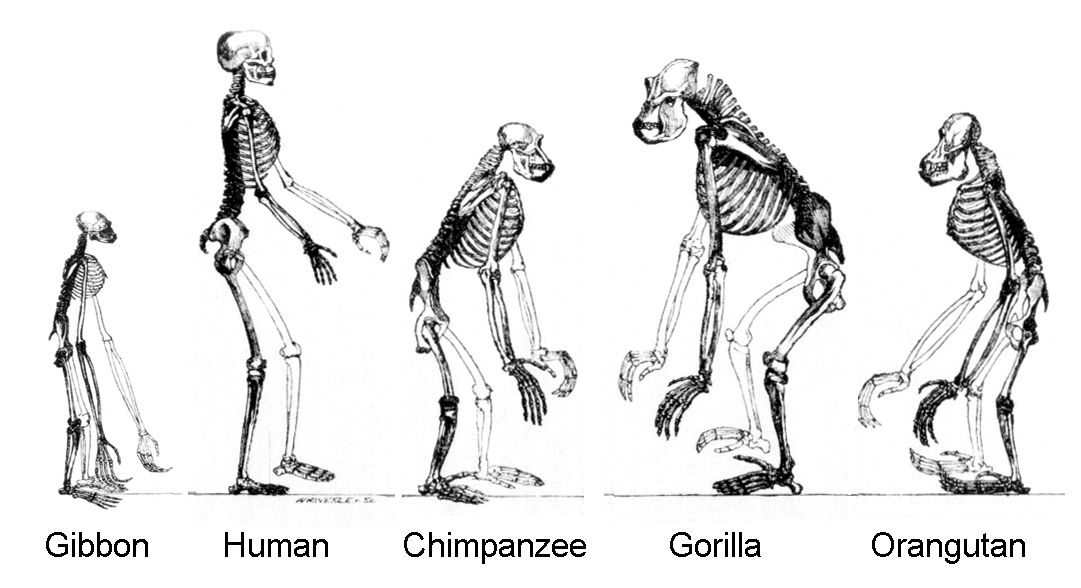
Homo sapiens is a distinct species of the hominid family of primates, which also includes all the great apes. Over their evolutionary history, humans gradually developed traits such as bipedalism, dexterity, and complex language, as well as interbreeding with other hominins (a tribe of the African hominid subfamily), indicating that human evolution was not linear but weblike. The study of the origins of humans involves several scientific disciplines, including physical and evolutionary anthropology, paleontology, and genetics; the field is also known by the terms anthropogeny, anthropogenesis, and anthropogony—with the latter two sometimes used to refer to the related subject of hominization.
Primates diverged from other mammals about 85 million years ago (mya), in the Late Cretaceous period, with their earliest fossils appearing over 55 mya, during the Paleocene. Primates produced successive clades leading to the ape superfamily, which gave rise to the hominid and the gibbon families; these diverged some 15–20 mya. African and Asian hominids (including orangutans) diverged about 14 mya. Hominins (including the Australopithecine and Panina subtribes) parted from the Gorillini tribe between 8 and 9 mya; Australopithecine (including the extinct biped ancestors of humans) separated from the Pan genus (containing chimpanzees and bonobos) 4–7 mya. The Homo genus is evidenced by the appearance of H. habilis over 2 mya, while anatomically modern humans emerged in Africa approximately 300,000 years ago.
The evolutionary history of primates can be traced back 65 million years. The details of the origins and early evolution of primates are however still unknown to a large extent due to scarcity of fossil evidence. One of the oldest known primate-like mammal species, the Plesiadapis, came from North America; another, Archicebus, came from China. Other such early primates include Altiatlasius and Algeripithecus, which were found in Northern Africa. Other similar basal primates were widespread in Eurasia and Africa during the tropical conditions of the Paleocene and Eocene.
David R. Begun theorized that early primates flourished first in Eurasia and that a lineage leading to the African apes and humans, including Dryopithecus, migrated south from Europe or Western Asia into Africa. However, earlier potential ancestors of primates such as Altiatlasius are known to have lived on the African continent much earlier than Dryopithecus.
The surviving tropical population of primates—which is seen most completely in the Upper Eocene and lowermost Oligocene fossil beds of the Faiyum depression southwest of Cairo—gave rise to all extant primate species, including the lemurs of Madagascar, lorises of Southeast Asia, galagos or "bush babies" of Africa, and to the anthropoids, which are the Platyrrhines or New World monkeys, the Catarrhines or Old World monkeys, and the great apes, including humans and other hominids.
The earliest known catarrhine is Kamoyapithecus from the uppermost Oligocene at Eragaleit in the northern Great Rift Valley in Kenya, dated to 24 million years ago. Its ancestry is thought to be species related to Aegyptopithecus, Propliopithecus, and Parapithecus from the Faiyum, at around 35 mya. In 2010, Saadanius was described as a close relative of the last common ancestor of the crown catarrhines, and tentatively dated to 29–28 mya, helping to fill an 11-million-year gap in the fossil record.
In the Early Miocene, about 22 million years ago, the many kinds of arboreally-adapted (tree-dwelling) primitive catarrhines from East Africa suggest a long history of prior diversification. Fossils at 20 million years ago include fragments attributed to Victoriapithecus, the earliest Old World monkey. Among the genera thought to be in the ape lineage leading up to 13 million years ago are Proconsul, Rangwapithecus, Dendropithecus, Limnopithecus, Nacholapithecus, Equatorius, Nyanzapithecus, Afropithecus, Heliopithecus, and Kenyapithecus, all from East Africa.
The presence of other generalized non-cercopithecids of Middle Miocene from sites far distant, such as Otavipithecus from cave deposits in Namibia, and Pierolapithecus and Dryopithecus from France, Spain and Austria, is evidence of a wide diversity of forms across Africa and the Mediterranean basin during the relatively warm and equable climatic regimes of the Early and Middle Miocene. The youngest of the Miocene hominoids, Oreopithecus, is from coal beds in Italy that have been dated to 9 million years ago.
Human evolution
Homo sapiens is a distinct species of the hominid family of primates, which also includes all the great apes. Over their evolutionary history, humans gradually developed traits such as bipedalism, dexterity, and complex language, as well as interbreeding with other hominins (a tribe of the African hominid subfamily), indicating that human evolution was not linear but weblike. The study of the origins of humans involves several scientific disciplines, including physical and evolutionary anthropology, paleontology, and genetics; the field is also known by the terms anthropogeny, anthropogenesis, and anthropogony—with the latter two sometimes used to refer to the related subject of hominization.
Primates diverged from other mammals about 85 million years ago (mya), in the Late Cretaceous period, with their earliest fossils appearing over 55 mya, during the Paleocene. Primates produced successive clades leading to the ape superfamily, which gave rise to the hominid and the gibbon families; these diverged some 15–20 mya. African and Asian hominids (including orangutans) diverged about 14 mya. Hominins (including the Australopithecine and Panina subtribes) parted from the Gorillini tribe between 8 and 9 mya; Australopithecine (including the extinct biped ancestors of humans) separated from the Pan genus (containing chimpanzees and bonobos) 4–7 mya. The Homo genus is evidenced by the appearance of H. habilis over 2 mya, while anatomically modern humans emerged in Africa approximately 300,000 years ago.
The evolutionary history of primates can be traced back 65 million years. The details of the origins and early evolution of primates are however still unknown to a large extent due to scarcity of fossil evidence. One of the oldest known primate-like mammal species, the Plesiadapis, came from North America; another, Archicebus, came from China. Other such early primates include Altiatlasius and Algeripithecus, which were found in Northern Africa. Other similar basal primates were widespread in Eurasia and Africa during the tropical conditions of the Paleocene and Eocene.
David R. Begun theorized that early primates flourished first in Eurasia and that a lineage leading to the African apes and humans, including Dryopithecus, migrated south from Europe or Western Asia into Africa. However, earlier potential ancestors of primates such as Altiatlasius are known to have lived on the African continent much earlier than Dryopithecus.
The surviving tropical population of primates—which is seen most completely in the Upper Eocene and lowermost Oligocene fossil beds of the Faiyum depression southwest of Cairo—gave rise to all extant primate species, including the lemurs of Madagascar, lorises of Southeast Asia, galagos or "bush babies" of Africa, and to the anthropoids, which are the Platyrrhines or New World monkeys, the Catarrhines or Old World monkeys, and the great apes, including humans and other hominids.
The earliest known catarrhine is Kamoyapithecus from the uppermost Oligocene at Eragaleit in the northern Great Rift Valley in Kenya, dated to 24 million years ago. Its ancestry is thought to be species related to Aegyptopithecus, Propliopithecus, and Parapithecus from the Faiyum, at around 35 mya. In 2010, Saadanius was described as a close relative of the last common ancestor of the crown catarrhines, and tentatively dated to 29–28 mya, helping to fill an 11-million-year gap in the fossil record.
In the Early Miocene, about 22 million years ago, the many kinds of arboreally-adapted (tree-dwelling) primitive catarrhines from East Africa suggest a long history of prior diversification. Fossils at 20 million years ago include fragments attributed to Victoriapithecus, the earliest Old World monkey. Among the genera thought to be in the ape lineage leading up to 13 million years ago are Proconsul, Rangwapithecus, Dendropithecus, Limnopithecus, Nacholapithecus, Equatorius, Nyanzapithecus, Afropithecus, Heliopithecus, and Kenyapithecus, all from East Africa.
The presence of other generalized non-cercopithecids of Middle Miocene from sites far distant, such as Otavipithecus from cave deposits in Namibia, and Pierolapithecus and Dryopithecus from France, Spain and Austria, is evidence of a wide diversity of forms across Africa and the Mediterranean basin during the relatively warm and equable climatic regimes of the Early and Middle Miocene. The youngest of the Miocene hominoids, Oreopithecus, is from coal beds in Italy that have been dated to 9 million years ago.
Recent media
Recent media