Hubbry Logo
search
logo
1224566

Hydrostatic weighing

logo
Community Hub0 Subscribers
Read side by side
from Wikipedia
Measurements of sea ice density using hydrostatic weighing in kerosene

Hydrostatic weighing, also referred to as underwater weighing, hydrostatic body composition analysis and hydrodensitometry, is a technique for measuring the density of a living person's body. It is a direct application of Archimedes' principle, that an object displaces its own volume of water.

Method

[edit]

The procedure, pioneered by Behnke, Feen and Welham as means to later quantify the relation between specific gravity and the fat content,[1] is based on Archimedes' principle, which states that: The buoyant force which water exerts on an immersed object is equal to the weight of water that the object displaces.

Example 1: If a block of solid stone weighs 3 kilograms on dry land and 2 kilogram when immersed in a tub of water, then it has displaced 1 kilogram of water. Since 1 liter of water weighs 1 kilogram (at 4 °C), it follows that the volume of the block is 1 liter and the density (mass/volume) of the stone is 3 kilograms/liter.

Example 2: Consider a larger block of the same stone material as in Example 1 but with a 1-liter cavity inside of the same amount of stone. The block would still weigh 3 kilograms on dry land (ignoring the weight of air in the cavity) but it would now displace 2 liters of water so its immersed weight would be only 1 kilogram (at 4 °C).

In either of the examples above, the correct density can be calculated by the following equation:[2]
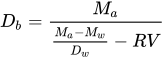
Where:

  • Db = Density of the body;
  • Ma = "Mass in air" (i.e. dry weight);
  • Mw = "Mass in water" (i.e. underwater weight);
  • Dw = Density of water (based on water temperature);
  • RV = Residual volume (the unfilled space enclosed by the body- e.g. volume of air in the lungs + respiratory passages after a maximum exhalation).

The residual volume in the lungs can add error if not measured directly or estimated accurately. Residual volume can be measured by gas dilution procedures or estimated from a person's age and height:[3]

  • RV-Est(liters, Men) = 1.310 × Ht. (meters) + 0.022 × Age (yrs., take as 25 for 18-25) − 1.232
  • RV-Est(liters, Women) = 1.812 × Ht. (meters) + 0.016 × Age (yrs., take as 25 for 18-25) − 2.003

These estimates are for adults aged 18-70, have standard deviation of about 0.4 litres and have dependence on ethnicity, environmental factors, etc.[4] Residual volume may also be estimated as a proportion of vital capacity (0.24 for men and 0.28 for women).[5]

Application

[edit]

Once body density has been calculated from the data obtained by hydrostatic/underwater weighing, body composition can be estimated. The most commonly used equations for estimating the percent of body fat from density are those of Siri[6] and Brozek et al.:[7]

Siri (1956): Fat % = [4.950 /Density - 4.500]×100

Brozek et al. (1963): Fat % = [4.570 /Density - 4.142]×100

Hydrostatic weighing is also used to estimate the density of sea ice, as it is considered the most precise method.[8] Typically, a sample of sea ice is weighed in air and in kerosene, as kerosene has a lower density than sea ice, can be cooled to sub-zero temperatures, and does not melt the ice. Sea ice density experiences substantial seasonality, with larger values during winter and lower values during summer.[9] Due to the small difference between the density of seawater and sea ice, such seasonal changes in sea ice density affect its freeboard and introduce large uncertaintes of sea ice thickness estimates using satellite altimeters.[10]

References

[edit]

See also

[edit]
Revisions and contributorsEdit on WikipediaRead on Wikipedia
from Grokipedia
Hydrostatic weighing, also known as underwater weighing or hydrodensitometry, is a densitometric technique used to assess body composition by measuring body density and estimating body fat percentage based on the principle that fat tissue is less dense than lean tissue.[1] The method relies on Archimedes' principle of buoyancy, where an object's underwater weight reflects its volume and density relative to water, allowing differentiation between fat mass (which floats more) and fat-free mass (which sinks).[2] First described by Behnke, Feen, and Welham in 1942, it was developed as a precise tool for body composition analysis and has been widely applied in sports science, clinical research, and fitness assessments to track changes in body fat and lean mass over time.[3][1] The procedure involves two primary measurements: the individual's dry land weight using a standard scale and their underwater weight while seated on a specialized scale in a tank of warm water, typically after full exhalation to minimize air in the lungs.[2] Residual lung volume is measured separately (often via helium dilution or similar techniques) to correct for trapped air, as this affects buoyancy calculations.[1] Body density is then computed using the formula: Density = Weight in air / [(Weight in air - Weight in water) / Water density - Residual volume], with measurements repeated three to five times for averaging to enhance reliability.[1] Percent body fat is derived from body density via established equations, such as the Siri equation:
%Fat=495Density450 \% \text{Fat} = \frac{495}{\text{Density}} - 450
which assumes a constant density of fat-free mass at 1.100 g/cm³ and fat at 0.900 g/cm³.[4] Historically regarded as the gold standard for body composition measurement due to its high precision, hydrostatic weighing offers an error rate of approximately ±1.5% to ±2.8% under controlled conditions, outperforming many indirect methods like skinfold calipers or bioelectrical impedance.[2][3] However, its accuracy depends on assumptions in the two-compartment model, which may not account for variations in hydration, ethnicity, or age, leading to potential over- or underestimation of fat mass in diverse populations.[1] Recent advancements, such as dual-energy X-ray absorptiometry (DEXA) and air displacement plethysmography (e.g., BOD POD), have challenged its status as the definitive method by offering greater convenience and multi-compartment analysis without submersion.[2] Despite these limitations, hydrostatic weighing remains valuable for athletes, researchers, and clinical settings where precise density-based assessments are needed, though it requires specialized equipment and trained personnel, limiting accessibility and increasing costs (typically $50–$100 per test).[3] It is contraindicated for individuals with claustrophobia, respiratory issues, or those unable to fully submerge, and modifications like head-out-of-water weighing have been explored to improve comfort without sacrificing validity.[1] Overall, the technique underscores the importance of direct densitometry in advancing understanding of body composition's role in health, performance, and disease risk.[2]

Principles and Theory

Archimedes' Principle in Density Measurement

Archimedes' principle states that an object immersed in a fluid experiences an upward buoyant force equal to the weight of the fluid displaced by the object.[5] This principle forms the foundation of hydrostatic weighing, where the volume of an object, such as the human body, is determined by the difference between its weight in air and its apparent weight when fully submerged in water. The buoyant force counteracts part of the object's weight, making it appear lighter underwater, and the magnitude of this reduction directly corresponds to the object's volume through the displaced water's weight. The principle was discovered by the ancient Greek mathematician Archimedes in the 3rd century BCE while investigating the purity of a gold crown for King Hieron II of Syracuse.[6] Archimedes realized that the buoyant force could be used to measure the volume of irregular shapes without direct measurement, leading to the legendary "Eureka!" moment. In the 20th century, this concept was adapted for human body density assessment by researchers including Albert R. Behnke, who applied hydrostatic weighing to quantify body composition in healthy men, establishing it as a reliable method for determining specific gravity as an index of obesity.[7] The hydrostatic weighing equation for body density derives from Archimedes' principle by equating the buoyant force to the weight of displaced water. Let $ m_a $ be the mass of the body in air, $ m_w $ the apparent mass underwater, and $ \rho_w $ the density of water. The volume $ V $ of the body is given by the displaced water volume:
V=mamwρw V = \frac{m_a - m_w}{\rho_w}
The body density $ \rho_b $ is then:
ρb=maV=maρwmamw \rho_b = \frac{m_a}{V} = \frac{m_a \rho_w}{m_a - m_w}
When $ \rho_w $ is approximately 1 g/cm³, the equation simplifies to $ \rho_b = \frac{m_a}{m_a - m_w} $, allowing direct computation of density from mass measurements alone.[8] Key assumptions underlying this method include the incompressibility of the body, meaning its volume remains constant under the hydrostatic pressure of submersion, and the density of water at the measurement temperature (typically 30-35°C, yielding ~0.994-0.996 g/cm³), which is determined precisely to match conditions and ensure accurate volume calculation.[9] These assumptions ensure the accuracy of volume calculation via displacement, though corrections for residual lung volume are often applied in practice to account for trapped air.

Body Composition Fundamentals

Body density, defined as the ratio of an individual's total body mass to their total body volume, serves as a foundational metric in body composition analysis through hydrostatic weighing.[1] This measure reflects the relative proportions of tissues within the body, with an inverse relationship to body fat percentage: as adipose tissue accumulates, overall body density decreases because fat is less dense than other bodily components.[10] Hydrostatic weighing leverages the buoyancy principle to determine this density, providing insights into fat and lean mass distribution without directly measuring individual tissue volumes.[9] Key to interpreting body density are the distinct densities of its primary components. Fat mass, primarily composed of lipids, has an average density of approximately 0.9 g/cm³, while fat-free mass—including muscle, bone, organs, and water—exhibits a higher average density of about 1.1 g/cm³.[11] These values arise from the chemical composition of tissues, where the lower density of fat stems from its high lipid content and minimal water, contrasting with the water-rich, mineral-dense nature of fat-free mass.[12] Variations in these densities across individuals underscore the method's reliance on population-specific assumptions for accurate composition estimates. The two-compartment model of body composition underpins the application of body density measurements, partitioning the body into fat mass and fat-free mass as mutually exclusive and exhaustive components.[13] In this framework, total body mass equals the sum of fat and non-fat elements, allowing density data to inform proportional estimates of each compartment based on their known densities.[14] This simplified model facilitates clinical and research assessments of body fat and lean mass percentages, though it assumes constant densities that may not fully account for ethnic, age, or hydration differences.[10] Early milestones in density-based body fat estimation trace to the 1942 study by Behnke, Feen, and Welham, who demonstrated that specific gravity measurements via water displacement could reliably index obesity by quantifying the body's fat component.[11] Their work on healthy men established the utility of body density as a non-invasive proxy for fatness, correlating lower densities with higher adiposity and laying the groundwork for subsequent densitometric techniques.[7] This research highlighted the physiological basis for using hydrostatic methods to differentiate lean from fat tissue, influencing modern body composition protocols.[15]

Equipment and Setup

Required Apparatus

Hydrostatic weighing requires specialized apparatus to measure body density accurately by comparing an individual's weight in air to their apparent weight when submerged in water. The core components include an underwater weighing tank, a precision scale for land measurements, and a load cell or strain gauge for underwater readings. These elements ensure precise application of Archimedes' principle through differential weighing, as detailed in foundational densitometric methods. The underwater weighing tank is typically constructed from durable materials like welded aluminum or fiberglass, with a capacity of 1000-2000 liters to accommodate full submersion of adults. Dimensions often range from 4 feet in length, 3 feet in width, and 4 feet in depth (approximately 1.2 m, 0.9 m, and 1.2 m), providing sufficient volume while maintaining stability; for instance, a portable system features a 4x3x4 foot aluminum tank weighing 141 pounds empty and up to 3000 pounds when filled.[16] The tank includes structural reinforcements such as aluminum tubes and flanges for rigidity, along with access features like ladders or steps. Water temperature is controlled to 34-36°C using immersion heaters (e.g., 6000-watt units) and circulation pumps (0.5 horsepower) with filtration systems to ensure consistency in water density and subject comfort.[17][16] For land weighing, a precision electronic scale with 0.01 kg (10 g) accuracy is essential, often with a capacity exceeding 150 kg to handle diverse body weights reliably. Underwater measurements employ a load cell or strain gauge, such as force cube transducers with 100-pound capacity and 10-gram sensitivity, connected to signal conditioners and analog-to-digital converters for data acquisition.[18][16] Ancillary items include a submerged seat or harness, typically an aluminum chair suspended from the load cell via a pulley system, allowing the subject to maintain position during immersion. A snorkel or breathing apparatus may assist in residual volume measurements, though not always required for basic setups.[16] Safety features are integrated to mitigate risks during submersion, including overflow drains to prevent water spillage and maintain level consistency, non-slip surfaces on entry platforms, and emergency retrieval mechanisms such as the suspended harness or quick-release pulleys for rapid subject extraction. Electrical systems incorporate ground fault interrupters (tripping at 6 milliamps) and thermal sensors on heaters (shutting off at 115-120°F) to avoid hazards.[16] Equipment has evolved significantly since the 1960s, when manual spring scales and basic tanks limited precision; innovations like electronic force cube transducers in 1969 enabled more accurate underwater readings. By the 1980s, portable, computerized systems with integrated data processing replaced cumbersome manual setups, improving field applicability for body composition analysis in military and research contexts.[16]

Calibration Procedures

Calibration procedures for hydrostatic weighing are essential to ensure the accuracy and reliability of body density measurements, which directly impact body composition estimates. Prior to each session, pre-use checks begin with zeroing the scales both in air and in water. In air, the scale is tared to zero using the empty platform or chair to establish a baseline for dry land weights, while in water, the same apparatus is submerged and tared to account for buoyancy on the equipment itself, minimizing errors in apparent weight readings. These steps verify that the load cell or balance responds correctly to gravitational and buoyant forces without offset biases.[19] Water density verification is a key component of these checks, performed using a calibrated thermometer to measure the temperature of the immersion tank and, where relevant, a salinity meter to detect any impurities or dissolved salts that could alter density from the standard value of pure water. Temperature measurement is particularly crucial, as even small variations affect the buoyant force according to Archimedes' principle, necessitating corrections in volume calculations. Salinity assessments ensure the water medium remains consistent, typically targeting fresh or dechlorinated water for body composition applications to avoid confounding factors from electrolytes.[20] To validate overall system performance, standard calibration objects with precisely known volumes, such as brass spheres or certified sinkers, are employed. These objects are weighed in air and then submerged in the tank, with the measured apparent mass loss compared to the theoretical value derived from their known density and the corrected water density. This process tests the system's linearity across a range of volumes and assesses repeatability through multiple trials, confirming that the setup yields consistent results within acceptable error margins, typically less than 0.5% deviation for research-grade equipment.[21] Recommended calibration frequencies emphasize routine maintenance: scales should be calibrated daily or before each use to account for potential drift in electronic components, while the tank volume and overall system setup is checked weekly to detect any structural changes or sediment buildup. Temperature-induced variations in water density require ongoing adjustments during sessions, applied via standard tables or precise formulations such as the ITS-90 density of water equation, which provides density as a function of temperature on the International Temperature Scale. For approximate calculations near body temperature ranges (20-40°C), a simple quadratic model can be used:
ρwater0.9998(T4)2×7.5×106g/cm3\rho_{\text{water}} \approx 0.9998 - (T - 4)^2 \times 7.5 \times 10^{-6} \, \text{g/cm}^3
where $ T $ is the measured temperature in °C; this captures the density maximum at 4°C.[22] All calibration activities must be meticulously documented in logs, including dates, measured values, corrections applied, and any deviations observed, to comply with research standards such as ISO/IEC 17025 guidelines for competence in testing and calibration laboratories. These records facilitate traceability, support quality assurance in body composition studies, and enable audits to confirm that precise mass measurements underpin reliable density derivations.

Measurement Procedure

Subject Preparation

Prior to undergoing hydrostatic weighing, subjects follow specific preparation protocols to standardize physiological conditions and minimize sources of error that could affect body density measurements, such as variations in gastrointestinal content, lung volume, or hydration status. These steps ensure the accuracy of subsequent body composition estimates derived from density calculations. Subjects are typically required to fast for 4 to 12 hours before the test, abstaining from food and caloric beverages to reduce gastrointestinal gas and solid content, which can increase buoyancy and lead to inaccuracies in volume determination. Additionally, intake of gas-producing foods, such as beans or carbonated drinks, should be avoided in the preceding 24 hours to further limit intestinal air interference. Hydration guidelines emphasize maintaining euhydration through normal fluid intake, as dehydration or overhydration can alter body water distribution and density; subjects are advised to drink water as usual but avoid excessive consumption or diuretics immediately prior.[2][23] Clothing must be minimal and non-buoyant, consisting solely of form-fitting swimwear like a one-piece swimsuit or compression shorts, to prevent additional air entrapment or drag during submersion. Subjects are also instructed on posture and breathing: they must adopt a relaxed, seated position and perform a maximal exhalation to residual volume just before and during immersion, reducing lung air volume that would otherwise inflate apparent body volume. At total lung capacity, the lungs hold approximately 6 L of air, but exhalation to residual volume minimizes this to about 1.2-1.5 L, correcting for the compressible gas that affects hydrostatic principles.[24][9][1] Screening procedures are essential to identify contraindications and ensure subject safety. Exclusion criteria include claustrophobia, which may prevent tolerance of submersion; recent surgery or conditions impairing recovery; and respiratory issues such as asthma or chronic obstructive pulmonary disease, which could compromise exhalation or increase residual volume variability. The procedure is safe for individuals with pacemakers, as it does not involve electrical currents that could interfere with such devices.[2] Informed consent is obtained in advance, detailing the procedure, potential discomfort from water immersion and breath-holding, and any associated risks, in accordance with ethical standards for human subject research.[25][26][27] For longitudinal or repeat assessments, testing is standardized to the same time of day to mitigate diurnal weight fluctuations, which typically range from 0.5 to 1 kg due to factors like fluid shifts, meals, and metabolic activity. This consistency helps isolate true changes in body composition from transient variations.[28][29]

Weighing Process

The weighing process in hydrostatic weighing begins with measuring the subject's dry weight in air, typically conducted on a calibrated scale while the subject wears minimal clothing such as a swimsuit to ensure accuracy.[9] This air weighing establishes the baseline mass before transitioning to the underwater phase. Following the air measurement, the subject enters the water tank and is seated in a specialized harness or chair suspended from an underwater scale, with the water temperature maintained at approximately 30–34°C for comfort and consistency.[9][30] The underwater weighing then proceeds with the subject fully submerging, including the head, by leaning forward until the top of the head is underwater, while maintaining a stable seated position with legs tucked to minimize movement.[9] The subject performs a maximal forced exhalation to reach residual volume, expelling as much air as possible from the lungs to reduce buoyancy, and holds this position for about 5 seconds until the weight reading stabilizes.[30] To account for variability from subject movement or incomplete exhalation, multiple trials—typically 3 to 5—are conducted, with the average of the most consistent readings used to minimize errors from motion artifacts such as swinging or touching the tank sides.[9][30] A key aspect of the process involves correcting for residual lung volume, the air remaining in the lungs after maximal exhalation (averaging about 1.5 L in adults), which is measured separately through a pulmonary function test such as helium dilution or body plethysmography, rather than estimated, to enhance precision.[31][9] The full weighing session, including air measurement, multiple underwater trials, and residual volume assessment, typically takes 15–20 minutes per subject, allowing time for the subject to rest between trials and recover from submersion.[32] In practice, for an average adult with a body density of approximately 1.05 g/cm³ (1050 kg/m³), the apparent underwater weight in fresh water (density ≈ 1.00 g/cm³) is typically only 3–7% of their weight in air when fully submerged after maximal exhalation. This corresponds to a weight reduction of about 93–97% due to the buoyant force from the displaced water. In seawater (density ≈ 1.025 g/cm³), the apparent underwater weight is further reduced by roughly 2.5–3% of the air weight due to the higher density and buoyancy (approximately 3–5% relative difference in some contexts, though typically closer to 2.5%). This significant measurable difference between air weight and apparent underwater weight is fundamental to the method, as it allows calculation of body volume (difference divided by water density) and subsequently body density.

Data Analysis and Calculations

Volume and Density Formulas

The primary equation for calculating body volume in hydrostatic weighing derives from Archimedes' principle, where the volume $ V $ of the body is determined by the difference in weight between air and water divided by the density of water:
V=WairWwaterρwater V = \frac{W_\text{air} - W_\text{water}}{\rho_\text{water}}
Here, $ W_\text{air} $ is the subject's weight in air (kg), $ W_\text{water} $ is the underwater weight (kg), and $ \rho_\text{water} $ is the density of water (typically 0.997–1.000 g/cm³, adjusted for temperature). This equation assumes full submersion and provides the displaced volume equivalent.[9] Body density $ \rho_\text{body} $ is then computed as the ratio of mass to volume:
ρbody=WairV \rho_\text{body} = \frac{W_\text{air}}{V}
with units typically in g/cm³. To account for residual lung volume $ R $ (the air remaining in the lungs after maximal exhalation, usually 1–2 L), the corrected volume is
Vcorrected=VR, V_\text{corrected} = V - R,
yielding a refined density $ \rho_\text{body} = W_\text{air} / V_\text{corrected} $. The value of $ R $ is measured separately via spirometry or estimated from age, height, and sex. This correction enhances precision by incorporating non-displaced air volume.[9][33] Error propagation in these calculations is sensitive to weighing accuracy; a ±0.1 kg inaccuracy in $ W_\text{air} $ or $ W_\text{water} $ can propagate to a ±0.01 g/cm³ error in body density, particularly for the underwater measurement due to its smaller magnitude and potential scale drift. Sensitivity analysis reveals that density error $ \Delta \rho_\text{body} $ approximates $ \rho_\text{body} \times (\Delta W / (W_\text{air} - W_\text{water})) $, emphasizing the need for high-precision scales (≤0.05 kg resolution).[34][20] In practice, these formulas are often automated using spreadsheet software like Microsoft Excel for manual data entry and computation, or specialized programs implementing density-to-composition conversions (e.g., adaptations of the Siri model for output). Such tools facilitate rapid correction for $ \rho_\text{water} $ and $ R $, reducing manual error in clinical or research settings.[32]

Body Fat Estimation

Hydrostatic weighing provides a measure of body density (ρ_body), which is then converted to body fat percentage using equations based on a two-compartment model that assumes the body consists of fat mass (density ≈ 0.900 g/cm³) and fat-free mass (density ≈ 1.100 g/cm³).[35][36] The Siri equation, derived from cadaver analysis and fluid space measurements, estimates percent body fat as % fat = (495 / ρ_body) - 450, where ρ_body is in g/cm³; this formula has been widely adopted for its simplicity and applicability to general populations.[35] An alternative is the Brozek equation, % fat = (457 / ρ_body) - 414, which uses similar density assumptions but incorporates adjusted constants from empirical data and is considered more precise for certain groups.[36] Both equations yield similar results in most cases, with differences typically under 2% body fat, but studies comparing them to four-compartment criteria show errors of ±3-4% for the two-compartment approach, primarily due to unaccounted variability in fat-free mass composition.[37] For improved accuracy, multi-compartment models extend the two-compartment framework by incorporating additional measures like bone mineral content, often via dual-energy X-ray absorptiometry alongside hydrostatic density; three-compartment models, for instance, separate fat, lean soft tissue, and bone, reducing errors to ±1-2% in validation studies against chemical analysis.[38] Population-specific adjustments are necessary, as the standard equations assume constant fat-free mass density, which varies by age (decreasing hydration with age lowers effective density), sex (males often have denser lean mass), ethnicity (e.g., higher bone mineral in African Americans), and training status (athletes exhibit denser fat-free mass due to increased mineral content). For example, for Black men, an adjusted equation assuming higher fat-free mass density (≈1.106 g/cm³) is % fat = (485.8 / ρ_body) - 453.2, accounting for these differences to minimize bias up to 5% in unadjusted models.[39]

Applications and Uses

In Athletic Performance Assessment

Hydrostatic weighing plays a key role in athletic performance assessment by enabling precise tracking of lean mass gains, particularly in sports where body composition directly influences weight class compliance and power-to-weight ratios. In wrestling, the National Collegiate Athletic Association (NCAA) employs hydrostatic weighing as one of the validated methods to determine minimum wrestling weight during preseason assessments, ensuring athletes maintain at least 5% body fat to safeguard lean mass while qualifying for specific weight classes.[40] This approach helps coaches monitor progressive lean mass accrual through training, minimizing risks associated with excessive fat loss. Similarly, in swimming, hydrostatic weighing has been used to evaluate body composition in competitive athletes, allowing for targeted interventions to optimize lean mass for buoyancy and stroke efficiency.[41] Longitudinal studies utilizing hydrostatic weighing have demonstrated measurable changes in body density over training seasons, often correlating with enhancements in key performance metrics such as maximal oxygen uptake (VO₂ max). For instance, in college basketball players, preseason to postseason assessments revealed increases in VO₂ max.[42] Such tracking informs periodized training programs to balance fat reduction with lean tissue preservation. The method's institutional adoption in NCAA protocols for sports like wrestling stemmed from the mandatory weight management program implemented in 1999, following wrestler deaths in 1997, building on earlier research from the 1970s on minimum weight formulas to promote safe body composition management.[43] Hydrostatic weighing has been validated alongside dual-energy X-ray absorptiometry (DEXA) for enhanced accuracy in lean mass and fat distribution measurements in later decades.[44] This combination has become routine in collegiate programs to cross-verify results and refine athlete monitoring. Hydrostatic weighing's reliance on body density for fat estimation underpins its utility in these performance contexts.

In Medical and Research Contexts

Hydrostatic weighing serves as a criterion method in obesity and metabolic studies for validating simpler, field-based techniques such as body mass index (BMI) and skinfold calipers, providing a reference for accurate body fat estimation in large cohorts. For instance, skinfold measurements have been cross-validated against hydrostatic weighing in adult populations, demonstrating moderate correlations but highlighting errors up to 6.6 kg in fat mass estimates when compared to multi-compartment models that incorporate hydrostatic data.[13] This approach is particularly relevant in analyses of body composition to refine BMI-based obesity classifications and assess metabolic risks across diverse ethnic groups.[45] In pediatric applications, hydrostatic weighing assesses body composition changes during growth, estimating total body density and percent body fat in children aged 10–15 years, though challenges like incomplete submersion can limit feasibility.[25] For geriatric populations, it evaluates conditions like sarcopenia by measuring age-related shifts in fat-free mass, utilizing it to quantify muscle density declines in elderly adults despite practical difficulties for those with mobility impairments.[46] Alternatives to standard hydrostatic weighing, such as air-displacement plethysmography, have been explored to accommodate older individuals aged 70–79 years.[47] As a gold standard in body composition research, hydrostatic weighing demonstrates high validity, with studies reporting accuracy within approximately 2% body fat when compared to advanced imaging techniques like magnetic resonance imaging (MRI), which excels in fat distribution but aligns closely with hydrostatic density-based estimates.[48] This positions it as a benchmark for validating emerging methods in multi-compartment models, ensuring reliable percent body fat derivations across clinical trials.[49] Ethical considerations in hydrostatic weighing research emphasize Institutional Review Board (IRB) oversight, particularly for human trials involving vulnerable populations such as children, the elderly, or those with mobility limitations, to mitigate risks like submersion discomfort and ensure informed consent and equitable inclusion. Protocols must justify participation benefits against potential harms, adhering to principles of respect, beneficence, and justice as outlined in foundational guidelines for human subjects research.[50]

Advantages, Limitations, and Comparisons

Strengths of the Method

Hydrostatic weighing demonstrates high precision in assessing body density, with test-retest reliability coefficients exceeding 0.99, corresponding to a coefficient of variation typically around 1-2% for repeated measures.[51] This level of reproducibility surpasses anthropometric techniques, such as skinfold measurements, which are more susceptible to inter- and intra-observer variability due to subjective caliper placement and compression.[45] A key strength lies in its direct measurement of body volume through Archimedes' principle of water displacement, where the difference between underwater and air weight yields precise volumetric data without relying on predictive equations or physiological assumptions.[13] In contrast to bioelectrical impedance analysis, which indirectly estimates composition based on assumptions about body water distribution and tissue conductivity, hydrostatic weighing minimizes errors from hydration fluctuations or individual variability in fluid status.[13] The method is also cost-effective for laboratories handling high volumes of assessments, involving a one-time equipment investment that allows for numerous tests over time without recurring per-use expenses. Furthermore, standardized protocols, such as those recommended by the American College of Sports Medicine (ACSM), ensure procedural consistency, including subject preparation, submersion techniques, and residual volume corrections, which promote comparability across studies and clinical settings.

Sources of Error and Limitations

Hydrostatic weighing is susceptible to physiological errors primarily stemming from inaccuracies in estimating residual lung volume (RV), which represents the air remaining in the lungs after maximal exhalation and typically accounts for the largest source of variability in body density calculations.[9] Variations in RV estimation can introduce errors of up to 10% relative to the mean value, particularly when predicted rather than directly measured, leading to potential over- or underestimation of body fat by 3-4%.[52] Additionally, gastrointestinal gas volume, often assumed to be around 0.1 L but exhibiting within-subject variability of 0-0.5 L, can further distort underwater weight measurements by altering apparent body volume.[53] Technical issues also contribute to measurement inaccuracies, including fluctuations in water temperature that affect its density by approximately 0.0002-0.0004 g/cm³ per °C around typical testing conditions (30-37°C), potentially biasing body density results if not precisely controlled and accounted for.[54] Scale drift over repeated uses or sessions can introduce systematic errors in both land and underwater weights, compounding variability in the weight difference used for volume derivation.[1] Subject-related factors exacerbate these errors, such as incomplete exhalation or involuntary movement during submersion, which can increase apparent buoyancy and lead to unreliable underwater readings.[55] The method may be challenging for obese individuals due to difficulties with full submersion from buoyancy, and for those with claustrophobia, as the enclosed tank and breath-holding requirements can cause distress and non-compliance. To mitigate these sources of error, protocols often incorporate multiple weighing trials (typically 3-10) to average out random variations and the use of spirometry for direct RV measurement, which reduces estimation bias compared to prediction equations.[56] Proper subject preparation, such as fasting to minimize gastrointestinal gas, further helps control physiological variables.[53] When these strategies are applied, the overall error in body fat percentage estimation remains around 2-3%.[57]

Comparison to Other Techniques

Hydrostatic weighing serves as a reference standard for body composition assessment, particularly in research settings, due to its high validity when compared to multi-compartment models, though it is often contrasted with more advanced imaging techniques like dual-energy X-ray absorptiometry (DEXA). DEXA offers superior precision for multi-compartment analysis, with typical errors of 1-2% in body fat estimation, and provides additional data on bone mineral density, visceral fat distribution, and regional body composition that hydrostatic weighing cannot. In contrast, hydrostatic weighing is generally less expensive and avoids radiation exposure but exhibits mean differences of about 1% body fat compared to DEXA, with limits of agreement showing greater variability at higher body fat levels.[58][58] Compared to anthropometric methods like skinfold calipers, hydrostatic weighing is the criterion measure, with calipers achieving accuracy within ±3-5% error but tending to underestimate body fat percentage, particularly in individuals with higher adiposity where precise measurement of thick skinfolds is challenging. Bioelectrical impedance analysis (BIA), another convenient field method, is highly accessible and portable but is sensitive to hydration status, recent exercise, and meal intake, leading to underestimations of body fat by 5-9% relative to hydrostatic weighing in various populations.[59][60][60] Air displacement plethysmography, such as the Bod Pod, yields similar accuracy to hydrostatic weighing, with mean differences in body fat percentage typically under 2% and high correlations (r > 0.95) in validation studies, making it a viable alternative for non-aqueous assessment. The Bod Pod is faster (under 5 minutes) and more comfortable, avoiding submersion, but requires controlled environmental conditions; hydrostatic weighing may be preferable for certain populations, like those with claustrophobia or aquatic discomfort, where underwater measurement is feasible.[25][25] Selection of hydrostatic weighing is favored in research as a gold standard for validating other techniques, supported by meta-analyses and reviews from the 2010s confirming its criterion validity against four-compartment models with errors under 2%. In clinical or field settings, alternatives like DEXA, BIA, or the Bod Pod are chosen for greater convenience, speed, and additional outputs, despite their higher costs or sensitivities.[45][61]

References

User Avatar
No comments yet.