Hubbry Logo
RespectRespectMain
Open search
Respect
Community hub
Respect
logo
8 pages, 0 posts
0 subscribers
Be the first to start a discussion here.
Contribute something
Respect
Respect
from Wikipedia

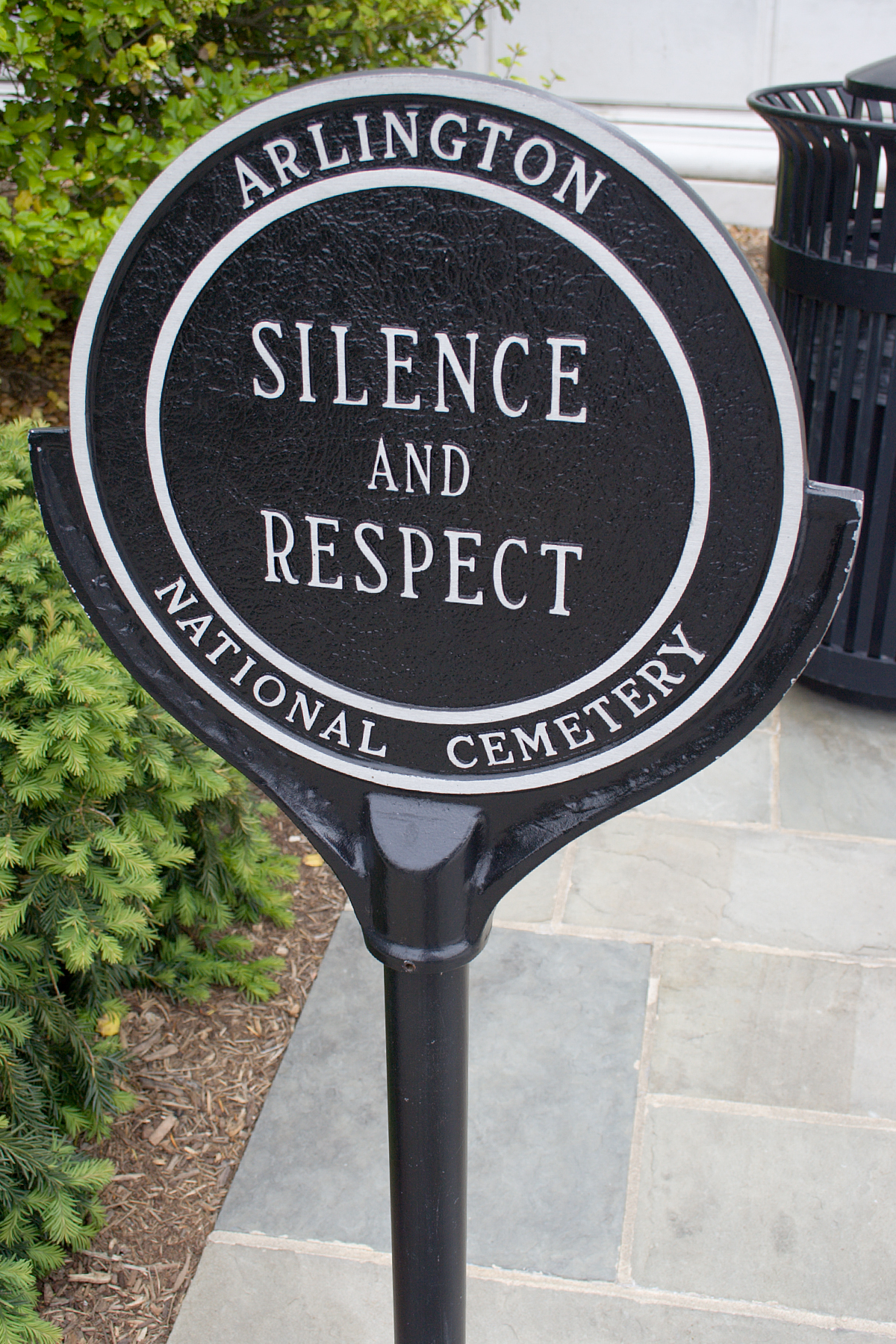
A sign entreating "silence and respect" at Arlington National Cemetery

Respect, also called esteem, is a positive feeling or deferential action shown towards someone or something considered important or held in high esteem or regard. It conveys a sense of admiration for good or valuable qualities. It is also the process of honoring someone by exhibiting care, concern, or consideration for their needs or feelings.[1]

In many cultures, people are considered to be worthy of respect until they prove otherwise. Some people may earn special respect through their exemplary actions or social roles. In "honor cultures", respect is more often earned in this way than granted by default.[2] Courtesies that show respect may include simple words and phrases like "thank you" in the West or "namaste" in the Indian subcontinent, or simple physical signs like a slight bow, a smile, direct eye contact, or a handshake. Such acts may have very different interpretations depending on the cultural context. The end goal is for all people to be treated with respect.

Signs and other ways of showing respect

[edit]

Language

[edit]

One definition of respect is a feeling of admiration for someone or something elicited by their abilities, qualities, and achievements.

An honorific is a word or expression (such as a title like "Doctor" or a pronoun form) that shows respect when used in addressing or referring to a person.

Typically honorifics are used for second and third persons; use for first person is less common. Some languages have anti-honorific first person forms (like "your most humble servant" or "this unworthy person") whose effect is to enhance the relative honor accorded a second or third person.

For example, it is disrespectful not to use polite language and honorifics when speaking in Japanese with someone having a higher social status. The Japanese honorific "san" can be used when English is spoken.[3]

In China, it is considered rude to call someone by their first name unless the person is known by the speaker for a long period of time. In work-related situations, people address each other by their titles. At home, people often refer to each other by nicknames or terms of kinship.[4] In Chinese culture, individuals often address their friends as juniors and seniors even if they are just a few months younger or older. When the Chinese ask for someone's age, they often do so to know how to address the person.[4]

Physical gestures

[edit]
A wife touching the feet of her husband

In Islamic cultures, there are many ways to show respect to people. For example, one may kiss the hands of parents, grandparents, or teachers. It is narrated in the sayings of Muhammad "Your smiling in the face of your brother is charity".[5] It is also important for Muslims to treat the Quran with great care, as it's considered the word of God. Actions like placing it on the floor or handling it with unclean hands are forbidden and should be followed by a prayer of forgiveness.

In India, it is customary that, out of respect, when a person's foot accidentally touches a book or any written material (considered to be a manifestations of Saraswati, the goddess of knowledge) or another person's body, it will be followed by an apology in the form of a single hand gesture (pranāma) with the right hand, where the offending person first touches the object with the finger tips and then the forehead and/or chest. This also counts for money, which is considered to be a manifestation of the goddess of wealth, Lakshmi.[6] Pranāma, or the touching of feet in Indian culture is a sign of respect. For instance, when a child greets their grandparents, they typically will touch their hands to their grandparents' feet. In Indian culture, it is believed that the feet are a source of love and power.[7]

In many African/West Indian descent communities and some non-African/West Indian descent communities, respect can be signified by the touching of fists.[citation needed]

Many gestures or physical acts that are common in the West can be considered disrespectful in Japan. For instance, one should not point directly at someone. When greeting someone or thanking them, it may be insulting if the person of lower status does not bow lower than the person with higher status. The duration and level of the bow depends on many factors such as age and status.[8] Some signs of physical respect apply to women only. If a woman does not wear cosmetics or a brassiere, it is possible that she will be considered unprofessional or others may think she does not care about her situation.

Respect as a virtue

[edit]

Respect for others is a variety of virtue or character strength. The philosopher Immanuel Kant made the virtue of respect the core of his Categorical Imperative:

So act that you treat humanity… always at the same time as an end, never merely as a means.[9]


Respect as a cultural value

[edit]
Sign in São João da Barra saying "respect if you want to be respected"

Chinese culture

[edit]

In Chinese culture, bowing is generally reserved as a sign of respect for elders and ancestors. When bowing, they place the fist of the right hand in the palm of their left at stomach level. The deeper the bow, the more respect they are showing.

Traditionally, there was not much hand-shaking in Chinese culture. However, this gesture is now widely practiced among people, especially when greeting Westerners or other foreigners. Many Westerners may find Chinese handshakes to be too long or too weak, but this is because Chinese people consider a weaker handshake to be a gesture of humility and respect.[4]

Kowtowing, or kneeling and bowing so deeply that one's forehead is touching the floor, is practiced during worship at temples. Kowtowing is a powerful gesture reserved mainly for honoring the dead or offering deep respect at a temple.[4]

Many codes of behavior revolve around young people showing respect to older people. Filial piety is a virtue of having respect for ancestors, family, and elders. As in many cultures, younger Chinese individuals are expected to defer to older people, let them speak first, sit down after them, and not contradict them. Sometimes when an older person enters a room, everyone stands. People are often introduced from oldest to youngest. Often, younger people will go out of their way to open doors for their elders and not cross their legs in front of them. The older you are the more respect you are expected to be treated with.[4]

Indigenous American culture

[edit]

In many indigenous American societies, respect is viewed as a moral value that teaches indigenous people about their culture. This moral value is treated as a process that influences participation in the community and also helps people develop and become integrated into their culture. For this reason, the value of respect is taught during childhood.[10]

Respect as a form of behavior and participation is especially important as a basis of how children must conduct themselves in their community. Children engage in mature activities such as cooking for the family, cleaning and sweeping the house, caring for infant peers, and crop work. Indigenous children learn to view their participation in these activities as a representation of respect. Through this manner of showing respect by participation in activities, children not only learn about culture but also practice it as well.[citation needed]

See also

[edit]

References

[edit]

Further reading

[edit]
[edit]
Revisions and contributorsEdit on WikipediaRead on Wikipedia
from Grokipedia
Respect is a prosocial attitude and behavioral response involving the acknowledgment of an entity's worth, , status, or competence, typically expressed through , esteem, or restraint from interference. Etymologically derived from the Latin respectus, meaning "a looking back" or "regard," it implies attentive rather than mere tolerance or fear-based submission. In philosophical traditions, particularly those influenced by , respect entails recognizing others as autonomous agents with inherent , prohibiting their instrumentalization as means to ends and grounding moral obligations. This contrasts with contingent forms of respect tied to achievements or roles, though empirical contexts often blend both, where perceived respect fosters equality recognition and agency attribution. From an evolutionary standpoint, respect likely emerged to navigate dominance hierarchies and alliance formation in ancestral groups, signaling deference to competent individuals who enhance cooperative outcomes while mitigating conflict; it parallels deference behaviors observed across social , tracking relational value over mere power. Empirical studies confirm its functional role in human societies, linking feelings of respect—whether from authorities or peers—to heightened , prosocial actions, and innovative behaviors, while its absence correlates with disengagement or antagonism. Culturally variable yet universally recurrent, respect's expressions range from hierarchical in collectivist settings to egalitarian mutual regard in others, though modern interpretations sometimes dilute it into undifferentiated approval, diverging from its roots in earned regard or intrinsic capacities. Defining characteristics include its bidirectional nature—encompassing self-respect as a prerequisite for granting it to others—and its causal link to stable social orders, where failures in reciprocal respect underpin conflicts from interpersonal disputes to societal breakdowns.

Definition and Etymology

Core Conceptual Definition

Respect denotes a normative attitude or behavioral wherein an agent attributes moral significance or worth to a , object, or , constraining actions to avoid diminishment or exploitation of that worth. This attribution typically manifests as restraint from arbitrary interference, deference to or , and sometimes proactive support, grounded in the perceived inherent or achieved value of the target. In ethical contexts, respect functions as a constraint on , prioritizing the target's standing over mere or , as evidenced in deontological traditions where it derives from rational agency rather than consequential outcomes. Philosophically, the core of respect lies in its relational structure: it requires perceiving the other as possessing a status that demands reciprocal accountability, often independent of personal liking or benefit. For instance, posited respect as the feeling aroused by the moral law's representation of human dignity, compelling individuals to regard others as autonomous ends rather than instrumental means, a view echoed in analyses emphasizing respect's role in upholding and equality. Empirical correlates in link respect to reduced and enhanced cooperation, as individuals who perceive mutual respect report higher trust and compliance in interactions, per studies on interpersonal dynamics. This conceptual foundation distinguishes respect from mere tolerance or , which lack the evaluative commitment to the target's intrinsic claims.

Linguistic Origins and Evolution

The term "respect" derives from the Latin noun respectus, the past participle of the respicere, meaning "to look back at" or "to regard," composed of the prefix re- ("back") and specere ("to look at"). This etymological root emphasizes an act of attentive consideration or regard toward something observed. Introduced to English in the late via respect (also denoting "regard" or "consideration"), the word initially signified "relation, condition, or fact of regarding" or a specific "aspect" warranting , particularly one of positive significance. By the early 15th century, its usage in texts, such as before 1398, reflected this relational sense, often tied to or rather than . Over the 16th century, the meaning evolved to include esteem and reverence; the verb form "to respect," denoting "to treat with deferential esteem" or "regard with reverence," emerged around the 1550s, shifting from mere to or social valuation. Concurrently, by the 1540s, the noun extended to "point" or "" attributes deserving , while by the 1590s, it incorporated restraint from interference, as in "respecting boundaries." This semantic broadening in aligned with expanding social hierarchies, where regard implied hierarchical acknowledgment without implying equality.

Philosophical Foundations

Types of Respect: Recognition and Appraisal

In philosophical ethics, Stephen Darwall introduced a key distinction between recognition respect and appraisal respect in his 1977 . Recognition respect constitutes a moral attitude directed toward persons or entities in virtue of their status or inherent worth, prompting individuals to govern their conduct accordingly by acknowledging constraints, such as or , without regard to personal qualities. This form of respect aligns with Kantian notions of treating persons as ends in themselves, where failure to accord it manifests as treating others as mere means, as exemplified in violations of or equality. It demands second-personal , meaning one's behavior is shaped by the normative authority of the respected party, rather than self-interested calculation. Appraisal respect, by contrast, entails an evaluative judgment of positive esteem based on observed traits, accomplishments, or virtues, which can be granted, withheld, or withdrawn depending on merit. Unlike recognition respect, it does not prescribe specific behavioral directives but reflects for excellence, such as intellectual prowess or , and may apply to non-persons like artworks or institutions if they exhibit comparable qualities. Darwall notes that appraisal respect often underlies expressions like "deserving respect" in contexts of achievement, yet it lacks the unconditional status of recognition respect, allowing for degrees and contingencies. The distinction clarifies confusions in ethical discourse, such as conflating moral obligations to persons (recognition) with variable admiration (appraisal), which Darwall argues infects analyses like those equating respect solely with estimation of worth. Recognition respect underpins universal frameworks, as it presumes equal standing irrespective of empirical variations, whereas appraisal respect informs differential social standings, like roles earned through competence. Subsequent scholars have extended this binary, noting that while recognition respect fosters baseline reciprocity in interactions, appraisal respect correlates with motivational incentives, such as in merit-based systems. Empirical extensions in confirm that recognition respect buffers against status hierarchies, promoting equity, while appraisal respect drives but risks inequality if unequally distributed.

Historical Development in Western Philosophy

In , the concept of respect was primarily understood through timē (honor) and aidōs (reverence or shame), denoting deference to superiors, gods, laws, or those displaying excellence (aretē). , in his (circa 350 BCE), framed respect within virtues like , where the great-souled person claims and receives great honor proportionate to merit, avoiding excess or deficiency in self-regard or regard for others. This hierarchical view emphasized earned status over universal entitlement, with requiring proportional equality that preserved . Roman philosophy, influenced by , extended this through dignitas, which (106–43 BCE) defined as "the honorable authority of a person, which merits attention and honor and worthy respect," tied to personal reputation, moral standing, and ethical worth achieved via merit. Stoics like Seneca stressed veneratio (reverence) for rational , blending hierarchical deference with an emerging sense of inner worth independent of external status, though still merit-based and not egalitarian. This period maintained respect as comparative, appropriate to one's standing in honor, liberality, or punishment. Medieval thinkers, synthesizing Christian theology with classical ideas, subordinated respect to divine hierarchy via pietas (piety) and veneratio. Thomas Aquinas (1225–1274), in Summa Theologica (Question 63), treated "respect of persons" as a vice opposing distributive justice, involving undue favoritism that ignores merit or proportion, while affirming hierarchical duties under God. Augustine (354–430) reserved ultimate respect for God alone, positing human equality before divine judgment yet endorsing earthly hierarchies in feudal and ecclesiastical structures. Respect thus functioned vertically, from subjects to authorities, with theological equality tempering but not erasing status distinctions. The modern era, particularly the Enlightenment, marked a pivotal shift toward universal respect grounded in individual autonomy. Immanuel Kant (1724–1804), in works like the Groundwork of the Metaphysics of Morals (1785), introduced respect (Achtung) as a moral duty arising from recognition of persons as rational ends-in-themselves, possessing inherent dignity that demands treatment without using others as means. This egalitarian framework, rooted in autonomy rather than hierarchy or merit alone, contrasted prior views by extending equal respect to all rational beings, influencing subsequent ethics on self-respect and interpersonal obligations. Post-Kantian developments further democratized respect, detaching it from social roles toward intrinsic human worth, though debates persist on balancing universal and differential forms.

Non-Western Philosophical Perspectives

In Confucian philosophy, respect manifests through li (ritual propriety) and xiao (filial piety), emphasizing hierarchical deference to elders, ancestors, and superiors as a means to cultivate personal and social . Confucius, in the Analects (c. 500 BCE), taught that respect toward parents and rulers fosters moral character, with statements like "If a man is respectful he will not be treated with insolence" underscoring reciprocity in social relations. This view integrates respect as an active commitment expressed via rituals, contrasting with mere deference by linking it to ethical . Indian philosophical traditions, particularly in , frame respect (sammāna) as reverence for (cosmic order) and gurus, integral to ethical conduct and spiritual progress. Texts like the (c. 200 BCE–200 CE) advocate respect for all beings as embodiments of the divine, promoting non-discrimination rooted in the unity of atman (self) with (), though hierarchical social duties under varna influence practical expressions. In , respect (gārava) is a prerequisite for enlightenment, directed toward , Dhamma, and , as well as all sentient beings, with describing it as a "great " that opens the mind to learning and counters arrogance. This egalitarian undertone extends to self-respect, enabling ethical reciprocity without attachment to ego. Islamic philosophy conceptualizes respect through adab (etiquette and refinement), a comprehensive ethic governing interactions with God, self, and others, as elaborated by thinkers like Al-Ghazali (d. 1111 CE). Adab demands humility and propriety in knowledge-seeking, with hierarchies of respect—highest for divine revelation, then scholars—fostering moral elevation over mere politeness. It integrates courtesy as a spiritual discipline, where outward manners reflect inner piety, applicable across familial, communal, and scholarly domains. In sub-Saharan African philosophies, such as Ubuntu (from Nguni Bantu languages), respect (ukuhlonipha) underpins communal personhood, encapsulated in the maxim "umuntu ngumuntu ngabantu" ("a person is a person through other persons"). This ontology prioritizes relational dignity, with elders and ancestors commanding deference to sustain social cohesion and moral reciprocity, as seen in Southern African traditions where disrespect disrupts harmony. Empirical studies of Ubuntu affirm respect's role in ethical decision-making, countering individualism by embedding it in collective interdependence. These perspectives collectively emphasize respect as a relational virtue sustaining order, differing from Western autonomy-focused models by prioritizing communal and hierarchical bonds.

Psychological Aspects

Self-Respect: Formation and Consequences

Self-respect, distinct from —which involves a general evaluative of personal worth—refers to the normative recognition of one's inherent and equal standing, often rooted in the internalization of possessing the same as others. This formation begins in childhood through environmental influences, including fair treatment by caregivers and societal figures, which foster awareness and self-evaluation based on rather than contingent achievements. Studies indicate that self-respect develops as an internal emotional experience, manifesting in tied to consistent adherence to personal values and reciprocal respect toward others, with disruptions from oppressive or inconsistent upbringing potentially hindering this process. Empirical research links the formation of self-respect to broader psychological traits like , where early positive self-regard predicts stronger interpersonal boundaries and in . Trait measures of self-respect, developed through scales assessing and , reveal its incremental build via experiences affirming equality, contrasting with self-esteem's fluctuation based on external validation. High self-respect correlates with reduced depressive symptoms, as individuals who internalize equal rights exhibit greater resilience to stress and lower endorsement of helplessness. It promotes prosocial behaviors, including heightened concern for human rights and intergenerational equity, evidenced in cross-sectional studies where self-respect predicted advocacy for ethical norms over self-interest. Conversely, diminished self-respect, often from stigma or repeated violations of personal dignity, triggers motivational deficits like the "why try" effect, exacerbating mental health declines and social withdrawal. These consequences extend to improved self-regulation and relational stability, with self-respect buffering against antisocial tendencies more enduringly than self-esteem alone.

Interpersonal Respect: Cognitive and Emotional Mechanisms

Interpersonal respect emerges from cognitive evaluations of an individual's status, , or competence, which activate neural networks processing social hierarchies and norms. reveals that the anterior temporal lobes encode semantic knowledge relevant to respect, including verbal concepts of social rules in the left lobe and non-verbal socio-emotional cues in the right lobe, facilitating recognition of others' worth. The supports , enabling individuals to adjust respectful behaviors based on dynamic interpersonal contexts, such as shifting power dynamics or cultural expectations. These cognitive processes often precede emotional responses, where respect functions as a emotion linking appraisals of others' moral standing to prosocial actions. Empirical studies link respect to activation in the and ventral anterior insula, regions that integrate cognitive evaluations with affective signals from the and ventral , generating feelings of deference or restraint. , a related emotional component, similarly engages the anterior , distinguishing respect from mere compliance by evoking elevated regard for observed virtues or achievements. Emotionally, respect reinforces interpersonal bonds through self-reinforcing loops, where expressing regard for another's abilities and feelings prompts reciprocal , enhancing and reducing conflict. Structural correlates higher trait respect with reduced gray matter volume in the anterior , suggesting efficient processing of socio-emotional information underlies consistent interpersonal . variations modulate these mechanisms, with respect-related rewards activating medial and differently based on collectivist versus individualist values, influencing emotional intensity and behavioral expression.

Manifestations and Expressions

Verbal and Behavioral Indicators

Verbal indicators of respect in communication include the employment of polite expressions such as "please" and "thank you," which denote deference and acknowledgment of the other's agency, as observed in individualistic societies emphasizing good manners. In collectivist cultures, verbal respect often involves honorific titles and formal speech patterns, such as using kinship terms for elders or authority figures to signify hierarchy and harmony. Linguistic honorifics, including specialized pronouns, verb inflections, or lexical choices, systematically encode respect by marking social distance or deference, as analyzed in pragmatic studies of languages like Japanese, Korean, and English. These forms prioritize the addressee's status, with empirical evidence from cross-cultural linguistics showing their role in mitigating face-threatening acts and fostering relational politeness. Paralinguistic elements, such as prosody, timing, and voice quality, further convey verbal respect; experimental research indicates that slower speech rates, lower pitch variations, and pauses signal across cultures, enhancing perceived sincerity in interactions. Affirmative responses and words of encouragement, like acknowledging efforts with phrases such as "I admire how you overcome challenges," also indicate respect by validating the other's capabilities without . Behavioral indicators encompass nonverbal and action-oriented cues that demonstrate regard for the other's and presence. Attentive listening—characterized by minimal interruptions, nodding, and full in many Western contexts—signals respect by prioritizing the speaker's input, with studies linking such behaviors to heightened perceptions of fairness and . Physical deference, including in Asian cultures or maintaining personal space universally, physically embodies respect for boundaries and , as neural imaging correlates these acts with activation in regions processing social norms. Open postures, genuine smiles, and subjugating gestures (e.g., lowering one's stance relative to the other) further manifest respect, empirically associated with trust-building in interpersonal dynamics. In institutional or group settings, behavioral respect appears through actions like fulfilling promises and providing undivided attention during discourse, which foster reciprocal trust as evidenced in organizational research. Hospitality and avoidance of public criticism, prevalent in collectivist societies, serve as overt behavioral markers, preventing loss of face and reinforcing communal bonds. These indicators, while culturally modulated, universally hinge on recognizing the other's inherent agency rather than mere compliance.

Respect in Social Institutions

In social institutions, respect operates as a normative mechanism that reinforces hierarchical structures, role-based , and adherence to rules, thereby promoting stability and coordinated among participants. This form of respect typically involves recognition of institutional positions—such as parents in families, teachers in schools, judges in courts, or in religious bodies—independent of personal appraisal of the individual's merits, serving to minimize conflict and ensure functional continuity. Empirical analyses indicate that such institutionalized respect correlates with reduced antisocial and enhanced group cohesion, as it signals mutual acknowledgment of shared obligations within formalized systems. Within the family, respect manifests primarily as filial deference to parental authority, which socializes children into broader societal norms of responsibility and obedience. Parents, as primary authority figures, command respect through their role in providing guidance and discipline, with violations often met with corrective measures to instill long-term compliance. Sociological reviews emphasize that this dynamic forms the initial context for transmitting interpersonal respect, contributing to emotional security and moral development, though disruptions—such as permissive parenting styles—have been linked to increased juvenile delinquency rates in longitudinal studies tracking family structures from the 1990s onward. Educational institutions embed respect through protocols that elevate teachers' authority, requiring students to address educators formally, follow directives without question, and maintain decorum in classrooms. This structure not only facilitates knowledge transmission but also inculcates discipline; for instance, schools explicitly promote respect for as a core value to regulate and prepare individuals for hierarchical workplaces. Data from organizational reveal that perceived respect from authority figures in educational settings boosts student engagement and reduces disruptions, with surveys of over 10,000 adolescents showing that low respect correlates with higher and poorer academic outcomes as of 2020. In legal systems, respect is codified through rituals like rising for judges, addressing officials by title, and prohibiting interruptions, which underscore the institution's impersonal derived from the rather than individual charisma. charges enforce this, with U.S. federal courts recording over 1,000 such convictions annually in the early for behaviors undermining procedural . This sustains judicial legitimacy, as demonstrates that respect for legal deters non-compliance and fosters public compliance rates exceeding 90% in stable democracies. Religious institutions demand respect via reverence for sacred roles, doctrines, and spaces, often expressed through rituals like genuflection, tithes, or unquestioned obedience to clerical directives. This appraisal of the divine hierarchy, as opposed to mere recognition, reinforces communal bonds; for example, congregational studies show that high respect for religious leaders correlates with sustained participation rates above 70% in traditional denominations. Disruptions, such as challenges to doctrinal authority, have historically precipitated schisms, underscoring respect's role in preserving institutional coherence. Across these domains, declining respect for institutional —evident in metrics like eroding trust in public bodies, which fell to 20-30% in major Western nations by 2023—has been associated with heightened instability, including rising litigation against authorities and institutional fragmentation in diverse populations. Interventions fostering respect, such as explicit norm reinforcement, have proven effective in restoring viability, per field experiments in organizational settings.

Cultural and Historical Contexts

Respect in Traditional Societies

In traditional societies, respect is predominantly structured around hierarchical relations derived from , age, and demonstrated competence, serving to maintain social cohesion and transmit survival-critical knowledge in resource-scarce environments. Anthropological analyses reveal that these hierarchies emerge from practical imperatives, such as reliance on elders' accumulated experience for , , and , rather than abstract egalitarian ideals. In small-scale tribal groups, disrespect toward seniors often incurs immediate sanctions like exclusion from communal resources, underscoring respect's role in enforcing reciprocity and order without formalized legal systems. Among indigenous North American communities, respect for elders is codified in protocols emphasizing their role as keepers and spiritual guides, with younger members expected to listen attentively, serve food first to seniors, and seek counsel on major decisions. This deference extends to intergenerational transmission, where elders impart oral histories, medicinal practices, and ethical norms, as documented in studies of American Indian groups where elders function as flexible mentors adaptable to modern challenges yet rooted in ancestral authority. Similarly, in Australian First Nations contexts, recognized elders—distinct from mere age—hold authority through demonstrated cultural depth, guiding ceremonies and while demanding verbal restraint and physical yielding from juniors. In Amazonian and other collectivist traditional frameworks, respect operates as a relational ethic tied to communal vitality, where individuals cultivate "heart-centered" to kin and leaders to avert relational ruptures that could jeopardize group welfare. These norms prioritize holistic social embedding over individual merit, with rituals like gift-giving or avoidance customs reinforcing status-based obligations; ethnographic evidence from hierarchical pre-modern polities shows such practices stabilizing chiefdoms by aligning personal conduct with collective endurance. Violations, conversely, disrupt these equilibria, as seen in tribal sanctions mirroring the causal logic of mutual dependence in non-state societies.

Cross-Cultural Comparisons

In collectivist societies, such as those in , respect often manifests through hierarchical deference, emphasizing , ritual behaviors like , and the use of language to maintain social harmony and group cohesion. In contrast, individualistic societies, prevalent in and , conceptualize respect more as recognition of personal , equality, and individual , expressed via polite manners, , and avoidance of intrusion into personal space. These differences align with broader cultural dimensions like Hofstede's index, where high-power-distance cultures (e.g., , score 104 in 2010 data) accept unequal authority relations and expect subordinates to show overt respect to superiors, while low-power-distance cultures (e.g., , score 11) prioritize egalitarian interactions and question authority. Respect for elders exemplifies these variations empirically. A cross-cultural study of young adults found that exhibited stronger behavioral respect toward elders, including in seating, serving first, and using respectful , compared to Americans, who showed more similarity in avoidance of contradiction but less ritualistic . Similarly, perceptions of aging reveal higher esteem for elders in collectivist contexts; for instance, in a 26-culture analysis, societies with stronger familism values (common in and ) associated elders with wisdom and authority more positively than individualistic Western samples. These patterns persist despite modernization, as evidenced by persistent filial obligations in Confucian-influenced societies versus increasing emphasis on elder in the U.S. Philosophically, Confucian ethics grounds respect (jing) in relational roles and rituals (li), promoting deference to superiors, elders, and ancestors to cultivate virtue and social order, as articulated in the (circa 500 BCE). This contrasts with Kantian respect, derived from the (1785), which treats persons as ends-in-themselves due to their rational , implying universal equality without inherent . Confucian respect thus supports dynamic, context-dependent hierarchies, while Kantian respect enforces a flat moral equality, influencing modern Western legal and democratic norms over Confucian-influenced emphasis on benevolent authority. Neural evidence underscores these cultural divergences. Functional MRI studies show that Japanese participants exhibit greater activation—linked to reward processing—when viewing submissive postures, reflecting culturally reinforced value in , whereas U.S. participants activate similar regions for dominant postures, aligning with individualistic assertions of status. Such findings suggest that respect engages adaptive mechanisms shaped by cultural norms, with anterior temporal lobes processing respect-related universally but modulated by societal . These comparisons highlight how respect functions as a causal mechanism for social stability, varying by whether cultures prioritize group interdependence or agency.

Modern Interpretations and Challenges

Shifts in Contemporary Usage

In the late 20th and early 21st centuries, the concept of respect has shifted from a predominantly hierarchical orientation—where deference was primarily extended to superiors based on rank, age, virtue, or authority, as seen in ancient Greek aidos and Roman pietas—to a dual structure incorporating egalitarian "recognition-respect" owed to individuals as autonomous agents. This transformation, accelerated by Kantian ethics during the Enlightenment, frames respect as acknowledgment of intrinsic human dignity shared equally across persons, independent of differential status or accomplishments. Contemporary usage increasingly emphasizes this recognition-respect in social, legal, and political spheres, evident in frameworks like the Universal Declaration of (1948), which codifies baseline dignity protections as a form of due regard for all without prerequisite merit. Social psychological research supports this, finding that modern experiences of respect correlate more strongly with perceptions of equality and inclusion than with hierarchical affirmations; for example, a 2021 study across varying contexts showed that feeling recognized as an equal predicted respect ratings over status-based cues. In , this egalitarian strand has evolved into demands for affirmative recognition of group-specific identities, narratives, or self-conceptions, often positioning as an entitlement to validation rather than mere tolerance or non-harm. Scholars note that such invocations frequently conflate recognition-respect (due universally as persons) with appraisal-respect (earned through actions or virtues), leading to expectations of endorsement for contested claims like pronouns or cultural narratives. This usage, prominent since the in multicultural debates, reflects pluralism's rise but has prompted critiques that it inverts traditional , prioritizing subjective affirmation over behavioral or empirical warrant. Generational surveys indicate further nuance: older cohorts (pre-1960s) associate respect with and compliance, while younger ones (post-1980s) link it to mutual validation and anti-hierarchical equity, correlating with individualism's growth and declining institutional trust since the 1970s. This perceptual shift aligns with broader metrics, such as Pew Research data from 2019 showing 65% of Americans viewing societal respect levels as lower than 50 years prior, attributed to eroded norms of earned regard.

Empirical Evidence on Societal Impacts

Perceptions of respect within communities and organizations are associated with enhanced and psychological . An integrative model of respect, tested through empirical analysis, demonstrates that individuals who experience respect from group members exhibit higher levels of social participation and , mediated by feelings of competence and relatedness. This effect holds across diverse group settings, where respect signals mutual recognition of agency, fostering cooperative behaviors essential for collective outcomes. Longitudinal studies on reveal that felt respect for one's efforts predicts sustained involvement, daily positive affect, long-term health indicators, and lower mortality rates over time. In a multi-wave of volunteers, those reporting higher respect showed 20-30% greater retention and improved metrics compared to those with lower respect perceptions, suggesting causal links via motivational reinforcement. These findings extend to broader societal volunteering rates, where respect norms correlate with participation, contributing to reduced and enhanced resilience. In contexts, which mirror societal hierarchies, respect as a component of —defined as and regard for others—yields measurable gains. A of 58 studies found that higher workplace , including respect enactment, correlates with reduced burnout (effect size r = 0.25) and increased job performance (r = 0.20), with interventions promoting respect norms showing sustained improvements in organizational efficiency. Similarly, respect in , per a of , enhances team cohesion and output by 15-25% in controlled settings, underscoring its role in scaling to economic at societal levels. Respect norms inversely relate to rates through maintenance of . Cross-national analyses indicate that erosion of traditional respect-oriented norms during modernization correlates with elevated rates, as weakened to and kin structures disrupts deterrence mechanisms. Complementary from connectedness studies, where mutual respect underpins ties, shows elastic reductions in murders (up to 10-15%), assaults, and thefts per standard deviation increase in social bonds, based on county-level U.S. data from 1990-2010. These patterns hold after controlling for demographics, implying respect's causal role in lowering deviance via internalized norms rather than mere correlation.

Controversies and Critiques

Earned Versus Unearned Respect

The distinction between earned and unearned respect centers on whether arises from demonstrated merit or presumed entitlement based on status, identity, or position. Earned respect, often termed appraisal respect, is conferred for specific qualities such as competence, , or achievements that merit , requiring individuals to prove their worth through actions rather than inherent attributes. Unearned respect, by contrast, akin to recognition respect, is extended as a default obligation to persons simply by virtue of their humanity or social role, independent of or performance, and cannot be forfeited through . Philosopher Stephen Darwall formalized this dichotomy in 1977, arguing that recognition respect demands conformity to universal norms applicable to all rational agents, irrespective of personal excellence, while appraisal respect evaluates and responds to variable traits like or , making it conditional and revocable. This framework highlights a core tension: conflating the two can erode , as unearned respect shields individuals from , potentially fostering complacency or of , whereas earned respect aligns incentives with productive outcomes by rewarding verifiable contributions. Empirical research in organizational settings underscores the superiority of earned respect for . A 2019 analysis of dynamics found that employees receiving earned respect—tied to demonstrated effectiveness—reported 56% higher , 1.72 times greater trust in protocols, and 89% more job enjoyment compared to those granted unearned based on title alone, correlating with reduced turnover and enhanced productivity. Similarly, psychological studies indicate that respect rooted in competence motivates sustained effort and , as individuals internalize value from reciprocal merit rather than unearned , which often breeds when expectations mismatch reality. In contexts, reliance on unearned respect for hierarchical positions predicts lower follower engagement, as evidenced by meta-analyses showing that appraisal-based predicts 20-30% variance in metrics like goal attainment and retention rates. Critics of unearned respect argue it undermines causal realism in social relations, enabling unmerited power retention—such as in bureaucracies where credentials confer despite incompetence—and contributes to societal decay by disincentivizing self-improvement. Proponents, however, contend that baseline recognition respect preserves minimal essential for , preventing ; yet data from cross-organizational surveys reveal that overemphasizing it correlates with entitlement cultures, where demands for without reciprocity erode trust by 40% in high-stakes environments like corporate boards or militaries. This debate intensifies in meritocratic systems, where empirical shifts toward earned respect since the 1990s have boosted indices by prioritizing competence over status quo entitlements.

Respect, Hierarchy, and Authority

Respect for and manifests as to individuals or roles positioned higher in social structures, facilitating coordination, , and conflict reduction in groups. In societies, hierarchies emerge naturally due to variations in competence, physical prowess, or influence, with respect serving as a mechanism to stabilize these arrangements by encouraging compliance without constant . Empirical observations across cultures and species indicate that such respect correlates with reduced and enhanced group cohesion, as subordinates yield to superiors to avoid dominance contests. Evolutionary psychology posits that respect in hierarchies traces to primate dominance systems, where submission to alpha individuals minimizes injury from fights and secures indirect benefits like protection or mating access. In humans, this evolved into dual pathways: dominance-based hierarchies reliant on fear and coercion, and prestige-based ones where respect accrues to skilled or knowledgeable leaders through voluntary admiration rather than force. Prestige hierarchies, unique to humans, promote cultural transmission by rewarding deference to experts, as evidenced by studies showing higher status for those demonstrating prosocial competence over mere aggression. This distinction explains why respect for authority often demands demonstrated value, such as in leadership roles where unearned claims provoke resistance. Sociological and psychological research underscores hierarchies' self-reinforcing nature, where power and status amplify through reciprocal respect: high-rank individuals gain influence, prompting further deference that entrenches their position. Field experiments demonstrate that invoking respect for authority—distinct from empathy—can enforce norms, such as reducing food waste in institutional settings by 20-30% when framed as obedience to oversight. However, excessive rigidity in authority respect may stifle innovation, as seen in high power-distance cultures where subordinates rarely challenge leaders, per cross-national surveys linking such deference to slower adaptive responses. Critiques from behavioral studies highlight that respect must align with perceived legitimacy; undermined authority, as in cases of incompetence, erodes compliance, echoing findings from obedience paradigms where ethical breaches override hierarchical loyalty.

References

  1. https://www.[linkedin](/page/LinkedIn).com/pulse/evolving-nature-respect-reflection-cultural-temporal-dynamics-viana-vonmc
Add your contribution
Related Hubs
Contribute something
User Avatar
No comments yet.