



Community hub
Recent from talks
Knowledge base stats:
Talk channels stats:
Members stats:
Improvised weapon
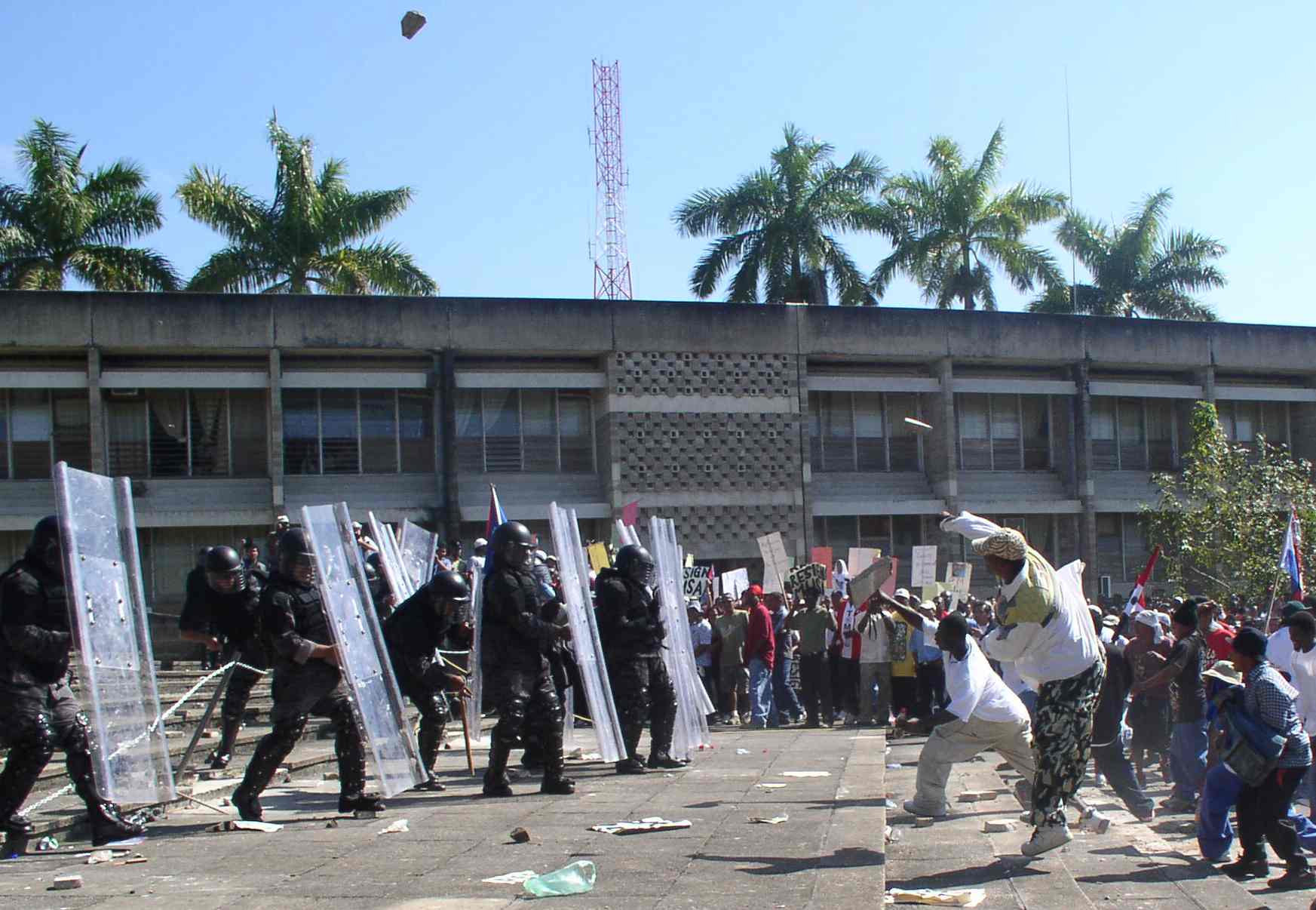
An improvised weapon is an object that was not designed to be used as a weapon but can be put to that use. They are generally used for self-defence or if the person is otherwise unarmed. In some cases, improvised weapons are commonly used by attackers in street fights, muggings, murders, gang warfare, during riots, or even during insurgencies, usually when conventional weapons such as firearms are unavailable or inappropriate.
Improvised weapons are common everyday objects that can be used in a variety of defensive applications. The objects are generally used in their normal state; they are not physically altered in any way to make them more functional as weapons.
Other than items designed as weapons, any object that can be used to cause bodily harm can be considered an improvised weapon. Examples of items that have been used as improvised weapons include:
Throughout history, common tools were used so often as weapons in self-defense that many of them evolved specifically into weapons or were adapted with the secondary purpose of being used in self-defense, usually by adding modifications to its design. Well-known examples include the Irish shillelagh, which was originally used as a walking stick; the Japanese bō, which may have originally been used to carry buckets and baskets; and the Buddhist monk's spade, a shovel monks used for burying corpses, which often had sharpened edges to help defend against bandits.[citation needed]
Many martial arts use common objects as weapons; Filipino martial arts such as Eskrima include practice with machetes, canes, bamboo spears, and knives as a result of the 333-year Spanish colonization in the Philippines that prohibited the ownership and use of standard swords and bladed weapons; Chinese martial arts and some Korean martial arts commonly feature the use of improvised weapons such as fans, hammers and staves. There are even some western martial arts that are based on improvised weapons, such as British quarterstaff fighting and Irish stick fighting.
After the German Peasants' Wars during 1524 and 1525, a 1542 fencing book edited by Paulus Hector Mair described fencing techniques using a scythe.
Because of the use of common objects as weapons in violent crimes, many countries have laws that prevent the use of some tools and other non-weapon objects to be used for causing harm. It is possible for a person to be detained or even arrested by a law enforcement official or security personnel for carrying a potentially-harmful object if there is no reasonable use for it. For example, it is legal and perfectly understandable for someone to possess a kitchen knife or a hammer and keep it for use in one's home, but it could be judged suspicious for someone to carry a kitchen knife or a hammer concealed on their person or in plain sight when walking down a city street.[citation needed]
There are places that prohibit people from entering with objects that may be used as weapons. Most public schools in North America do not allow their students to bring pocket knives, butter knives or chain-wallets, sometimes with harsh zero tolerance policies. Airports typically prohibit objects that could be used as weapons from being carried as a carry-on or in a carry-on bag into the aircraft cabin. The security repercussions after the September 11 attacks saw restrictions widely extended to cover even objects like nail clippers and spiked wristbands.
Hub AI
Improvised weapon AI simulator
(@Improvised weapon_simulator)
Improvised weapon
An improvised weapon is an object that was not designed to be used as a weapon but can be put to that use. They are generally used for self-defence or if the person is otherwise unarmed. In some cases, improvised weapons are commonly used by attackers in street fights, muggings, murders, gang warfare, during riots, or even during insurgencies, usually when conventional weapons such as firearms are unavailable or inappropriate.
Improvised weapons are common everyday objects that can be used in a variety of defensive applications. The objects are generally used in their normal state; they are not physically altered in any way to make them more functional as weapons.
Other than items designed as weapons, any object that can be used to cause bodily harm can be considered an improvised weapon. Examples of items that have been used as improvised weapons include:
Throughout history, common tools were used so often as weapons in self-defense that many of them evolved specifically into weapons or were adapted with the secondary purpose of being used in self-defense, usually by adding modifications to its design. Well-known examples include the Irish shillelagh, which was originally used as a walking stick; the Japanese bō, which may have originally been used to carry buckets and baskets; and the Buddhist monk's spade, a shovel monks used for burying corpses, which often had sharpened edges to help defend against bandits.[citation needed]
Many martial arts use common objects as weapons; Filipino martial arts such as Eskrima include practice with machetes, canes, bamboo spears, and knives as a result of the 333-year Spanish colonization in the Philippines that prohibited the ownership and use of standard swords and bladed weapons; Chinese martial arts and some Korean martial arts commonly feature the use of improvised weapons such as fans, hammers and staves. There are even some western martial arts that are based on improvised weapons, such as British quarterstaff fighting and Irish stick fighting.
After the German Peasants' Wars during 1524 and 1525, a 1542 fencing book edited by Paulus Hector Mair described fencing techniques using a scythe.
Because of the use of common objects as weapons in violent crimes, many countries have laws that prevent the use of some tools and other non-weapon objects to be used for causing harm. It is possible for a person to be detained or even arrested by a law enforcement official or security personnel for carrying a potentially-harmful object if there is no reasonable use for it. For example, it is legal and perfectly understandable for someone to possess a kitchen knife or a hammer and keep it for use in one's home, but it could be judged suspicious for someone to carry a kitchen knife or a hammer concealed on their person or in plain sight when walking down a city street.[citation needed]
There are places that prohibit people from entering with objects that may be used as weapons. Most public schools in North America do not allow their students to bring pocket knives, butter knives or chain-wallets, sometimes with harsh zero tolerance policies. Airports typically prohibit objects that could be used as weapons from being carried as a carry-on or in a carry-on bag into the aircraft cabin. The security repercussions after the September 11 attacks saw restrictions widely extended to cover even objects like nail clippers and spiked wristbands.