



Community hub
Recent from talks
Knowledge base stats:
Talk channels stats:
Members stats:
Indiana bat
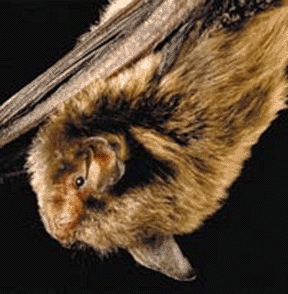
The Indiana bat (Myotis sodalis) is a medium-sized mouse-eared bat native to North America. It lives primarily in Southern and Midwestern U.S. states and is listed as an endangered species. The Indiana bat is grey, black, or chestnut in color and is 1.2–2.0 in long and weighs 4.5–9.5 g (0.16–0.34 oz). It is similar in appearance to the more common little brown bat, but is distinguished by its feet size, toe hair length, pink lips, and a keel on the calcar.
Indiana bats live in hardwood and hardwood-pine forests. It is common in old-growth forest and in agricultural land, mainly in forest, crop fields, and grasslands. As an insectivore, the bat eats both terrestrial and aquatic flying insects, such as moths, beetles, mosquitoes, and midges.
The Indiana bat is listed as an endangered species by the U.S. Fish and Wildlife Service. It has had serious population decline, estimated to be more than 50% over the past 10 years, based on direct observation and a decline on its extent of occurrence.
The length of the Indiana bat's head to the body is from 4.1 to 4.9 cm. The animal weighs about 8 g (.25 ounce). These bats are very difficult to distinguish from other species, especially the more common little brown bat (Myotis lucifugus), unless examined closely. The size of the feet, the length of the toe hairs, and the presence of a keel on the calcar are characteristics used to differentiate the Indiana bat from other bats. Indiana bats typically live 5 to 9 years, but some have reached 12 years of age. They can have fur from black to chestnut with a light gray to cinnamon belly. Unlike other common bats with brown hair and black lips, Indiana bats have brown hair and pink lips, which is helpful for identification.
Indiana bats spend the summer living throughout the eastern United States. During winter, however, they cluster together and hibernate in only a few caves. Since about 1975, their population has declined by about 50%. Based on a 1985 census of hibernating bats, the Indiana bat population is estimated around 244,000. About 23% of these bats hibernate in caves in Indiana. The Indiana bat lives in caves only in winter; but, there are few caves that provide the conditions necessary for hibernation. Stable, low temperatures are required to allow the bats to reduce their metabolic rates and conserve fat reserves. These bats hibernate in large, tight clusters which may contain thousands of individuals. Indiana bats feed entirely on night flying insects, and a colony of bats can consume millions of insects each night.[citation needed] The range of the Indiana bat overlaps with that of the more narrowly distributed Gray Bat (Myotis grisescens), also listed as endangered.
The Indiana bat was listed as federally endangered under the Endangered Species Preservation Act, on 11 March 1967, due to the dramatic decline of populations throughout their range. Reasons for the bat's decline include disturbance of colonies by human beings, pesticide use and loss of summer habitat resulting from the clearing of forest cover. As of 1973, the Indiana bat has been listed as endangered under the Endangered Species Act (as amended), and additionally protected by the Federal Cave Resources Protection Act of 1988, to protect hibernacula on federal lands. In 2013, Bat Conservation International listed this species as one of the 35 species of its worldwide priority list of conservation.
Indiana bat populations in the northeastern United States are crashing with the rapid spread of white-nose syndrome, the most devastating wildlife disease in recent history. By the end of 2011, this unprecedented threat had killed 5.7 to 6.7 million bats in the United States since its discovery in 2007 based on photographs taken in 2006. Among these, at least 15,662 Indiana bats died from WNS in 2008 alone (3.3% of the 2007 range wide population), and an estimated 95% of Pennsylvania's entire cave bat population has died.
Although becoming less common, direct and intentional killings by humans have occurred. On 23 October 2007, Lonnie W. Skaggs of Olive Hill, Kentucky, and Kaleb Dee Carpenter, of Grayson, Kentucky, entered Laurel Cave in Carter Caves State Park, Kentucky, and killed 23 Indiana bats. Skaggs re-entered the cave three days later and killed another 82 endangered Indiana bats. An investigation began when Carter Caves State Park employees discovered at least 105 dead Indiana bats. The two men admitted to knowingly slaughtering an endangered species, using flashlights and rocks to knock hibernating bats off their roosts, and smashing their bodies with rocks. Bats that attempted to escape by flying away were knocked down from the air. The men stomped bats to death, bludgeoned them with flashlights, and crushed their bodies with rocks in several areas of the hibernaculum. BCI worked with the Kentucky Department of Fish & Wildlife Resources to establish a reward fund and provided the initial contribution. The reward quickly grew to $5,000 with support from the Southeastern Bat Diversity Network and Defenders of Wildlife and was widely reported, and the two men were caught following an anonymous tip. This incident was called a "senseless killing" by James Gale, Special Agent-in-Charge for the USFWS Southeast Region, and resulted in conviction. They pleaded guilty to violating the federal Endangered Species Act. U.S. Magistrate Judge Edward Atkins sentenced Skaggs to eight months in federal prison, and placed Carpenter on three years' probation. The case marks the first time nationwide that individuals were sentenced for killing endangered Indiana bats. BCI thanked members and donors for allowing them to help protect these bats and work toward a time when such killings finally cease.
Hub AI
Indiana bat AI simulator
(@Indiana bat_simulator)
Indiana bat
The Indiana bat (Myotis sodalis) is a medium-sized mouse-eared bat native to North America. It lives primarily in Southern and Midwestern U.S. states and is listed as an endangered species. The Indiana bat is grey, black, or chestnut in color and is 1.2–2.0 in long and weighs 4.5–9.5 g (0.16–0.34 oz). It is similar in appearance to the more common little brown bat, but is distinguished by its feet size, toe hair length, pink lips, and a keel on the calcar.
Indiana bats live in hardwood and hardwood-pine forests. It is common in old-growth forest and in agricultural land, mainly in forest, crop fields, and grasslands. As an insectivore, the bat eats both terrestrial and aquatic flying insects, such as moths, beetles, mosquitoes, and midges.
The Indiana bat is listed as an endangered species by the U.S. Fish and Wildlife Service. It has had serious population decline, estimated to be more than 50% over the past 10 years, based on direct observation and a decline on its extent of occurrence.
The length of the Indiana bat's head to the body is from 4.1 to 4.9 cm. The animal weighs about 8 g (.25 ounce). These bats are very difficult to distinguish from other species, especially the more common little brown bat (Myotis lucifugus), unless examined closely. The size of the feet, the length of the toe hairs, and the presence of a keel on the calcar are characteristics used to differentiate the Indiana bat from other bats. Indiana bats typically live 5 to 9 years, but some have reached 12 years of age. They can have fur from black to chestnut with a light gray to cinnamon belly. Unlike other common bats with brown hair and black lips, Indiana bats have brown hair and pink lips, which is helpful for identification.
Indiana bats spend the summer living throughout the eastern United States. During winter, however, they cluster together and hibernate in only a few caves. Since about 1975, their population has declined by about 50%. Based on a 1985 census of hibernating bats, the Indiana bat population is estimated around 244,000. About 23% of these bats hibernate in caves in Indiana. The Indiana bat lives in caves only in winter; but, there are few caves that provide the conditions necessary for hibernation. Stable, low temperatures are required to allow the bats to reduce their metabolic rates and conserve fat reserves. These bats hibernate in large, tight clusters which may contain thousands of individuals. Indiana bats feed entirely on night flying insects, and a colony of bats can consume millions of insects each night.[citation needed] The range of the Indiana bat overlaps with that of the more narrowly distributed Gray Bat (Myotis grisescens), also listed as endangered.
The Indiana bat was listed as federally endangered under the Endangered Species Preservation Act, on 11 March 1967, due to the dramatic decline of populations throughout their range. Reasons for the bat's decline include disturbance of colonies by human beings, pesticide use and loss of summer habitat resulting from the clearing of forest cover. As of 1973, the Indiana bat has been listed as endangered under the Endangered Species Act (as amended), and additionally protected by the Federal Cave Resources Protection Act of 1988, to protect hibernacula on federal lands. In 2013, Bat Conservation International listed this species as one of the 35 species of its worldwide priority list of conservation.
Indiana bat populations in the northeastern United States are crashing with the rapid spread of white-nose syndrome, the most devastating wildlife disease in recent history. By the end of 2011, this unprecedented threat had killed 5.7 to 6.7 million bats in the United States since its discovery in 2007 based on photographs taken in 2006. Among these, at least 15,662 Indiana bats died from WNS in 2008 alone (3.3% of the 2007 range wide population), and an estimated 95% of Pennsylvania's entire cave bat population has died.
Although becoming less common, direct and intentional killings by humans have occurred. On 23 October 2007, Lonnie W. Skaggs of Olive Hill, Kentucky, and Kaleb Dee Carpenter, of Grayson, Kentucky, entered Laurel Cave in Carter Caves State Park, Kentucky, and killed 23 Indiana bats. Skaggs re-entered the cave three days later and killed another 82 endangered Indiana bats. An investigation began when Carter Caves State Park employees discovered at least 105 dead Indiana bats. The two men admitted to knowingly slaughtering an endangered species, using flashlights and rocks to knock hibernating bats off their roosts, and smashing their bodies with rocks. Bats that attempted to escape by flying away were knocked down from the air. The men stomped bats to death, bludgeoned them with flashlights, and crushed their bodies with rocks in several areas of the hibernaculum. BCI worked with the Kentucky Department of Fish & Wildlife Resources to establish a reward fund and provided the initial contribution. The reward quickly grew to $5,000 with support from the Southeastern Bat Diversity Network and Defenders of Wildlife and was widely reported, and the two men were caught following an anonymous tip. This incident was called a "senseless killing" by James Gale, Special Agent-in-Charge for the USFWS Southeast Region, and resulted in conviction. They pleaded guilty to violating the federal Endangered Species Act. U.S. Magistrate Judge Edward Atkins sentenced Skaggs to eight months in federal prison, and placed Carpenter on three years' probation. The case marks the first time nationwide that individuals were sentenced for killing endangered Indiana bats. BCI thanked members and donors for allowing them to help protect these bats and work toward a time when such killings finally cease.