



Community hub
Recent from talks
Knowledge base stats:
Talk channels stats:
Members stats:
Injuries in netball
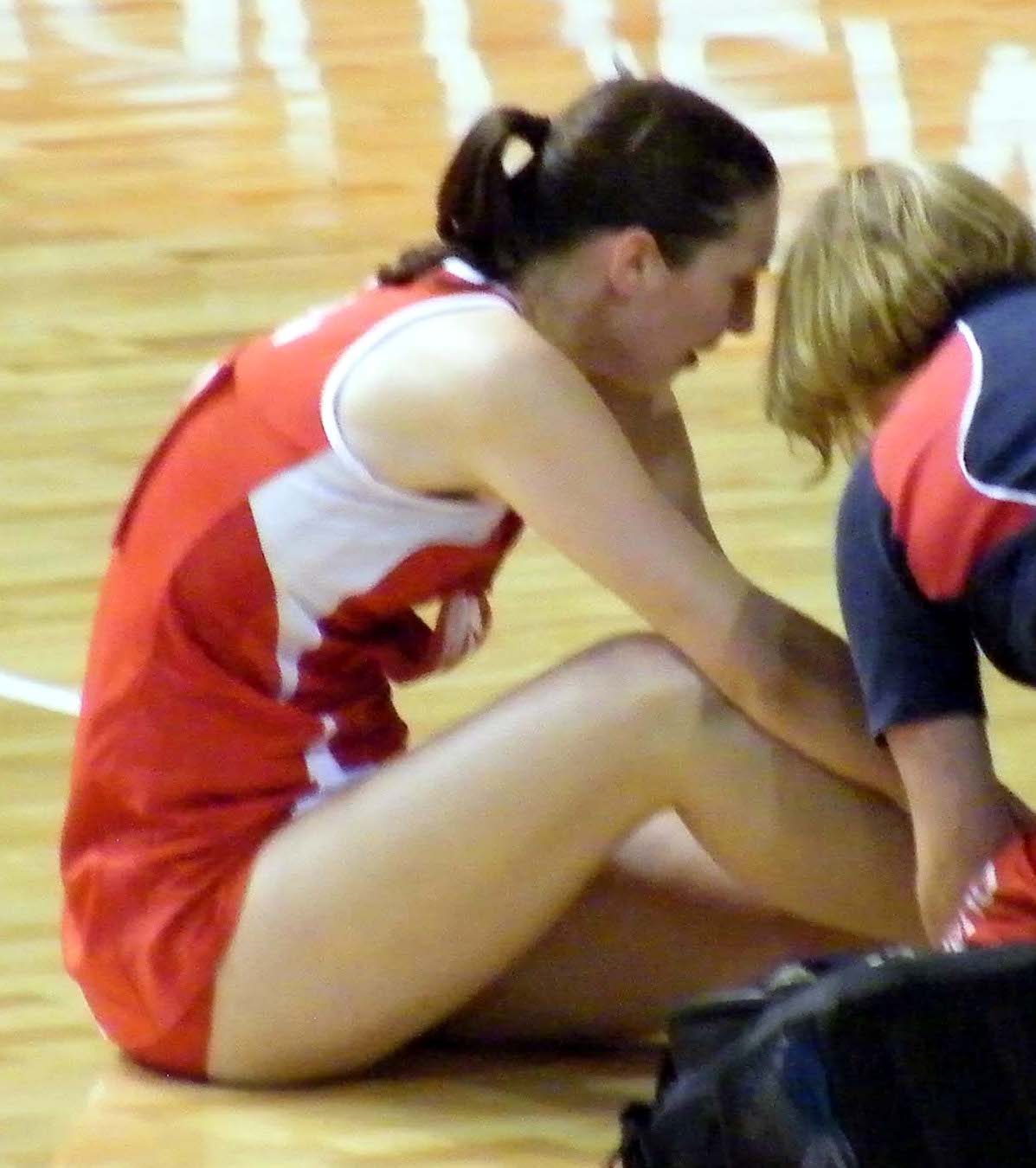
Netball is a sport that has one of the largest female participation rates within the Commonwealth, most popular in the United Kingdom, Australia and New Zealand, with more than 20 million athletes participating in the sport. Netball is a ball sport played by two teams of seven players in which goals are scored by shooting the ball through a netted ring. Netball relies heavily on muscular endurance and bursts of rapid acceleration to “break free” from an opponent as well as, sudden and rapid change of directions in combination with jumping to receive a pass, intercept a ball or rebound. The sudden stop-start motion of the game is what often leads to serious injuries in participants. Higher grade players, in both senior and junior competitions, are more susceptible to injuries than lower grade players, due to the high intensity and rapid pace of the game. An injury is most commonly defined as one that has occurred while participating in sport and which led to one of the following consequences: a reduction in the amount or level of sports activity; need for medical advice or treatment; and/or adverse economic or social effects for the athlete.
A soft tissue injury is the damage of muscles, ligaments or tendons in the body. The most common soft tissue injuries in netball occur to the ankles, knees and hands. The main cause of these injuries is due to incorrect landing. Other factors influencing injury include; tripping, collisions with other players, being struck by the ball, over-exertion and fatigue.
In netball the ankle joint is most susceptible to injury and accounts for 31% of the injuries sustained in the sport. A sprained ankle is a tear or complete rupture of a ligament. The most commonly injured ligament is the Anterior Talofibular Ligament. This ligament is on the outside of the ankle and injury occurs when the sole of the foot rolls inwards. A minor sprain may only need a week to recover, however severe ankle sprains can result in a player being out for 6–10 weeks.
Knee injuries are the second most common injury in netball and are the most serious in regards to cost and disability. Studies show that majority of knee injuries are new injuries, and those who sustain a knee injury often withdraw from participation in netball. The most common knee injuries are meniscal and major ligament sprains/ruptures. The most commonly injured ligament is the Anterior Cruciate Ligament(ACL). The ACL allows a twisting motion at the knee. Common symptoms of an ACL rupture include a “popping” sound at the time of the injury, severe pain, swelling and a feeling of instability. ACL injuries are difficult to effectively diagnose without the assistance of Medical Resonance Imaging (MRI). A ruptured ACL will require knee reconstruction surgery that will result in the athlete being out of the game for 9–12 months.
Hand injuries usually involve joint ligamentous sprains and fractures. Children most commonly injure hands, in particular their fingers. “Other” types of injuries in netball vary including; lower leg strain, quadriceps haematoma, rotator cuff shoulder problems, an elbow joint dislocation, a radial fracture, and back problems.
As soon as an injury occurs game time must be held until the player has been properly assessed and removed from the court if need be. It is essential that players seek immediate help from a qualified first aid provider or health practitioner. Any netball injury should be treated by using the P.R.I.C.E.S., D.R.S.A.B.C., T.O.T.A.P.S. AND R.I.C.E.R. regimes:
P - Protect
R - Rest
Hub AI
Injuries in netball AI simulator
(@Injuries in netball_simulator)
Injuries in netball
Netball is a sport that has one of the largest female participation rates within the Commonwealth, most popular in the United Kingdom, Australia and New Zealand, with more than 20 million athletes participating in the sport. Netball is a ball sport played by two teams of seven players in which goals are scored by shooting the ball through a netted ring. Netball relies heavily on muscular endurance and bursts of rapid acceleration to “break free” from an opponent as well as, sudden and rapid change of directions in combination with jumping to receive a pass, intercept a ball or rebound. The sudden stop-start motion of the game is what often leads to serious injuries in participants. Higher grade players, in both senior and junior competitions, are more susceptible to injuries than lower grade players, due to the high intensity and rapid pace of the game. An injury is most commonly defined as one that has occurred while participating in sport and which led to one of the following consequences: a reduction in the amount or level of sports activity; need for medical advice or treatment; and/or adverse economic or social effects for the athlete.
A soft tissue injury is the damage of muscles, ligaments or tendons in the body. The most common soft tissue injuries in netball occur to the ankles, knees and hands. The main cause of these injuries is due to incorrect landing. Other factors influencing injury include; tripping, collisions with other players, being struck by the ball, over-exertion and fatigue.
In netball the ankle joint is most susceptible to injury and accounts for 31% of the injuries sustained in the sport. A sprained ankle is a tear or complete rupture of a ligament. The most commonly injured ligament is the Anterior Talofibular Ligament. This ligament is on the outside of the ankle and injury occurs when the sole of the foot rolls inwards. A minor sprain may only need a week to recover, however severe ankle sprains can result in a player being out for 6–10 weeks.
Knee injuries are the second most common injury in netball and are the most serious in regards to cost and disability. Studies show that majority of knee injuries are new injuries, and those who sustain a knee injury often withdraw from participation in netball. The most common knee injuries are meniscal and major ligament sprains/ruptures. The most commonly injured ligament is the Anterior Cruciate Ligament(ACL). The ACL allows a twisting motion at the knee. Common symptoms of an ACL rupture include a “popping” sound at the time of the injury, severe pain, swelling and a feeling of instability. ACL injuries are difficult to effectively diagnose without the assistance of Medical Resonance Imaging (MRI). A ruptured ACL will require knee reconstruction surgery that will result in the athlete being out of the game for 9–12 months.
Hand injuries usually involve joint ligamentous sprains and fractures. Children most commonly injure hands, in particular their fingers. “Other” types of injuries in netball vary including; lower leg strain, quadriceps haematoma, rotator cuff shoulder problems, an elbow joint dislocation, a radial fracture, and back problems.
As soon as an injury occurs game time must be held until the player has been properly assessed and removed from the court if need be. It is essential that players seek immediate help from a qualified first aid provider or health practitioner. Any netball injury should be treated by using the P.R.I.C.E.S., D.R.S.A.B.C., T.O.T.A.P.S. AND R.I.C.E.R. regimes:
P - Protect
R - Rest