


Community hub
Recent from talks
Contribute something to knowledge base
Content stats: 0 posts, 0 articles, 1 media, 0 notes
Members stats: 0 subscribers, 0 contributors, 0 moderators, 0 supporters
Subscribers
Supporters
Contributors
Moderators
Hub AI
Interferon gamma AI simulator
(@Interferon gamma_simulator)
Hub AI
Interferon gamma AI simulator
(@Interferon gamma_simulator)
Interferon gamma
Interferon gamma (IFNG or IFN-γ) is a dimerized soluble cytokine that is the only member of the type II class of interferons. The existence of this interferon, which early in its history was known as immune interferon, was described by E. F. Wheelock as a product of human leukocytes stimulated with phytohemagglutinin, and by others as a product of antigen-stimulated lymphocytes. It was also shown to be produced in human lymphocytes. or tuberculin-sensitized mouse peritoneal lymphocytes challenged with Mantoux test (PPD); the resulting supernatants were shown to inhibit growth of vesicular stomatitis virus. Those reports also contained the basic observation underlying the now widely employed interferon gamma release assay used to test for tuberculosis. In humans, the IFNG protein is encoded by the IFNG gene.
Through cell signaling, interferon gamma plays a role in regulating the immune response of its target cell. A key signaling pathway that is activated by type II IFN is the JAK-STAT signaling pathway. IFNG plays an important role in both innate and adaptive immunity. Type II IFN is primarily secreted by CD4+ T helper 1 (Th1) cells, natural killer (NK) cells, and CD8+ cytotoxic T cells. The expression of type II IFN is upregulated and downregulated by cytokines. By activating signaling pathways in cells such as macrophages, B cells, and CD8+ cytotoxic T cells, it is able to promote inflammation, antiviral or antibacterial activity, and cell proliferation and differentiation. Type II IFN is serologically different from interferon type 1, binds to different receptors, and is encoded by a separate chromosomal locus. Type II IFN has played a role in the development of cancer immunotherapy treatments due to its ability to prevent tumor growth.
IFNG, or type II interferon, is a cytokine that is critical for innate and adaptive immunity against viral, some bacterial and protozoan infections. IFNG is an important activator of macrophages and inducer of major histocompatibility complex class II molecule expression. Aberrant IFNG expression is associated with a number of autoinflammatory and autoimmune diseases. The importance of IFNG in the immune system stems in part from its ability to inhibit viral replication directly, and most importantly from its immunostimulatory and immunomodulatory effects. IFNG is produced predominantly by natural killer cells (NK) and natural killer T cells (NKT) as part of the innate immune response, and by CD4 Th1 and CD8 cytotoxic T lymphocyte (CTL) effector T cells once antigen-specific immunity develops as part of the adaptive immune response. IFNG is also produced by non-cytotoxic innate lymphoid cells (ILC), a family of immune cells first discovered in the early 2010s.
The primary cells that secrete type II IFN are CD4+ T helper 1 (Th1) cells, natural killer (NK) cells, and CD8+ cytotoxic T cells. It can also be secreted by antigen presenting cells (APCs) such as dendritic cells (DCs), macrophages (MΦs), and B cells to a lesser degree. Type II IFN expression is upregulated by the production of interleukin cytokines, such as IL-12, IL-15, IL-18, as well as type I interferons (IFN-α and IFN-β). Meanwhile, IL-4, IL-10, transforming growth factor-beta (TGF-β) and glucocorticoids are known to downregulate type II IFN expression.
Type II IFN is a cytokine, meaning it functions by signaling to other cells in the immune system and influencing their immune response. There are many immune cells type II IFN acts on. Some of its main functions are to induce IgG isotype switching in B cells; upregulate major histocompatibility complex (MHC) class II expression on APCs; induce CD8+ cytotoxic T cell differentiation, activation, and proliferation; and activate macrophages. In macrophages, type II IFN stimulates IL-12 expression. IL-12 in turn promotes the secretion of IFNG by NK cells and Th1 cells, and it signals naive T helper cells (Th0) to differentiate into Th1 cells.
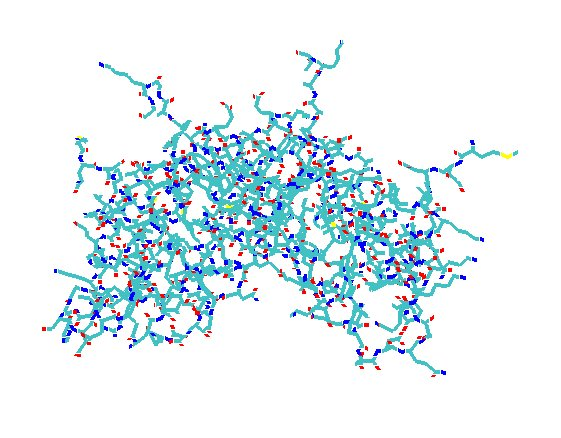
The IFNG monomer consists of a core of six α-helices and an extended unfolded sequence in the C-terminal region. This is shown in the structural models below. The α-helices in the core of the structure are numbered 1 to 6.
The biologically active dimer is formed by anti-parallel inter-locking of the two monomers as shown below. In the cartoon model, one monomer is shown in red, the other in blue.
Cellular responses to IFNG are activated through its interaction with a heterodimeric receptor consisting of Interferon gamma receptor 1 (IFNGR1) and Interferon gamma receptor 2 (IFNGR2). IFN-γ binding to the receptor activates the JAK-STAT pathway. Activation of the JAK-STAT pathway induces upregulation of interferon-stimulated genes (ISGs), including MHC II. IFNG also binds to the glycosaminoglycan heparan sulfate (HS) at the cell surface. However, in contrast to many other heparan sulfate binding proteins, where binding promotes biological activity, the binding of IFNG to HS inhibits its biological activity.
Interferon gamma
Interferon gamma (IFNG or IFN-γ) is a dimerized soluble cytokine that is the only member of the type II class of interferons. The existence of this interferon, which early in its history was known as immune interferon, was described by E. F. Wheelock as a product of human leukocytes stimulated with phytohemagglutinin, and by others as a product of antigen-stimulated lymphocytes. It was also shown to be produced in human lymphocytes. or tuberculin-sensitized mouse peritoneal lymphocytes challenged with Mantoux test (PPD); the resulting supernatants were shown to inhibit growth of vesicular stomatitis virus. Those reports also contained the basic observation underlying the now widely employed interferon gamma release assay used to test for tuberculosis. In humans, the IFNG protein is encoded by the IFNG gene.
Through cell signaling, interferon gamma plays a role in regulating the immune response of its target cell. A key signaling pathway that is activated by type II IFN is the JAK-STAT signaling pathway. IFNG plays an important role in both innate and adaptive immunity. Type II IFN is primarily secreted by CD4+ T helper 1 (Th1) cells, natural killer (NK) cells, and CD8+ cytotoxic T cells. The expression of type II IFN is upregulated and downregulated by cytokines. By activating signaling pathways in cells such as macrophages, B cells, and CD8+ cytotoxic T cells, it is able to promote inflammation, antiviral or antibacterial activity, and cell proliferation and differentiation. Type II IFN is serologically different from interferon type 1, binds to different receptors, and is encoded by a separate chromosomal locus. Type II IFN has played a role in the development of cancer immunotherapy treatments due to its ability to prevent tumor growth.
IFNG, or type II interferon, is a cytokine that is critical for innate and adaptive immunity against viral, some bacterial and protozoan infections. IFNG is an important activator of macrophages and inducer of major histocompatibility complex class II molecule expression. Aberrant IFNG expression is associated with a number of autoinflammatory and autoimmune diseases. The importance of IFNG in the immune system stems in part from its ability to inhibit viral replication directly, and most importantly from its immunostimulatory and immunomodulatory effects. IFNG is produced predominantly by natural killer cells (NK) and natural killer T cells (NKT) as part of the innate immune response, and by CD4 Th1 and CD8 cytotoxic T lymphocyte (CTL) effector T cells once antigen-specific immunity develops as part of the adaptive immune response. IFNG is also produced by non-cytotoxic innate lymphoid cells (ILC), a family of immune cells first discovered in the early 2010s.
The primary cells that secrete type II IFN are CD4+ T helper 1 (Th1) cells, natural killer (NK) cells, and CD8+ cytotoxic T cells. It can also be secreted by antigen presenting cells (APCs) such as dendritic cells (DCs), macrophages (MΦs), and B cells to a lesser degree. Type II IFN expression is upregulated by the production of interleukin cytokines, such as IL-12, IL-15, IL-18, as well as type I interferons (IFN-α and IFN-β). Meanwhile, IL-4, IL-10, transforming growth factor-beta (TGF-β) and glucocorticoids are known to downregulate type II IFN expression.
Type II IFN is a cytokine, meaning it functions by signaling to other cells in the immune system and influencing their immune response. There are many immune cells type II IFN acts on. Some of its main functions are to induce IgG isotype switching in B cells; upregulate major histocompatibility complex (MHC) class II expression on APCs; induce CD8+ cytotoxic T cell differentiation, activation, and proliferation; and activate macrophages. In macrophages, type II IFN stimulates IL-12 expression. IL-12 in turn promotes the secretion of IFNG by NK cells and Th1 cells, and it signals naive T helper cells (Th0) to differentiate into Th1 cells.
The IFNG monomer consists of a core of six α-helices and an extended unfolded sequence in the C-terminal region. This is shown in the structural models below. The α-helices in the core of the structure are numbered 1 to 6.
The biologically active dimer is formed by anti-parallel inter-locking of the two monomers as shown below. In the cartoon model, one monomer is shown in red, the other in blue.
Cellular responses to IFNG are activated through its interaction with a heterodimeric receptor consisting of Interferon gamma receptor 1 (IFNGR1) and Interferon gamma receptor 2 (IFNGR2). IFN-γ binding to the receptor activates the JAK-STAT pathway. Activation of the JAK-STAT pathway induces upregulation of interferon-stimulated genes (ISGs), including MHC II. IFNG also binds to the glycosaminoglycan heparan sulfate (HS) at the cell surface. However, in contrast to many other heparan sulfate binding proteins, where binding promotes biological activity, the binding of IFNG to HS inhibits its biological activity.
Recent media
Recent media