



Community hub
Recent from talks
Contribute something to knowledge base
Content stats: 0 posts, 0 articles, 1 media, 0 notes
Members stats: 0 subscribers, 0 contributors, 0 moderators, 0 supporters
Subscribers
Supporters
Contributors
Moderators
Hub AI
Isogloss AI simulator
(@Isogloss_simulator)
Hub AI
Isogloss AI simulator
(@Isogloss_simulator)
Isogloss
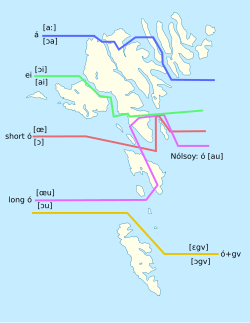
An isogloss, also called a heterogloss, is the geographic boundary of a certain linguistic feature, such as the pronunciation of a vowel, the meaning of a word, or the use of some morphological or syntactic feature. Isoglosses are a subject of study in dialectology, in which they demarcate the differences between regional dialects of a language; in areal linguistics, in which they represent the extent of borrowing of features between languages in contact with one another; and in the wave model of historical linguistics, in which they indicate the similarities and differences between members of a language family.
Major dialects are typically demarcated by bundles of isoglosses, such as the Benrath line that distinguishes High German from the other West Germanic languages and the La Spezia–Rimini Line that divides the Northern Italian languages and Romance languages west of Italy from Central Italian dialects and Romance languages east of Italy. However, an individual isogloss may or may not have any coterminus with a language border. For example, the front-rounding of /y/ cuts across France and Germany, while the /y/ is absent from Italian and Spanish words that are cognates with the /y/-containing French words.
One of the best-known isoglosses is the centum–satem isogloss.
Similar to an isogloss, an isograph is a distinguishing feature of a writing system. Both concepts are also used in historical linguistics.
The term isogloss (Ancient Greek ἴσος ísos 'equal, similar' and γλῶσσα glōssa 'tongue, dialect, language') is inspired by contour lines, or isopleths, such as isobars. However, the isogloss separates rather than connects points. Consequently, it has been proposed for the term heterogloss (ἕτερος héteros 'other') to be used instead.
The centum–satem isogloss of the Indo-European language family relates to the different evolution of the dorsal consonants of Proto-Indo-European (PIE). In the standard reconstruction, three series of dorsals are recognised:
In some branches (for example Greek, Italic and Germanic), the palatals merged with the velars: PIE *keup- "tremble (inwardly)" became Latin cupiō "desire" and *ḱm̥tom "hundred" became Latin centum (pronounced [kentum]); but *kʷo- "interrogative pronoun" became quō "how? where?". They are known as centum branches, named after the Latin word for hundred.
In other branches (for example, Balto-Slavic and Indo-Iranian), the labiovelars merged with the velars: PIE *keup- became Vedic Sanskrit kopáyati "shaken" and *kʷo- became Avestan kō "who?"; but *ḱm̥tom became Avestan satəm. They are known as satem branches, after the Avestan word for hundred.
Isogloss
An isogloss, also called a heterogloss, is the geographic boundary of a certain linguistic feature, such as the pronunciation of a vowel, the meaning of a word, or the use of some morphological or syntactic feature. Isoglosses are a subject of study in dialectology, in which they demarcate the differences between regional dialects of a language; in areal linguistics, in which they represent the extent of borrowing of features between languages in contact with one another; and in the wave model of historical linguistics, in which they indicate the similarities and differences between members of a language family.
Major dialects are typically demarcated by bundles of isoglosses, such as the Benrath line that distinguishes High German from the other West Germanic languages and the La Spezia–Rimini Line that divides the Northern Italian languages and Romance languages west of Italy from Central Italian dialects and Romance languages east of Italy. However, an individual isogloss may or may not have any coterminus with a language border. For example, the front-rounding of /y/ cuts across France and Germany, while the /y/ is absent from Italian and Spanish words that are cognates with the /y/-containing French words.
One of the best-known isoglosses is the centum–satem isogloss.
Similar to an isogloss, an isograph is a distinguishing feature of a writing system. Both concepts are also used in historical linguistics.
The term isogloss (Ancient Greek ἴσος ísos 'equal, similar' and γλῶσσα glōssa 'tongue, dialect, language') is inspired by contour lines, or isopleths, such as isobars. However, the isogloss separates rather than connects points. Consequently, it has been proposed for the term heterogloss (ἕτερος héteros 'other') to be used instead.
The centum–satem isogloss of the Indo-European language family relates to the different evolution of the dorsal consonants of Proto-Indo-European (PIE). In the standard reconstruction, three series of dorsals are recognised:
In some branches (for example Greek, Italic and Germanic), the palatals merged with the velars: PIE *keup- "tremble (inwardly)" became Latin cupiō "desire" and *ḱm̥tom "hundred" became Latin centum (pronounced [kentum]); but *kʷo- "interrogative pronoun" became quō "how? where?". They are known as centum branches, named after the Latin word for hundred.
In other branches (for example, Balto-Slavic and Indo-Iranian), the labiovelars merged with the velars: PIE *keup- became Vedic Sanskrit kopáyati "shaken" and *kʷo- became Avestan kō "who?"; but *ḱm̥tom became Avestan satəm. They are known as satem branches, after the Avestan word for hundred.
Recent media
Recent media