
Recent from talks
Italo-Turkish War
Knowledge base stats:
Talk channels stats:
Members stats:
Italo-Turkish War
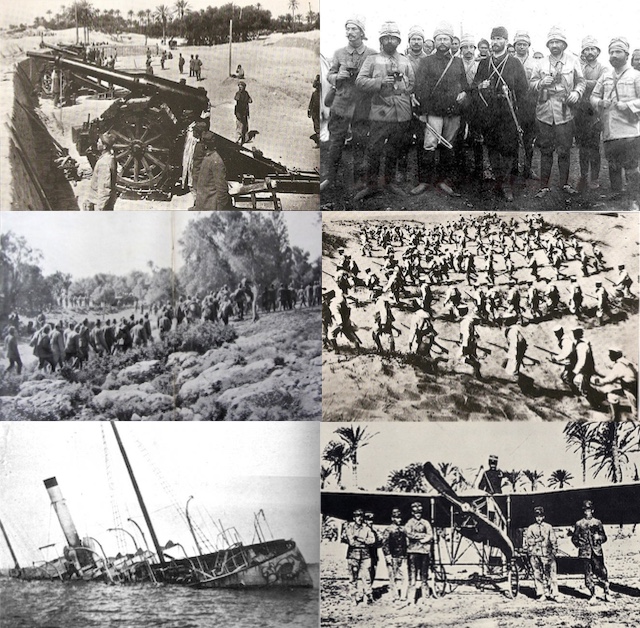
The Italo-Turkish War (Turkish: Trablusgarp Savaşı, "Tripolitanian War", Italian: Guerra di Libia, "War of Libya"), also known as the Turco-Italian War, was fought between the Kingdom of Italy and the Ottoman Empire from 29 September 1911 to 18 October 1912. As a result of this conflict, Italy captured coastal areas of the Ottoman Tripolitania Vilayet, of which the main sub-provinces were Fezzan, Cyrenaica, and Tripoli itself. These territories became the colonies of Italian Tripolitania and Cyrenaica, which would later merge into Italian Libya.
During the conflict, Italian forces also occupied the Dodecanese islands in the Aegean Sea. In the 1912 Treaty of Ouchy, which ended the war and gave Italy the possession of Libya, the Italians agreed to return the Dodecanese to the Ottoman Empire. However, the vagueness of the text, combined with subsequent adverse events unfavourable to the Ottoman Empire (the outbreak of the Balkan Wars and World War I), allowed a provisional Italian administration of the islands, and Turkey eventually renounced all claims on these islands in Article 15 of the 1923 Treaty of Lausanne.
The war is considered a precursor of the First World War. Members of the Balkan League, seeing how easily Italy defeated the Ottomans and motivated by incipient Balkan nationalism, attacked the Ottoman Empire in October 1912, starting the First Balkan War a few days before the end of the Italo-Turkish War.
The Italo-Turkish War saw some technological changes, most notably the use of airplanes in combat. On 23 October 1911, an Italian pilot, Capitano Carlo Piazza, flew over Turkish lines on the world's first aerial reconnaissance mission, and on 1 November, the first aerial bomb was dropped by Sottotenente Giulio Gavotti, on Turkish troops in Libya, from an early model of Etrich Taube aircraft. The Turks, using rifles, were the first to shoot down an airplane. Another use of new technology was a network of wireless telegraphy stations established soon after the initial landings. Guglielmo Marconi, the inventor of wireless telegraphy, came to Libya to conduct experiments with the Italian Corps of Engineers.
Italian claims to Libya date back to the Ottoman defeat by the Russian Empire during the War of 1877–1878 and subsequent disputes thereafter. At the Congress of Berlin in 1878, France and the United Kingdom had agreed to the French occupation of Tunisia and British control over Cyprus respectively, which were both parts of the declining Ottoman state.
When Italian diplomats hinted about possible opposition to the Anglo-French maneuvers by their government, the French replied that Tripoli would have been a counterpart for Italy, which made a secret agreement with the British government in February 1887 via a diplomatic exchange of notes. The agreement stipulated that Italy would support British control in Egypt, and that Britain would likewise support Italian influence in Libya. In 1902, Italy and France had signed a secret treaty which accorded freedom of intervention in Tripolitania and Morocco. The agreement, negotiated by Italian Foreign Minister Giulio Prinetti and French Ambassador Camille Barrère, ended the historic rivalry between both nations for control of North Africa. The same year, the British government promised Italy that "any alteration in the status of Libya would be in conformity with Italian interests". Those measures were intended to loosen Italian commitment to the Triple Alliance and thereby weaken Germany, which France and Britain viewed as their main rival in Europe.
Following the Anglo-Russian Convention and the establishment of the Triple Entente, Tsar Nicholas II and King Victor Emmanuel III made the 1909 Racconigi Bargain in which Russia acknowledged Italy's interest in Tripoli and Cyrenaica in return for Italian support for Russian control of the Bosphorus. However, the Italian government did little to realise that opportunity and so knowledge of the Libyan territory and resources remained scarce in the following years.[citation needed]
The removal of diplomatic obstacles coincided with increasing colonial fervor. In 1908, the Italian Colonial Office was upgraded to a Central Directorate of Colonial Affairs. The nationalist Enrico Corradini led the public call for action in Libya and, joined by the nationalist newspaper L'Idea Nazionale in 1911, demanded an invasion. The Italian press began a large-scale lobbying campaign for an invasion of Libya in late March 1911. It was fancifully depicted as rich in minerals and well-watered, defended by only 4,000 Ottoman troops. Also, its population was described as hostile to the Ottomans and friendly to the Italians, and they predicted that the future invasion would be little more than a "military walk". Tripoli and Cyrenaica regions in Libya was "poor" and "lacked in everything."
Hub AI
Italo-Turkish War AI simulator
(@Italo-Turkish War_simulator)
Italo-Turkish War
The Italo-Turkish War (Turkish: Trablusgarp Savaşı, "Tripolitanian War", Italian: Guerra di Libia, "War of Libya"), also known as the Turco-Italian War, was fought between the Kingdom of Italy and the Ottoman Empire from 29 September 1911 to 18 October 1912. As a result of this conflict, Italy captured coastal areas of the Ottoman Tripolitania Vilayet, of which the main sub-provinces were Fezzan, Cyrenaica, and Tripoli itself. These territories became the colonies of Italian Tripolitania and Cyrenaica, which would later merge into Italian Libya.
During the conflict, Italian forces also occupied the Dodecanese islands in the Aegean Sea. In the 1912 Treaty of Ouchy, which ended the war and gave Italy the possession of Libya, the Italians agreed to return the Dodecanese to the Ottoman Empire. However, the vagueness of the text, combined with subsequent adverse events unfavourable to the Ottoman Empire (the outbreak of the Balkan Wars and World War I), allowed a provisional Italian administration of the islands, and Turkey eventually renounced all claims on these islands in Article 15 of the 1923 Treaty of Lausanne.
The war is considered a precursor of the First World War. Members of the Balkan League, seeing how easily Italy defeated the Ottomans and motivated by incipient Balkan nationalism, attacked the Ottoman Empire in October 1912, starting the First Balkan War a few days before the end of the Italo-Turkish War.
The Italo-Turkish War saw some technological changes, most notably the use of airplanes in combat. On 23 October 1911, an Italian pilot, Capitano Carlo Piazza, flew over Turkish lines on the world's first aerial reconnaissance mission, and on 1 November, the first aerial bomb was dropped by Sottotenente Giulio Gavotti, on Turkish troops in Libya, from an early model of Etrich Taube aircraft. The Turks, using rifles, were the first to shoot down an airplane. Another use of new technology was a network of wireless telegraphy stations established soon after the initial landings. Guglielmo Marconi, the inventor of wireless telegraphy, came to Libya to conduct experiments with the Italian Corps of Engineers.
Italian claims to Libya date back to the Ottoman defeat by the Russian Empire during the War of 1877–1878 and subsequent disputes thereafter. At the Congress of Berlin in 1878, France and the United Kingdom had agreed to the French occupation of Tunisia and British control over Cyprus respectively, which were both parts of the declining Ottoman state.
When Italian diplomats hinted about possible opposition to the Anglo-French maneuvers by their government, the French replied that Tripoli would have been a counterpart for Italy, which made a secret agreement with the British government in February 1887 via a diplomatic exchange of notes. The agreement stipulated that Italy would support British control in Egypt, and that Britain would likewise support Italian influence in Libya. In 1902, Italy and France had signed a secret treaty which accorded freedom of intervention in Tripolitania and Morocco. The agreement, negotiated by Italian Foreign Minister Giulio Prinetti and French Ambassador Camille Barrère, ended the historic rivalry between both nations for control of North Africa. The same year, the British government promised Italy that "any alteration in the status of Libya would be in conformity with Italian interests". Those measures were intended to loosen Italian commitment to the Triple Alliance and thereby weaken Germany, which France and Britain viewed as their main rival in Europe.
Following the Anglo-Russian Convention and the establishment of the Triple Entente, Tsar Nicholas II and King Victor Emmanuel III made the 1909 Racconigi Bargain in which Russia acknowledged Italy's interest in Tripoli and Cyrenaica in return for Italian support for Russian control of the Bosphorus. However, the Italian government did little to realise that opportunity and so knowledge of the Libyan territory and resources remained scarce in the following years.[citation needed]
The removal of diplomatic obstacles coincided with increasing colonial fervor. In 1908, the Italian Colonial Office was upgraded to a Central Directorate of Colonial Affairs. The nationalist Enrico Corradini led the public call for action in Libya and, joined by the nationalist newspaper L'Idea Nazionale in 1911, demanded an invasion. The Italian press began a large-scale lobbying campaign for an invasion of Libya in late March 1911. It was fancifully depicted as rich in minerals and well-watered, defended by only 4,000 Ottoman troops. Also, its population was described as hostile to the Ottomans and friendly to the Italians, and they predicted that the future invasion would be little more than a "military walk". Tripoli and Cyrenaica regions in Libya was "poor" and "lacked in everything."
Recent media