
Recent from talks
Italian invasion of Albania
Knowledge base stats:
Talk channels stats:
Members stats:
Italian invasion of Albania
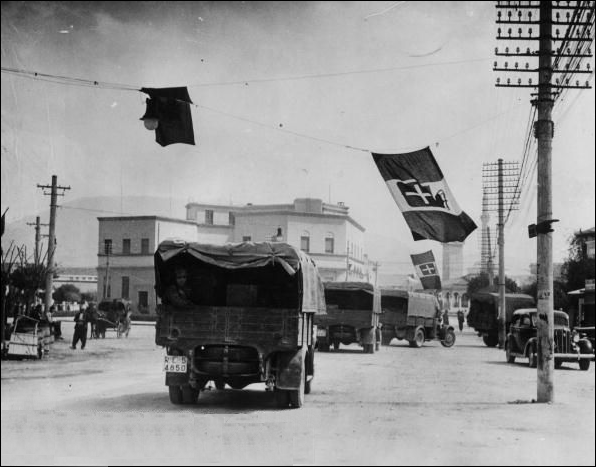
The Italian invasion of Albania was a brief military campaign which was launched by Italy against Albania in 1939. The conflict was a result of the imperialistic policies of the Italian prime minister and dictator Benito Mussolini. Albania was rapidly occupied, its ruler King Zog I went into exile in the neighboring Kingdom of Greece, and the country was made a part of the Italian Empire as a protectorate in personal union with the Italian Crown.
Albania had long been of considerable importance to the Kingdom of Italy. Italian naval strategists coveted the port of Vlorë and the island of Sazan because of their location at the entrance to the Bay of Vlorë and out to the Adriatic Sea. The Italians also wanted to construct a suitable base on Vlorë and Sazan for military operations in the Balkans. In the late Ottoman period, with a local weakening of Islam, the Albanian nationalist movement gained the strong support of the two Adriatic sea powers of Austria-Hungary and Italy, which were concerned about pan-Slavism in the wider Balkans and also Anglo-French hegemony, purportedly represented in the area through Greece. Before World War I Italy and Austria-Hungary had been supportive of the creation of an independent Albanian state. At the outbreak of the war, Italy seized the chance to occupy the southern half of Albania, to avoid it being captured by the Austro-Hungarians. That success did not last long, as Albanian resistance during the subsequent Vlora War and post-war domestic problems forced Italy to pull out in 1920. The desire to compensate for this failure would be one of Mussolini's major motives in invading Albania.
Culturally and historically, Albania was important to the nationalistic aims of Italian Fascists,[citation needed] as the territory of Albania had long been part of the Roman Empire, even prior to the annexation of northern Italy by the Romans. Later, during the High Middle Ages, some coastal areas (like Durazzo) had been influenced and owned by Italian powers for many years. Chief among them were the Kingdom of Naples and the Republic of Venice (cf. Albania Veneta). The Italian Fascist regime legitimized its claim to Albania by conducting studies and using them to proclaim the racial affinity of Albanians and Italians, especially as opposed to the Slavic Yugoslavs. Italian Fascists claimed that Albanians were linked to Italians through an ethnic heritage due to links between the protohistoric Italic and Illyrian populations, and they also claimed that the major influence over Albania of the Roman and Venetian empires justified Italy's right to possess it.[citation needed]
After Mussolini had seized power in Italy (October 1922), he turned to Albania with renewed interest. Italy began to penetrate Albania's economy in 1925, when Albania agreed to allow Italy to exploit its mineral resources. That action was followed by the signing of the First Treaty of Tirana in 1926 and the signing of the Second Treaty of Tirana in 1927, which enabled Italy and Albania to form a defensive alliance. Among other things, the Albanian government and economy were subsidised by Italian loans and the Royal Albanian Army was not only trained by Italian military instructors, most of the officers in the army were also Italians; other Italians were highly placed in the Albanian government. A third of Albanian imports came from Italy.
Despite strong Italian influence, King Zog I refused to completely give in to Italian pressure. In 1931, he openly stood up to the Italians, refusing to renew the 1926 Treaty of Tirana. After Albania signed trade agreements with Yugoslavia and Greece in 1934, Mussolini made a failed attempt to intimidate the Albanians by sending a fleet of warships to Albania.[dubious – discuss]
As Nazi Germany annexed Austria and moved against Czechoslovakia, Italy noticed that it was becoming the lesser member of the Pact of Steel.[dubious – discuss] Meanwhile, the imminent birth of an Albanian royal child threatened to give Zog the opportunity to establish a lasting dynasty. After Hitler invaded Czechoslovakia (15 March 1939) without notifying Mussolini in advance, the Italian dictator decided to proceed with his annexation of Albania.[citation needed] Italy's King Victor Emmanuel III criticized Mussolini's plan to annex Albania by stating that it was an extremely unnecessary risk for an almost negligible gain. Rome, however, delivered Tirana an ultimatum on 25 March 1939, demanding that it consent to Italy's occupation of Albania. Zog refused to accept money in exchange for allowing a full Italian takeover and colonization of Albania.[citation needed]
The Albanian government tried to keep news of the Italian ultimatum secret.[citation needed] While Radio Tirana persistently broadcast claims in which it stated that nothing was happening, people became suspicious; and the news of the Italian ultimatum was spread by unofficial sources. On 5 April the king's son was born and the news of his birth was announced by the firing of cannons. Alarmed, people poured out into the streets, but the news of the birth of the new prince calmed them. People suspected that something else was going on, which led to an anti-Italian demonstration in Tirana the same day. On 6 April, several demonstrations were staged in Albania's main cities. That same afternoon, 100 Italian aircraft flew over Tirana, Durrës, and Vlorë, dropping leaflets which instructed the people to submit to Italian occupation. The people were infuriated by this demonstration of force and they called for the government to resist the Italian occupation and release all of the Albanians who were previously arrested on the suspicion that they were "communists". The crowd shouted, "Give us arms! We are being sold out! We are being betrayed!".[citation needed] While a mobilization of the reserves was called, many high-ranking officers left the country.[citation needed] The government began to dissolve. The Minister of the Interior, Musa Juka, left the country and moved to Yugoslavia the same day. While King Zog announced that he would resist the Italian occupation of his country, his people felt that they were being abandoned by their government.
The original Italian plans for the invasion called for the deployment of up to 50,000 men who would be supported by 51 naval units and 400 airplanes. Ultimately, the invasion force grew to 100,000 men who were supported by 600 airplanes, but only 22,000 men actually took part in the invasion. On 7 April Mussolini's troops, led by General Alfredo Guzzoni, invaded Albania, simultaneously attacking all Albanian ports. The Italian naval forces which were involved in the invasion consisted of the battleships Giulio Cesare and Conte di Cavour, three heavy cruisers, three light cruisers, nine destroyers, fourteen torpedo boats, one minelayer, ten auxiliary ships and nine transport ships. The ships were divided into four groups that carried out landings at Vlorë, Durrës, Shëngjin and Sarandë. The Romanian Royal Army never deployed to Sarandë and Italy conquered the Romanian concession along with the rest of Albania during the invasion.[dead link]
Hub AI
Italian invasion of Albania AI simulator
(@Italian invasion of Albania_simulator)
Italian invasion of Albania
The Italian invasion of Albania was a brief military campaign which was launched by Italy against Albania in 1939. The conflict was a result of the imperialistic policies of the Italian prime minister and dictator Benito Mussolini. Albania was rapidly occupied, its ruler King Zog I went into exile in the neighboring Kingdom of Greece, and the country was made a part of the Italian Empire as a protectorate in personal union with the Italian Crown.
Albania had long been of considerable importance to the Kingdom of Italy. Italian naval strategists coveted the port of Vlorë and the island of Sazan because of their location at the entrance to the Bay of Vlorë and out to the Adriatic Sea. The Italians also wanted to construct a suitable base on Vlorë and Sazan for military operations in the Balkans. In the late Ottoman period, with a local weakening of Islam, the Albanian nationalist movement gained the strong support of the two Adriatic sea powers of Austria-Hungary and Italy, which were concerned about pan-Slavism in the wider Balkans and also Anglo-French hegemony, purportedly represented in the area through Greece. Before World War I Italy and Austria-Hungary had been supportive of the creation of an independent Albanian state. At the outbreak of the war, Italy seized the chance to occupy the southern half of Albania, to avoid it being captured by the Austro-Hungarians. That success did not last long, as Albanian resistance during the subsequent Vlora War and post-war domestic problems forced Italy to pull out in 1920. The desire to compensate for this failure would be one of Mussolini's major motives in invading Albania.
Culturally and historically, Albania was important to the nationalistic aims of Italian Fascists,[citation needed] as the territory of Albania had long been part of the Roman Empire, even prior to the annexation of northern Italy by the Romans. Later, during the High Middle Ages, some coastal areas (like Durazzo) had been influenced and owned by Italian powers for many years. Chief among them were the Kingdom of Naples and the Republic of Venice (cf. Albania Veneta). The Italian Fascist regime legitimized its claim to Albania by conducting studies and using them to proclaim the racial affinity of Albanians and Italians, especially as opposed to the Slavic Yugoslavs. Italian Fascists claimed that Albanians were linked to Italians through an ethnic heritage due to links between the protohistoric Italic and Illyrian populations, and they also claimed that the major influence over Albania of the Roman and Venetian empires justified Italy's right to possess it.[citation needed]
After Mussolini had seized power in Italy (October 1922), he turned to Albania with renewed interest. Italy began to penetrate Albania's economy in 1925, when Albania agreed to allow Italy to exploit its mineral resources. That action was followed by the signing of the First Treaty of Tirana in 1926 and the signing of the Second Treaty of Tirana in 1927, which enabled Italy and Albania to form a defensive alliance. Among other things, the Albanian government and economy were subsidised by Italian loans and the Royal Albanian Army was not only trained by Italian military instructors, most of the officers in the army were also Italians; other Italians were highly placed in the Albanian government. A third of Albanian imports came from Italy.
Despite strong Italian influence, King Zog I refused to completely give in to Italian pressure. In 1931, he openly stood up to the Italians, refusing to renew the 1926 Treaty of Tirana. After Albania signed trade agreements with Yugoslavia and Greece in 1934, Mussolini made a failed attempt to intimidate the Albanians by sending a fleet of warships to Albania.[dubious – discuss]
As Nazi Germany annexed Austria and moved against Czechoslovakia, Italy noticed that it was becoming the lesser member of the Pact of Steel.[dubious – discuss] Meanwhile, the imminent birth of an Albanian royal child threatened to give Zog the opportunity to establish a lasting dynasty. After Hitler invaded Czechoslovakia (15 March 1939) without notifying Mussolini in advance, the Italian dictator decided to proceed with his annexation of Albania.[citation needed] Italy's King Victor Emmanuel III criticized Mussolini's plan to annex Albania by stating that it was an extremely unnecessary risk for an almost negligible gain. Rome, however, delivered Tirana an ultimatum on 25 March 1939, demanding that it consent to Italy's occupation of Albania. Zog refused to accept money in exchange for allowing a full Italian takeover and colonization of Albania.[citation needed]
The Albanian government tried to keep news of the Italian ultimatum secret.[citation needed] While Radio Tirana persistently broadcast claims in which it stated that nothing was happening, people became suspicious; and the news of the Italian ultimatum was spread by unofficial sources. On 5 April the king's son was born and the news of his birth was announced by the firing of cannons. Alarmed, people poured out into the streets, but the news of the birth of the new prince calmed them. People suspected that something else was going on, which led to an anti-Italian demonstration in Tirana the same day. On 6 April, several demonstrations were staged in Albania's main cities. That same afternoon, 100 Italian aircraft flew over Tirana, Durrës, and Vlorë, dropping leaflets which instructed the people to submit to Italian occupation. The people were infuriated by this demonstration of force and they called for the government to resist the Italian occupation and release all of the Albanians who were previously arrested on the suspicion that they were "communists". The crowd shouted, "Give us arms! We are being sold out! We are being betrayed!".[citation needed] While a mobilization of the reserves was called, many high-ranking officers left the country.[citation needed] The government began to dissolve. The Minister of the Interior, Musa Juka, left the country and moved to Yugoslavia the same day. While King Zog announced that he would resist the Italian occupation of his country, his people felt that they were being abandoned by their government.
The original Italian plans for the invasion called for the deployment of up to 50,000 men who would be supported by 51 naval units and 400 airplanes. Ultimately, the invasion force grew to 100,000 men who were supported by 600 airplanes, but only 22,000 men actually took part in the invasion. On 7 April Mussolini's troops, led by General Alfredo Guzzoni, invaded Albania, simultaneously attacking all Albanian ports. The Italian naval forces which were involved in the invasion consisted of the battleships Giulio Cesare and Conte di Cavour, three heavy cruisers, three light cruisers, nine destroyers, fourteen torpedo boats, one minelayer, ten auxiliary ships and nine transport ships. The ships were divided into four groups that carried out landings at Vlorë, Durrës, Shëngjin and Sarandë. The Romanian Royal Army never deployed to Sarandë and Italy conquered the Romanian concession along with the rest of Albania during the invasion.[dead link]
Recent media