



Community hub
Recent from talks
Knowledge base stats:
Talk channels stats:
Members stats:
Italian campaign (World War II)
The Italian campaign of World War II, also called the Liberation of Italy following the German occupation in September 1943, consisted of Allied and Axis operations in and around Italy, from 1943 to 1945. The joint Allied Forces Headquarters (AFHQ) was operationally responsible for all Allied land forces in the Mediterranean theatre and it planned and led the invasion of Sicily in July 1943, followed in September by the invasion of the Italian mainland and the campaign in Italy until the surrender of the Axis forces in Italy in May 1945.
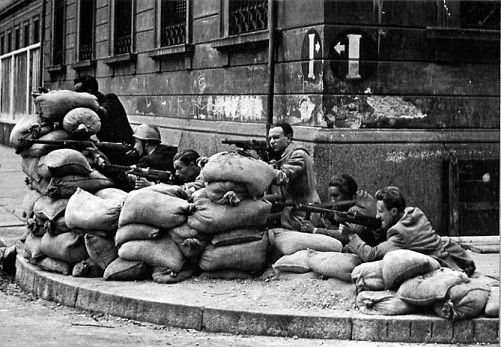
The invasion of Sicily in July 1943 led to the collapse of the Fascist Italian regime and the fall of Mussolini, who was deposed and arrested by order of King Victor Emmanuel III on 25 July. The new government signed an armistice with the Allies on 8 September 1943. However, German forces soon invaded northern and central Italy, committing several atrocities against Italian civilians and army units who opposed the German occupation and started the Italian resistance movement. Mussolini, who was rescued by German paratroopers, established a collaborationist puppet state, the Italian Social Republic (RSI), to administer the German-occupied territory. On 13 October 1943, the Allies recognized Italy as a co-belligerent in the war against Germany. Thereafter, the Italian Co-Belligerent Army and the Italian partisans fought alongside the Allies against German troops and the collaborationist National Republican Army; an aspect of this period is the Italian civil war. In the summer of 1944, after the Axis defeats at Cassino and Anzio, central Italy, including Rome, was liberated. Northern Italy was liberated following the final spring offensive and the general insurrection of Italian partisans on 25 April 1945. Mussolini was captured by the Italian resistance and summarily executed by firing squad. The campaign ended when Army Group C surrendered unconditionally to the Allies on 2 May 1945, one week before the formal German Instrument of Surrender. Both sides committed war crimes during the conflict, and the independent states of San Marino and Vatican City surrounded by Italian territory also suffered damage.
It is estimated that between September 1943 and April 1945, 60,000–70,000 Allied and 38,805–150,660 German soldiers died in Italy. The number of Allied casualties was about 330,000 and the German figure (excluding those involved in the final surrender) was over 330,000. Fascist Italy, prior to its collapse, suffered about 200,000 casualties, mostly prisoners-of-war taken in the invasion of Sicily, including more than 40,000 killed or missing. Over 150,000 Italian civilians died, as did 35,828 anti-Nazi and anti-fascist partisans and some 35,000 troops of the Italian Social Republic. On the Western Front of World War II, Italy was the most costly campaign in terms of casualties suffered by infantry forces of both sides, during bitter small-scale fighting around strongpoints at the Winter Line, the Anzio beachhead and the Gothic Line. Casualties among infantry in Italy were proportionally higher than they were on the Western Front of WWI.
The British, especially the Prime Minister, Winston Churchill, advocated their traditional naval-based peripheral strategy. Even with a large army, but greater naval power, the traditional British answer against a continental enemy was to fight as part of a coalition, blockading with their navy and mount small peripheral operations designed to gradually weaken the enemy. The United States, with the larger U.S. Army, favoured a more direct method of fighting the main force of the German Army in northwestern Europe. The ability to launch such a campaign depended on first winning the Battle of the Atlantic.
The strategic disagreement was fierce, with the U.S. service chiefs arguing for an invasion of France as early as possible, while their British counterparts advocated a policy centred on operations in the Mediterranean. There was even pressure from some Latin American countries to stage an invasion of Spain, which, under Francisco Franco, was friendly to the Axis nations, although not a participant in the war. The American staff believed that a full-scale invasion of France at the earliest possible time was required to end the war in Europe, and that no operations should be undertaken that might delay that effort.
Eventually the U.S. and British political leadership reached a compromise in which both would commit most of their forces to an invasion of France in early 1944, but also launch a relatively small-scale Italian campaign. A contributing factor was Franklin D. Roosevelt's desire to keep U.S. troops active in the European theatre during 1943 and his attraction to the idea of eliminating Italy from the war. It was hoped that an invasion might knock Italy out of the conflict, or at least increase the pressure on it and weaken it. The elimination of Italy would enable Allied naval forces, principally the Royal Navy, to dominate the Mediterranean Sea, securing the lines of communications with Egypt and thus Asia. Italian divisions on occupation and coastal defence duties in the Balkans and France would be withdrawn to defend Italy, while the Germans would have to transfer troops from the Eastern Front to defend Italy and the entire southern coast of France, thus aiding the Soviet Union.
The initial plan was for landings in the south-east, south and north-west areas of the island which would lead to the rapid capture of key Axis airfields and except for Messina, all the main ports on the island. This would allow a rapid Allied build-up, as well as denying their use to the Axis. This was altered into a reduced number of landings but with more concentration of force.
The Allied invasion of Sicily, Operation Husky, began on 9 July 1943 with both amphibious and airborne landings at the Gulf of Gela. The land forces involved were the U.S. Seventh Army, under Lieutenant General George S. Patton, the 1st Canadian Infantry Division and the 1st Canadian Armoured Brigade under the command of Major-General Guy Simonds and the British Eighth Army, under General Bernard Montgomery.
Hub AI
Italian campaign (World War II) AI simulator
(@Italian campaign (World War II)_simulator)
Italian campaign (World War II)
The Italian campaign of World War II, also called the Liberation of Italy following the German occupation in September 1943, consisted of Allied and Axis operations in and around Italy, from 1943 to 1945. The joint Allied Forces Headquarters (AFHQ) was operationally responsible for all Allied land forces in the Mediterranean theatre and it planned and led the invasion of Sicily in July 1943, followed in September by the invasion of the Italian mainland and the campaign in Italy until the surrender of the Axis forces in Italy in May 1945.
The invasion of Sicily in July 1943 led to the collapse of the Fascist Italian regime and the fall of Mussolini, who was deposed and arrested by order of King Victor Emmanuel III on 25 July. The new government signed an armistice with the Allies on 8 September 1943. However, German forces soon invaded northern and central Italy, committing several atrocities against Italian civilians and army units who opposed the German occupation and started the Italian resistance movement. Mussolini, who was rescued by German paratroopers, established a collaborationist puppet state, the Italian Social Republic (RSI), to administer the German-occupied territory. On 13 October 1943, the Allies recognized Italy as a co-belligerent in the war against Germany. Thereafter, the Italian Co-Belligerent Army and the Italian partisans fought alongside the Allies against German troops and the collaborationist National Republican Army; an aspect of this period is the Italian civil war. In the summer of 1944, after the Axis defeats at Cassino and Anzio, central Italy, including Rome, was liberated. Northern Italy was liberated following the final spring offensive and the general insurrection of Italian partisans on 25 April 1945. Mussolini was captured by the Italian resistance and summarily executed by firing squad. The campaign ended when Army Group C surrendered unconditionally to the Allies on 2 May 1945, one week before the formal German Instrument of Surrender. Both sides committed war crimes during the conflict, and the independent states of San Marino and Vatican City surrounded by Italian territory also suffered damage.
It is estimated that between September 1943 and April 1945, 60,000–70,000 Allied and 38,805–150,660 German soldiers died in Italy. The number of Allied casualties was about 330,000 and the German figure (excluding those involved in the final surrender) was over 330,000. Fascist Italy, prior to its collapse, suffered about 200,000 casualties, mostly prisoners-of-war taken in the invasion of Sicily, including more than 40,000 killed or missing. Over 150,000 Italian civilians died, as did 35,828 anti-Nazi and anti-fascist partisans and some 35,000 troops of the Italian Social Republic. On the Western Front of World War II, Italy was the most costly campaign in terms of casualties suffered by infantry forces of both sides, during bitter small-scale fighting around strongpoints at the Winter Line, the Anzio beachhead and the Gothic Line. Casualties among infantry in Italy were proportionally higher than they were on the Western Front of WWI.
The British, especially the Prime Minister, Winston Churchill, advocated their traditional naval-based peripheral strategy. Even with a large army, but greater naval power, the traditional British answer against a continental enemy was to fight as part of a coalition, blockading with their navy and mount small peripheral operations designed to gradually weaken the enemy. The United States, with the larger U.S. Army, favoured a more direct method of fighting the main force of the German Army in northwestern Europe. The ability to launch such a campaign depended on first winning the Battle of the Atlantic.
The strategic disagreement was fierce, with the U.S. service chiefs arguing for an invasion of France as early as possible, while their British counterparts advocated a policy centred on operations in the Mediterranean. There was even pressure from some Latin American countries to stage an invasion of Spain, which, under Francisco Franco, was friendly to the Axis nations, although not a participant in the war. The American staff believed that a full-scale invasion of France at the earliest possible time was required to end the war in Europe, and that no operations should be undertaken that might delay that effort.
Eventually the U.S. and British political leadership reached a compromise in which both would commit most of their forces to an invasion of France in early 1944, but also launch a relatively small-scale Italian campaign. A contributing factor was Franklin D. Roosevelt's desire to keep U.S. troops active in the European theatre during 1943 and his attraction to the idea of eliminating Italy from the war. It was hoped that an invasion might knock Italy out of the conflict, or at least increase the pressure on it and weaken it. The elimination of Italy would enable Allied naval forces, principally the Royal Navy, to dominate the Mediterranean Sea, securing the lines of communications with Egypt and thus Asia. Italian divisions on occupation and coastal defence duties in the Balkans and France would be withdrawn to defend Italy, while the Germans would have to transfer troops from the Eastern Front to defend Italy and the entire southern coast of France, thus aiding the Soviet Union.
The initial plan was for landings in the south-east, south and north-west areas of the island which would lead to the rapid capture of key Axis airfields and except for Messina, all the main ports on the island. This would allow a rapid Allied build-up, as well as denying their use to the Axis. This was altered into a reduced number of landings but with more concentration of force.
The Allied invasion of Sicily, Operation Husky, began on 9 July 1943 with both amphibious and airborne landings at the Gulf of Gela. The land forces involved were the U.S. Seventh Army, under Lieutenant General George S. Patton, the 1st Canadian Infantry Division and the 1st Canadian Armoured Brigade under the command of Major-General Guy Simonds and the British Eighth Army, under General Bernard Montgomery.