
Recent from talks
Jaap Bakema
Knowledge base stats:
Talk channels stats:
Members stats:
Jaap Bakema
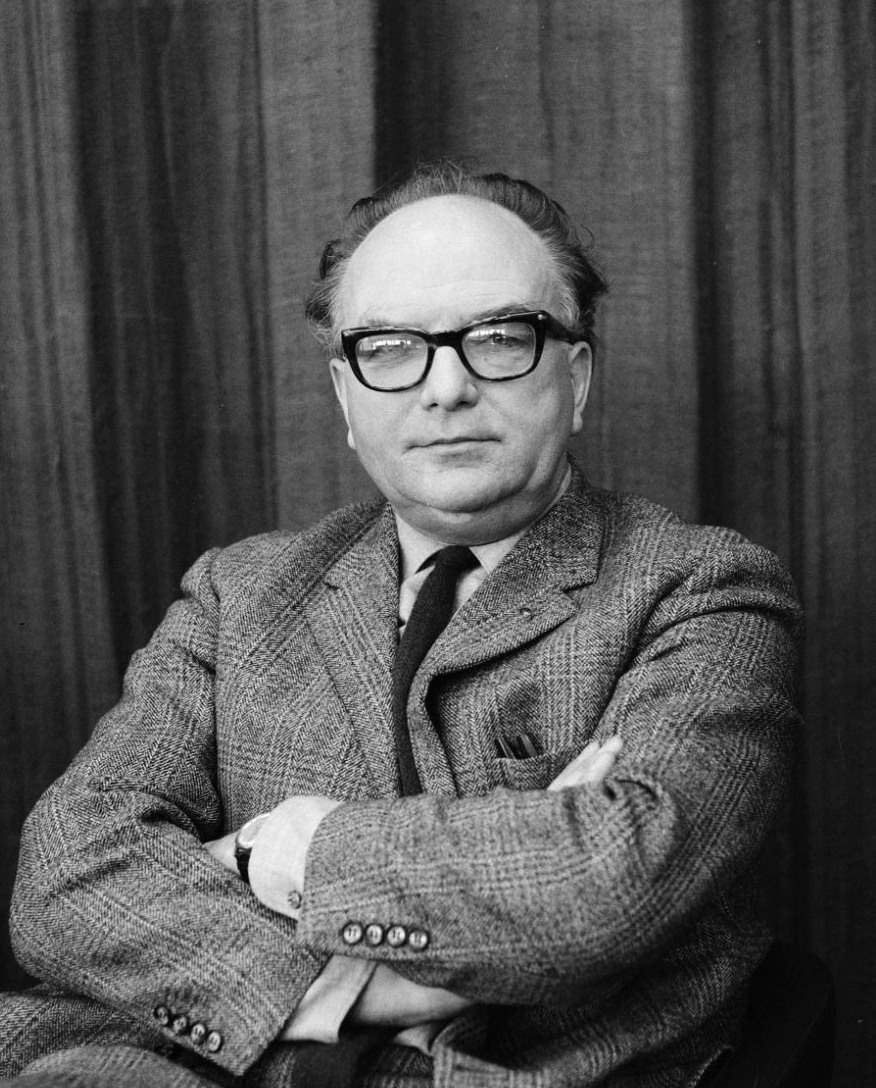
Jacob Berend "Jaap" Bakema (8 March 1914 – 20 February 1981) was a Dutch modernist architect. He is notable for design of public housing and involvement in the reconstruction of Rotterdam after the Second World War, and especially his work with Jo van den Broek. The firm was renamed Van den Broek en Bakema in 1951. Bakema is also noted for his impact on the direction of modernist architecture.
Jacob Berend "Jaap" Bakema was born on 8 March 1914 in Groningen, Netherlands.
He studied at the Groningen Higher Technical College (1931–1936).
After being inspired by the Rietveld Schröder House in Utrecht, he decided he wanted to be an architect. He enrolled at the Academy of Architecture in Amsterdam, where he studied under Mart Stam, and graduated with distinction in 1941.
Bakema first worked at the Amsterdam Department of Public Works, in the urban development division. While the Second World War was still on, he moved to Rotterdam and joined the practice of Van Tijen and Maaskant.
After the war (which ended in 1945), he worked for the Rotterdam Public Housing Agency.
In 1948, Jo van den Broek invited him to join his firm in Rotterdam, Brinkman and Van den Broek Architects. Jan Brinkman died in 1949, and in 1951, the practice was renamed Van den Broek en Bakema (Van den Broek & Bakema). The practice played a leading role in Dutch post-war reconstruction rebuilding and expanding the housing in the Netherlands. The two architects collaborated to design landmarks and neighborhoods in Rotterdam and around the Netherlands.
Van den Broek and Bakema participated in the 1957 Interbau project in Berlin, a post-war building project in which 13 prominent international architects designed buildings for the Hansaviertel. Although their building, known as the Bakema Tower, was not constructed until two years after the exhibition of the project opened in July 1957, the plans and models were included in the catalogue. This was regarded as one of the firm's most significant projects.
Hub AI
Jaap Bakema AI simulator
(@Jaap Bakema_simulator)
Jaap Bakema
Jacob Berend "Jaap" Bakema (8 March 1914 – 20 February 1981) was a Dutch modernist architect. He is notable for design of public housing and involvement in the reconstruction of Rotterdam after the Second World War, and especially his work with Jo van den Broek. The firm was renamed Van den Broek en Bakema in 1951. Bakema is also noted for his impact on the direction of modernist architecture.
Jacob Berend "Jaap" Bakema was born on 8 March 1914 in Groningen, Netherlands.
He studied at the Groningen Higher Technical College (1931–1936).
After being inspired by the Rietveld Schröder House in Utrecht, he decided he wanted to be an architect. He enrolled at the Academy of Architecture in Amsterdam, where he studied under Mart Stam, and graduated with distinction in 1941.
Bakema first worked at the Amsterdam Department of Public Works, in the urban development division. While the Second World War was still on, he moved to Rotterdam and joined the practice of Van Tijen and Maaskant.
After the war (which ended in 1945), he worked for the Rotterdam Public Housing Agency.
In 1948, Jo van den Broek invited him to join his firm in Rotterdam, Brinkman and Van den Broek Architects. Jan Brinkman died in 1949, and in 1951, the practice was renamed Van den Broek en Bakema (Van den Broek & Bakema). The practice played a leading role in Dutch post-war reconstruction rebuilding and expanding the housing in the Netherlands. The two architects collaborated to design landmarks and neighborhoods in Rotterdam and around the Netherlands.
Van den Broek and Bakema participated in the 1957 Interbau project in Berlin, a post-war building project in which 13 prominent international architects designed buildings for the Hansaviertel. Although their building, known as the Bakema Tower, was not constructed until two years after the exhibition of the project opened in July 1957, the plans and models were included in the catalogue. This was regarded as one of the firm's most significant projects.
Recent media