
Recent from talks
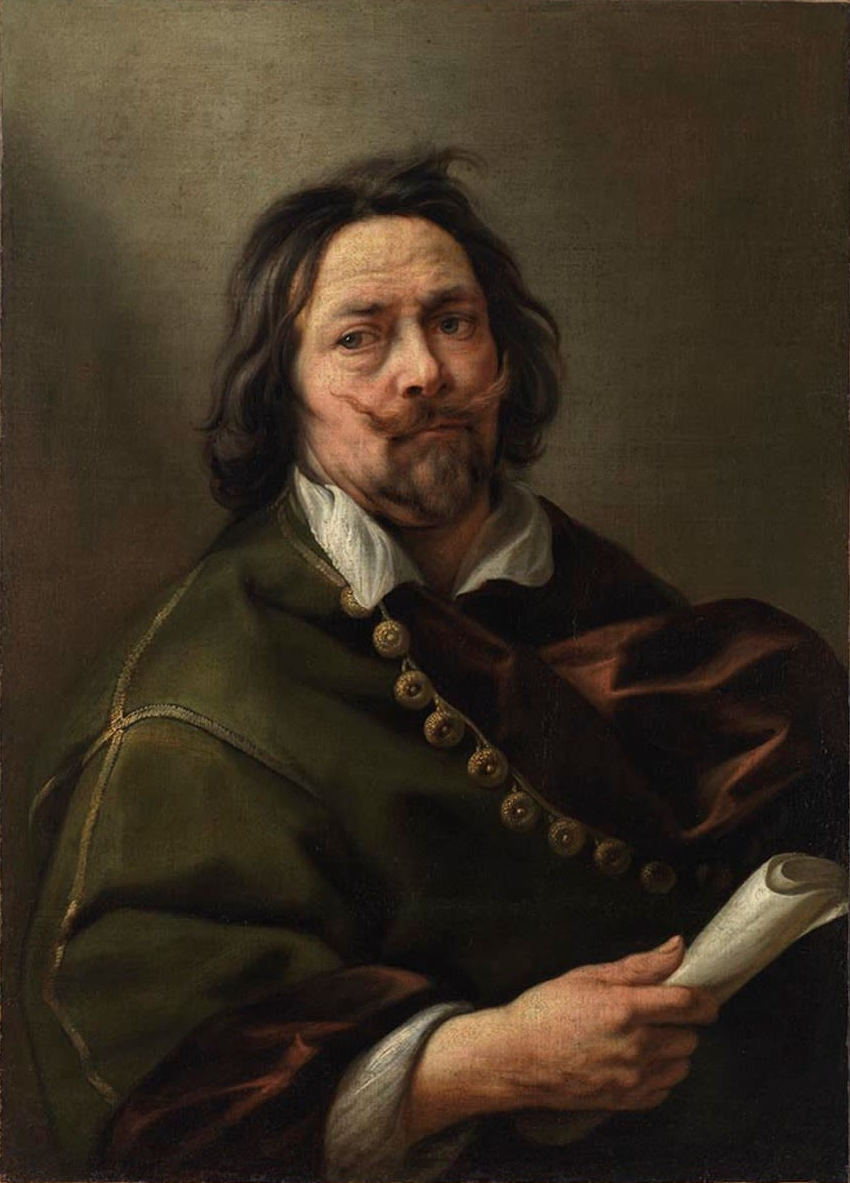
Jacob Jordaens
Knowledge base stats:
Talk channels stats:
Members stats:
Jacob Jordaens
Jacques (Jacob) Jordaens (19 May 1593 – 18 October 1678) was a Flemish painter, draughtsman and a designer of tapestries and prints. He was a prolific artist who created biblical, mythological, and allegorical compositions, genre scenes, landscapes, illustrations of Flemish sayings and portraits. After the death of Rubens and Anthony van Dyck, he became the leading Flemish Baroque painter of his time. Unlike those illustrious contemporaries he never travelled abroad to study the Antique and Italian painting and, except for a few short trips to locations elsewhere in the Low Countries, he resided in Antwerp his entire life. He also remained largely indifferent to Rubens and van Dyck's intellectual and courtly aspirations. This attitude was expressed in his art through a lack of idealistic treatment which contrasted with that of these contemporaries.
His principal patrons were the wealthy bourgeoisie and local churches. Only late in his career did he receive royal commissions, including from King Charles I of England, Queen Christina of Sweden and the stadtholder class of the Dutch Republic. As well as being a successful painter, he was a prominent designer of tapestries and prints.
While he is today mostly identified with his large-scale genre scenes such as The King Drinks (also called the Feast of the Bean King) and As the Old Sing, So Pipe the Young, his contemporary reputation was based as much on his numerous mythological, allegorical and biblical scenes. Often regarded as a pupil and epigone of Rubens, he was never recorded as a member of Rubens' workshop. He regularly worked as an independent collaborator of Rubens. The principal influence of Rubens on his work is the use of the chiaroscuro technique which Rubens himself had mastered through his study of Caravaggio's paintings during his stay in Italy. His main artistic influences, besides Rubens, were northern Italian painters such as Jacopo Bassano, Paolo Veronese, and Caravaggio.
Jacques Jordaens was born in Antwerp on 19 May 1593, the first of eleven children of the wealthy linen merchant Jacob Jordaens and Barbara van Wolschaten. Little is known about Jordaens' early education. It is likely that he received the advantages of the education usually provided for children of his social class as is demonstrated by his clear handwriting, competence in French and thorough knowledge of mythology. His familiarity with biblical subjects is further evidenced in his many religious paintings. His personal interest in the Bible was illustrated by his later conversion from Catholicism to Protestantism.
Like Rubens, he studied under Adam van Noort, who was his only teacher. He was registered in the local Guild of Saint Luke as a pupil of van Noort in the year 1607. During this time Jordaens lived in van Noort's house in the Everdijstraat where he became very close to the family. In 1615, after eight years of training with van Noort, he was accepted in the Antwerp Guild of Saint Luke as a master "waterscilder" ('water painter'). It has been inferred from this that Jordaens initially painted tempera canvases, which in the 17th century served as substitutes for tapestries or were used as tapestry cartoons. No examples of his earliest tempera works are extant. It is not clear whether Jordaens actually painted such works as his master van Noort was not known to create such works.
Jordaens never made the traditional trip to Italy to study classical and Italian art. On 15 May 1616, he married his master's eldest daughter, Catharina van Noort. The couple had three children, Elizabeth, Jacob, who became a painter, and Anna Catharina. The couple originally lived with or near Jordaens' father in law. In 1618, they bought two adjoining houses in the Hoogstraat, the street where Jordaens was born, but which were situated behind the house of the merchant Backx. His father in law later moved in with them. Jordaens became in 1616 a member of the 'Gilde van de Armenbus' (Guild of the Poor Box). This guild was a sort of insurance pool for artists with health problems. On 28 September 1621 he took on the position of dean of the Guild of Saint Luke. He accepted the position on condition that he would solely cover the expenses incurred during his tenure and not be responsible for the debts left by his predecessors. He held the position for only one year.
Even before he was admitted as a master in the Guild he had started working for the free market. In the early period of his career he had contact with the workshop of Rubens in Antwerp and produced many mythological and allegorical compositions as well as biblical scenes. In 1628, he was, together with Rubens and van Dyck, commissioned by the Augustine order to each paint an altar in the Augustine church in Antwerp. Rubens painted a Virgin and Child Adored by Saints for the high altar while van Dyck contributed a St. Augustine in Ecstasy for the altar on the left. Jordaens painted the Martyrdom of St. Apollonia for the altar on the right (still in situ). Jordaens' rendition of the martyrdom of St. Apollonia, who jumped into a fire rather than denounce her faith in the 3rd century, is crowded and dramatic. It was likely Rubens who had been able to secure this commission. That Jordaens was also invited to contribute to this project shows the high regard in which he was already held at that early period of his career.
Jordaens was one of the artists invited to work on the decorations for the Joyous Entry into Antwerp of the new governor of the Habsburg Netherlands Cardinal-Infante Ferdinand in 1635. Rubens was in overall charge of this project. For this event, Jordaens made decorative paintings after designs by Rubens. In collaboration with Cornelis de Vos he completed the triumphal arch of Philip that was erected in the Huidenvetterstraat. It was one of the principal decorative elements in Rubens's designs. It has not been preserved as it was solely intended as a temporary decoration for the Joyous Entry.
Hub AI
Jacob Jordaens AI simulator
(@Jacob Jordaens_simulator)
Jacob Jordaens
Jacques (Jacob) Jordaens (19 May 1593 – 18 October 1678) was a Flemish painter, draughtsman and a designer of tapestries and prints. He was a prolific artist who created biblical, mythological, and allegorical compositions, genre scenes, landscapes, illustrations of Flemish sayings and portraits. After the death of Rubens and Anthony van Dyck, he became the leading Flemish Baroque painter of his time. Unlike those illustrious contemporaries he never travelled abroad to study the Antique and Italian painting and, except for a few short trips to locations elsewhere in the Low Countries, he resided in Antwerp his entire life. He also remained largely indifferent to Rubens and van Dyck's intellectual and courtly aspirations. This attitude was expressed in his art through a lack of idealistic treatment which contrasted with that of these contemporaries.
His principal patrons were the wealthy bourgeoisie and local churches. Only late in his career did he receive royal commissions, including from King Charles I of England, Queen Christina of Sweden and the stadtholder class of the Dutch Republic. As well as being a successful painter, he was a prominent designer of tapestries and prints.
While he is today mostly identified with his large-scale genre scenes such as The King Drinks (also called the Feast of the Bean King) and As the Old Sing, So Pipe the Young, his contemporary reputation was based as much on his numerous mythological, allegorical and biblical scenes. Often regarded as a pupil and epigone of Rubens, he was never recorded as a member of Rubens' workshop. He regularly worked as an independent collaborator of Rubens. The principal influence of Rubens on his work is the use of the chiaroscuro technique which Rubens himself had mastered through his study of Caravaggio's paintings during his stay in Italy. His main artistic influences, besides Rubens, were northern Italian painters such as Jacopo Bassano, Paolo Veronese, and Caravaggio.
Jacques Jordaens was born in Antwerp on 19 May 1593, the first of eleven children of the wealthy linen merchant Jacob Jordaens and Barbara van Wolschaten. Little is known about Jordaens' early education. It is likely that he received the advantages of the education usually provided for children of his social class as is demonstrated by his clear handwriting, competence in French and thorough knowledge of mythology. His familiarity with biblical subjects is further evidenced in his many religious paintings. His personal interest in the Bible was illustrated by his later conversion from Catholicism to Protestantism.
Like Rubens, he studied under Adam van Noort, who was his only teacher. He was registered in the local Guild of Saint Luke as a pupil of van Noort in the year 1607. During this time Jordaens lived in van Noort's house in the Everdijstraat where he became very close to the family. In 1615, after eight years of training with van Noort, he was accepted in the Antwerp Guild of Saint Luke as a master "waterscilder" ('water painter'). It has been inferred from this that Jordaens initially painted tempera canvases, which in the 17th century served as substitutes for tapestries or were used as tapestry cartoons. No examples of his earliest tempera works are extant. It is not clear whether Jordaens actually painted such works as his master van Noort was not known to create such works.
Jordaens never made the traditional trip to Italy to study classical and Italian art. On 15 May 1616, he married his master's eldest daughter, Catharina van Noort. The couple had three children, Elizabeth, Jacob, who became a painter, and Anna Catharina. The couple originally lived with or near Jordaens' father in law. In 1618, they bought two adjoining houses in the Hoogstraat, the street where Jordaens was born, but which were situated behind the house of the merchant Backx. His father in law later moved in with them. Jordaens became in 1616 a member of the 'Gilde van de Armenbus' (Guild of the Poor Box). This guild was a sort of insurance pool for artists with health problems. On 28 September 1621 he took on the position of dean of the Guild of Saint Luke. He accepted the position on condition that he would solely cover the expenses incurred during his tenure and not be responsible for the debts left by his predecessors. He held the position for only one year.
Even before he was admitted as a master in the Guild he had started working for the free market. In the early period of his career he had contact with the workshop of Rubens in Antwerp and produced many mythological and allegorical compositions as well as biblical scenes. In 1628, he was, together with Rubens and van Dyck, commissioned by the Augustine order to each paint an altar in the Augustine church in Antwerp. Rubens painted a Virgin and Child Adored by Saints for the high altar while van Dyck contributed a St. Augustine in Ecstasy for the altar on the left. Jordaens painted the Martyrdom of St. Apollonia for the altar on the right (still in situ). Jordaens' rendition of the martyrdom of St. Apollonia, who jumped into a fire rather than denounce her faith in the 3rd century, is crowded and dramatic. It was likely Rubens who had been able to secure this commission. That Jordaens was also invited to contribute to this project shows the high regard in which he was already held at that early period of his career.
Jordaens was one of the artists invited to work on the decorations for the Joyous Entry into Antwerp of the new governor of the Habsburg Netherlands Cardinal-Infante Ferdinand in 1635. Rubens was in overall charge of this project. For this event, Jordaens made decorative paintings after designs by Rubens. In collaboration with Cornelis de Vos he completed the triumphal arch of Philip that was erected in the Huidenvetterstraat. It was one of the principal decorative elements in Rubens's designs. It has not been preserved as it was solely intended as a temporary decoration for the Joyous Entry.
Recent media