Hubbry Logo
TemperaTemperaMain
Open search
Tempera
Community hub
Tempera
logo
8 pages, 0 posts
0 subscribers
Be the first to start a discussion here.
Contribute something
Tempera
Tempera
from Wikipedia
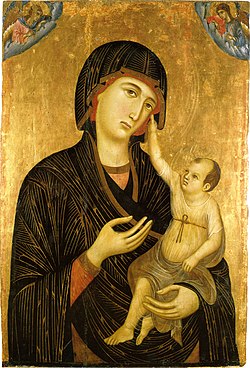
Crevole Madonna by Duccio, tempera with gold ground on wood, 1284, Siena

Tempera (Italian: [ˈtɛmpera]) is a permanent, fast-drying painting medium consisting of pigments mixed with a water-soluble binder medium, usually glutinous material such as egg yolk. There are several types of tempera paint, but the one containing egg yolk is called egg tempera. Tempera paint made from the milk protein is Casein paint. If the binder is synthetic PVA, the result is polyvinyl acetate tempera.[1] A distemper paint consisting of pigment and binders such as cornstarch, gum arabic and other gums is called poster paint in certain parts of the world, and it is also often confusingly referred to as "tempera paint", although the binders in this paint are different from traditional egg tempera paints and the visual effect is more like gouache[2].

The term Tempera also refers to the paintings done in any kind of these tempera mediums.

Etymology

[edit]

The term tempera is derived from the Italian dipingere a tempera ("paint in distemper"), from the Late Latin distemperare ("mix thoroughly").[3]

History

[edit]
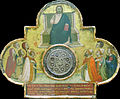
A 1367 tempera on wood by Niccolò Semitecolo

The earliest known examples of egg tempera are the prehistoric murals on the Domus de Janas chamber tombs in Sardinia, dating back to 3400-2700 BCE.[4] Analysed samples of 1200 BCE also detected egg tempera in the murals of the Palace of Nestor in Pylos.[5]

It is frequently claimed that egg empera painting has been found on early Egyptian sarcophagus decorations. Some Fayum mummy portraits also seem to have been done in tempera, sometimes in combination with encaustic painting made with melted wax, the alternative painting technique in the ancient world. But recent scientific analysis cast some doubts in those affirmations.[6] It was probably also used for the murals of the 3rd century Dura-Europos synagogue.

A related technique has been used also in ancient and early medieval paintings found in several caves and rock-cut temples of India.[7] High-quality art with the help of tempera was created in Bagh Caves between the late 4th and 10th centuries and in the 7th century in Ravan Chhaya rock shelter, Odisha.[8]

This art technique was known from the classical world, where it appears to have taken over from encaustic painting[citation needed] and was the main medium used for panel painting and illuminated manuscripts in the Byzantine world and Medieval and Early Renaissance Europe. Tempera painting was the primary panel painting medium for nearly every painter in the European Medieval and Early renaissance period up to 1500. For example, most surviving panel paintings attributed to Michelangelo are executed in egg tempera, an exception being his Doni Tondo which uses both tempera and oil paint.

Oil paint, which may have originated in Afghanistan between the 5th and 9th centuries[9] and migrated westward in the Middle Ages[10] eventually superseded tempera in popularity. Oil replaced tempera as the principal medium used for creating artwork during the 15th century in Early Netherlandish painting in northern Europe. Around 1500, oil paint replaced tempera in Italy. In the 19th and 20th centuries, there were intermittent revivals of tempera technique in Western art, among the Pre-Raphaelites, Social Realists, and others. Tempera painting continues to be used in Greece and Russia where it is the traditional medium for Orthodox icons.

Technique

[edit]

Tempera is broad term describing many types of paint, traditionally created by hand-grinding dry powdered pigments into a binding agent or medium, such as egg yolk, milk (in the form of casein) or a variety of plant gums.

Egg tempera

[edit]

The most common form of classical tempera painting is "egg tempera". For this form most often only the contents of the egg yolk is used. The white of the egg and the membrane of the yolk are discarded (the membrane of the yolk is dangled over a receptacle and punctured to drain off the liquid inside). The egg yolk is diluted with water and used with pigment. Some kind of remedy is always added in different proportions. One recipe uses vinegar as a preservative, but only in small quantities, as vinegar will discolour pigments such as ultramarine[11]. A few drops of vinegar will keep the solution for a week, but it is better to prepare fresh paint on a daily basis. Some egg tempera schools use different mixtures of egg yolk and water, usually the ratio of yolk to water is 1:3; other recipes offer white wine (1 part yolk, 2 parts wine).

Powdered pigment, or pigment that has been ground in distilled water, is placed onto a palette or bowl and mixed with a roughly equal volume of the binder.[12] Some pigments require slightly more binder, some require less.

When used to paint icons on church walls, liquid myrrh is sometimes added to the mixture to give the paint a pleasing odor, particularly as worshippers may find the egg tempera somewhat pungent for quite some time after completion. The paint mixture has to be constantly adjusted to maintain a balance between a "greasy" and "watery" consistency by adjusting the amount of water and yolk. As tempera gradually dries on the palette, the artist will add some water to preserve the consistency and to balance the thickening of the yolk on contact with air. Once prepared, the paint cannot be stored. As such, tubed egg tempera tends to be Tempera Grassa, as it must contain several preservatives such as oil.[13] Egg tempera is water-resistant, but not waterproof. Different preparations use the egg white instead of the yolk or even the whole egg for a different effect. Other additives such as oil and wax emulsions can modify the medium. Egg tempera is not a flexible paint and requires stiff boards; painting on canvas will cause cracks to form and chips of paint to fall off.

Egg tempera paint should be cured for at least 3 months, up to 6 months. The surface is susceptible to scratches during the curing process, but will become much more durable after curing. Egg tempera paintings are not normally framed behind glass, as the glass can trap moisture and lead to the growth of mold.[14]

Tempera grassa

[edit]

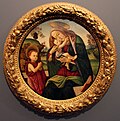
Adding oil in no more than a 1:1 ratio with the egg yolk by volume produces a water-soluble medium with many of the color effects of oil paint, although it cannot be painted thickly as it would crack. Tempera grassa was detected in several Renaissance paintings by artists such as Botticelli.[5]

Pigments

[edit]

Some of the pigments used by medieval painters, such as cinnabar (contains mercury), orpiment (contains arsenic), or lead white (contains lead) are highly toxic if accidentally ingested or inhaled. Most artists today use modern synthetic pigments, which are less toxic but have similar color properties to the older pigments. Even so, many (if not most) modern pigments are still dangerous unless certain precautions are taken; these include keeping pigments wet in storage to avoid breathing their dust.

Application

[edit]

Tempera paint dries rapidly. It is normally applied in thin, semi-opaque or transparent layers. Tempera painting allows for great precision when used with traditional techniques that often require the application of numerous small brush strokes applied in a cross-hatching technique. When dry, it produces a smooth satin or slightly matte finish. Because it cannot be applied in thick layers as oil paints can, tempera paintings rarely have the deep color saturation that oil paintings can achieve because it can hold less pigment (lower pigment load). In this respect, the colors of an unvarnished tempera painting resemble a fresco, although the color deepens if a varnish is applied. On the other hand, tempera colors do not change over time,[15] whereas oil paints darken, yellow, and become transparent with age.[16]

Ground

[edit]
Pietro Lorenzetti's Tarlati polyptych, Tempera and gold on panel, 1320

Tempera adheres best to an absorbent ground.[17][18] The ground traditionally used is inflexible Italian gesso, and the substrate is usually rigid as well.[19] Historically wood panels were used as the substrate, and more recently un-tempered masonite or medium density fiberboard (MDF) have been employed; heavy paper is also used.

Pre-made paints

[edit]

Apart from the traditional process of mixing pigment with egg yolk, new methods include egg tempera sold in tubes by manufacturers such as Sennelier and Daler-Rowney. These paints do contain a slight amount of oil in order to extend longevity within the container. Notable egg tempera artist and author Koo Schadler points out that because of this addition of oil "tubed 'egg tempera' paints are actually 'tempera grassa', an emulsion of egg yolk and a drying oil (generally with other additives, such as preservatives and stabilizers). Tempera grassa has some of the working properties of both egg tempera and oil painting and is a perfectly viable medium – however it is not the same as pure, homemade egg tempera and behaves differently."[20]Marc Chagall used Sennelier egg tempera tube paints extensively.

Artists

[edit]

Although tempera has been out of favor since the Late Renaissance and Baroque eras, it has been periodically rediscovered by later artists such as William Blake, the Nazarenes, the Pre-Raphaelites, and Joseph Southall. The 19th and 20th century saw a significant revival of tempera, partially due to the publication of Cennino Cennini's Il libro dell'arte in 1821, and the Society of Painters in Tempera being created in 1901.[21] European painters who worked with tempera include Giorgio de Chirico, Otto Dix, Eliot Hodgkin, Pyke Koch,[22] and Pietro Annigoni, who used an emulsion of egg yolks, stand oil and varnish.

Spanish surrealist painter Remedios Varo worked extensively in egg tempera.

Revival in 20th-century American art

[edit]

The tempera medium was used by American artists such as the Regionalists Andrew Wyeth, Thomas Hart Benton and his students James Duard Marshall and Roger Medearis; expressionists Ben Shahn, Mitchell Siporin and John Langley Howard, magic realists George Tooker, Paul Cadmus, Jared French, Julia Thecla and Louise E. Marianetti, realist painter David Hanna; Art Students League of New York instructors Kenneth Hayes Miller and William C. Palmer, Social Realists Kyra Markham, Isabel Bishop, Reginald Marsh, and Noel Rockmore, Edward Laning, Anton Refregier, Jacob Lawrence, Rudolph F. Zallinger, Robert Vickrey, Peter Hurd, and science fiction artist John Schoenherr, notable as the cover artist of Dune.

20th-century Indian art

[edit]

In the early part of the 20th century, a large number of Indian artists, notably of the Bengal school took up tempera as one of their primary media of expression. Artists such as Gaganendranath Tagore, Asit Kumar Haldar, Abanindranath Tagore, Nandalal Bose, Kalipada Ghoshal and Sughra Rababi were foremost. After the 1950s, artists such as Jamini Roy and Ganesh Pyne established tempera as a medium for the new age artists of India.

In contemporary art

[edit]

Other practicing tempera artists include Philip Aziz, Ernst Fuchs, Antonio Roybal, George Huszar, Donald Jackson, Tim Lowly, Altoon Sultan, Shaul Shats, Sandro Chia, Alex Colville, Robert Vickrey, Andrew Wyeth, Andrew Grassie, Soheila Sokhanvari, and Ganesh Pyne.

Ken Danby (1940–2007) a Canadian realist artist, whose most well known works (such as: At the Crease, Lacing up, and Pancho) were completed using egg tempera.

Robert Clinch (b. 1957) is an Australian realist painter who, thanks to the 1993 Marten Bequest Travelling Scholarship, was able to conduct extensive research into egg tempera and has since completed multiple works in the medium.[23]

In 2013, American fine artists Elena Vladimir Baranoff and Anastasia Elena Baranoff founded Egg Tempera Movement in London, United Kingdom.[24][25] Elena Vladimir Baranoff and Anastasia Elena Baranoff established Egg Tempera Movement to promote and preserve the egg tempera painting technique.[26]

[edit]

See also

[edit]

References

[edit]

Further reading

[edit]
[edit]
Revisions and contributorsEdit on WikipediaRead on Wikipedia
from Grokipedia
Tempera is a fast-drying, permanent medium composed of colored pigments ground and mixed with a water-soluble binder, most commonly egg yolk, to create an that adheres to surfaces. This technique, often referred to as egg tempera, produces a matte, luminous finish when applied in thin, translucent layers, allowing light to interact with the underlying colors for a jewel-like quality. The medium requires preparation on rigid supports, such as wooden panels coated with —a plaster-like primer—to ensure stability and prevent cracking or flaking. The use of tempera dates back to ancient civilizations, with evidence of its employment as a mural medium in the ancient dynasties of , , , and . It emerged as the primary medium for in Europe during the and reached its zenith in the early , where artists such as , , and utilized it to achieve precise detailing and vibrant, enduring colors on religious altarpieces and icons. Tempera remained dominant until the , when oil paints, offering greater flexibility and blending capabilities, gradually supplanted it in Western art. Despite its decline, tempera experienced revivals in later periods, including the 19th and 20th centuries, as artists sought its unique optical effects and archival qualities; notable proponents include the Pre-Raphaelites in Britain and American realists like , who mixed pigments with egg yolk and daily for meticulous, layered works on gessoed panels. Variants such as casein tempera, using milk-derived binders, have also persisted for their versatility in modern applications, from to . Today, tempera continues to be valued for its historical significance, technical challenges, and ability to yield durable, lightfast paintings that capture intricate details.

Origins

Etymology

The term "tempera" originates from the Latin verb temperāre, meaning "to mix," "to blend," or "to temper," which refers to the process of combining dry pigments with a binder to create a of suitable consistency. This etymological root underscores the medium's foundational technique of proportionally mixing components, a practice documented in texts on materials and crafts. By the , the term had evolved in Italian usage as "tempera," specifically describing the emulsion-based made by blending pigments with an aqueous binder like egg yolk, distinguishing it from earlier, broader applications of the verb. In medieval literature, such as Cennino Cennini's Il Libro dell'Arte (c. ), the concept appears through instructions on "tempering" pigments—grinding colors and mixing them with egg yolk and water to form a stable for panel work. Cennini emphasizes this blending to achieve even application, providing one of the earliest detailed accounts of the process in vernacular treatises. "Tempera" is etymologically and technically distinct from "distemper," a related term from distemperāre ("to mix thoroughly"), which denotes water-based paints bound with glue or rather than an oil-in-water like egg tempera. This differentiation highlights tempera's specific emphasis on a stable, non-matte binder for applications, as opposed to distemper's use in coarser or temporary surfaces.

Early Definition and Characteristics

Tempera is a fast-drying medium consisting of ground into an binder, most commonly a water-soluble mixture of egg yolk and , which produces a durable yet matte finish upon drying. This acts as the , binding the dry into a stable that can be applied in thin layers to rigid supports like wood panels. The basic composition involves combining the paste with an equal volume of the egg yolk , where the yolk is typically diluted with at a 1:1 ratio by weight to achieve stability and workable consistency. Key characteristics of tempera include its opacity, which allows for solid coverage without the translucency of water-based paints like watercolor, and its rapid drying time, often within minutes, necessitating quick application in small sections. The medium achieves through the buildup of thin, semi-transparent glazes, creating depth and a glowing effect as light scatters within the layered pigments. This contrasts with its matte surface, which remains non-reflective and velvety, enhancing the jewel-like quality of the colors without added gloss. In terms of permanence, tempera offers greater than watercolors, resisting and maintaining color over centuries when properly prepared, though it remains sensitive to high and light exposure if left unvarnished, potentially leading to subtle shifts in tone or binder degradation. Without a protective , the film's vulnerability to environmental fluctuations underscores the importance of display conditions to preserve its archival qualities.

Historical Development

Ancient and Medieval Uses

The earliest known uses of tempera painting trace back to during the third millennium BCE, where plant-based binders such as were mixed with pigments to create durable paints applied to surfaces like , wood, and for funerary objects, including mummy cases around 1000 BCE. Egg yolk-based tempera was also employed for murals and decorations in ancient civilizations including , , , and ancient as early as the second millennium BCE. This water-soluble medium allowed for vibrant, matte finishes suitable for religious and ritualistic contexts, distinguishing it from earlier mineral-based grounds. In the , tempera emerged as a practical alternative to for portable panel paintings, employing binders like or egg to adhere pigments to wooden supports, facilitating the creation of easel art for domestic and temple settings from the Classical period onward. During the medieval period, egg tempera became the dominant medium in , particularly for religious from the 6th to the 15th centuries, where it was applied in thin, successive layers on wooden panels prepared with grounds. This technique produced luminous, symbolic images emphasizing spiritual essence over naturalistic representation, with stylized figures, gold backgrounds, and inverted perspective to convey divine hierarchy and otherworldliness. painters, often working in monastic workshops, adhered to strict theological guidelines, using egg yolk as the primary binder to achieve a fast-drying, permanent surface that enhanced the icons' role as windows to the sacred in Orthodox worship. The Byzantine mastery of egg tempera spread to Western Europe via trade routes, crusades, and cultural exchanges, particularly through Italian ports like Venice, influencing artistic practices beginning in the 13th century. In monastic scriptoria across Carolingian and Romanesque Europe, scribes and illuminators adopted tempera for decorating manuscripts, blending pigments bound with gum or egg with gold leaf to illuminate initials, borders, and miniatures, thereby preserving and disseminating religious texts with vivid, jewel-like effects. This integration elevated illuminated books as central artifacts of medieval piety, bridging Eastern and Western traditions until the rise of oil painting in later centuries.

Renaissance and Post-Renaissance Evolution

During the , particularly from the 14th to 16th centuries, egg tempera achieved its zenith in Italian painting, where artists like employed it to create works characterized by linear precision and luminous detail on gesso-prepared wooden panels. 's altarpieces, such as The Annunciation (c. 1438–1445), exemplify this technique, with pigments applied in thin, successive layers over a to achieve a radiant, jewel-like quality that emphasized spiritual clarity and spatial rationality. This medium's fast-drying nature allowed for meticulous and cross-hatching to model forms, aligning with the era's shift toward naturalistic representation while maintaining the symbolic intensity of medieval traditions. By the early , however, tempera began to yield to in , a transition pioneered by in the late 15th century, as the medium's rapid drying hindered the blending and subtle tonal gradations desired for effects. 's adoption of , refined with variants for lean, clear drying, enabled slower-drying layers that facilitated atmospheric depth and realistic modeling, as seen in works like (c. 1474–1478). This shift marked a broader evolution in artistic practice, where 's versatility supplanted tempera's rigidity for painting, leading to tempera's decline in by the as became the dominant medium for . Despite its waning prominence in Western , tempera persisted in Eastern Orthodox through the post-Renaissance period, remaining the preferred medium for devotional panels in and due to its durable, matte finish suited to sacred imagery. In these traditions, egg tempera on wood continued to convey theological symbolism with unmodulated colors and gold grounds, as in 17th- and 18th-century that adhered to Byzantine conventions. Similarly, tempera endured in Spanish colonial art across the from the 16th to 19th centuries, often combined with oil on cloth for religious works in resource-limited settings. Post-Renaissance, tempera's economical properties influenced its use in ancillary arts, serving as a cheaper alternative to oil in preparations—such as colored grounds for woodcuts—and especially in theater backdrops, where its matte, fast-drying qualities facilitated large-scale scenic painting into the . This adaptability ensured tempera's survival in decorative and performative contexts, even as it faded from elite portraiture and production in .

Materials

Binders

The primary binder in traditional tempera is egg yolk, which serves as a natural of water and oil, enabling strong adhesion to supports while imparting flexibility to the dried film. Egg yolk consists of droplets suspended in a protein-water matrix, where acts as the key emulsifying agent, stabilizing the mixture by attracting both hydrophilic and hydrophobic components. This emulsification allows pigments to remain suspended without separating, creating a smooth, workable that dries quickly to a durable, matte finish. For water-based variants of tempera, alternatives to egg yolk include , a milk-derived protein that forms a tough, water-insoluble upon drying, and , a natural gum from trees that provides and adhesion in aqueous media. These binders maintain the medium's fast-drying properties but offer different handling characteristics; casein yields a harder surface suitable for detailed work, while gum arabic enhances flow for broader applications. In preparing the emulsion, the yolk's lecithin facilitates stable pigment suspension by forming a balanced interface between water and oil phases, with common mixing ratios such as 1 part yolk to 1 part water achieving optimal fluidity for application. In contrast, modern tempera formulations since the mid-20th century frequently employ synthetic acrylic emulsions, like polyvinyl acetate, which enhance durability against environmental factors while retaining water-solubility during application. These acrylic binders improve archival stability, resisting cracking and yellowing over time compared to traditional organic options.

Pigments and Additives

Traditional tempera painting relies on natural pigments sourced from minerals and earths, including and for warm earth tones, as well as for vivid blue and for bright green shades. These pigments are ground to an extremely fine powder using a muller on a slab, a process essential for achieving a smooth, lump-free mixture that allows for precise brushwork and luminous effects when integrated with water-based binders. Oils are strictly avoided in tempera formulations to prevent incompatibility with the aqueous medium, which could result in and subsequent cracking of the paint film over time. Historical additives enhance the paint's workability; was commonly included to improve flow and retard drying, while acted as a to promote better pigment wetting and even spreading. (basic lead carbonate) served as a key additive for imparting high opacity and a bright white tone in many recipes, enabling effective layering and highlights. Concerns over the of lead-based pigments, which can cause severe issues including neurological damage through of or accidental , prompted a post-20th-century transition to safer alternatives in tempera. Synthetic organic pigments, such as phthalocyanines and azo compounds, now provide vibrant colors with lower toxicity risks, often supplemented by inert fillers like to achieve similar opacity and matte finishes without compromising binder compatibility.

Preparation and Supports

Grounds

In tempera painting, the ground serves as the foundational layer applied to a support, providing an absorbent and smooth surface essential for the and of the paint film. Traditional , the primary ground used historically, consists of a mixture of whiting—such as () or ()—bound with , typically dissolved in . This composition ensures the ground's rigidity and , allowing the water-based tempera to bond effectively without cracking or flaking over time. The preparation of a ground begins with the support to seal its surface and prevent excessive absorption of subsequent layers. For wooden panels, a thin coat of warm solution—often at a 10% concentration—is brushed onto both sides of the raw to create a slight while sealing the against ingress. Once dry, multiple layers of hot are applied, typically 5 to 10 coats, with each layer brushed on while the previous one is still tacky to avoid lumps, and allowed to dry to a dull finish between applications. The final surface is then sanded progressively with fine abrasives to achieve a polished, even texture that enhances the paint's optical qualities. Although wood panels were predominant, alternatives like stretched on offered greater portability for transport, though they required similar and application to maintain stability. During the in , poplar wood ( spp.) was the preferred support for tempera panels due to its widespread availability and inherent stability. Its homogeneous fine texture, with minimal variation between earlywood and latewood, resulted in low shrinkage and distortion coefficients, making it resistant to warping under fluctuating humidity when properly sized and grounded. This choice, as noted by in his Il Libro dell'Arte (c. 1437), allowed for large, defect-free boards that supported the intricate layering techniques of the period.

Pre-Made Paints and Modern Variants

In the , tempera experienced a revival that spurred the commercialization of pre-made paints, making the medium more accessible beyond traditional handmade preparations. Brands like Winsor & Newton began producing tube tempera paints around the 1930s, coinciding with renewed interest among artists during the , as evidenced by exhibitions such as the Society of Painters in Tempera shows. These commercial formulations often incorporated synthetic binders, such as (PVA) or early acrylic emulsions, to enhance and stability, allowing artists to avoid the labor-intensive grinding of pigments with or other natural media. This shift democratized tempera for studio use, though it marked a departure from historical methods. Commercial tempera variants diverged into distinct categories tailored for different users. Poster tempera, developed primarily for educational settings in the mid-20th century, typically employs vinyl- or PVA-based binders, offering a non-toxic, washable option suitable for school projects with vibrant, opaque colors that dry to a matte finish. In contrast, fine art egg tempera kits, such as those from Sennelier or Natural Pigments, provide pre-ground and components for artists seeking authenticity, eliminating the need for on-site pigment preparation while preserving the medium's characteristic luminosity and permanence. These kits advantage users with convenience and consistency, but synthetic or altered binders in some products may reduce the jewel-like translucency of traditional egg tempera. Post-2000 innovations have focused on sustainable and ethical alternatives, particularly vegan binders derived from plant gums like or sap, addressing concerns over animal-derived materials in traditional recipes. Companies such as Natural Earth Paint and Earth Pigments have introduced these plant-based emulsions since the early , enabling eco-friendly tempera formulations that maintain water-solubility and archival quality without compromising performance. These developments fill gaps in , appealing to contemporary artists prioritizing environmental impact while broadening tempera's applicability in modern and restoration.

Techniques

Egg Tempera Process

The traditional egg tempera process involves preparing a water-based medium using egg yolk as the binder, which creates an that holds pigments in suspension for application on prepared panels. This technique, documented in 15th-century treatises, requires meticulous preparation to achieve a smooth, fast-drying suitable for layered application. The egg yolk serves as the primary emulsifier, providing and a slight gloss when dry, while thins the mixture for brushability. To mix the paint, begin by separating the egg from the white, taking care to keep the intact to avoid from the albumen. Pierce the gently with a pin or needle to drain the liquid into a small , discarding the sac and any adhering white. Add to the and stir vigorously to form an , which should have a consistency similar to thin cream; a drop of vinegar may be added to stabilize it and extend workability slightly. Next, prepare the pigments by grinding dry pigment powder on a flat stone or slab using a glass muller in circular motions until a fine consistency is achieved, then incorporate a small amount of to create a smooth paste—this prevents clumping when blending with the . Gradually add the pigment paste to the egg-water in increments, stirring with a or brush until the mixture reaches a creamy texture, akin to heavy cream; over-addition of pigment at once can cause separation or lumps, so test consistency on a scrap surface. Essential tools include a muller and slab for pigment grinding, or dishes for holding the and mixed , and fine brushes for application; these materials ensure purity and prevent reactions that could alter color or drying. The mixed has a limited of 1-2 days when refrigerated in airtight containers, after which it may separate or spoil, so artists traditionally prepare small batches fresh each session. In the workflow, the process emphasizes building the image through successive thin glazes, starting with an —a dilute base layer of earth tones applied over the ground to establish overall tonal values and underdrawing. Subsequent layers progress from dark to light hues, with each applied wet-on-dry; the dries rapidly in 5-10 minutes at , enabling immediate overlaying and optical via translucent veils rather than blending on the surface. This layered approach, requiring 20-50 glazes for full depth, demands precision and patience to achieve luminous effects.

Tempera Grassa and Variations

Tempera grassa, or "fat tempera," represents an oil-modified variant of traditional egg tempera, achieved by incorporating drying oils such as linseed or into the egg yolk-water to create a more fluid medium. This addition slows the drying process compared to pure egg tempera, facilitating smoother blending of brushstrokes and enhanced color transitions, which allowed artists to achieve greater depth and in their work. The technique emerged as a transitional method during the , particularly among Flemish painters in the , who employed it as a precursor to fully oil-based , bridging the quick-drying limitations of water-based tempera with the versatility of oils. Historical evidence suggests that Flemish artists, influenced by early Northern innovations, integrated tempera grassa into layered applications, often using egg tempera for underdrawings or detailed areas and reserving oil-emulsified layers for glazes and shadows to exploit the medium's extended workability. This hybrid approach contributed to the rich, jewel-like effects seen in works from the period, predating the widespread adoption of pure oil techniques by figures like . In , Venetian painters such as further adapted tempera grassa in the late , emulsifying oils with egg to produce subtle tonal gradations in religious panels and portraits. Other historical adaptations of tempera include distemper, a glue-based tempera using animal or vegetable glues like or hide glue as the binder, which was prevalent from the medieval period onward and particularly favored for scenic and theatrical painting due to its matte finish, quick drying on large surfaces, and cost-effectiveness for temporary or decorative works. Encaustic, a distinct wax-based technique utilizing heated as a binder mixed with pigments, originated in around the 1st-3rd centuries CE and was used for alongside tempera, allowing for luminous, textured effects through reheating and fusing layers, offering durability in the hot climate but requiring specialized tools for application. Tempera grassa provides good long-term stability through the egg-oil emulsion, with the protein-based binder enhancing resistance to aging and reducing oxidative degradation compared to pure oil paints, though it was eventually supplanted by standalone oil media for their superior blending flexibility.

Application Methods

Layering and Building

In tempera painting, particularly egg tempera, artists build form and volume by applying successive thin, transparent layers known as glazes over initial opaque underlayers, which gradually develop depth and complexity in the composition. This technique allows for the creation of subtle transitions and rich color saturation without the opacity of thicker applications. To achieve texture, cross-hatching is commonly used, where fine lines of paint are layered in intersecting directions, providing a sense of surface without relying on impasto buildup. The optical effects produced by this layering are striking, with veiling glazes creating a luminous quality that enhances the overall vibrancy, a hallmark evident in many altarpieces where multiple thin layers contribute to jewel-like radiance. Tempera's rapid drying time—often within seconds—facilitates quick overlays, preventing color muddiness and enabling precise control over tonal shifts and highlights. This fast-drying property is key to the medium's ability to maintain clarity across numerous applications, building through cumulative translucent veils rather than blending wet paint. A frequent challenge in layering is over-thinning the paint mixture, which dilutes the binder and can result in weak adhesion between layers or to the ground, potentially leading to flaking over time. Maintaining the proper consistency, typically achieved by carefully balancing water with the egg emulsion during paint preparation, is essential to ensure strong film formation and durability. Artists must monitor dilution to avoid compromising the medium's inherent stability while exploiting its layering potential.

Tools and Finishing

Artists working with tempera, particularly egg tempera, employ specialized tools to achieve the medium's characteristic precision and luminosity. Sable brushes are favored for their fine points and ability to hold and release paint smoothly, allowing for detailed application in thin glazes that build layered effects. Palette knives, often with rounded tips and offset handles, are essential for mixing pigments with binders on a palette, ensuring even consistency without introducing air bubbles that could affect drying. In contemporary practice, synthetic sable brushes have gained popularity for their durability and resistance to wear, providing a cost-effective alternative while maintaining the softness needed for intricate work. Finishing techniques in tempera emphasize preserving the paint's natural matte surface, which enhances color vibrancy and depth. Traditionally, no is applied to egg tempera paintings, as it would alter the matte finish and potentially cause uneven aging over time. Instead, artists may incise fine lines into the surface with a sharp tool, such as a or needle, to define contours or add decorative details, a method evident in works like Duccio's panels where such incisions guide paint application. Modern artists sometimes use UV-protective sprays or waterborne varnishes sparingly to shield against light-induced fading, applied in thin layers to minimize gloss while offering environmental protection. During creation, the fast-drying nature of tempera requires careful to avoid imperfections. Painters must wipe excess from brushes onto a cloth or before application, preventing drips or thick deposits that could crack as the medium sets rapidly—often within minutes. This technique ensures clean edges and supports the layering process by allowing controlled buildup without unintended buildup.

Cultural and Artistic Impact

Notable Historical Artists

(c. 1395–1455), an Italian Dominican friar and painter, advanced the use of egg tempera on panel in early , creating fresco-like compositions that emphasized spiritual clarity and divine illumination. His scenes, such as the one in the (c. 1425–1426), depict the archangel Gabriel announcing to the Virgin Mary with luminous figures and gold accents, blending devotional piety with precise, harmonious lines to evoke a sense of sacred serenity. Sandro Botticelli (c. 1445–1510) exemplified tempera's potential for intricate, mythical narratives in the late , particularly through glazing techniques that lent an ethereal quality to his figures. In Primavera (c. 1482), a tempera on panel now in the Uffizi Gallery, Botticelli layered translucent glazes over opaque underlayers to achieve glowing, almost weightless forms representing , the Three Graces, and other allegorical elements, capturing the ideal of graceful, otherworldly beauty. Andrew Wyeth (1917–2009), a 20th-century American realist bridging historical and modern practices, revived tempera after the dominance of by adapting a technique for stark, intimate depictions of rural American landscapes. Works like (1948) and (1947), executed in egg tempera on gessoed panels, build texture through meticulous layering of mineral pigments mixed with egg yolk, evoking weathered isolation and emotional depth in and scenes.

20th-Century Revivals and Regional Adaptations

In the early 20th century, egg tempera experienced a notable revival in the United States, particularly among Regionalist artists who sought to depict everyday American life amid the Great Depression. Thomas Hart Benton, a leading figure in this movement, employed egg tempera for his monumental mural cycle America Today (1930–1931), commissioned by the New School for Social Research in New York City. This series of ten panels, painted with pigments mixed directly with egg yolks, portrayed diverse scenes of 1920s American society—from industrial labor to urban leisure—emphasizing social realism and regional themes to foster a sense of national identity during economic hardship. Benton's choice of tempera, inspired by Renaissance techniques, allowed for luminous, durable surfaces suited to large-scale public works, influencing other Regionalists like Grant Wood and John Steuart Curry in their pursuit of authentic, narrative-driven art. The Wyeth family further propelled this American tempera revival through their commitment to the medium's painstaking process, blending it with realist traditions. , the family patriarch, utilized tempera for expansive illustrations and murals in the early 20th century, teaching the technique to his son . , renowned for his meticulous egg tempera paintings such as (1948), drew from 15th-century Italian methods outlined in Cennino Cennini's Il Libro dell'Arte, applying thin glazes over panels to achieve an ethereal, enamel-like quality in depictions of rural and landscapes. His lifelong dedication, spanning decades of labor-intensive works, exemplified the medium's resurgence as a to modernism's , inspiring subsequent generations in American realism. In , tempera adaptations emerged within the around the early 1900s, where artists fused traditional miniature techniques with nationalist motifs to resist colonial influences. , a founder of the school, employed —a water-soluble paint akin to tempera but bound with —in works like Bharat Mata (1905), symbolizing as a serene, multi-armed figure offering spiritual guidance to her people. This adaptation evoked the luminous, flattened forms of Mughal and miniatures while incorporating tempera-like opacity and subtlety in color to convey themes of cultural revival and independence, influencing a generation of artists like in promoting indigenous aesthetics over Western realism. Beyond these contexts, tempera elements appeared in , where integrated the medium into select easel paintings to enhance narrative depth. In The Flower Carrier (1935) and (1936), Rivera combined oil with tempera on rigid supports like , achieving vibrant yet matte finishes that complemented his socialist themes of indigenous labor and . Post-World War II, European revivals sustained tempera's legacy through informal networks and exhibitions, building on pre-war experiments and continuing into abstract applications amid the continent's artistic reconstruction.

Modern and Contemporary Uses

Innovations in Contemporary Art

In the , egg tempera has experienced a resurgence among seeking its luminous, matte finish and archival qualities for exploring personal and cultural narratives. American painter Barnaby Fitzgerald, active since the 2000s, employs egg tempera on panels to create figurative works that blend classical techniques with modern introspection, such as his 2016 piece The Soul of the Opossum, which captures ethereal lighting and symbolic depth. Similarly, Indian artist Bratin Khan integrates tempera on canvas in series like Enlightened (2015–2020), merging traditional media with contemporary themes of and human form to evoke meditative states. Innovations in tempera have focused on adapting the medium for diverse supports and hybrid formulations to enhance versatility in global practice. Artists now apply egg tempera to modern substrates like aluminum composite panels, which offer a rigid, non-warping surface superior to traditional , enabling larger-scale works with consistent absorbency and preventing cracking over time. Tempera grassa, a semi-oil variant revived in contemporary studios, allows for smoother blending than pure egg tempera while retaining its fast-drying properties, as seen in experimental layering techniques that utilize its oil for smoother blending while retaining fast-drying properties. The medium's natural composition—egg yolk binders and earth-based pigments—positions it as a sustainable choice in eco-conscious art, aligning with 2020s emphases on low-impact materials. At the 2023 Venice Architecture Biennale, tempera appeared in installations counterpointing industrial elements, such as manipulated materials paired with tempera paintings using seawater and natural pigments to highlight environmental themes and material resilience. This reflects broader trends, including computational workflows for non-invasive pigment analysis in Venetian collections, promoting eco-friendly conservation of modern tempera works. Exhibitions like the 2019 "Tempera: A Focus Exhibition" at Crystal Bridges Museum further showcased these adaptations, featuring post-2000 artists experimenting with tempera for abstract and narrative compositions. As of 2025, artists like Julio Reyes continue to advance egg tempera through large-scale works and exhibitions, further integrating it into sustainable contemporary practice.

Conservation Challenges and Methods

Tempera paintings present unique conservation challenges stemming from their brittle, water-sensitive nature and organic components. Fluctuations in relative cause wooden supports to swell or shrink, inducing stress that leads to cracking in the rigid egg-based paint film, which lacks the flexibility of oil paints. Additionally, the traditional absence of a protective leaves the matte surface exposed, making pigments vulnerable to fading from light exposure and atmospheric pollutants, which can alter colors over time. Insect infestations further threaten these works, as wood-boring larvae damage panels and organic binders like egg yolk, compromising structural integrity. Conservation methods focus on stabilization and minimal intervention to preserve the original matte aesthetic. Consolidation with , an introduced in the , has become a standard approach; applied in solvent solutions, it penetrates flaking layers to reattach them without altering appearance, offering reversibility and long-term stability. For surface cleaning, gel-based systems—such as or organogels loaded with solvents—enable controlled, localized application, reducing risks of abrasion, swelling, or tideline formation that aqueous methods might cause on water-sensitive tempera. In the 2020s, advanced laser techniques like Nd:YAG and Er:YAG systems provide precise of dirt, overpaint, or accretions; these non-contact methods minimize mechanical stress and allow selective removal based on pulse duration and wavelength, as demonstrated in studies on tempera mock-ups. Notable case studies illustrate these approaches in practice. The ongoing conservation efforts at St. Catherine's Monastery in Sinai, including restorations of Byzantine icons from the 6th–13th centuries, have employed gentle cleaning to reveal underlayers; for instance, removal of overpainting on the icon exposed original encaustic details, enhancing understanding of early techniques while stabilizing fragile surfaces. Such projects underscore the importance of interdisciplinary analysis, combining and material testing to guide interventions without speculation.

References

Add your contribution
Related Hubs
Contribute something
User Avatar
No comments yet.