
Recent from talks
Flemish Baroque painting
Knowledge base stats:
Talk channels stats:
Members stats:
Flemish Baroque painting
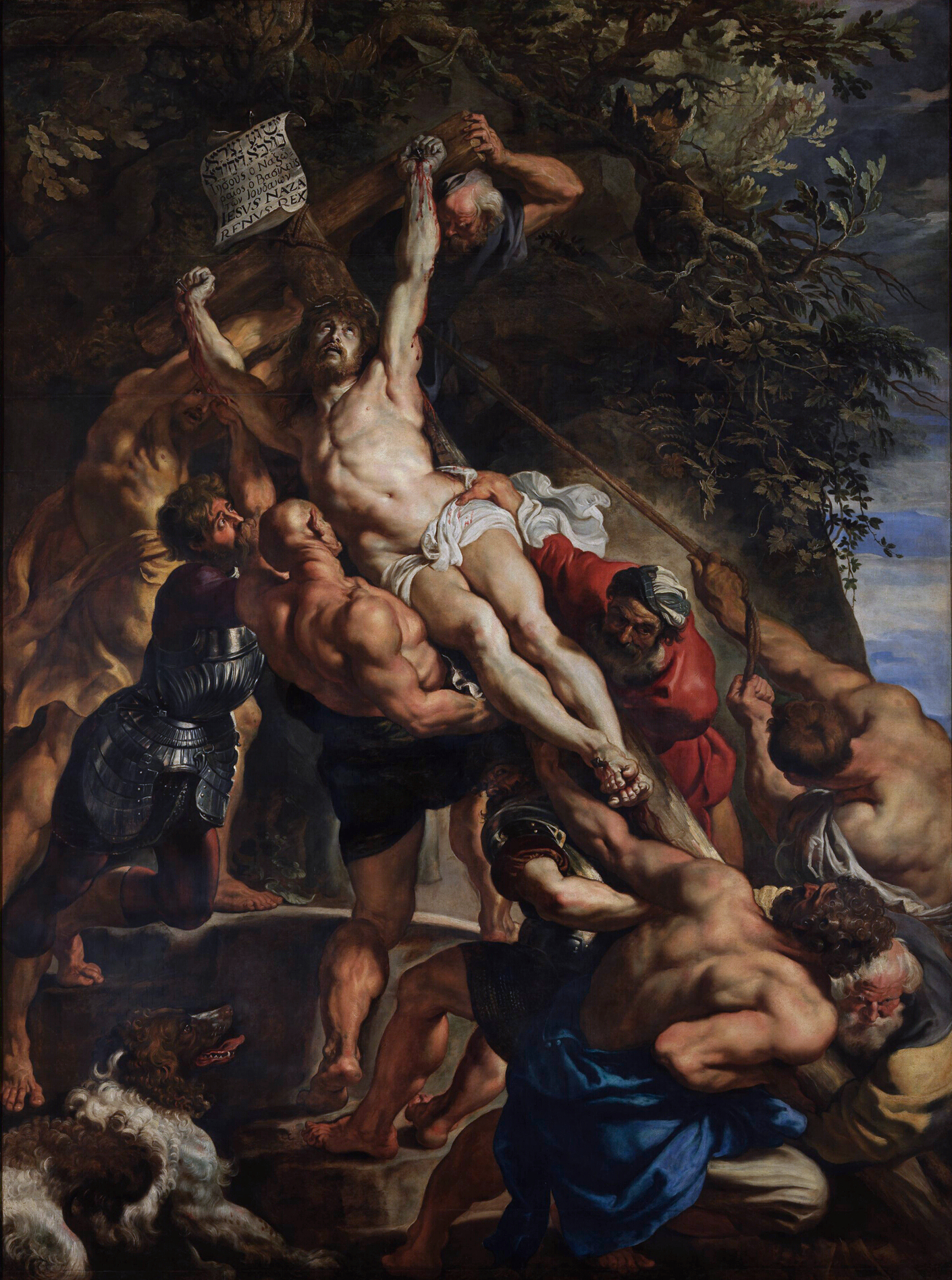
Flemish Baroque painting was a style of painting in the Southern Netherlands during Spanish control in the 16th and 17th centuries. The period roughly begins when the Dutch Republic was split from the Habsburg Spain regions to the south with the Spanish recapturing of Antwerp in 1585 and goes until about 1700, when Spanish Habsburg authority ended with the death of King Charles II. Antwerp, home to the prominent artists Peter Paul Rubens, Anthony van Dyck, and Jacob Jordaens, was the artistic nexus, while other notable cities include Brussels and Ghent.
Rubens, in particular, had a strong influence on seventeenth-century visual culture. His innovations helped define Antwerp as one of Europe's major artistic cities, especially for Counter-Reformation imagery, and his student Van Dyck was instrumental in establishing new directions in English portraiture. Other developments in Flemish Baroque painting are similar to those found in Dutch Golden Age painting, with artists specializing in such areas as history painting, portraiture, genre painting, landscape painting, and still life.
"Flemish", in the context of this and artistic periods such as the "Flemish Primitives" (in English now Early Netherlandish painting), often includes the regions not associated with modern Flanders, including the Duchy of Brabant and the autonomous Prince-Bishopric of Liège. By the seventeenth century, however, Antwerp was the main city for innovative artistic production, largely due to the presence of Rubens. Brussels was important as the location of the court, attracting David Teniers the Younger later in the century.
Although paintings produced at the end of the 16th century belong to general Northern Mannerist and Late Renaissance approaches that were common throughout Europe, artists such as Otto van Veen, Adam van Noort, Marten de Vos, and the Francken family were particularly instrumental in setting the stage for the local Baroque. Between 1585 and the early 17th century they made many new altarpieces to replace those destroyed during the iconoclastic outbreaks of 1566. Also during this time Frans Francken the Younger and Jan Brueghel the Elder became important for their small cabinet paintings, often depicting mythological and history subjects.
Peter Paul Rubens (1577–1640), a student of both Otto van Veen and Adam van Noort, spent eight years in Italy (1600–1608), during which time he studied examples of classical antiquity, the Italian Renaissance, and contemporaries Adam Elsheimer and Caravaggio. Following his return to Antwerp he set up an important studio, training students such as Anthony van Dyck, and generally exerting a strong influence on the direction of Flemish art. Most artists active in the city during the first half of the 17th century were directly influenced by Rubens.
Flemish art is notable for the large amount of collaboration that took place between independent masters, which was partly related to the local tendency to specialize in a particular area. Frans Snyders, for example, was an animal painter and Jan Brueghel the Elder was admired for his landscapes and paintings of plants. Both artists worked with Rubens, who often usually painted the figures, and other artists to create collaborative pieces.
Flower still life painting, which developed around 1600 by artists such as Jan Brueghel the Elder, was partially a Flemish innovation, echoed in the Dutch Republic in the works of the Antwerp-born Ambrosius Bosschaert (1573–1621). In Antwerp, however, this new genre also developed into a specifically Catholic type of painting, the flower garland. Other types of paintings closely associated with Flemish Baroque include the monumental hunting scenes by Rubens and Snyders, and gallery paintings by artists such as Willem van Haecht and David Teniers the Younger.
History painting, which includes biblical, mythological and historical subjects, was considered by seventeenth-century theoreticians as the most noble art. Abraham Janssens was an important history painter in Antwerp between 1600 and 1620, although after 1609 Rubens was the leading figure. Both Van Dyck and Jacob Jordaens were active painting monumental history scenes. Following Rubens's death, Jordaens became the most important Flemish painter. Other notable artists working in the idiom of Rubens include Gaspar de Crayer, who was active in Brussels, Artus Wolffort, Cornelis de Vos, Jan Cossiers, Theodoor van Thulden, Abraham van Diepenbeeck, and Jan Boeckhorst. During the second half of the century, history painters combined a local influence from Rubens with knowledge of classicism and Italian Baroque qualities. Artists in the vein include Erasmus Quellinus the Younger, Jan van den Hoecke, Pieter van Lint, Cornelis Schut, and Thomas Willeboirts Bosschaert. Later in the century, many painters turned to Anthony van Dyck as a major influence. Among them were Pieter Thijs, Lucas Franchoys the Younger, and artists who were also inspired by Late Baroque theatricality such as Theodoor Boeyermans and Jan-Erasmus Quellinus. Additionally, a Flemish variant of Caravaggism was expressed by Theodoor Rombouts and Gerard Seghers.
Hub AI
Flemish Baroque painting AI simulator
(@Flemish Baroque painting_simulator)
Flemish Baroque painting
Flemish Baroque painting was a style of painting in the Southern Netherlands during Spanish control in the 16th and 17th centuries. The period roughly begins when the Dutch Republic was split from the Habsburg Spain regions to the south with the Spanish recapturing of Antwerp in 1585 and goes until about 1700, when Spanish Habsburg authority ended with the death of King Charles II. Antwerp, home to the prominent artists Peter Paul Rubens, Anthony van Dyck, and Jacob Jordaens, was the artistic nexus, while other notable cities include Brussels and Ghent.
Rubens, in particular, had a strong influence on seventeenth-century visual culture. His innovations helped define Antwerp as one of Europe's major artistic cities, especially for Counter-Reformation imagery, and his student Van Dyck was instrumental in establishing new directions in English portraiture. Other developments in Flemish Baroque painting are similar to those found in Dutch Golden Age painting, with artists specializing in such areas as history painting, portraiture, genre painting, landscape painting, and still life.
"Flemish", in the context of this and artistic periods such as the "Flemish Primitives" (in English now Early Netherlandish painting), often includes the regions not associated with modern Flanders, including the Duchy of Brabant and the autonomous Prince-Bishopric of Liège. By the seventeenth century, however, Antwerp was the main city for innovative artistic production, largely due to the presence of Rubens. Brussels was important as the location of the court, attracting David Teniers the Younger later in the century.
Although paintings produced at the end of the 16th century belong to general Northern Mannerist and Late Renaissance approaches that were common throughout Europe, artists such as Otto van Veen, Adam van Noort, Marten de Vos, and the Francken family were particularly instrumental in setting the stage for the local Baroque. Between 1585 and the early 17th century they made many new altarpieces to replace those destroyed during the iconoclastic outbreaks of 1566. Also during this time Frans Francken the Younger and Jan Brueghel the Elder became important for their small cabinet paintings, often depicting mythological and history subjects.
Peter Paul Rubens (1577–1640), a student of both Otto van Veen and Adam van Noort, spent eight years in Italy (1600–1608), during which time he studied examples of classical antiquity, the Italian Renaissance, and contemporaries Adam Elsheimer and Caravaggio. Following his return to Antwerp he set up an important studio, training students such as Anthony van Dyck, and generally exerting a strong influence on the direction of Flemish art. Most artists active in the city during the first half of the 17th century were directly influenced by Rubens.
Flemish art is notable for the large amount of collaboration that took place between independent masters, which was partly related to the local tendency to specialize in a particular area. Frans Snyders, for example, was an animal painter and Jan Brueghel the Elder was admired for his landscapes and paintings of plants. Both artists worked with Rubens, who often usually painted the figures, and other artists to create collaborative pieces.
Flower still life painting, which developed around 1600 by artists such as Jan Brueghel the Elder, was partially a Flemish innovation, echoed in the Dutch Republic in the works of the Antwerp-born Ambrosius Bosschaert (1573–1621). In Antwerp, however, this new genre also developed into a specifically Catholic type of painting, the flower garland. Other types of paintings closely associated with Flemish Baroque include the monumental hunting scenes by Rubens and Snyders, and gallery paintings by artists such as Willem van Haecht and David Teniers the Younger.
History painting, which includes biblical, mythological and historical subjects, was considered by seventeenth-century theoreticians as the most noble art. Abraham Janssens was an important history painter in Antwerp between 1600 and 1620, although after 1609 Rubens was the leading figure. Both Van Dyck and Jacob Jordaens were active painting monumental history scenes. Following Rubens's death, Jordaens became the most important Flemish painter. Other notable artists working in the idiom of Rubens include Gaspar de Crayer, who was active in Brussels, Artus Wolffort, Cornelis de Vos, Jan Cossiers, Theodoor van Thulden, Abraham van Diepenbeeck, and Jan Boeckhorst. During the second half of the century, history painters combined a local influence from Rubens with knowledge of classicism and Italian Baroque qualities. Artists in the vein include Erasmus Quellinus the Younger, Jan van den Hoecke, Pieter van Lint, Cornelis Schut, and Thomas Willeboirts Bosschaert. Later in the century, many painters turned to Anthony van Dyck as a major influence. Among them were Pieter Thijs, Lucas Franchoys the Younger, and artists who were also inspired by Late Baroque theatricality such as Theodoor Boeyermans and Jan-Erasmus Quellinus. Additionally, a Flemish variant of Caravaggism was expressed by Theodoor Rombouts and Gerard Seghers.
Recent media