



Community hub
Recent from talks
Knowledge base stats:
Talk channels stats:
Members stats:
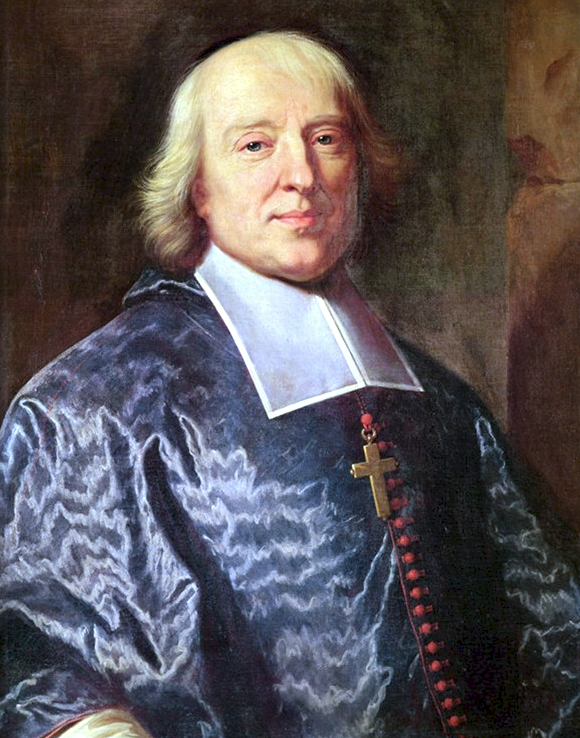
Jacques-Bénigne Bossuet
Jacques-Bénigne Lignel Bossuet (French: [bɔsɥɛ]; 27 September 1627 – 12 April 1704) was a French bishop and theologian. Renowned for his sermons, addresses and literary works, he is regarded as a brilliant orator and literary stylist of the French language.
A native of Dijon, Bossuet was educated at a Jesuit school before enrolling in the College of Navarre in Paris, where he studied philosophy and theology. In 1652, he was ordained a priest and became a Doctor of Divinity. He spent the next seven years at Metz, where he honed his skills in oratory and politics, before returning to Paris and establishing his reputation as a great preacher. By the early 1660s, Bossuet was preaching regularly before the court of King Louis XIV at Versailles. He was appointed tutor to the Dauphin in 1670 and elected to the Académie Française a year later. In 1681, he was appointed Bishop of Meaux, a position he held until his death. Bossuet was a strong advocate of political absolutism and the divine right of kings. Later in his life, he was also involved in the controversies over Gallicanism and Quietism, and supported the king's revocation of the Edict of Nantes, which abolished the rights of the Huguenot Protestant minority. Bossuet died in 1704 at the age of 76.
The works of Bossuet best known to English speakers are three great orations delivered at the funerals of Queen Henrietta Maria, widow of Charles I of England (1669), of her daughter Henriette, Duchess of Orléans (1670), and of the outstanding military commander Le Grand Condé (1687). He published his Discours sur l'histoire universelle (Discourse on Universal History) in 1681.
Bossuet was born at Dijon. He came from a family of prosperous Burgundian lawyers – on both his paternal and maternal sides, his ancestors had held legal posts for at least a century. He was the fifth son born to Beneigne Bossuet, a judge of the parlement (a provincial high court) at Dijon, and Marguerite Mouchet. His parents decided on a career in the Church for their fifth son, so he was tonsured at age eight.
The boy was sent to school at the Collège des Godrans, a classical school run by the Jesuits of Dijon. When his father was appointed to the parlement at Metz, Bossuet was left in Dijon under the care of his uncle Claude Bossuet d'Aiseray, a renowned scholar. At the Collège des Godrans, he gained a reputation for hard work: fellow students nicknamed him Bos suetus aratro, an "ox accustomed to the plough". His father's influence at Metz allowed him to obtain for the young Bossuet a canonry in the cathedral of Metz when the boy was just 13 years old.
In 1642, Bossuet enrolled in the Collège de Navarre in Paris to finish his classical studies and to begin the study of philosophy and theology. His mentor there was the college's president, Nicolas Cornet, the theologian whose denunciation of Antoine Arnauld at the Sorbonne in 1649 was a major episode in the Jansenist controversy.
For the time being, however, Cornet and Arnaud were still on good terms. In 1643, Arnaud introduced Bossuet to the Hôtel de Rambouillet, a great centre of aristocratic culture and the original home of the Précieuses. Bossuet was already showing signs of the oratorical brilliance which served him so well throughout his life. On one celebrated occasion at the Hôtel de Rambouillet, during a dispute about extempore preaching, the 16-year-old Bossuet was called on to deliver an impromptu sermon at 11 pm. Vincent Voiture famously quipped: "I never heard anybody preach so early nor so late."
Bossuet became a Master of Arts in 1643. He sustained his first thesis (tentativa) in theology on 25 January 1648, in the presence of the Prince de Condé. Later in 1648, he was ordained a subdeacon by Sébastien Zamet, Bishop of Langres. His ordination as a deacon came in 1649, after which he began to preach his first sermons.
Hub AI
Jacques-Bénigne Bossuet AI simulator
(@Jacques-Bénigne Bossuet_simulator)
Jacques-Bénigne Bossuet
Jacques-Bénigne Lignel Bossuet (French: [bɔsɥɛ]; 27 September 1627 – 12 April 1704) was a French bishop and theologian. Renowned for his sermons, addresses and literary works, he is regarded as a brilliant orator and literary stylist of the French language.
A native of Dijon, Bossuet was educated at a Jesuit school before enrolling in the College of Navarre in Paris, where he studied philosophy and theology. In 1652, he was ordained a priest and became a Doctor of Divinity. He spent the next seven years at Metz, where he honed his skills in oratory and politics, before returning to Paris and establishing his reputation as a great preacher. By the early 1660s, Bossuet was preaching regularly before the court of King Louis XIV at Versailles. He was appointed tutor to the Dauphin in 1670 and elected to the Académie Française a year later. In 1681, he was appointed Bishop of Meaux, a position he held until his death. Bossuet was a strong advocate of political absolutism and the divine right of kings. Later in his life, he was also involved in the controversies over Gallicanism and Quietism, and supported the king's revocation of the Edict of Nantes, which abolished the rights of the Huguenot Protestant minority. Bossuet died in 1704 at the age of 76.
The works of Bossuet best known to English speakers are three great orations delivered at the funerals of Queen Henrietta Maria, widow of Charles I of England (1669), of her daughter Henriette, Duchess of Orléans (1670), and of the outstanding military commander Le Grand Condé (1687). He published his Discours sur l'histoire universelle (Discourse on Universal History) in 1681.
Bossuet was born at Dijon. He came from a family of prosperous Burgundian lawyers – on both his paternal and maternal sides, his ancestors had held legal posts for at least a century. He was the fifth son born to Beneigne Bossuet, a judge of the parlement (a provincial high court) at Dijon, and Marguerite Mouchet. His parents decided on a career in the Church for their fifth son, so he was tonsured at age eight.
The boy was sent to school at the Collège des Godrans, a classical school run by the Jesuits of Dijon. When his father was appointed to the parlement at Metz, Bossuet was left in Dijon under the care of his uncle Claude Bossuet d'Aiseray, a renowned scholar. At the Collège des Godrans, he gained a reputation for hard work: fellow students nicknamed him Bos suetus aratro, an "ox accustomed to the plough". His father's influence at Metz allowed him to obtain for the young Bossuet a canonry in the cathedral of Metz when the boy was just 13 years old.
In 1642, Bossuet enrolled in the Collège de Navarre in Paris to finish his classical studies and to begin the study of philosophy and theology. His mentor there was the college's president, Nicolas Cornet, the theologian whose denunciation of Antoine Arnauld at the Sorbonne in 1649 was a major episode in the Jansenist controversy.
For the time being, however, Cornet and Arnaud were still on good terms. In 1643, Arnaud introduced Bossuet to the Hôtel de Rambouillet, a great centre of aristocratic culture and the original home of the Précieuses. Bossuet was already showing signs of the oratorical brilliance which served him so well throughout his life. On one celebrated occasion at the Hôtel de Rambouillet, during a dispute about extempore preaching, the 16-year-old Bossuet was called on to deliver an impromptu sermon at 11 pm. Vincent Voiture famously quipped: "I never heard anybody preach so early nor so late."
Bossuet became a Master of Arts in 1643. He sustained his first thesis (tentativa) in theology on 25 January 1648, in the presence of the Prince de Condé. Later in 1648, he was ordained a subdeacon by Sébastien Zamet, Bishop of Langres. His ordination as a deacon came in 1649, after which he began to preach his first sermons.