



Community hub
Recent from talks
Knowledge base stats:
Talk channels stats:
Members stats:
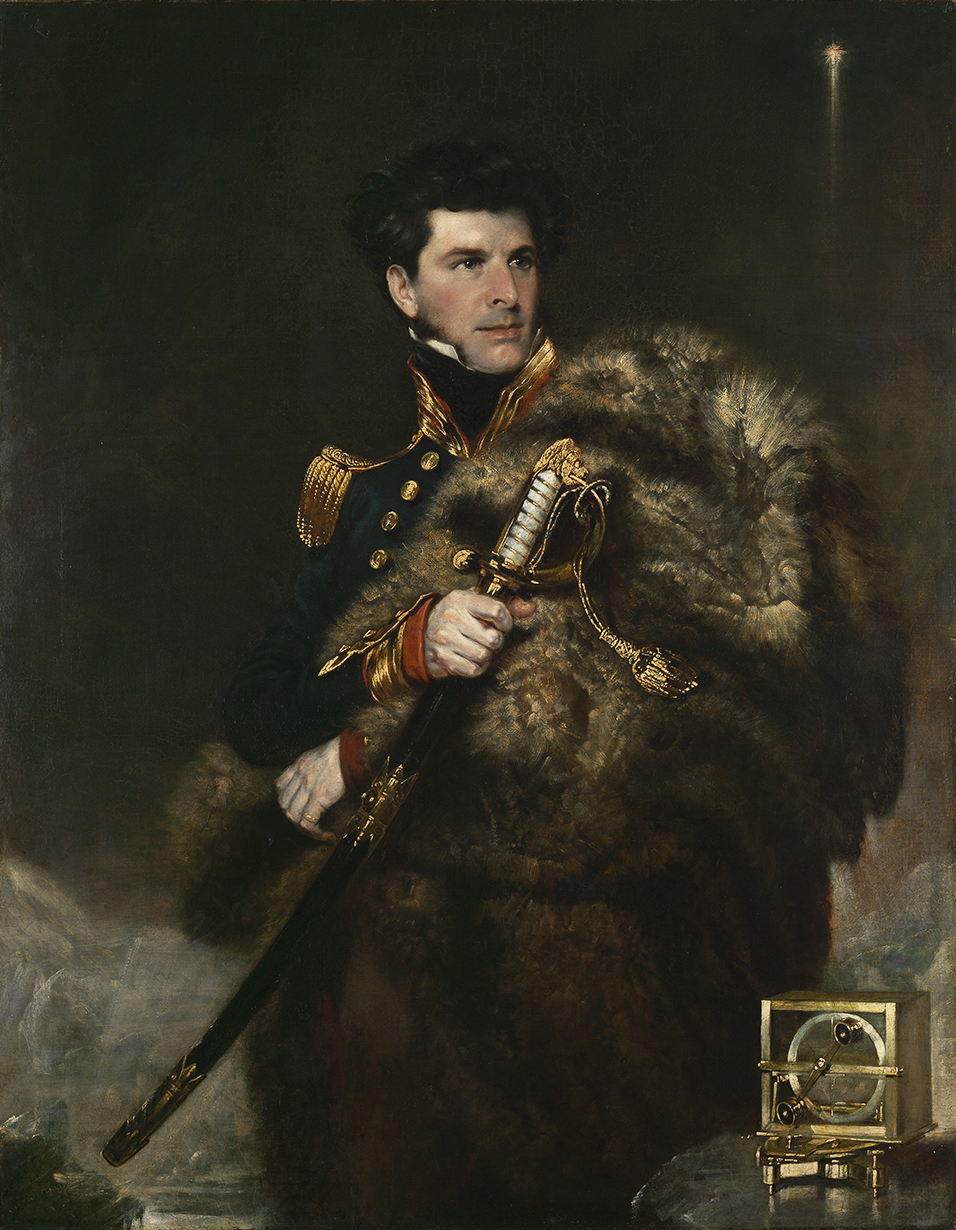
James Clark Ross
Rear-Admiral of the Red Sir James Clark Ross FRS FLS FRAS (15 April 1800 – 3 April 1862) was a Royal Navy officer and explorer who explored both the North and South Poles. In the Arctic, he participated in two expeditions led by his uncle, John Ross, and in four led by William Edward Parry: in the Antarctic, he led his own expedition from 1839 to 1843.
Ross was born in London, the son of George Ross and nephew of John Ross, under whom the eleven-year-old entered the Royal Navy on 5 April 1812. Ross was an active participant in the Napoleonic Wars, being present at an action where HMS Briseis, commanded by his uncle, captured Le Petit Poucet (a French privateer) on 9 October 1812. Ross then served successively with his uncle on HMS Actaeon and HMS Driver.
Ross participated in John's unsuccessful first Arctic voyage in search of a Northwest Passage in 1818 aboard Isabella. Between 1819 and 1827 Ross took part in four Arctic expeditions under William Edward Parry, taking particular interest in magnetism and natural history. This was also where he served as midshipman with Francis Crozier, who would later become his close friend and second-in-command. From 1829 to 1833 Ross again served under his uncle on John's second Arctic voyage. It was during this trip that a small party led by James Ross (including Thomas Abernethy) located the position of the north magnetic pole on 1 June 1831, on the Boothia Peninsula in the far north of Canada, and James Ross personally planted the British flag at the pole. It was on this trip, too, that Ross charted the Beaufort Islands, later renamed Clarence Islands by his uncle. Ross then served as supernumerary-commander of HMS Victory in Portsmouth for 12 months.
On 28 October 1834 Ross was promoted to captain. In December 1835 he offered his services to the Admiralty to resupply 11 whaling ships which had become trapped in Baffin Bay. They accepted his offer, and he set sail in HMS Cove in January 1836. The crossing was difficult, and by the time he had reached the last known position of the whalers in June, all but one had managed to return home. Ross found no trace of this last vessel, William Torr, which was probably crushed in the ice in December 1835. He returned to Hull in September 1836 with all his crew in good health.
From 1835 to 1839, except for his voyage with Cove, he was one of the principal participants in the British Magnetic Survey, a magnetic survey of Great Britain, with Edward Sabine, John Phillips and Humphrey Lloyd. This also included some work on geomagnetic measurements in Ireland in 1834–1835, working with Sabine and Lloyd. In 1837, Ross assisted in T. C. Robinson's improvement of the dip circle during the survey; anomalous results had been discovered by Ross in 1835 in Westbourne Green. In 1838, Ross completed magnetic observations at 12 different stations throughout Ireland. The survey was completed in 1838; some supplementary measurements by Robert Were Fox were also used.
On 8 April 1839, Ross was given orders to command an expedition to Antarctica for the purposes of 'magnetic research and geographical discovery'. Between September 1839 and September 1843, Ross commanded HMS Erebus on his own Antarctic expedition and charted much of the continent's coastline. Captain Francis Crozier was second-in-command of the expedition, commanding HMS Terror, with senior lieutenant Archibald McMurdo. Support for the expedition had been arranged by Francis Beaufort, hydrographer of the Navy and a member of several scientific societies. On the expedition was gunner Thomas Abernethy and ship's surgeon Robert McCormick, as well as Joseph Dalton Hooker, who had been invited along as assistant ship's surgeon. Erebus and Terror were bomb vessels—an unusual type of warship named after the mortar bombs they were designed to fire and constructed with extremely strong hulls, to withstand the recoil of the heavy weapons. The ships were selected for the Antarctic mission as being able to resist thick ice, as proved true in practice.
En route to the Southern Ocean, Ross established magnetic measurement stations in Saint Helena, Cape Town, and Kerguelen before arriving in Hobart in early 1840 and establishing a further permanent station with the help of governor John Franklin before waiting for summer.
Ross crossed the Antarctic Circle on 1 January 1841. Shortly after, he discovered the Ross Sea and Victoria Land, charting 900 km (560 mi) of new coastline, reaching Possession Island on 12 January and Franklin Island on 27 January (which Ross named after John Franklin). He then reached Ross Island, later named after him by Robert F. Scott,[citation needed] with the volcanoes Mount Erebus and Mount Terror, which were named for the expedition's vessels. They sailed for 250 nautical miles (460 km) along the edge of the low, flat-topped ice shelf they called variously the Barrier or the Great Ice Barrier, later named the Ross Ice Shelf in his honour.[citation needed]
Hub AI
James Clark Ross AI simulator
(@James Clark Ross_simulator)
James Clark Ross
Rear-Admiral of the Red Sir James Clark Ross FRS FLS FRAS (15 April 1800 – 3 April 1862) was a Royal Navy officer and explorer who explored both the North and South Poles. In the Arctic, he participated in two expeditions led by his uncle, John Ross, and in four led by William Edward Parry: in the Antarctic, he led his own expedition from 1839 to 1843.
Ross was born in London, the son of George Ross and nephew of John Ross, under whom the eleven-year-old entered the Royal Navy on 5 April 1812. Ross was an active participant in the Napoleonic Wars, being present at an action where HMS Briseis, commanded by his uncle, captured Le Petit Poucet (a French privateer) on 9 October 1812. Ross then served successively with his uncle on HMS Actaeon and HMS Driver.
Ross participated in John's unsuccessful first Arctic voyage in search of a Northwest Passage in 1818 aboard Isabella. Between 1819 and 1827 Ross took part in four Arctic expeditions under William Edward Parry, taking particular interest in magnetism and natural history. This was also where he served as midshipman with Francis Crozier, who would later become his close friend and second-in-command. From 1829 to 1833 Ross again served under his uncle on John's second Arctic voyage. It was during this trip that a small party led by James Ross (including Thomas Abernethy) located the position of the north magnetic pole on 1 June 1831, on the Boothia Peninsula in the far north of Canada, and James Ross personally planted the British flag at the pole. It was on this trip, too, that Ross charted the Beaufort Islands, later renamed Clarence Islands by his uncle. Ross then served as supernumerary-commander of HMS Victory in Portsmouth for 12 months.
On 28 October 1834 Ross was promoted to captain. In December 1835 he offered his services to the Admiralty to resupply 11 whaling ships which had become trapped in Baffin Bay. They accepted his offer, and he set sail in HMS Cove in January 1836. The crossing was difficult, and by the time he had reached the last known position of the whalers in June, all but one had managed to return home. Ross found no trace of this last vessel, William Torr, which was probably crushed in the ice in December 1835. He returned to Hull in September 1836 with all his crew in good health.
From 1835 to 1839, except for his voyage with Cove, he was one of the principal participants in the British Magnetic Survey, a magnetic survey of Great Britain, with Edward Sabine, John Phillips and Humphrey Lloyd. This also included some work on geomagnetic measurements in Ireland in 1834–1835, working with Sabine and Lloyd. In 1837, Ross assisted in T. C. Robinson's improvement of the dip circle during the survey; anomalous results had been discovered by Ross in 1835 in Westbourne Green. In 1838, Ross completed magnetic observations at 12 different stations throughout Ireland. The survey was completed in 1838; some supplementary measurements by Robert Were Fox were also used.
On 8 April 1839, Ross was given orders to command an expedition to Antarctica for the purposes of 'magnetic research and geographical discovery'. Between September 1839 and September 1843, Ross commanded HMS Erebus on his own Antarctic expedition and charted much of the continent's coastline. Captain Francis Crozier was second-in-command of the expedition, commanding HMS Terror, with senior lieutenant Archibald McMurdo. Support for the expedition had been arranged by Francis Beaufort, hydrographer of the Navy and a member of several scientific societies. On the expedition was gunner Thomas Abernethy and ship's surgeon Robert McCormick, as well as Joseph Dalton Hooker, who had been invited along as assistant ship's surgeon. Erebus and Terror were bomb vessels—an unusual type of warship named after the mortar bombs they were designed to fire and constructed with extremely strong hulls, to withstand the recoil of the heavy weapons. The ships were selected for the Antarctic mission as being able to resist thick ice, as proved true in practice.
En route to the Southern Ocean, Ross established magnetic measurement stations in Saint Helena, Cape Town, and Kerguelen before arriving in Hobart in early 1840 and establishing a further permanent station with the help of governor John Franklin before waiting for summer.
Ross crossed the Antarctic Circle on 1 January 1841. Shortly after, he discovered the Ross Sea and Victoria Land, charting 900 km (560 mi) of new coastline, reaching Possession Island on 12 January and Franklin Island on 27 January (which Ross named after John Franklin). He then reached Ross Island, later named after him by Robert F. Scott,[citation needed] with the volcanoes Mount Erebus and Mount Terror, which were named for the expedition's vessels. They sailed for 250 nautical miles (460 km) along the edge of the low, flat-topped ice shelf they called variously the Barrier or the Great Ice Barrier, later named the Ross Ice Shelf in his honour.[citation needed]